
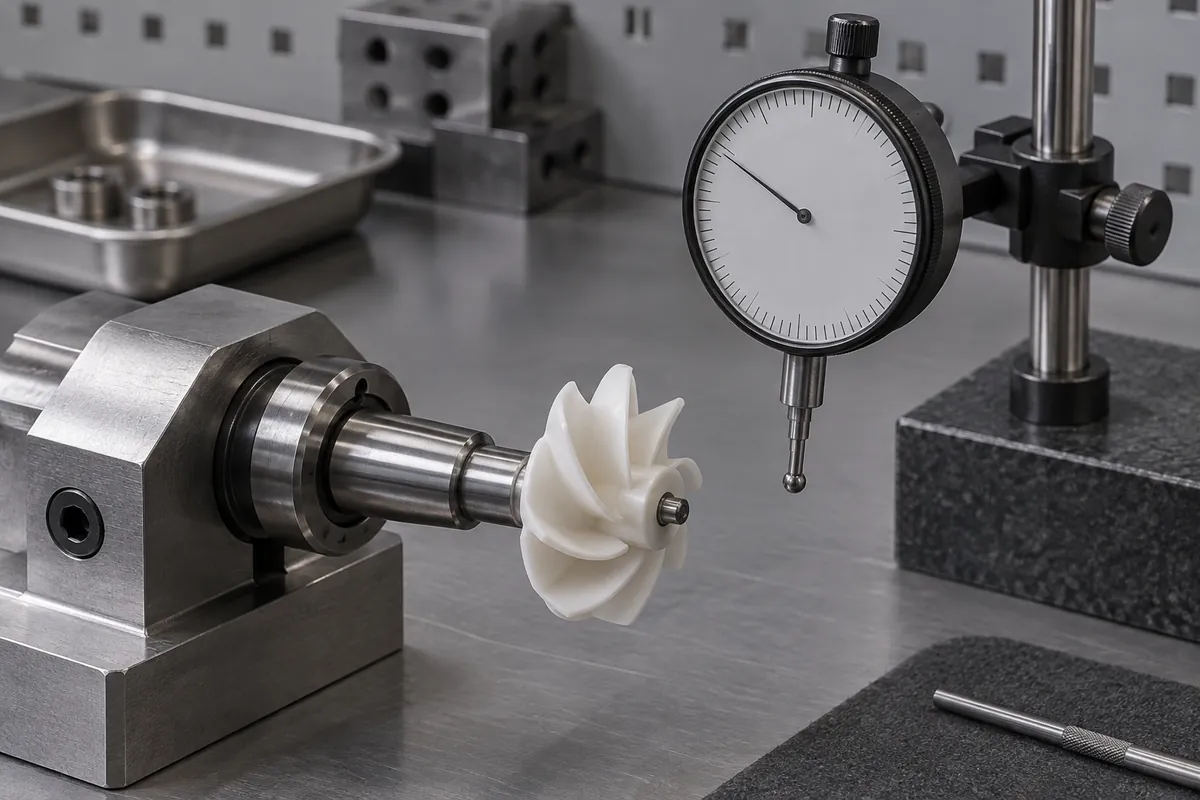
Product design illustrations. Final geometry, materials and acceptance criteria are project-specific.
Runout and balance describe different problems. Runout concerns geometric variation as the component rotates around a reference axis. Balance concerns mass distribution relative to rotation. A part can meet one requirement and fail the other, so neither result should be used as a shortcut for complete rotating-assembly approval.
Start by identifying the delivered state. A molded half, a welded impeller and an impeller fitted to a shaft are not the same specimen. The stage at which bore finishing, joining and correction occur determines which inspection results meaningfully describe the component that will enter the pump.
Establish the geometric reference
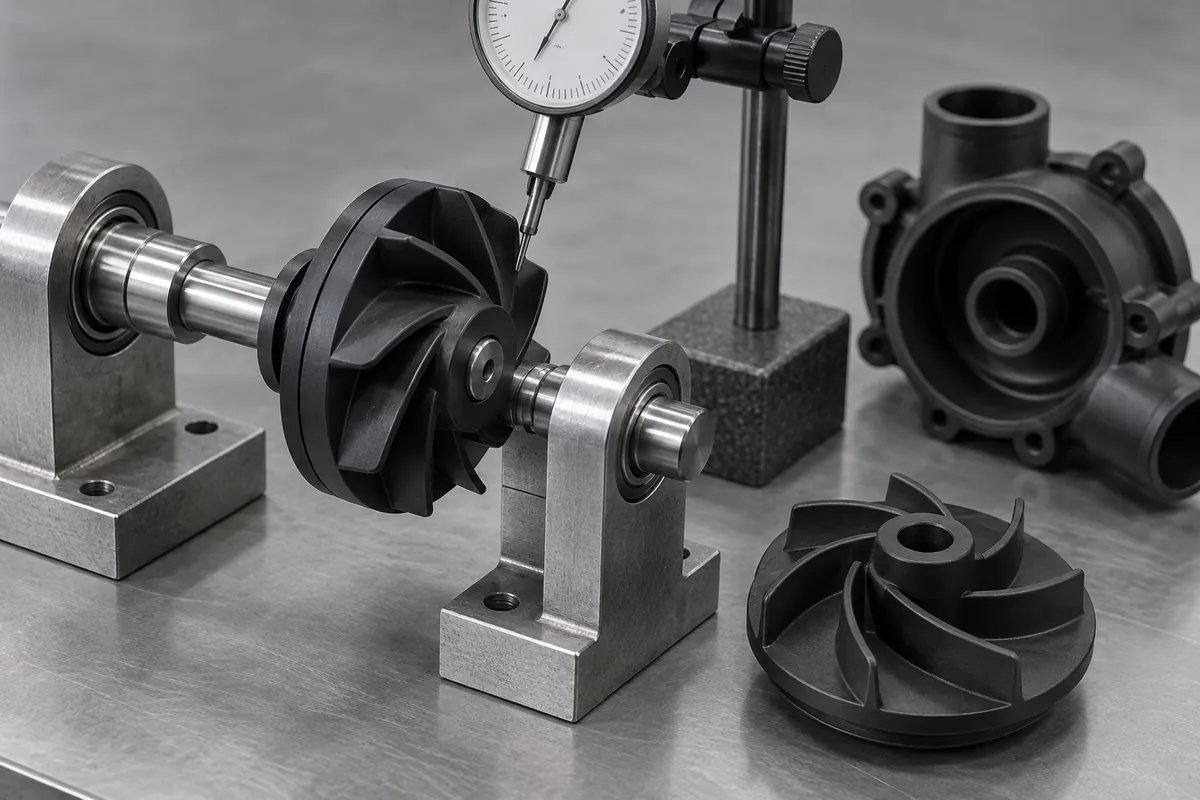
For runout, specify the mounting method, axis and surface being measured. A face reading and an outside-diameter reading reveal different geometric behavior. If the fixture uses a loose or distorted mounting interface, the observed variation may include fixture movement rather than the part feature of interest.
Control clamping force where the polymer can deform. A fixture that forces the impeller flat may conceal the free-state condition, while one that locates it poorly may exaggerate variation. Agree whether the requirement applies in a defined assembly condition or to the unrestrained component.
Separate numerical limits from instrument capability. A report should make clear how the reading was obtained and which reference was used. Listing a small runout tolerance without a repeatable setup creates a measurement dispute rather than reliable process feedback.
If balancing removes material, retain the correction amount and location where the quality plan requires them. A recurring large correction in the same region can be useful process feedback, even when every corrected specimen meets the final limit. The finished result and the stability of the incoming molded process are related but separate observations.
Define the balancing requirement correctly
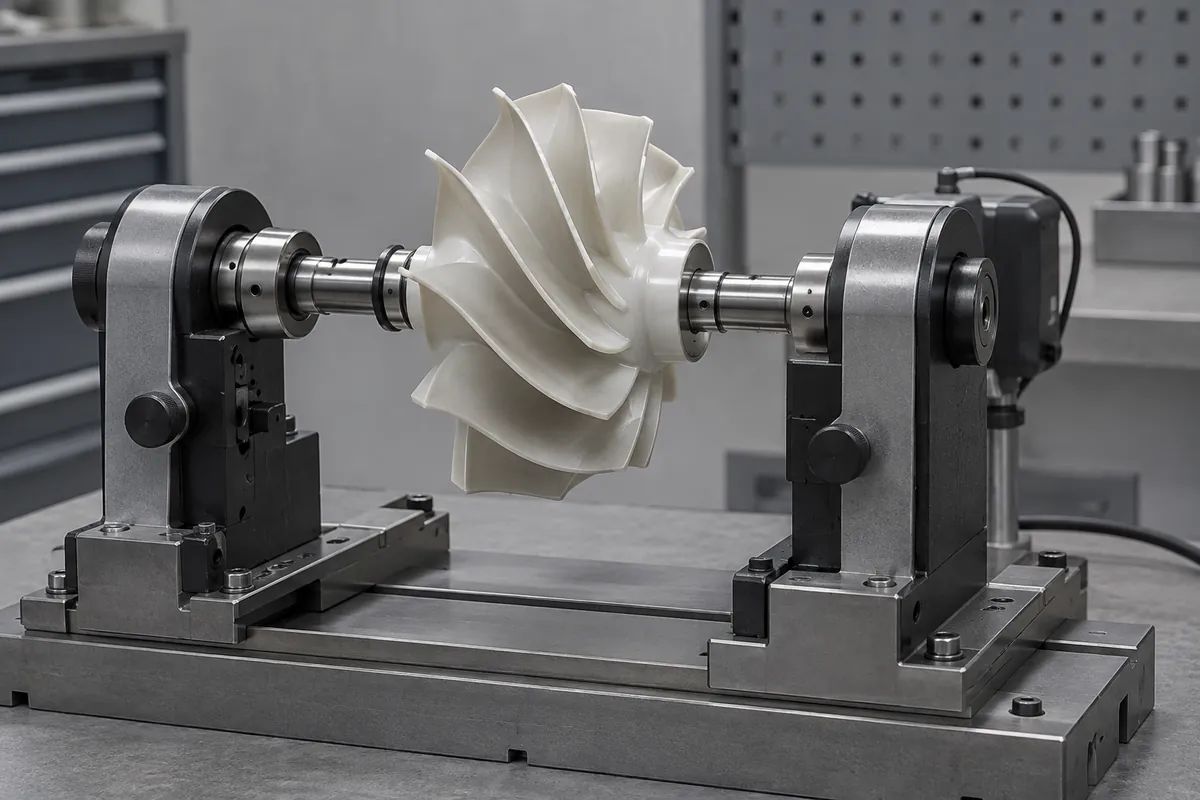
Balancing requires its own specification, including the rotor configuration and relevant speed. A balance quality designation is not a measured vibration result from a complete pump. Avoid writing a grade number beside a vibration unit as though the two were interchangeable acceptance criteria.
Identify whether one-plane or two-plane evaluation is appropriate for the actual rotor and method. The balancing supplier should explain the setup and permitted correction zones. Do not infer the required method solely from the outside diameter or copy a report from a differently proportioned rotating part.
KSB's centrifugal-pump technical reference provides context for rotating components and pump behavior. The project's balancing requirement still needs to be explicitly agreed with the responsible assembly and test teams.
Control correction and inspection sequence
Define where material may be removed or added without affecting a critical blade, joint or sealing surface. A successful balance correction is not acceptable if it damages the flow path or weakens a constrained region. Include permitted correction features in the design review where practical.
Measure after operations that can change mass distribution or geometry. Welding, insert installation, trimming and bore finishing can affect the result. If a preliminary balance check is useful during development, label it as such and keep the final delivered-state check separate.
Retain specimen identity and cavity coverage. A few selected parts may help establish a process, but their results do not demonstrate that every cavity or shipment was checked. State whether the report covers development samples, a production sample or complete inspection.
Validate the pump without confusing the levels of evidence
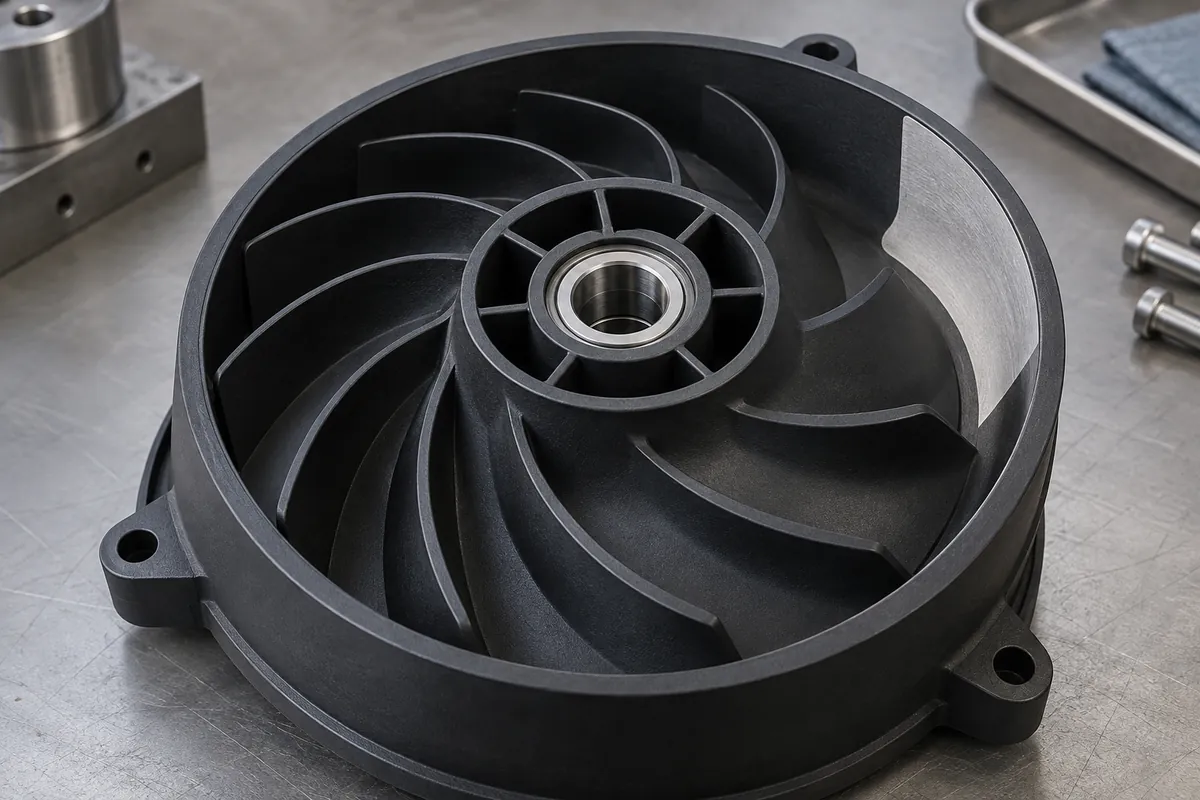
A component-level balance result does not isolate every cause of pump vibration. Shaft alignment, bearings, assembly fit and operating conditions also belong to the system review. If the pump behaves poorly, preserve the component report while investigating the complete installed configuration.
Use assembly testing to evaluate the intended operating points. Record the configuration and conditions rather than presenting one bench observation as a general pump rating. Component acceptance and system qualification answer related but distinct questions.
The release package should therefore contain separate geometry, balance and assembly conclusions where required. This makes later changes traceable and prevents a single favorable number from standing in for several untested requirements.
Discuss the component and its acceptance requirements
Explore our custom plastic impellers and the related project case study. Send the current drawing, mating-part details, operating conditions and required quantities. We can review tooling, molding and inspection as a defined supply scope, with development samples and production approval kept separate.