

Product design illustrations. Final geometry, materials and acceptance criteria are project-specific.
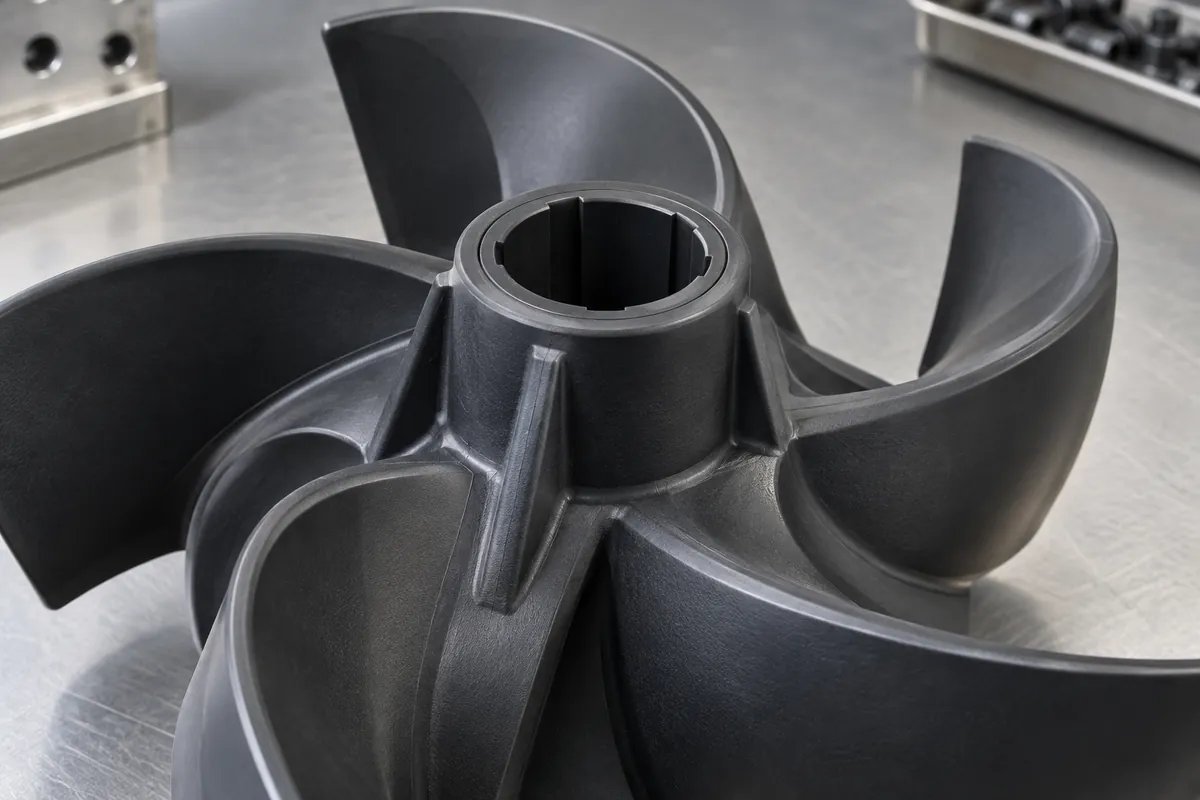
An impeller material has to maintain the geometry that moves fluid while carrying the loads imposed by the rotating assembly. Choosing a resin from its maximum temperature alone overlooks fluid exposure, dimensional change, blade construction and the connection to the shaft. These factors can make a less expensive candidate suitable or rule out an apparently premium one.
Begin with the pump duty rather than a material shortlist. Record the fluid, temperature range, speed, pressure conditions, cleaning exposure and intended service interval. Include abnormal but permitted conditions such as startup, shutdown and temporary loss of flow, with responsibility for system protection clearly assigned.
Compare the properties that affect the geometry
PP may be considered where the operating environment and structural requirements permit it. Its use does not eliminate the need to review stiffness, creep and the shaft interface. A blade that deflects or a hub that relaxes can affect the assembly even if the polymer remains chemically intact.
Polyamide candidates require attention to the condition in which dimensions and properties are evaluated. Moisture exposure can matter to the comparison, so distinguish dry molding inspection from the intended operating condition. An interference fit approved only on freshly molded samples may not represent the later assembly.
PPS and PEEK offer different high-performance options, but family names do not establish a common service rating. Reinforcement, grade and exposure conditions remain important. The cost of a higher-performance polymer is justified only when its relevant properties address a defined requirement that a lower-cost candidate cannot satisfy.
Account for reinforcement and manufacturing
Glass reinforcement can change stiffness and dimensional behavior, while also introducing orientation-dependent effects that the molding review must consider. Do not assume a reinforced grade shrinks equally in every direction. Blade geometry, flow path and gate location can influence the final part and its repeatability.
For a welded closed impeller, check whether the proposed material and joint can be processed using the selected joining method. A grade suitable for molding the two halves is not automatically qualified for the finished welded assembly. Include joint design and cleanliness in the development scope.
Celanese's Fortron PPS information is a starting point for grade-level review. Manufacturer data should be matched to the actual candidate and test conditions, not converted into a blanket temperature or chemical-resistance promise for a molded pump component.
Keep shaft fit and fluid duty in the same decision
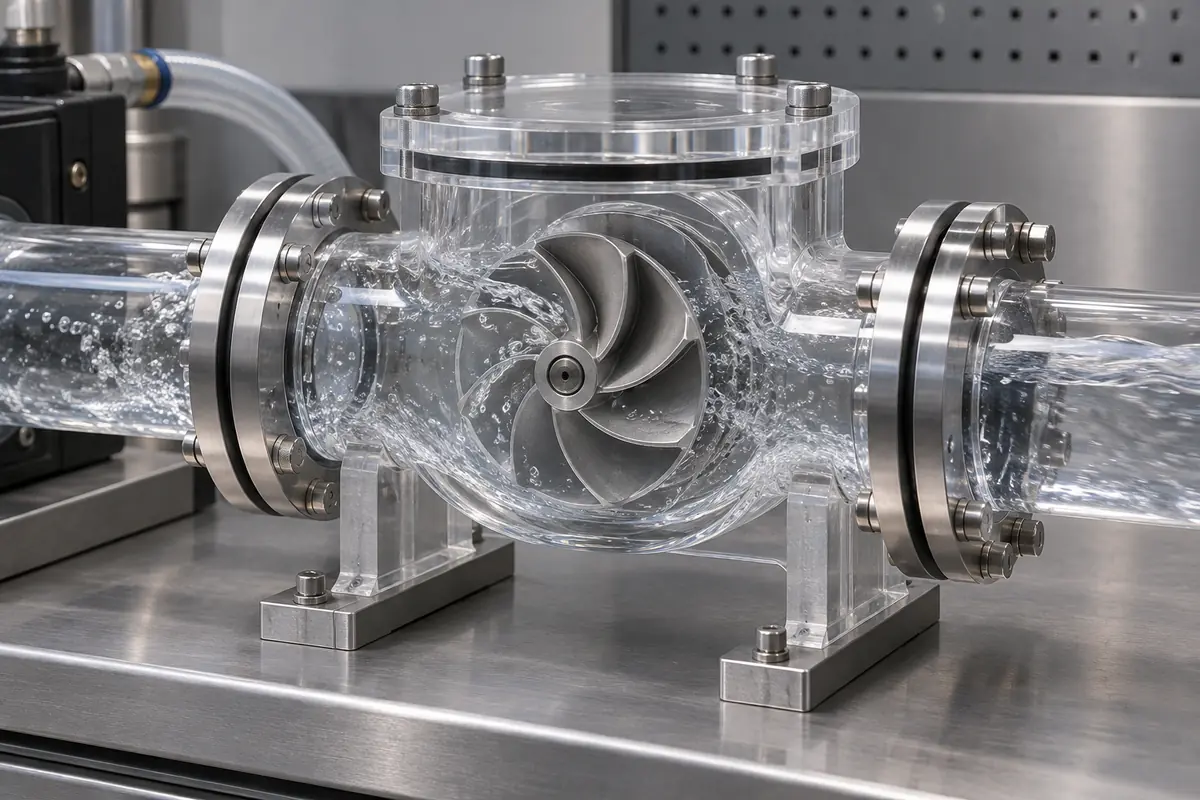
A bore, insert or keyed connection transfers load through a local region that can behave differently from the thin blades. Identify assembly force, torque transmission and temperature change at that interface. Increasing material stiffness does not automatically make a press fit safe or prevent local cracking.
Evaluate the actual fluid composition, including additives or cleaning agents. A compatibility chart can screen candidates, but it may not represent a stressed rotating component exposed for the required duration. Define which material screening and assembled tests are needed before the grade is released.
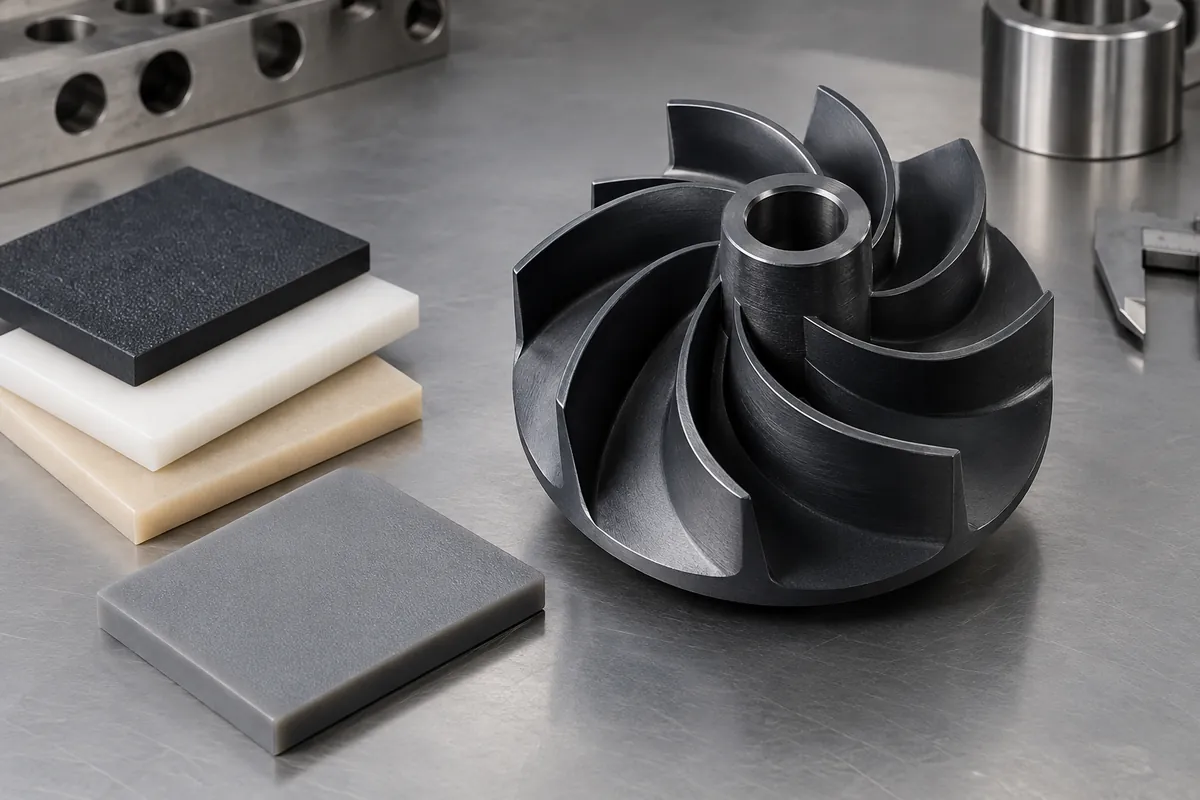
Compare materials in a consistent condition. If one sample is conditioned in the service fluid and another is measured dry, apparent dimensional advantages may be misleading. Record exposure and measurement timing so the engineering team can interpret differences without guessing the sample history.
Build a commercial comparison around a qualified scope
Ask suppliers to quote the same drawing revision and inspection requirements. Include any welding, bore finishing, balancing and traceability needed for the assembly. A lower molded-part price is not a direct saving if another proposal includes secondary operations that are still required before pump testing.
Review runout and balance separately from material selection. A suitable resin does not establish either result, and a balanced specimen does not prove that its geometry will remain stable through the intended exposure.
Release the chosen grade with the approved process and operating boundary. Later substitutions, including another reinforced grade from the same family, should be reviewed against those conditions. This keeps the material decision connected to demonstrated component function rather than a ranking of polymer names.
Discuss the component and its acceptance requirements
Explore our custom plastic impellers and the related project case study. Send the current drawing, mating-part details, operating conditions and required quantities. We can review tooling, molding and inspection as a defined supply scope, with development samples and production approval kept separate.