
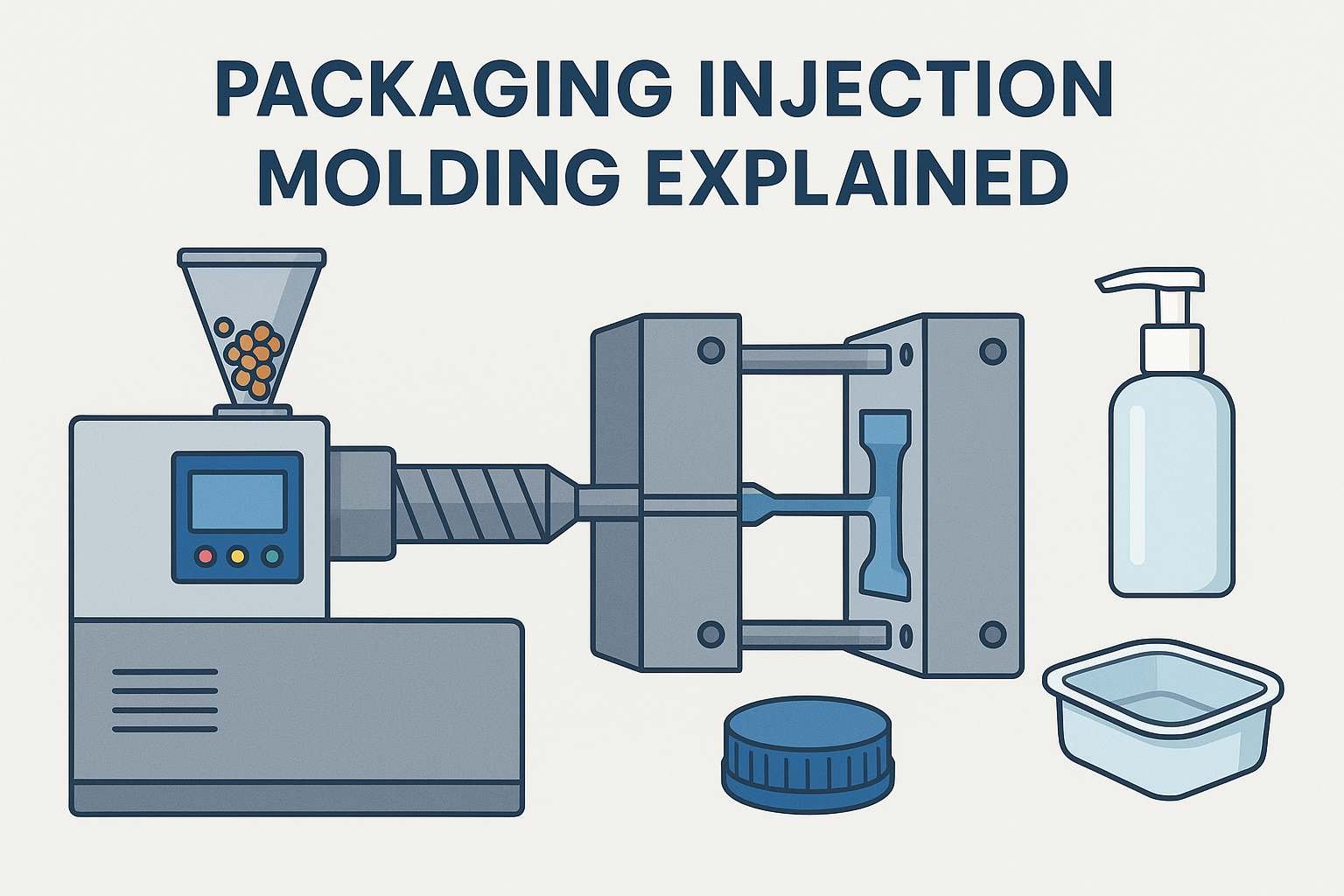
Packaging injection molding is a common method for producing plastic containers, caps, and dispensers. It is popular for everyday consumer products because it can quickly produce large quantities at a low cost.
The process creates packaging with high accuracy and consistent quality. It can also use advanced techniques like molding different materials together and adding labels during production. This method is used for food containers, medical packaging, and cosmetic bottles.
Injection molding can also use recycled and biodegradable plastics as sustainability becomes increasingly important. This article explains how injection molded packaging works, what materials are used, and why it is so useful.
What is Packaging Injection Molding?
Molded packaging refers to any type of container or component that has been formed by heating plastic and forcing it into a mold. Mold is having the final form size of the packaging, which is what manufacturers get. Packaging that has been molded is created when melted plastic is injected, cooled, and removed from a specially designed tool.
Injection molding is the fastest way to produce millions of identical items within a very short life cycle. And the entire process happens inside a closed mold hence it is possible to achieve smooth surfaces, tight tolerances, and strong structural integrity. This method is best suited for items that require protection from contamination, maintenance of freshness, or secure sealing, such as bottle caps, food containers, and medical components.
How It Differs From Other Manufacturing Processes
Injection molding produces a complete part in a single cycle. Compared to other methods:
- 3D printing: good for small batches, but too slow and expensive for mass production. Injection molding is better for large volumes.
- Thermoforming: cheaper tooling but less detail and lower precision. Injection molding can create threads, holes, and fine designs easily.
- Blow molding: best for hollow bottles. Injection molding is better for solid parts with high detail.
- CNC machining: very accurate but creates a lot of waste and costs more at high volume.
For large-scale packaging production, injection molding is typically the most suitable choice.
How Injection Molding Works for Packaging?
Injection molding turns plastic pellets into finished packaging through a few clear steps. Each step is carefully controlled to ensure the final product is strong, clean, and accurate.
Step 1: Mold design and preparation
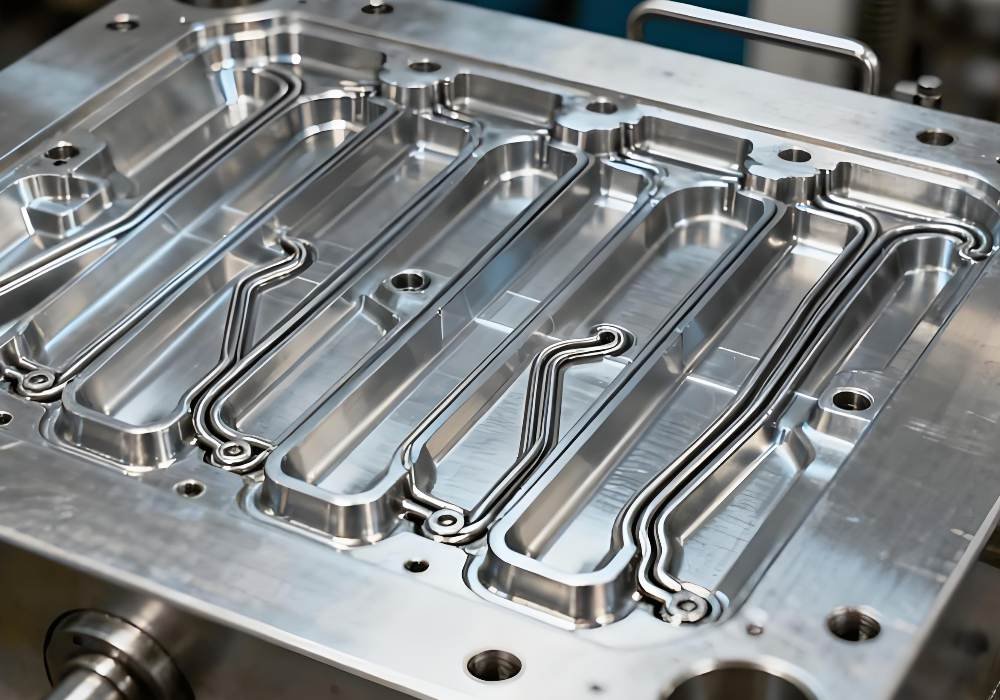
The process starts with the mold. A mold is a metal tool (usually steel or aluminum) shaped like the final packaging item. Engineers design it so the two mold halves fit perfectly. They also add small slopes (draft angles) so the part can be easily removed.
The mold features cooling channels, ejector pin spots, and other details to ensure smooth production. Once finished, the mold is placed into the machine and clamped tightly to stop plastic from leaking.
Step 2: Melting and injecting the plastic
Plastic pellets are poured into a hopper and move into a hot barrel. Inside the machine, a rotating screw heats the plastic and moves it forward.
When the plastic becomes fully melted, the machine injects it into the mold using very strong pressure. This fills every corner of the mold in just a few seconds.
Step 3: Cooling and solidifying
After the mold is filled, the plastic must cool down and harden. This is the longest step. Water or oil runs through cooling channels to remove heat.
During cooling, the machine keeps pressure on the plastic to stop shrinking or forming defects. Proper cooling helps the part keep the right shape and strength.
Step 4: Ejection and finishing
Once the plastic becomes solid, the mold opens. Ejector pins push the part out. The product may be trimmed or checked for quality, then it’s ready for use. After that, the mold closes and the process repeats.
Materials Used in Injection Molded Packaging
The selection of the right material is very important in injection molded packaging. The choice of material that is right shows a direct effect on the performance and cost-effectiveness and sustainability of the final product.
- PP (Polypropylene): Polypropylene is one of the most widely used materials in injection-molded plastic packaging. It’s lightweight, food-safe, and highly resistant to moisture, making it ideal for thin-wall containers. PP is commonly used for yogurt cups, caps and closures, and takeaway food boxes.
- PE (Polyethylene): Polyethylene is available in various forms, primarily LDPE and HDPE. It offers excellent flexibility and impact resistance, along with strong chemical protection. PE is widely used in household product containers, bottle caps, and industrial packaging applications.
- PS (Polystyrene): Polystyrene provides high transparency and good rigidity. General-purpose PS is often used for clear food containers, while high-impact PS improves toughness and durability. Its thermal stability also makes it suitable for beverage cups and food trays.
- ABS (Acrylonitrile Butadiene Styrene): ABS is known for its strength, durability, and premium surface finish. It’s often used in high-end cosmetic packaging, protective cases, handles, and other components that require strong mechanical performance.
- Bioplastics & Compostable Resins: Growing demand for eco-friendly packaging has increased interest in biodegradable alternatives such as PLA and other compostable resins. These materials offer good clarity and stiffness while helping reduce environmental impact, making them popular in sustainable packaging solutions.
Key Benefits of Injection Molding for Packaging
Injection molded packaging delivers multiple advantages that directly improve product safety, cost efficiency, and brand value.
1) Fast production for large quantities
Injection molding is ideal for producing large quantities of items. Each cycle can take only a few seconds, so factories can produce millions or even billions of packaging parts quickly. Many machines also use robots, which makes production faster, reduces mistakes, and keeps work running smoothly.
2) Precision and consistency
This method makes very accurate parts with tight measurements. Once the mold is perfected, the machine can produce millions of identical products with the same shape and quality. Modern machines also use sensors to monitor the process and identify and rectify problems promptly, thereby reducing waste.
3) Design flexibility for custom molded packaging
Injection molding enables the creation of complex shapes and special features in a single piece. Packaging can include textures, logos, tamper-proof bands, or even built-in hinges. This helps brands create unique packaging that looks good and works better.
4) Cost effectiveness in large scale manufacturing
The mold may be expensive initially, but after that, each item becomes very cost-effective when produced in large batches. The process also saves money by using less labor (because of automation) and producing very little material waste. Molds are strong and can last for millions of uses.
5) Support for sustainable packaging solutions
Injection molding can use recycled plastics and biodegradable materials, such as PLA. It also makes lightweight packaging, which reduces plastic use. Many companies design injection molded products to be easier to recycle, helping meet sustainability goals.

Types of Injection Molded Packaging Products
The production of various packaging solutions for all industrial sectors depends on injection molding technology. Common uses include:
- Food and Beverage Containers: When it comes to food grade packaging like cups, trays, yoghurt containers, caps, coffee capsules and takeaway boxes, people have a very high expectation of consistency and hygiene in order to prevent contamination and keep products fresh.
- Medical and Pharmaceutical Packaging: You need ultra-precise molding and materials that have been certified to produce items like syringe parts, pill bottles, diagnostic trays, test tube racks and sterile transport containers. Many are produced under ISO standards to ensure their safety and traceability.
- Cosmetics and Beauty Packaging: Injection molding can be used to produce high-end packaging such as lipstick tubes, droppers, mascara cases, compact housings, cream jars and applicators. The smooth finish and custom textures all serve to elevate brand image.
- Consumer Electronics and Goods Packaging: Protective inserts, modular cases and shock-resistant enclosures are all used to keep fragile products safe during shipping and retail display.
- Industrial & B2B Custom Molded Packaging: Items like heavy-duty trays, stackable bins, component organisers and tool inserts benefit from being made with strong, durable materials that can be precision-engineered to exact specifications. These are commonly engineered as custom molded packaging products.
Injection Molding vs Other Packaging Manufacturing Methods
Choosing the right production method depends on project needs such as complexity, cost, and volume.
| Method | Best For | Strengths | Limitations |
| Injection Molding | High-volume, precise packaging | Tight tolerances, fast cycles, complex shapes | Higher tooling cost |
| Thermoforming | Large parts, low tooling cost | Quick prototyping, cost-efficient for large thin parts | Less precise, limited detail |
| Blow Molding | Hollow bottles and containers | Efficient for bottles, lightweight | Not suitable for solid parts |
| 3D Printing | Prototyping, small batches | Customization, no molds needed | Slow, expensive for mass production |
| CNC Machining | Precision metal or low-volume plastic parts | Very accurate | High waste, costly for large volumes |
Injection molding is the most suitable option for mass-produced packaging.
Why Choose Fecision for Packaging Injection Molded Service
Fecision is a global leader in precision injection molding for packaging. We offer complete solutions that cater to the medical, eletronics and industrial packaging sectors. With the latest equipment, automated lines and an experienced team of engineers, Fecision delivers reliable quality to a large scale.
Why customers choose Fecision:
- modern high-precision machines
- strict quality checks and inspections
- full service (design, materials, prototyping, production)
- flexible order sizes (small to ultra-high volume)
- eco-friendly and recyclable material options
- clear communication through every step
We can transform your packaging concept into functional, visually appealing molded solutions tailored to your industry.
Conclusion
Injection molding remains one of the most powerful technologies for creating precise, high-quality molded packaging. It allows for speed, precision and design freedom while also supporting many different types of plastics including recycled and bio-based resins. Injection molded packaging can meet very strict manufacturing and performance demands.
If your brand needs packaging that protects products, looks great on shelves, and lowers long-term production costs, injection molding is a smart choice. And if you need a partner to bring high-precision custom packaging to life, Fecision is ready to help. Contact us today to start developing your next injection molded packaging solution.