
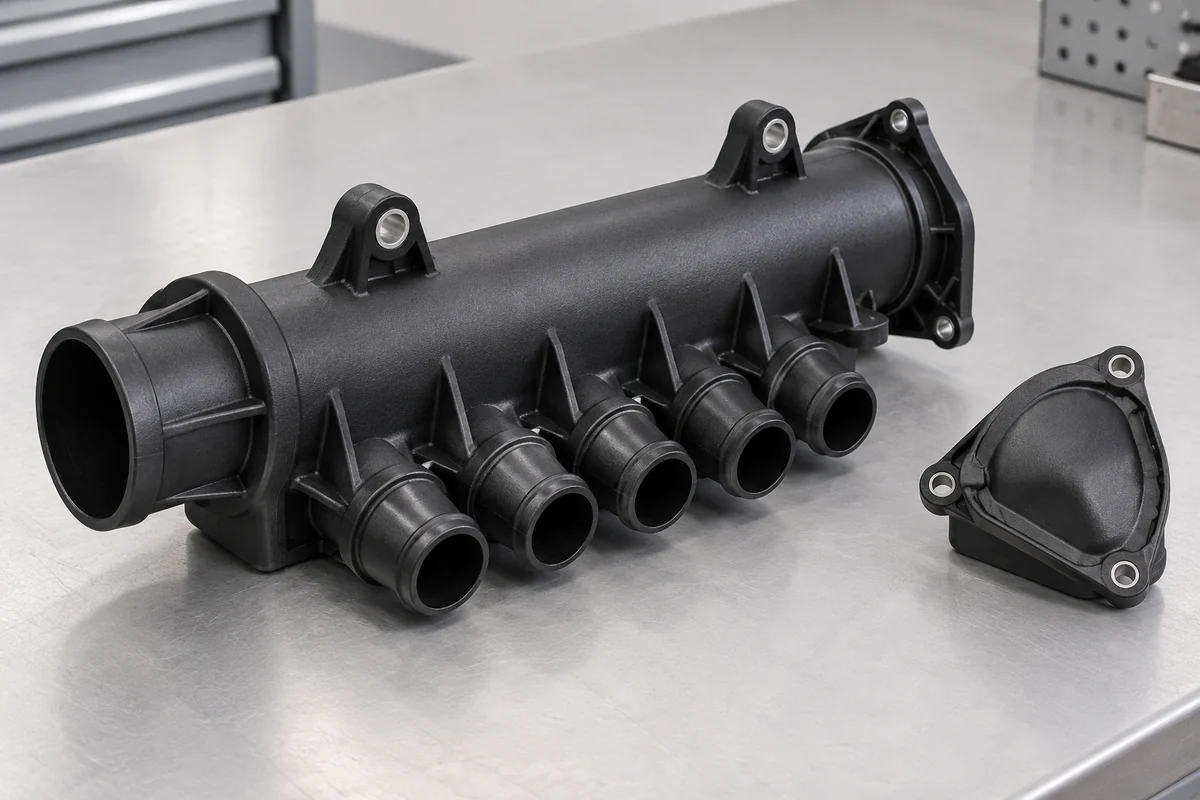
Product design illustrations. Final geometry, materials and acceptance criteria are project-specific.
A plastic fluid manifold quotation can cover an empty molded body, a body with installed fittings, or a leak-checked assembly. Each carries different tooling, inspection and assembly costs. Before comparing prices, make the supplied configuration explicit. A supplier cannot reliably price a manifold from a picture and an operating-pressure number alone.
This guide concerns a component that distributes or collects a service fluid. It is not about the heated manifold inside an injection mold's hot-runner system. That distinction matters when requesting technical help: the product's internal flow path and the mold's polymer feed system are different engineering subjects with different acceptance criteria.
Start with the flow path and the supplied parts
Provide the current CAD and controlled drawing, then mark the inlet, outlets and any isolated circuits. Explain whether every outlet operates simultaneously or whether valves change the active branches. A body that fits the available envelope may still require a different channel arrangement once the actual connections and branch duties are understood.
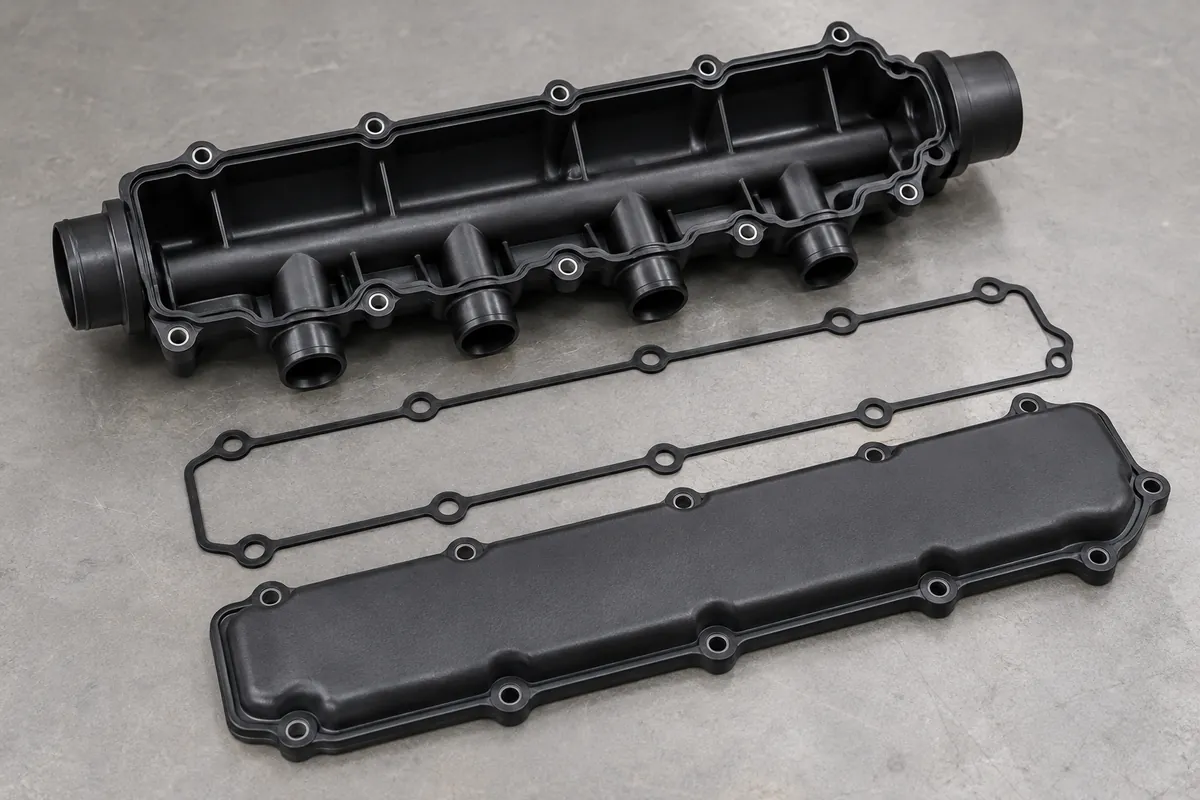
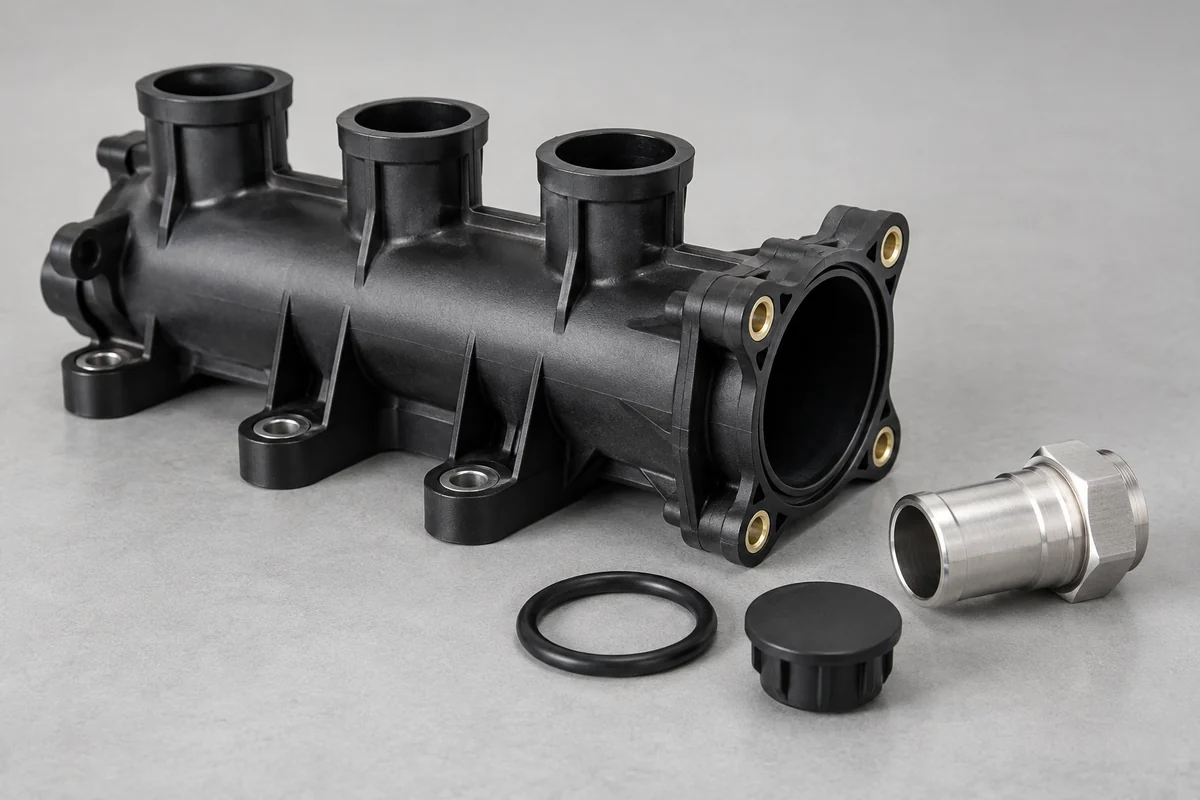
List caps, plugs, seals, inserts, fittings and joining operations separately. Identify who supplies each mating part and whether the quotation includes installation. If a cover is needed to close a molded channel, its joining method is part of the design review. It should not appear later as an unexplained assembly surcharge.
Describe the fluid over its intended service conditions
Give the fluid formulation, concentration range and temperature range rather than only the word coolant. Include additives, cleaning fluids and any foreseeable changes in concentration during service. State whether the part will see continuous operation, intermittent duty or long storage. These inputs determine which material evidence is relevant to the proposed component.
Separate normal pressure, expected transients and the proposed qualification tests. A proof-test condition is not automatically a working-pressure rating, and a short room-temperature check does not describe years of hot-fluid exposure. Ask the system owner to define these requirements; do not let an attractive material datasheet temperature become the assembly's service limit.
Define the connections that determine assembly success
Supply drawings for the actual mating ports. Thread form, engagement, seal location, insertion clearance and hose loads can all affect the molded interface. Two fittings with a similar nominal size may seal in different ways. A thread that locates a connection and an O-ring land that seals it should not be treated as one interchangeable feature.
Mark the port locations relative to functional datums and specify the assembled condition. A manifold bolted to a rigid plate may behave differently from a loose inspected part. The port and seal tolerance guide explains how to separate location, surface form and the elastomer interface instead of tightening every dimension equally.
Ask how the channel will be molded and inspected
Internal passages need a credible tooling and inspection route. Ask which channels use removable cores, where slides or shutoffs are needed and whether any features need a secondary operation. A change that makes a channel easy to mold may alter the fluid path or leave an access closure requiring its own seal.
Explain the critical wall regions and cleanliness requirements. An internal burr can be difficult to remove after molding, especially where channels intersect. Agree how accessible regions will be inspected and how hidden features will be sampled or otherwise evaluated. A clean external surface does not establish that the internal circuit is free from obstructions.
Keep development work visible in the proposal. Flow analysis, tooling trials, sectioning and test fixtures are not interchangeable deliverables. A supplier might include dimensional samples but exclude hydraulic characterization. Asking for the proposed evidence package early makes that difference clear before either side interprets the sample order as full qualification.
Price the accepted configuration, not an unspecified block
Separate tooling, trial quantities, repeat orders, assembly and inspection. State whether pressure checks are development tests or production screening, and how sample identity will be maintained. Our leak-test planning guide discusses why test medium, temperature, stabilization and acceptance language belong in the request, not only in a later report.
Define packaging and cleanliness at shipment. A protected port, a cleaned internal circuit and a bagged part are different requirements. If a cleaning step is specified, say how its effectiveness will be accepted and whether residues matter to the system. Do not assume that ordinary protective packaging establishes a particular cleanliness classification.
Finally, show forecast demand separately from the committed first order. The tooling choice should reflect the real development stage and expected design stability. A useful RFQ allows the supplier to explain technical options and open decisions while pricing a defined component. It does not turn a proposed annual volume into evidence that the design is already production-ready.
Discuss your molded fluid component
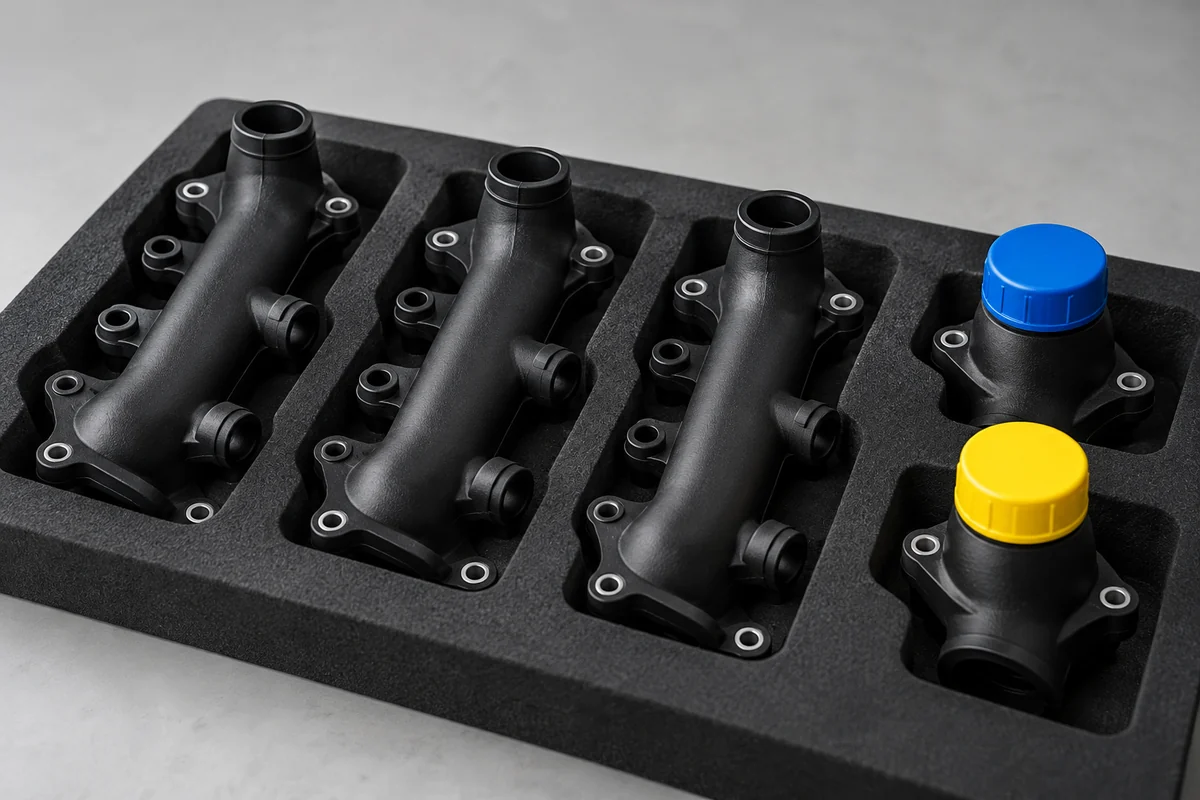
Explore our custom injection-molded fluid manifolds and the PPS liquid-cooling manifold trial case. Send the controlled drawing, mating interfaces, fluid conditions and acceptance requirements. Tooling, sample inspection and system qualification should have separately agreed deliverables.