
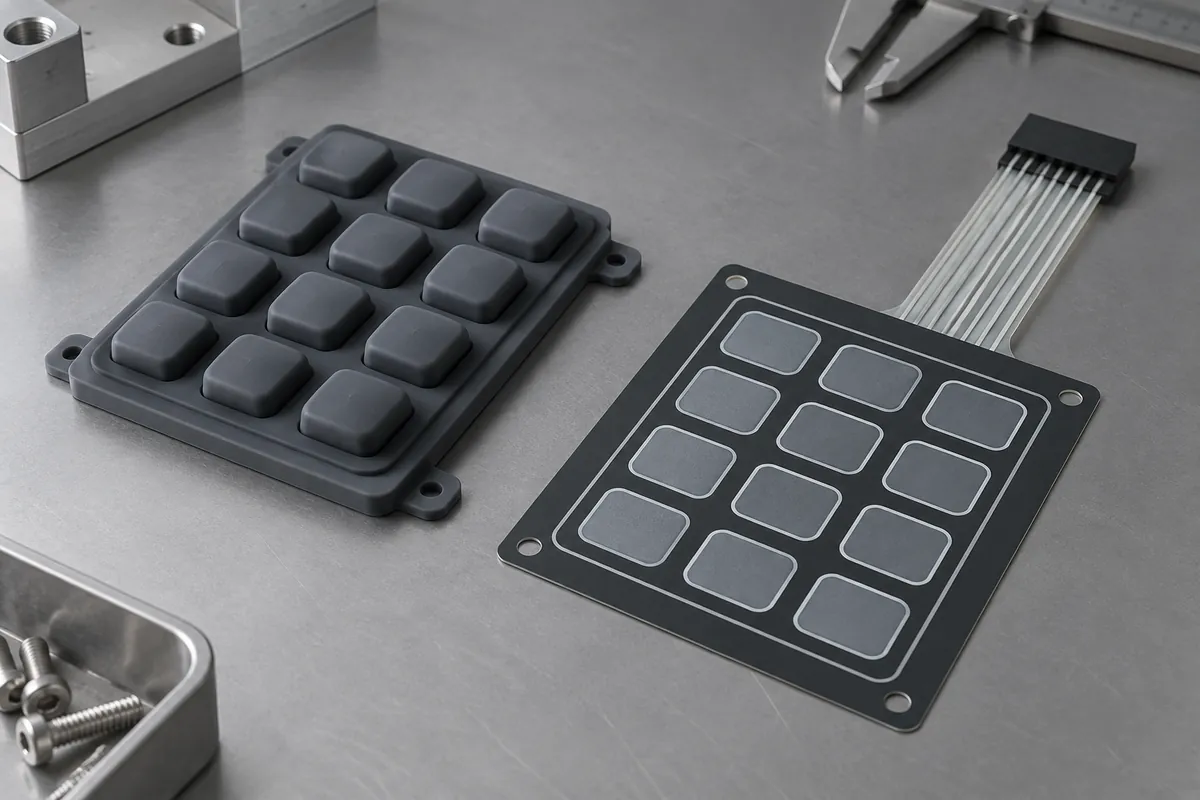
Product design illustrations. Final geometry, materials and acceptance criteria are project-specific.
Silicone and membrane keypads are often compared as if one material choice determines the whole interface. In practice, silicone can actuate a membrane switch, and a membrane construction can incorporate tactile domes. First distinguish the surface the operator touches from the mechanism that closes the circuit.
The right comparison starts with the equipment. Consider available depth, how users locate keys, cleaning exposure, label complexity and expected maintenance. Then compare two complete configurations with equivalent electrical and environmental requirements. A price for a loose keymat is not comparable with a fully assembled membrane-switch panel.
Start with the physical interaction
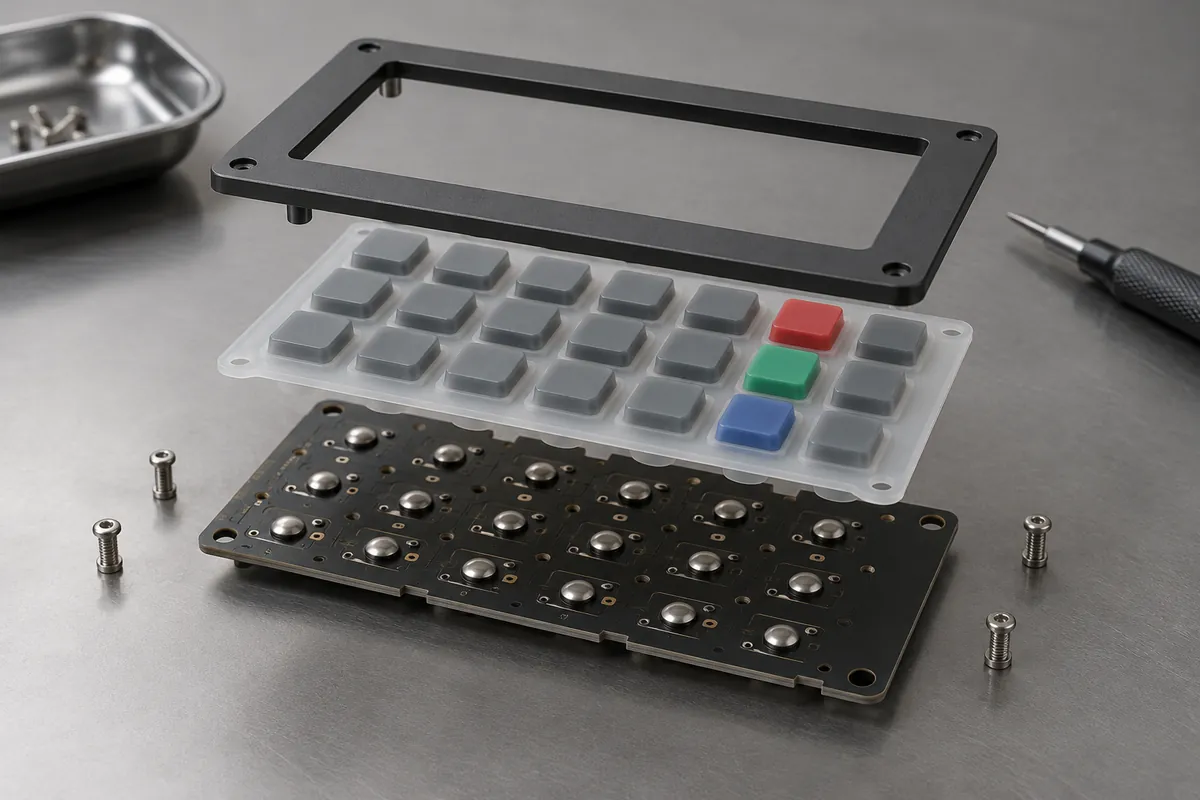
Raised silicone keys can provide recognizable shapes and a compliant contact surface. Their geometry can be tailored around a navigation control or differentiated command keys. The extra three-dimensional construction consumes space and requires clearance around moving features, particularly when the bezel is tightly packaged.
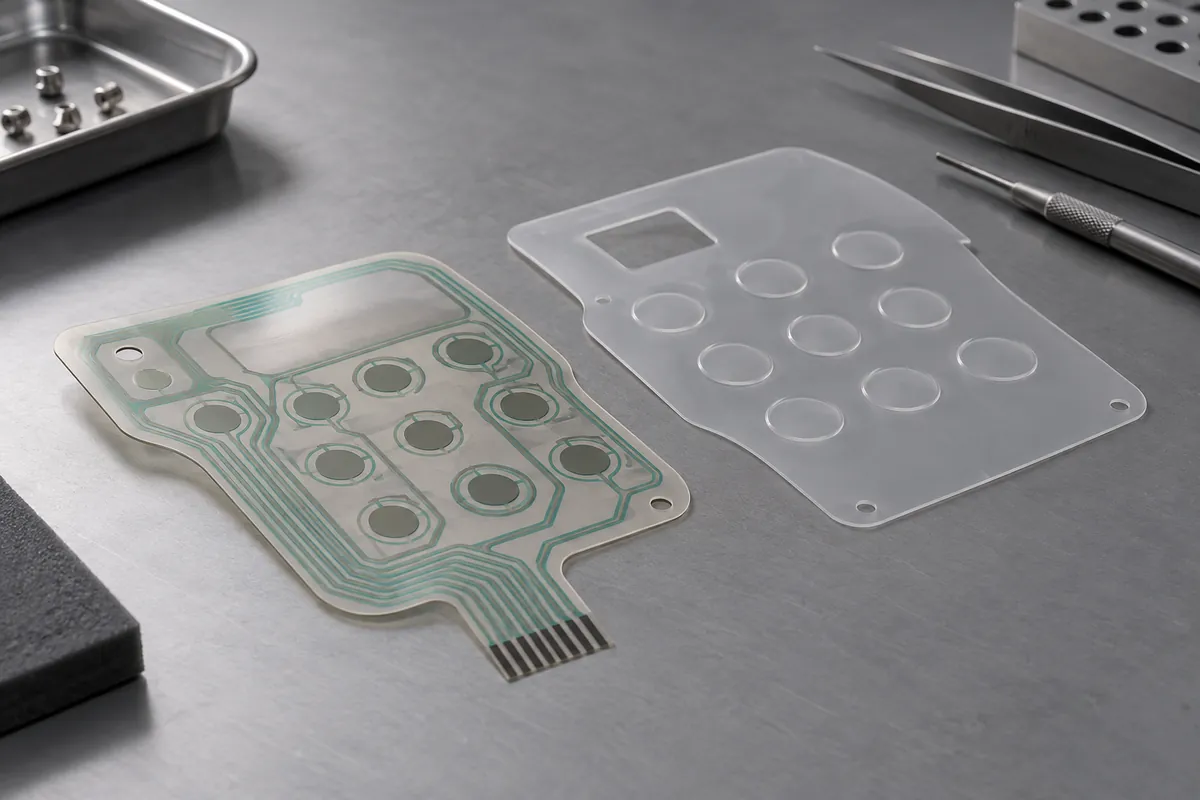
A membrane surface can provide a low-profile face with closely integrated graphics. Its tactile response depends on the underlying construction rather than the overlay alone. A flat appearance does not necessarily mean no tactile feedback, and a raised silicone surface does not necessarily mean a long travel or a strong snap.
The SiTech application guide describes several key constructions. Use construction details to frame the discussion rather than selecting from the general category name. Ask which layer supplies movement, tactile feedback, contact and environmental separation.
Evaluate graphics and the front-panel surface
Membrane overlays can consolidate instructions and key labels on a broad surface. Silicone decoration may use printing, coatings, laser-opened regions or other agreed techniques. Artwork complexity, color matching and illuminated regions affect process choice, especially when the design contains small symbols or several functional zones.
Compare cleaning and wear on finished samples, not only on unprocessed material plaques. An overlay adhesive, printed legend or protective coating can limit the interface even if its base polymer tolerates the exposure. Specify the actual cleaning agent, concentration, contact time and wiping action used in the application.
Identify joints, openings and attachment edges. A continuous-looking front surface does not prove that liquid cannot enter the assembly. Installation loading and the path around the switch tail or connector may matter. Qualification should address the complete intended boundary rather than relying on the visual impression of a sealed face.
Compare supply scope and change cost
List the items delivered with each proposal: keymat, overlay, circuit, dome sheet, adhesive, connector and assembly labor where relevant. Include tooling, samples, decoration setup and inspection. Unit prices become useful only when the delivered configuration and responsibilities are aligned.
Consider what is likely to change after launch. Revised artwork, a different key layout or a new electrical interface can affect different parts of the tooling and process. A design that allows one layer to change independently may reduce disruption, but that flexibility needs deliberate revision control and compatibility checks.
Agree whether the supplier validates loose components or the assembled front panel. If the equipment team supplies the supporting electronics and bezel, provide representative parts for the sample review. Testing an improvised fixture may miss the deflection or alignment issue that appears only after final installation.
Packaging and assembly handling also deserve comparison. Thin flexible circuits can be damaged during routing, while a compliant keymat can be stretched or misplaced before fastening. Include locating features, permitted handling and incoming checks in the assembly instructions. These details often explain an installation problem more clearly than a general claim about which interface is more robust.

Choose from representative prototypes
Build a small number of representative assemblies and evaluate locating the controls, center and edge presses, release, visual readability and the intended cleaning sequence. Keep user-preference feedback distinct from pass/fail engineering requirements. Both can be valuable, but they answer different questions.
When a silicone construction is preferred, define force, travel and tactile acceptance before tooling release. When a hybrid construction works best, document the complete stack rather than forcing the purchase into a misleading silicone-versus-membrane label.
Discuss the component and its acceptance requirements
Explore our custom silicone keypads and the related project case study. Send the current drawing, mating-part details, operating conditions and required quantities. We can review tooling, molding and inspection as a defined supply scope, with development samples and production approval kept separate.