
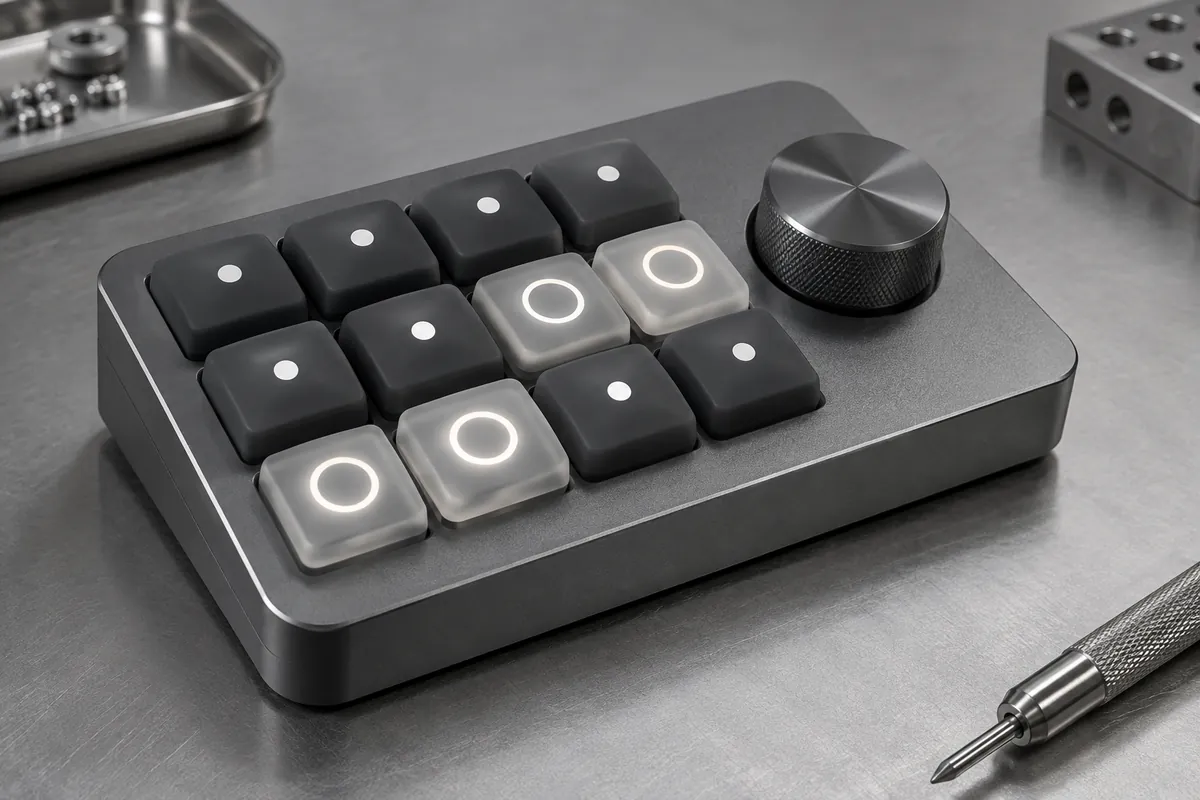
Product design illustrations. Final geometry, materials and acceptance criteria are project-specific.
A legend is part of the working interface, not just a final cosmetic operation. It must remain readable under the specified lighting and use conditions while staying compatible with the flexible key beneath it. Printing and laser processing offer different construction choices, and neither automatically proves a durability claim.
Before choosing a process, define whether the symbol is viewed by reflected light, transmitted light or both. Also identify its smallest important feature and the expected cleaning and abrasion exposure. These requirements help distinguish a genuine process advantage from a visually appealing sample made under easier conditions.
Describe the layer structure
Printing applies a defined ink system to a prepared surface. The ink, pretreatment, cure and any protective coating belong to the specification. Silicone's surface behavior makes adhesion a process issue; the substrate grade alone does not establish that every available ink will bond or survive repeated flexing.
Laser etching can mean removing an opaque layer to expose a lighter or transmitting layer beneath it. Other laser-marking mechanisms can produce different results. State which operation is intended. Removing material from a uniformly black key does not inherently create a bright contrasting legend or a controlled light window.
Review the relationship between laser marking and backlit keypad construction as background. The manufacturing drawing should still identify the actual substrate, coating stack, artwork and acceptable finished appearance for the selected process.
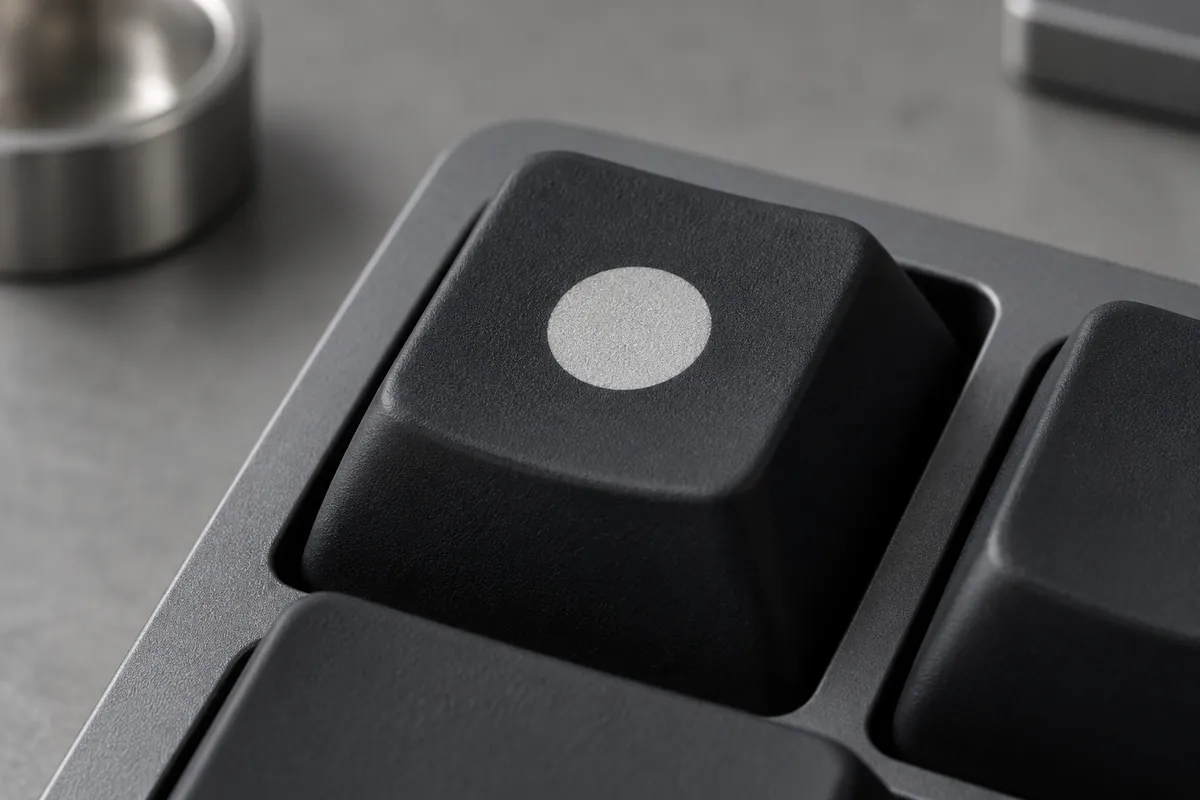
Match decoration to the optical requirement
For a non-illuminated key, contrast and edge definition under ambient light may dominate the choice. For a backlit key, the transmitting region and the opaque surrounding layer must be controlled together. A process that looks excellent in daylight can reveal pinholes or light leakage when illuminated.
Provide artwork at the intended size and identify critical gaps, strokes and alignment relative to the key. An attractive enlarged proof can hide limitations that appear on the actual molded surface. Curvature, texture and local flexibility should be included in the sample evaluation.
Set a reference for positional variation. Cosmetic centering on a rounded key may not use the same reference as the mold drawing. Agree which feature locates the artwork and how it is inspected, particularly for navigation keys whose symbol orientation communicates a function.
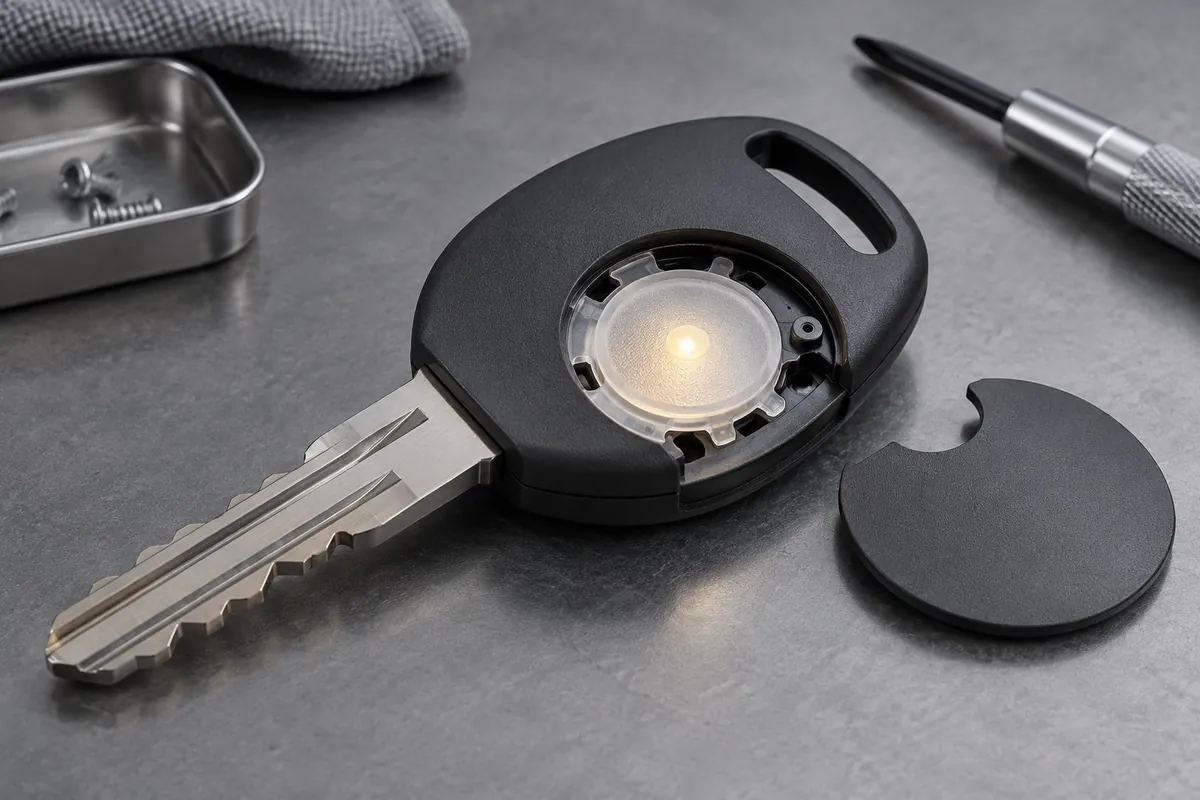
Test the finished key in its use condition
Specify the rubbing material, contact force, stroke and cycle count for an abrasion comparison. Include the relevant cleaning fluid and its concentration when exposure is part of the intended use. A generic claim that a legend is permanent is not a replacement for a defined acceptance test.
Evaluate legibility, coating separation and unwanted illumination separately. A key can still switch electrically after the label becomes unreadable. Conversely, a superficial cosmetic change may not represent an electrical failure. Define what counts as an unacceptable observation before testing begins.
Keep the tested samples traceable to their molding and decoration process. If an ink, coating or surface treatment changes, earlier results may no longer describe the delivered construction. A record of the artwork revision and finished process is more useful than a photograph of an unidentified good sample.
Decide how cosmetic rework will be treated. Reprinting over a rejected mark or repeating a laser pass can change layer thickness and edge quality. The supplier should not assume that a reworked key is equivalent to a first-pass approved sample. Establish whether rework is allowed and which appearance or durability checks apply afterward.
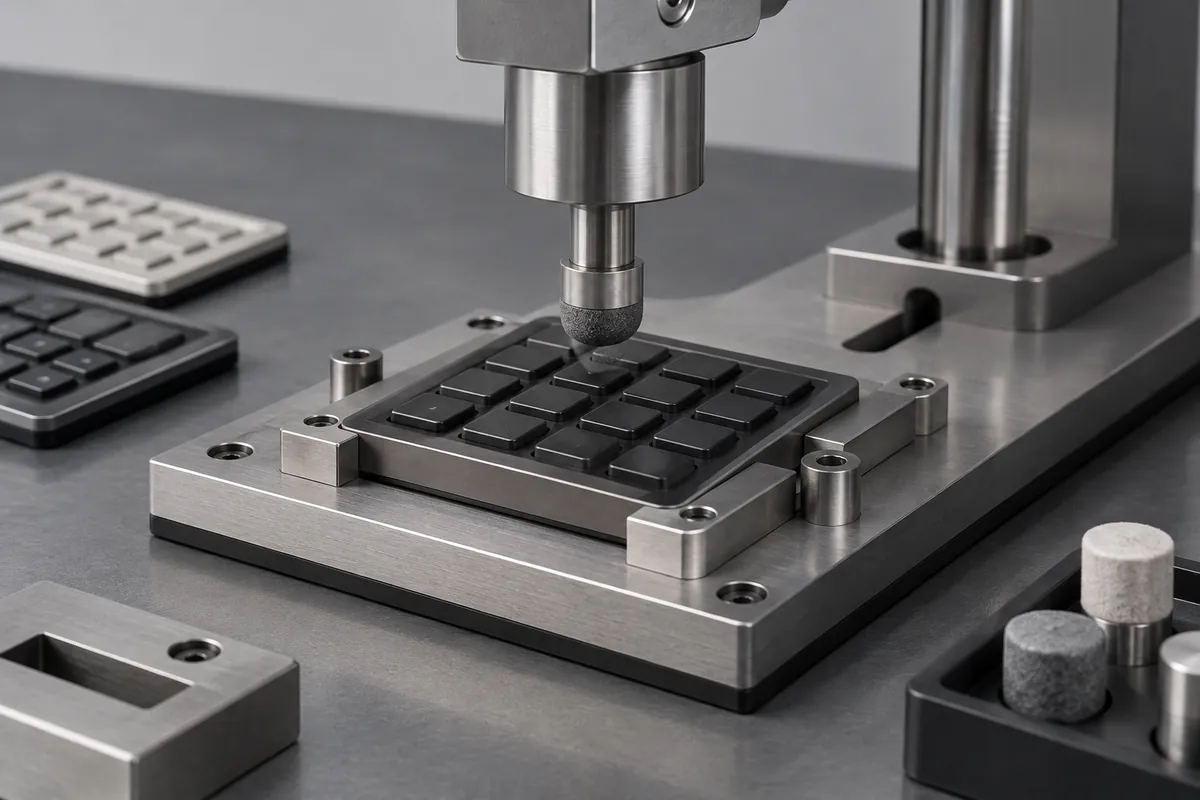
Quote decoration as part of component supply
Include setup, masking, rejects, inspection and packaging protection in the comparison. A lower decoration price can exclude a protective layer or require a different acceptable appearance. Ask suppliers to identify these differences rather than compressing every process into one unit-cost column.
Use the backlighting guide when the legends transmit light. Release the artwork, layer stack, viewing setup and durability requirements together. This creates a repeatable purchasing specification while leaving room to review a process change through controlled samples.
Discuss the component and its acceptance requirements
Explore our custom silicone keypads and the related project case study. Send the current drawing, mating-part details, operating conditions and required quantities. We can review tooling, molding and inspection as a defined supply scope, with development samples and production approval kept separate.