
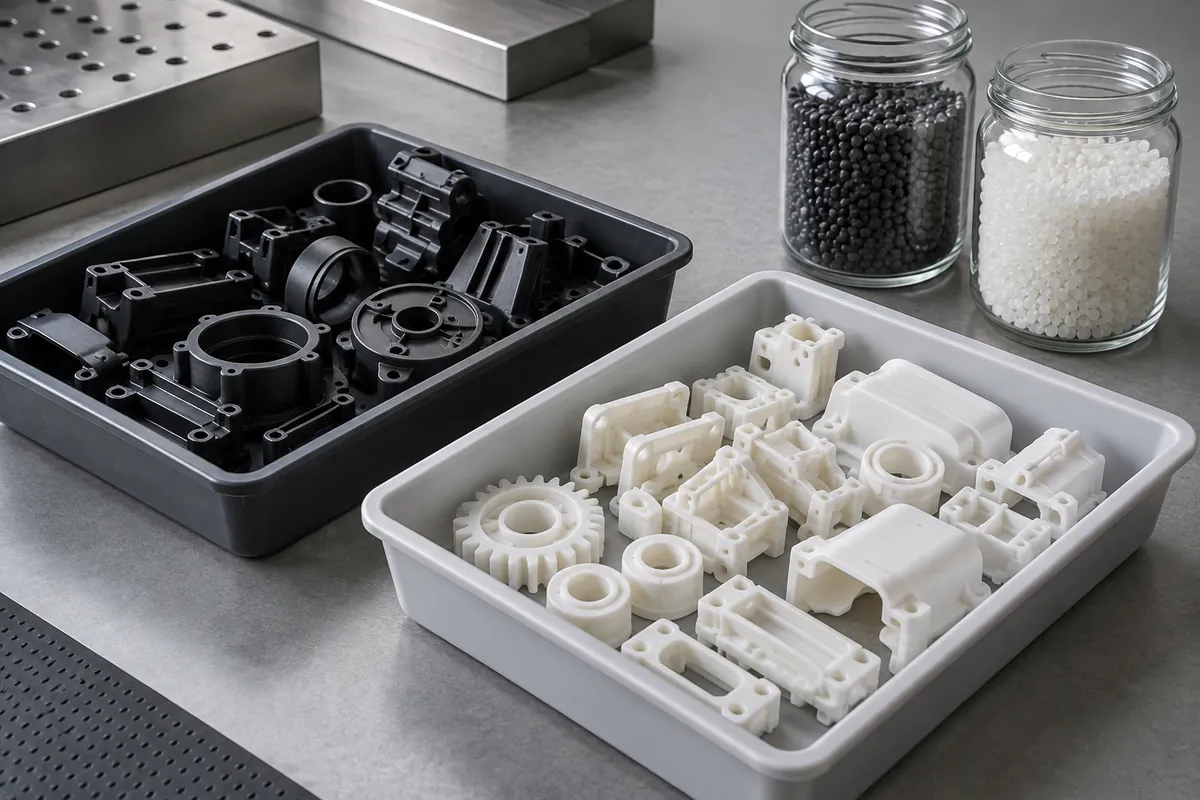
Product design illustrations. Final geometry, materials and acceptance criteria are project-specific.
A supplier substitution should reopen the functional review even when the replacement belongs to the same polymer family. Ask whether the molding shrinkage, additive package and cleaning response remain compatible with the approved carrier. Maintaining a familiar material abbreviation is not enough to preserve pocket fit or an electrical acceptance requirement.
PP and HDPE are both common candidates for molded handling trays, but choosing between them from a generic material table is incomplete. The tray geometry, support spacing, carried load and exposure history determine which properties matter. An apparently tougher material can still produce an unsuitable carrier if its deflection allows parts to touch or escape.
Define the complete duty first. Include storage temperature, cleaning method, loaded and empty stacking, drops that may occur in handling and any electrical-protection requirement. Then compare specific grades or compounds that can be processed into the proposed shape and supported by the necessary documentation.
Connect material properties to the tray structure
Stiffness influences how the base and rim deflect under load. Impact behavior matters when a tray is dropped or strikes a stop. These are different characteristics and may favor different candidates. The comparison should use the actual grade and relevant temperature rather than a single family-wide statement that one polymer is stronger.
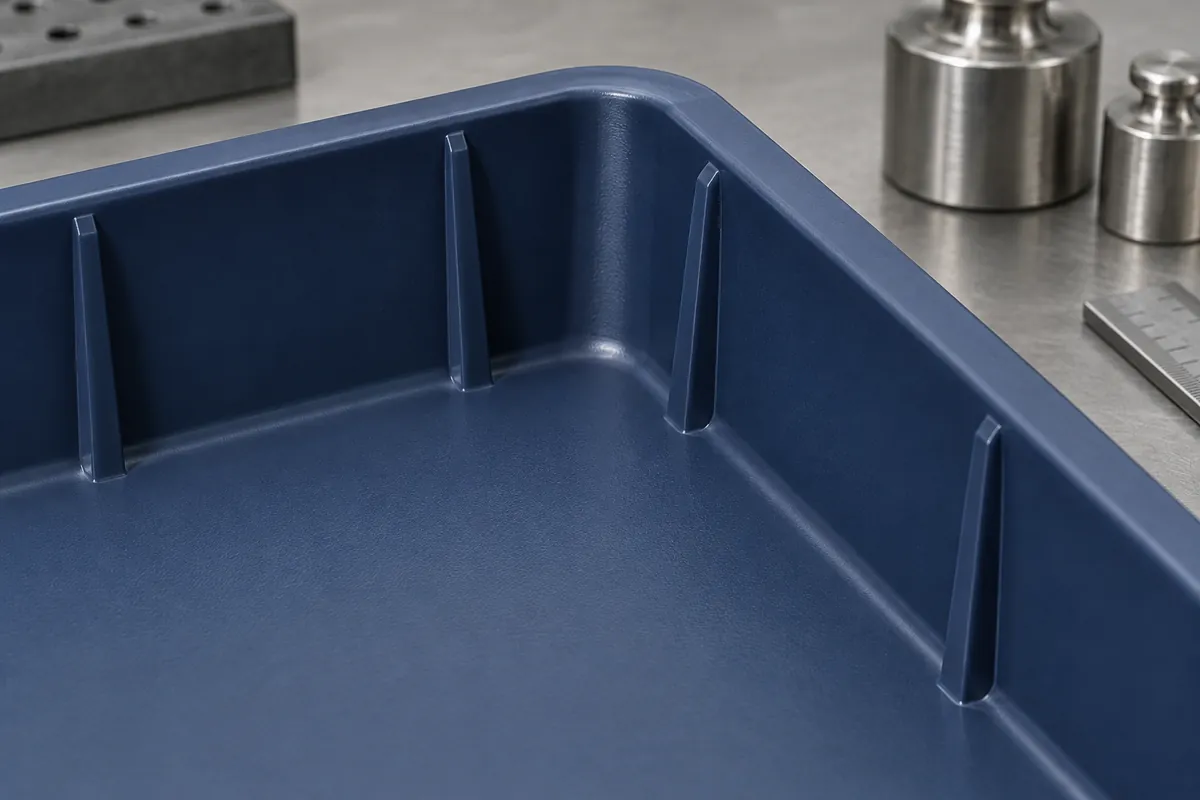
Ribs, perimeter sections and support points can change the structural response substantially. Simply increasing wall thickness may create molding problems without producing an efficient load path. Review the shape with the material candidate so the design does not rely on unsupported spans or thick local intersections.
Curbell's chemical-environment guidance includes both polyethylene and polypropylene. Its general material discussion is a screening resource; a compatibility decision still requires the actual chemical, concentration, temperature and exposure time.
Account for time, temperature and cleaning
A short room-temperature load test does not establish long-term stack stability. Plastic deformation can depend on time and temperature, so record the duration of loaded storage and the support arrangement. A tray that recovers after unloading may still have allowed unacceptable component movement while it was loaded.
Evaluate the intended wash process rather than a generic claim of chemical resistance. Detergents, rinse temperature, drying and repeated mechanical handling can affect the finished carrier. Include any label, marking or surface treatment if it will remain on the tray through that process.
Check low-temperature handling when it is part of the actual route. A grade selected for a warm production floor may not provide the same impact response in cold storage or transit. Likewise, a material's published heat-related property is not automatically an allowable loaded-tray operating temperature.
Treat additives as part of the compound
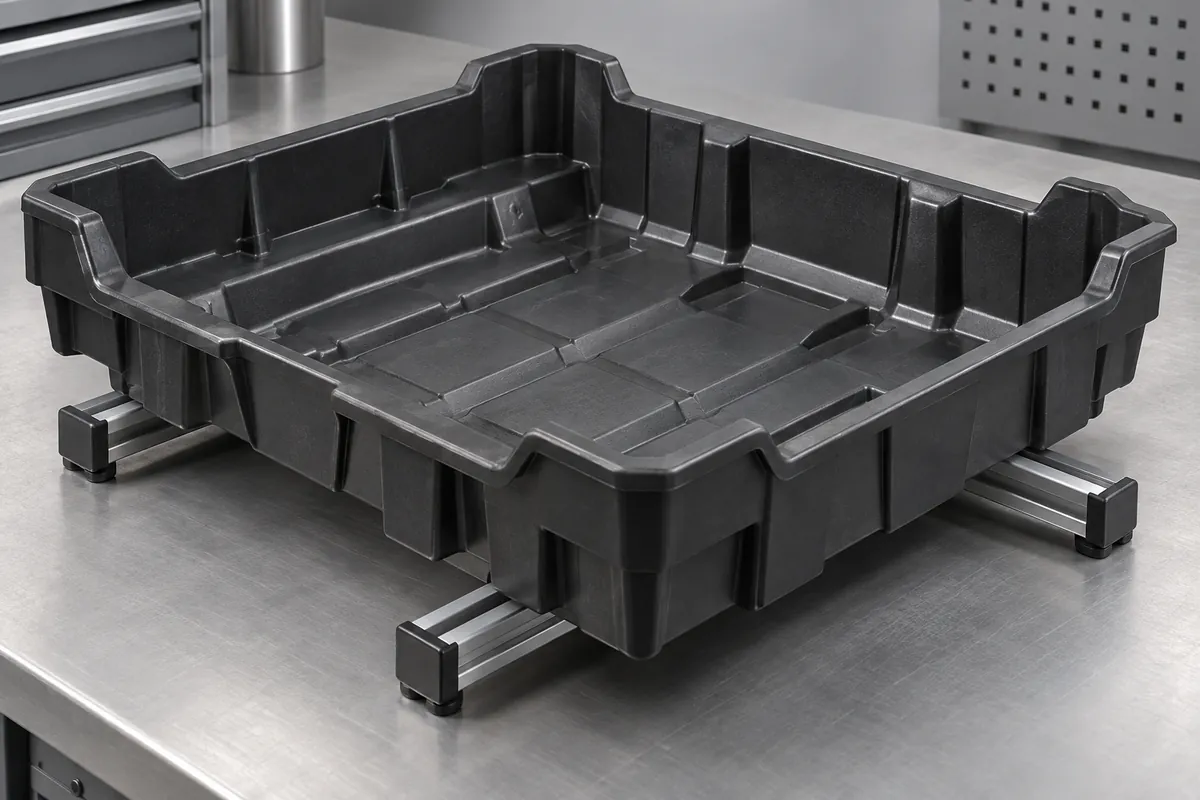
Conductive fillers, colorants and other additives can change processing and mechanical behavior. A PP base grade mixed with a specified masterbatch is a particular formulation, not necessarily a standard supplier grade with all of the base resin's published properties intact. Record the formulation and its approved supply route.
For ESD use, qualify the finished tray under an appropriate test method and conditioning procedure. Black appearance alone does not identify electrical behavior. Resistance measurements also do not automatically prove discharge shielding or low charging in every handling operation. Assign the required functions explicitly.
Control regrind or recycled-content allowances where they are part of the supply agreement. The issue is not that every such material is unsuitable, but that a change in source or composition can alter the approved behavior. Traceability and change notification should match the risks of the component-handling application.
Select from relevant molded samples
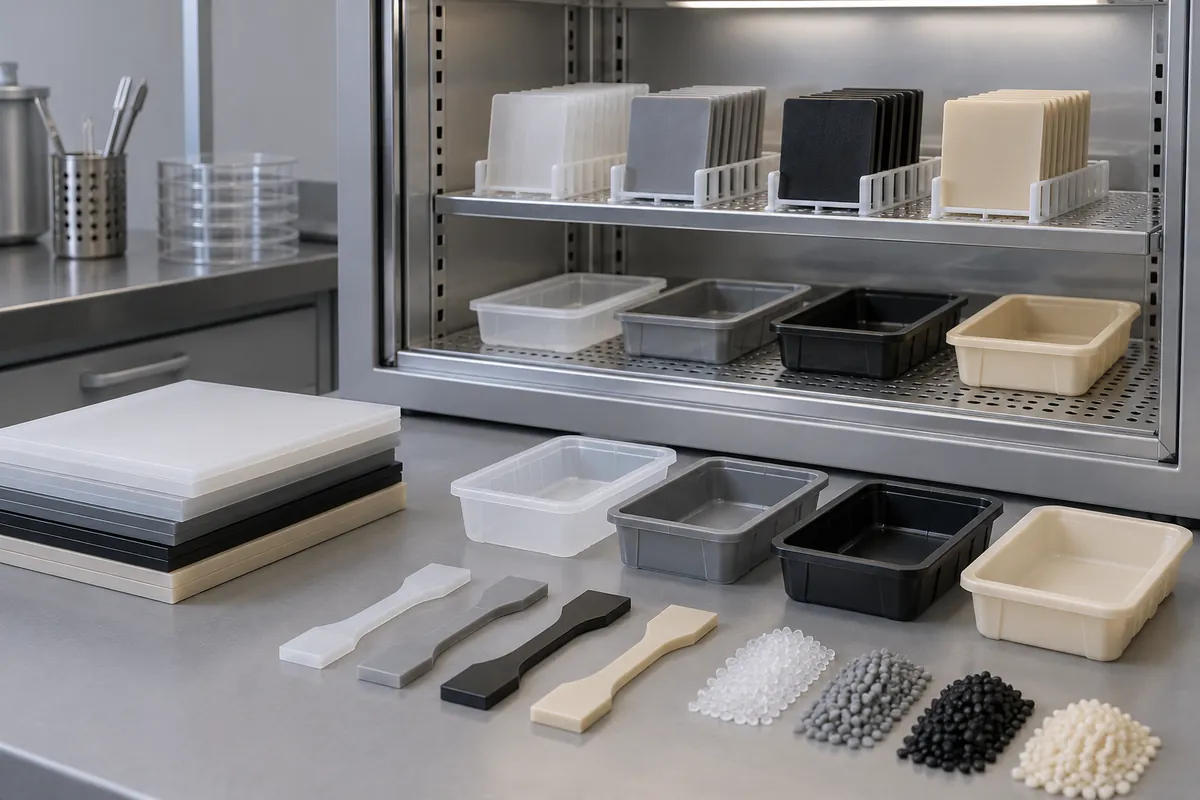
Evaluate dimensions, stack stability, loading and removal using representative components. Keep molding state and conditioning consistent across candidates. A comparison between a new PP tray and an aged HDPE tray cannot isolate the effect of resin without accounting for the different histories.
When the carrier must protect electronics, use the ESD evidence guide alongside the structural review. Choose the candidate that meets the combined requirements with a controlled formulation and feasible process, and retain the evidence supporting that particular configuration.
Discuss the component and its acceptance requirements
Explore our custom component trays and the related project case study. Send the current drawing, mating-part details, operating conditions and required quantities. We can review tooling, molding and inspection as a defined supply scope, with development samples and production approval kept separate.