
Product design illustrations. Final geometry, materials and acceptance criteria are project-specific.
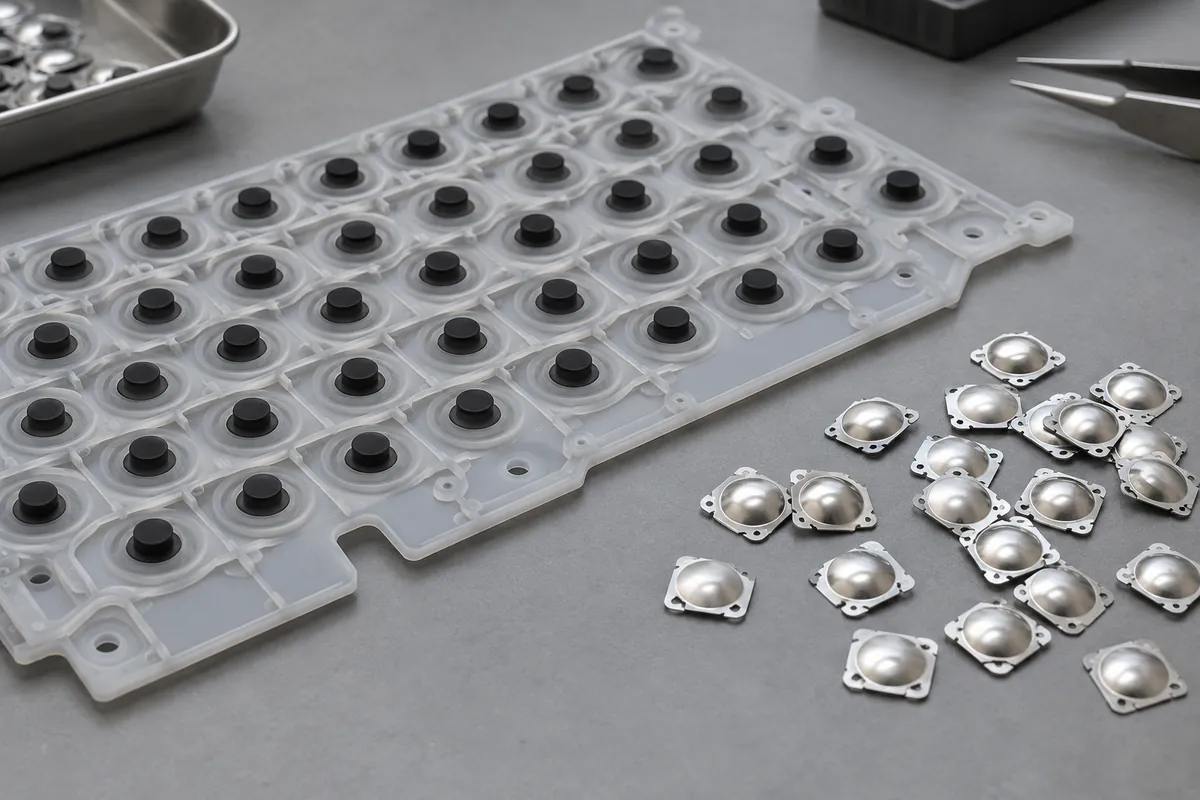
Carbon pills and metal domes solve different parts of a keypad problem. A carbon contact can close a circuit when a silicone key brings it onto a board pattern. A metal dome can provide both a snap action and a conductive path. Choosing between them requires the electrical interface and the desired user response, not only the molded appearance.
Neither architecture is automatically superior. The useful comparison is between complete switching stacks that meet the same application requirements. Include the silicone component, board contact, dome retention where applicable, support structure and the inspection needed to approve the finished assembly.
Identify which part creates the tactile response
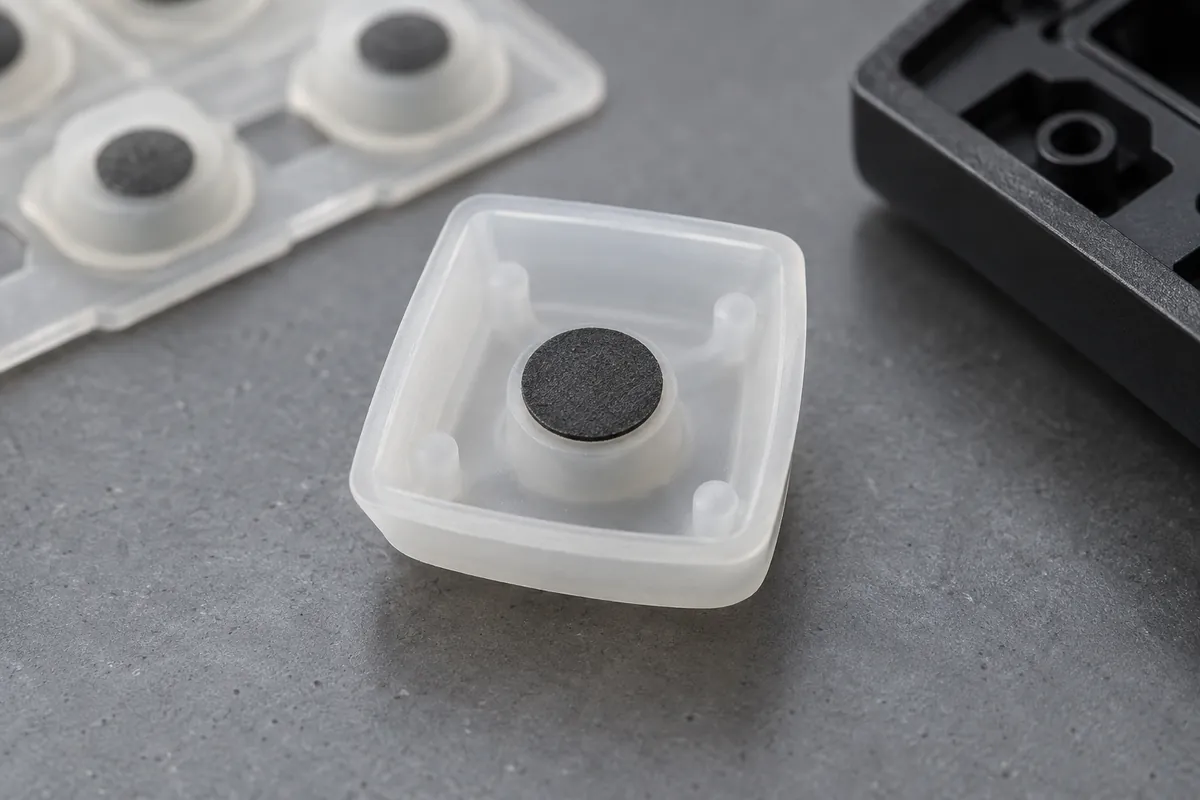
In a web-based silicone key, the geometry around the pusher can provide the force change felt during depression. A conductive pill on the underside supplies the contact interface. Altering the web to change tactile feel can also change the force maintained at the contact, so the mechanical and electrical reviews cannot be separated completely.
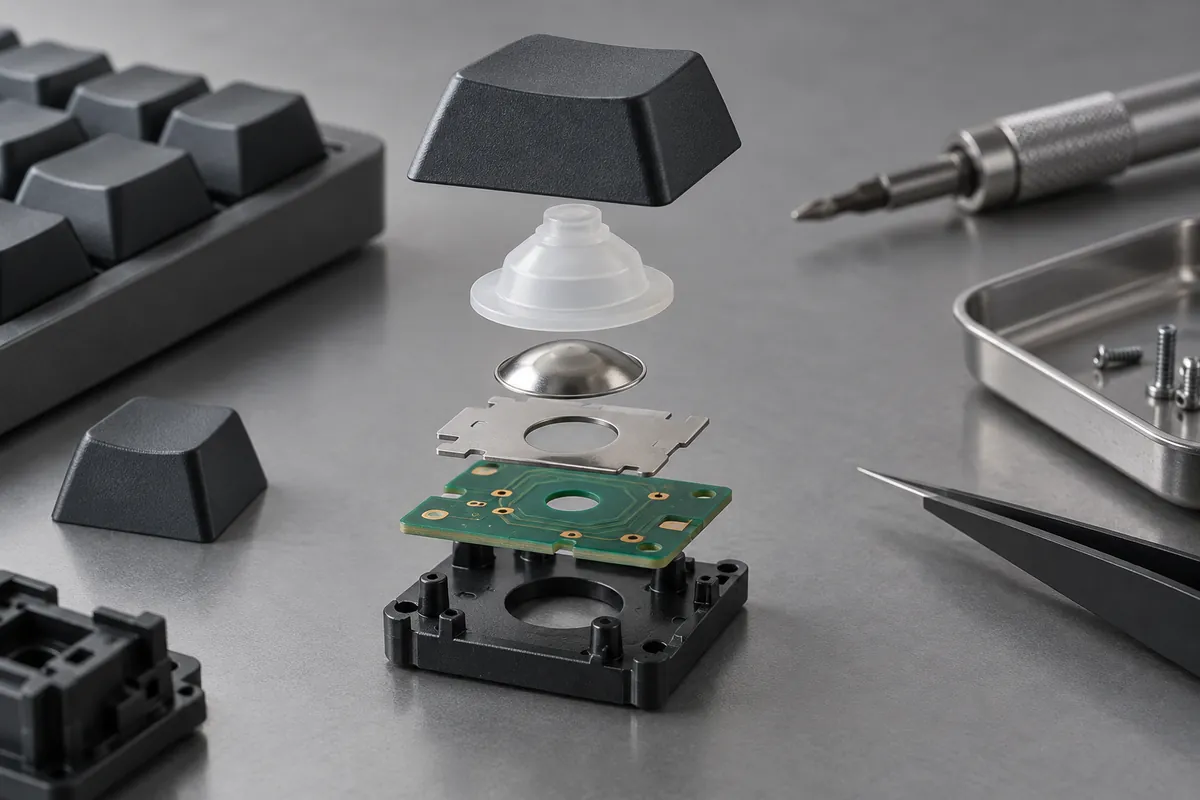
With a metal dome, the silicone may act mainly as an actuator or protective surface. The dome contributes its own force and travel characteristics. Extra silicone preload, an incorrectly sized pusher or a support gap can change the assembled response from the dome supplier's test condition. Evaluate the complete stack rather than quoting the dome in isolation.
SiTech's explanation of silicone key operation describes conductive contact options. It is useful background for identifying the mechanism; the chosen material and electrical performance still need application-specific documentation.
Define the electrical contact requirement
State the circuit's switching duty and the method used to measure contact resistance. Probe placement, contact loading and settling time should be controlled. A reading taken with an arbitrary hand-applied load is difficult to compare with an assembled switch operating near its minimum required force.
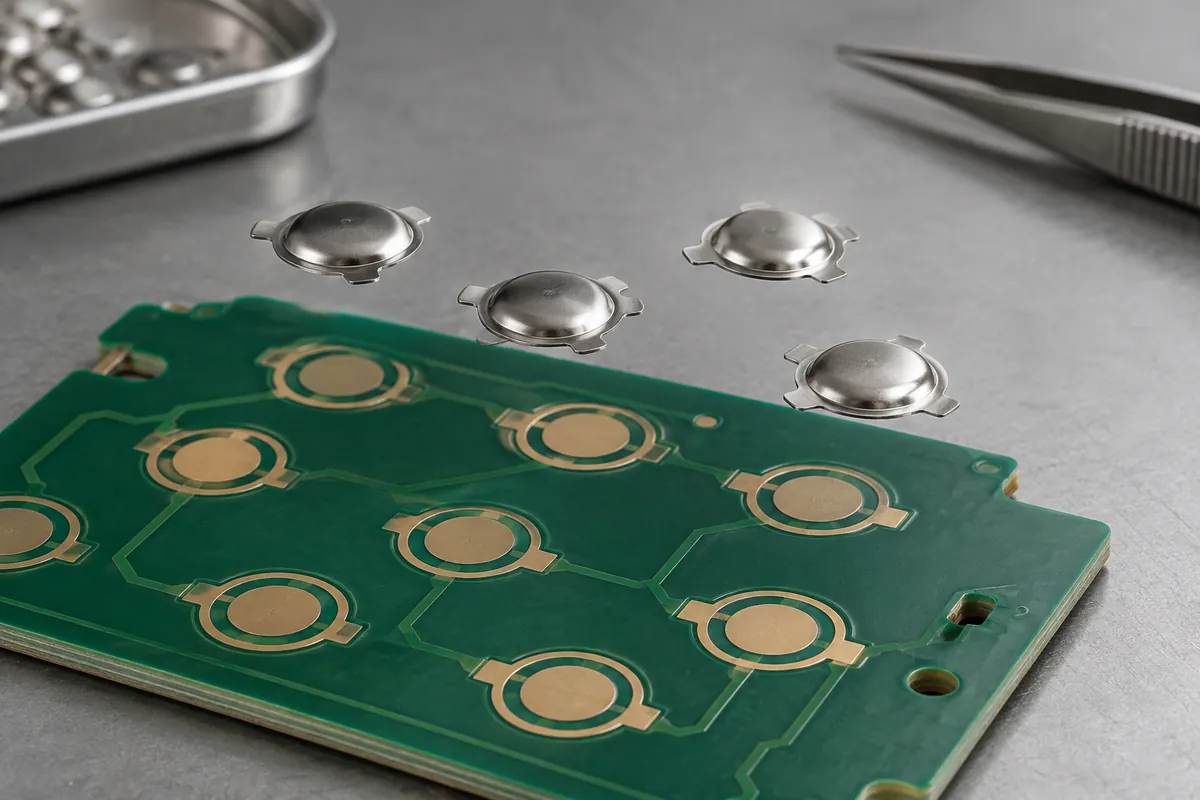
Review the board finish and pattern with the contact supplier. A surface intended for one switching system should not be assumed suitable for another. Contamination, cleaning residues and wear can matter at the interface even when the silicone part passes visual inspection. Keep the board revision attached to the qualification record.
Consider how the controller recognizes closure and release. Mechanical bounce or intermittent contact must be evaluated with the actual sensing approach, but software filtering should not conceal an uncontrolled mechanical interface. Agree which electrical checks belong to the component supplier and which remain with the electronics team.
Compare assembly and maintenance consequences
A pill incorporated into a keymat can simplify placement of the flexible component, but the bonding and contact surface need control. Loose domes introduce orientation and retention considerations. A dome sheet can manage placement while adding another layer whose alignment, venting and condition influence operation.
Draw the full stack in section. Mark the mechanical stop, pusher clearance and locating features. Check that the key reaches electrical closure without being forced beyond the permitted movement. Also verify that the return path remains clear when the product is fastened and exposed to its intended environment.
For a serviceable panel, decide which parts are replaced together. A new keymat over a worn or contaminated switching interface may not restore the qualified behavior. The service specification should identify compatible revisions and any reassembly check, especially where incorrect alignment could produce an unintended command.
Approve evidence from the intended configuration
Compare initial force and resistance, off-center operation where relevant, repeated use and exposure checks. Keep sample counts and failure definitions explicit. A claim about the life of a catalog dome does not establish the life of every silicone-covered assembly using that dome.
For an early concept, prototype both candidates with representative supports and electronics before committing to a cosmetic tool. The force and travel guide helps organize that comparison. Select the architecture whose assembled evidence and supply controls fit the requirement, rather than the one with the more attractive isolated number.
Discuss the component and its acceptance requirements
Explore our custom silicone keypads and the related project case study. Send the current drawing, mating-part details, operating conditions and required quantities. We can review tooling, molding and inspection as a defined supply scope, with development samples and production approval kept separate.