
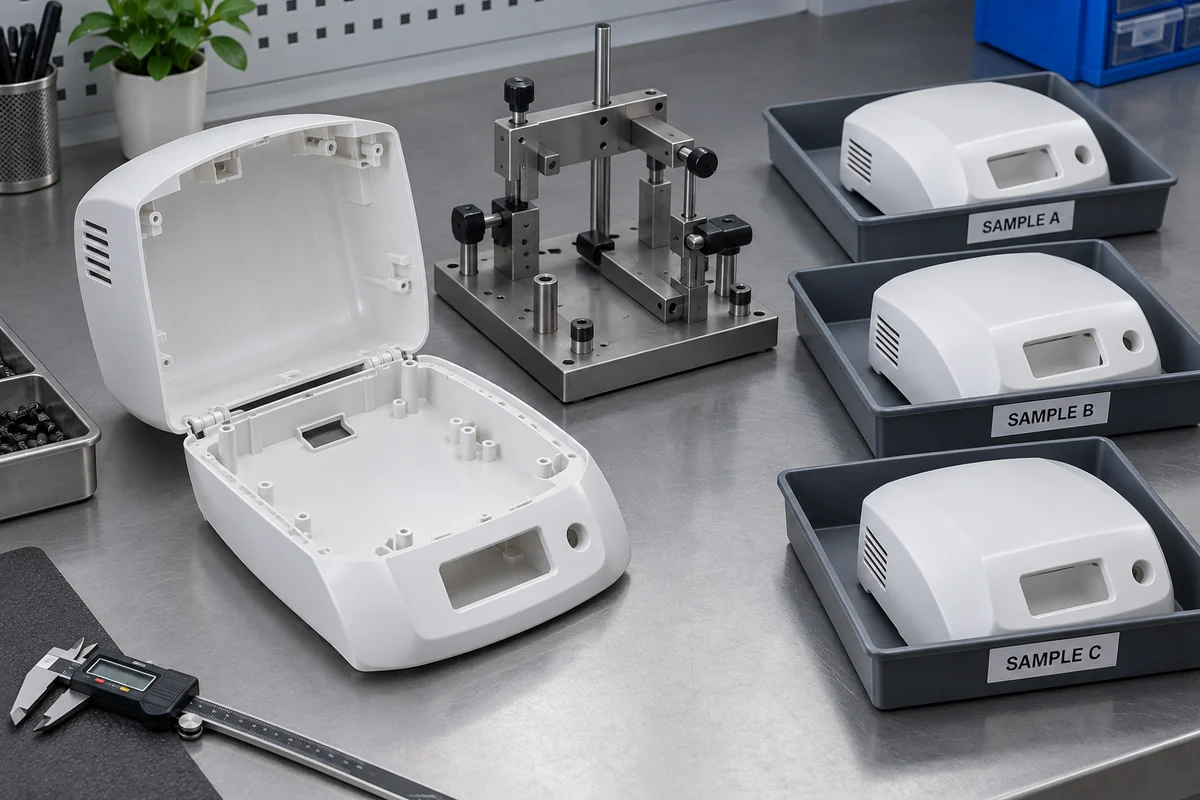
Product design illustrations. Final geometry, materials and acceptance criteria are project-specific.
A first-article report is valuable only when it is clear which configuration the report describes. A housing can carry the correct part number while using a new color formulation, a repaired tool insert or a changed coating preparation. If those details are missing, the next production lot may be compared with an approval that no longer represents it.
For custom medical-equipment housings, keep the component acceptance record focused and traceable. It should connect the drawing, material, manufacturing route, samples and inspection results. It should not imply that a dimensional report is a complete device validation, or that a certificate held by another organization automatically applies to the supplied part.
Freeze the proposal that is actually being sampled
Start with the released drawing and CAD revisions, including any approved DFM changes. Identify the exact resin purchase specification and color, the mold and cavity configuration, and secondary operations. If trial parts are made with a temporary process or a different material, mark that difference and state what the samples can and cannot approve.
The enclosure RFQ guide explains why these decisions belong in the supply scope. Bringing them into the first-article record prevents a common handover gap: purchasing believes it approved production, while engineering only intended to evaluate one prototype feature.
Give each result a sample identity
Choose identifiers that link the part to its trial or production lot and, where relevant, cavity. Preserve the link through coating and inspection. A report containing five readings is difficult to investigate if nobody can tell whether they came from five parts, five locations on one part or a mixture of different trials.
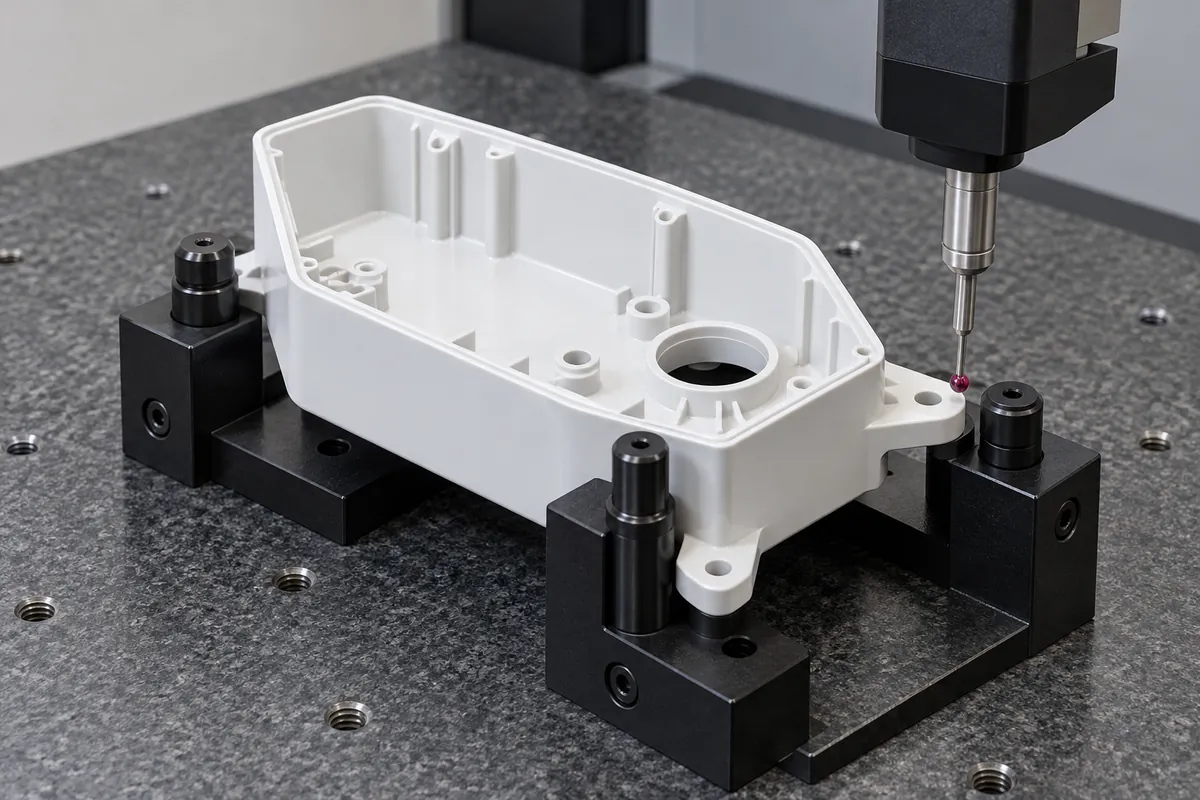
Keep the inspection characteristic, method, sample state and result together. A flatness value measured with a shell clamped in a nest may answer a different question from a loose-part measurement. The method should follow the agreed requirement rather than whichever setup produces the most favorable number.
Separate acceptance dimensions from the wider evaluation
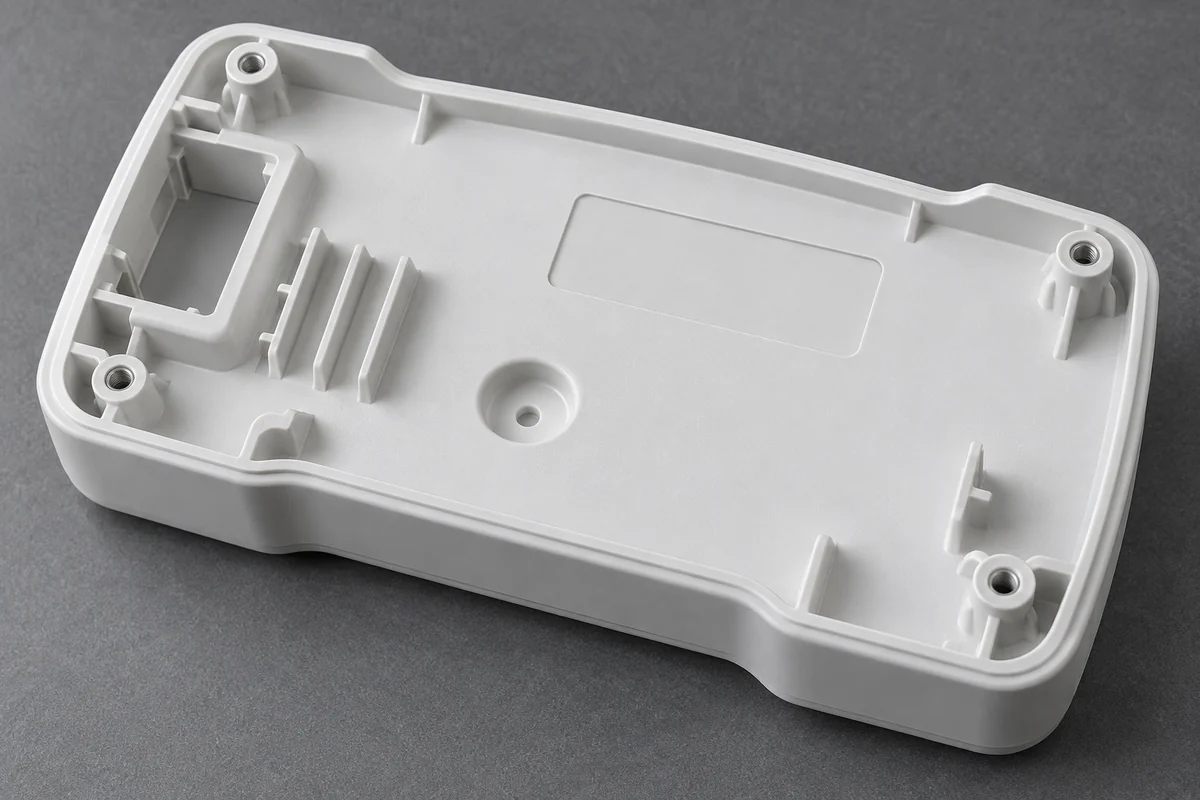
A component report can include display-seat dimensions, mounting references and seam features. An assembly check then evaluates the specified counterparts and fastening conditions. Keep those records distinct so that a later failure can be investigated at the correct level rather than automatically blamed on the plastic drawing.
Do the same for appearance and coating. Link the agreed color reference and inspection method, and identify the coating system and test locations if coated parts are supplied. See the appearance acceptance guide for the difference between a numerical color result and a complete cosmetic judgment.
When qualification, capability studies or additional quality-system documentation are required, specify them as separate deliverables. A short first-article sample set does not establish a long-term defect rate or process capability. The sampling basis and statistical purpose should be agreed before a number is promised.
Record open requirements instead of hiding them in approval
A part may pass dimensional and visual checks while cleaning exposure or equipment-level testing is still pending. State those exclusions directly in the release decision. That does not make the dimensional work less useful; it prevents a limited approval from being used as evidence for a requirement it never assessed.
FDA's device-specific reprocessing overview is one reminder that component manufacturing and the device's use-related validation are different responsibilities. A molding supplier should provide the agreed evidence for its scope, while the device manufacturer determines and completes the applicable equipment requirements.
If a customer authorizes a temporary deviation, retain its scope, affected quantity and expiration or closure condition. Do not silently revise the inspection limit to make the lot appear compliant with the original drawing. An explicit deviation is easier to manage than contradictory records sharing the same revision identifier.
Make changes reviewable after the first order
Define which changes need notification or renewed approval: resin substitutions, color changes, mold repair, cavity changes, production transfer and secondary-process changes are examples to discuss. Their significance depends on the part and agreed controls. A change record should explain the affected requirement and the evidence needed to accept it.
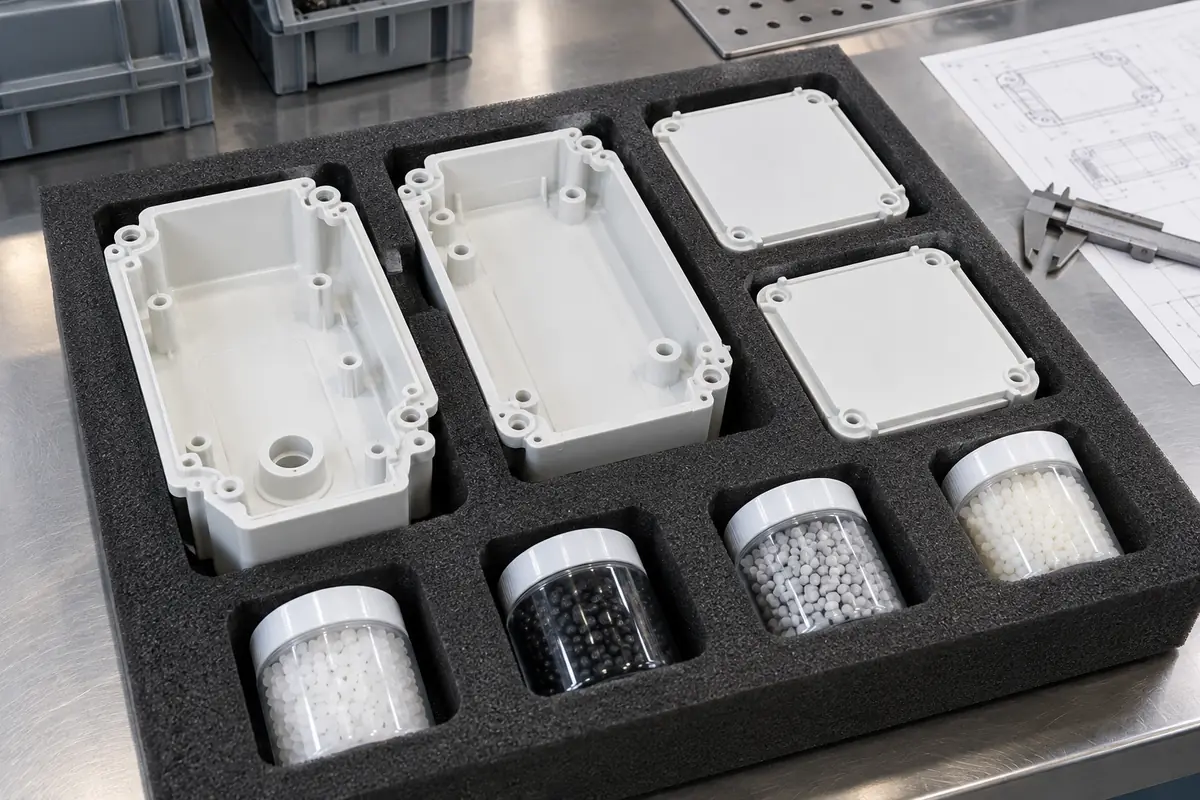
Finally, keep packaging and lot segregation linked to the released configuration. Returned samples, retained references and shipment records should be identifiable without exposing customer-confidential information. Traceability does not guarantee performance by itself, but it gives the team a usable path from a field observation back to the part and process that produced it.
Discuss your custom enclosure
Explore our custom injection-molded medical device enclosures and the tabletop analyzer housing project. Share the controlled drawing, intended use, quantities and acceptance requirements. Component supply and finished-device qualification should have clearly assigned responsibilities.