
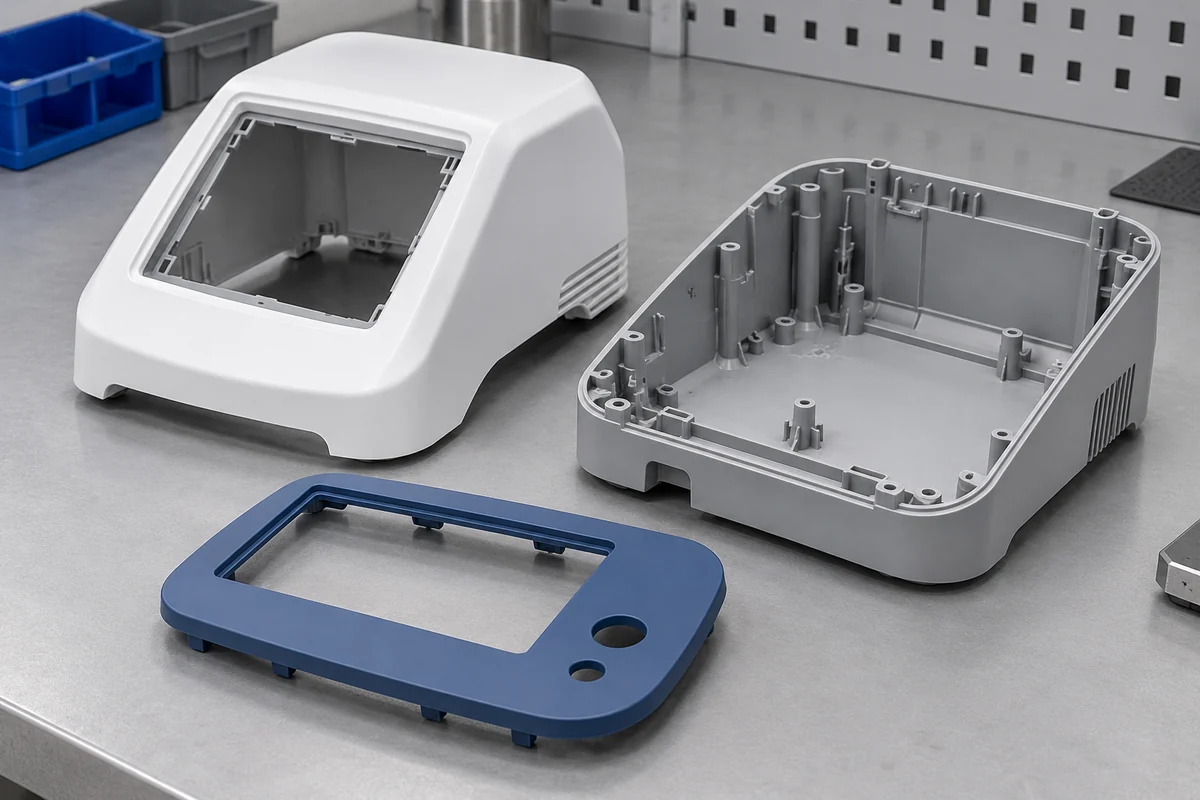
Product design illustrations. Final geometry, materials and acceptance criteria are project-specific.
A quotation for a medical device enclosure can mean a bare molded cover, a painted housing, or a tested assembly containing a display and electronics. Those are different deliverables. Comparing their prices without defining the boundary can make an apparently inexpensive proposal expensive to finish, inspect or qualify. The most useful RFQ therefore begins with what the supplier must actually deliver.
This guide concerns custom external housings for non-implantable equipment, such as tabletop instruments and associated control units. It does not treat a plastic shell as a finished medical device. The device manufacturer must determine the applicable requirements and intended use; the molding quotation should show how the component fits within that plan.
Separate the enclosure from the equipment around it
Name each supplied component and its revision. An upper cover may be quoted independently, while a second proposal includes the lower tray, display bezel and fasteners. State which mating parts will be supplied for trials and who owns their tolerances. Otherwise, a supplier may approve its own cover dimensions without checking the assembled gap that matters to the customer.
Also distinguish tooling ownership, molded samples, repeat production and secondary operations. Color compounding, coating, printing, inserts and packaging can require separate setup and approval. A quotation should identify these operations explicitly, including any partner involvement, instead of hiding them inside a broad description such as medical-grade manufacturing.
Describe the environment without overclaiming the requirement
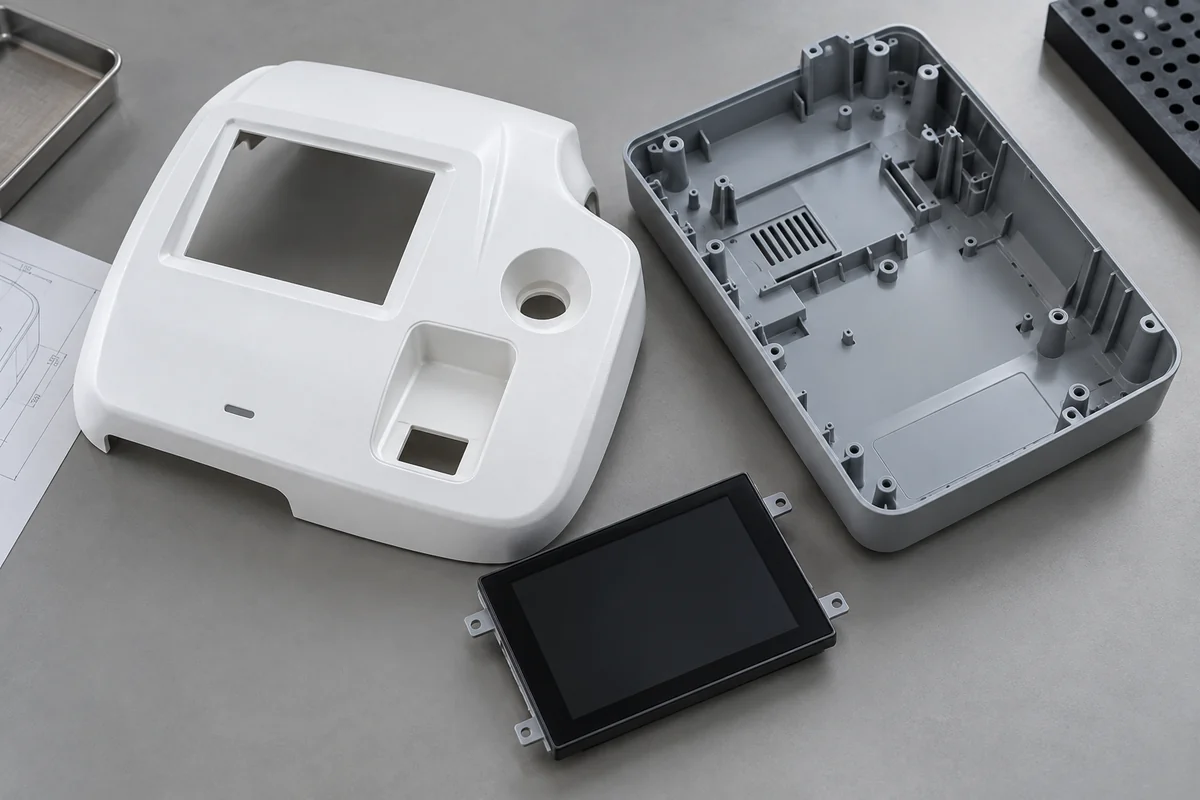
Explain where the housing sits, who touches it and how it is cleaned. Non-implantable does not automatically mean that no biological, electrical or cleaning-related requirements apply. Conversely, it does not mean every external panel needs the same evidence as a patient-contacting component. Ask the device team to define the actual contact and exposure conditions before selecting the material.
A statement such as suitable for hospital use is too broad to qualify a resin. Identify the cleaners, concentrations, application method and expected service exposure. Add heat, mechanical loading and any relevant disassembly. The disinfectant-resistance planning guide explains why a material-screening result and a complete housing evaluation answer different questions.
FDA's overview of reprocessing reusable medical devices emphasizes device-specific regimens. That guidance is not a reason to invent a universal cleaning cycle for all external instrument covers. Use the device's intended cleaning instructions as an input to the engineering review.
Mark the features that control function and appearance
Provide the controlled drawing as well as CAD. Mark display seats, mounting datums, connector openings, seam edges and cosmetic zones. Explain whether a dimension is checked on the loose part or after assembly. The mold designer can then review draft, gate location, ejection and side actions while protecting the features that actually establish fit.
A larger display opening, for example, may simplify clearance but leave insufficient overlap for the bezel or gasket. A relocated rib may reduce a local thick section but interfere with a board connector. These are interface decisions, not changes that should be made solely to achieve an attractive molding quote.
Make the acceptance package part of the price
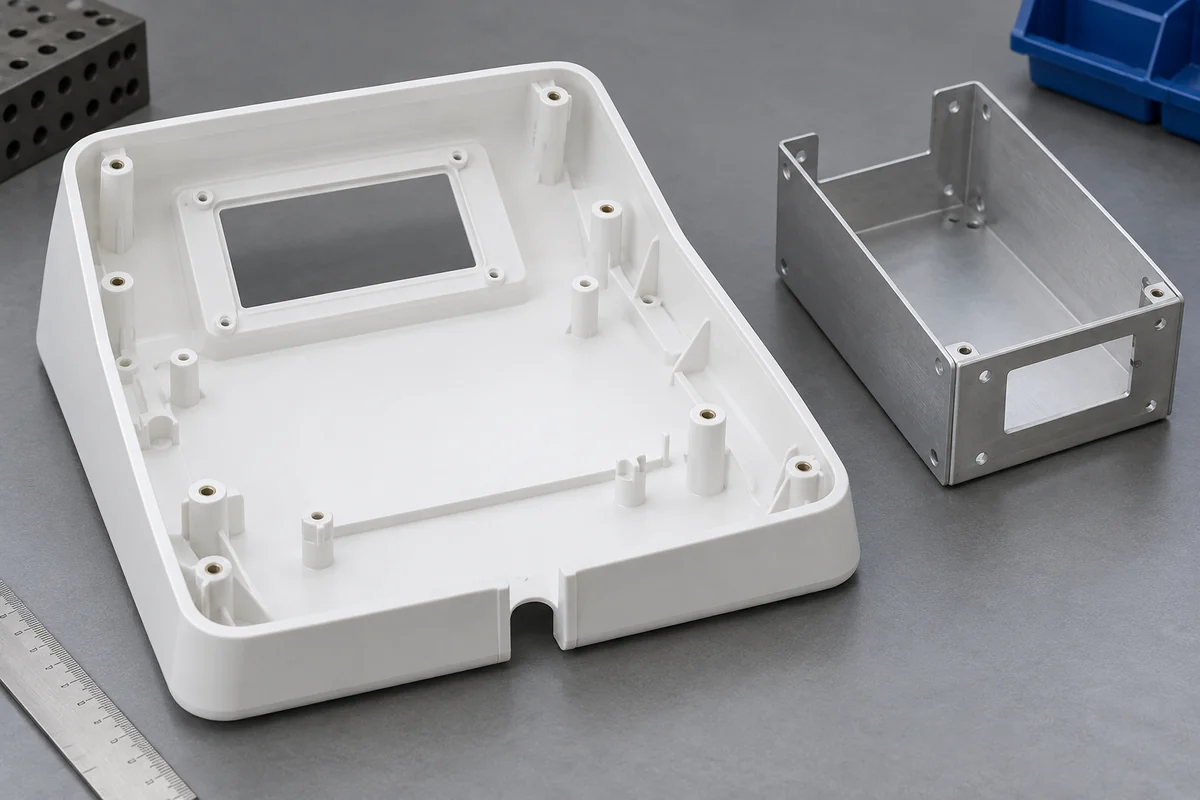
Agree the first-article dimensional report, appearance samples and assembly checks before tooling. If coating is included, name the coating system, masking requirements and the component-level tests requested. Keep device-level tests separately assigned. A coating resistance measurement does not establish electromagnetic compatibility of an instrument containing seams, openings and cables.
Specify sample identities and how drawing changes will be handled. A polished prototype approved for appearance is not automatically the production baseline if the tool texture, resin formulation or assembly method later changes. The first-article and traceability guide connects each approval to the configuration that was actually inspected.
Distinguish forecasts from purchase commitments
Give the trial quantity, first-order quantity and expected repeat demand as separate figures. That lets a supplier discuss cavity count and production planning without treating an optimistic annual forecast as a firm order. Ask how the proposal handles replacement inserts, maintenance, color changes and a transfer of tooling if those responsibilities matter to the program.
Finally, describe how cosmetic parts will travel. Protective film, separated trays and coating cure time can affect packing and release. A quote-ready RFQ is not the longest possible checklist: it is a shared explanation of the part, its interfaces and the evidence required to accept delivery. Unresolved decisions should remain visible rather than becoming undocumented supplier assumptions.
Discuss your custom enclosure
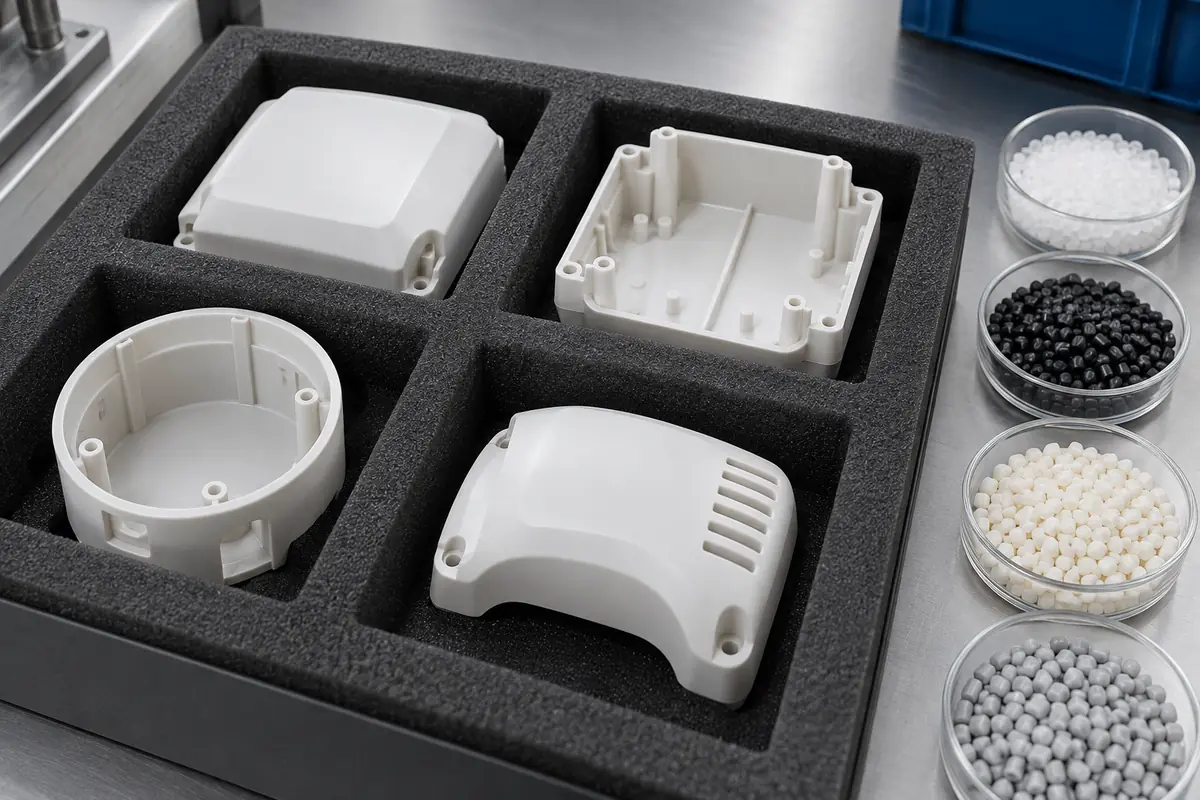
Explore our custom injection-molded medical device enclosures and the tabletop analyzer housing project. Share the controlled drawing, intended use, quantities and acceptance requirements. Component supply and finished-device qualification should have clearly assigned responsibilities.