
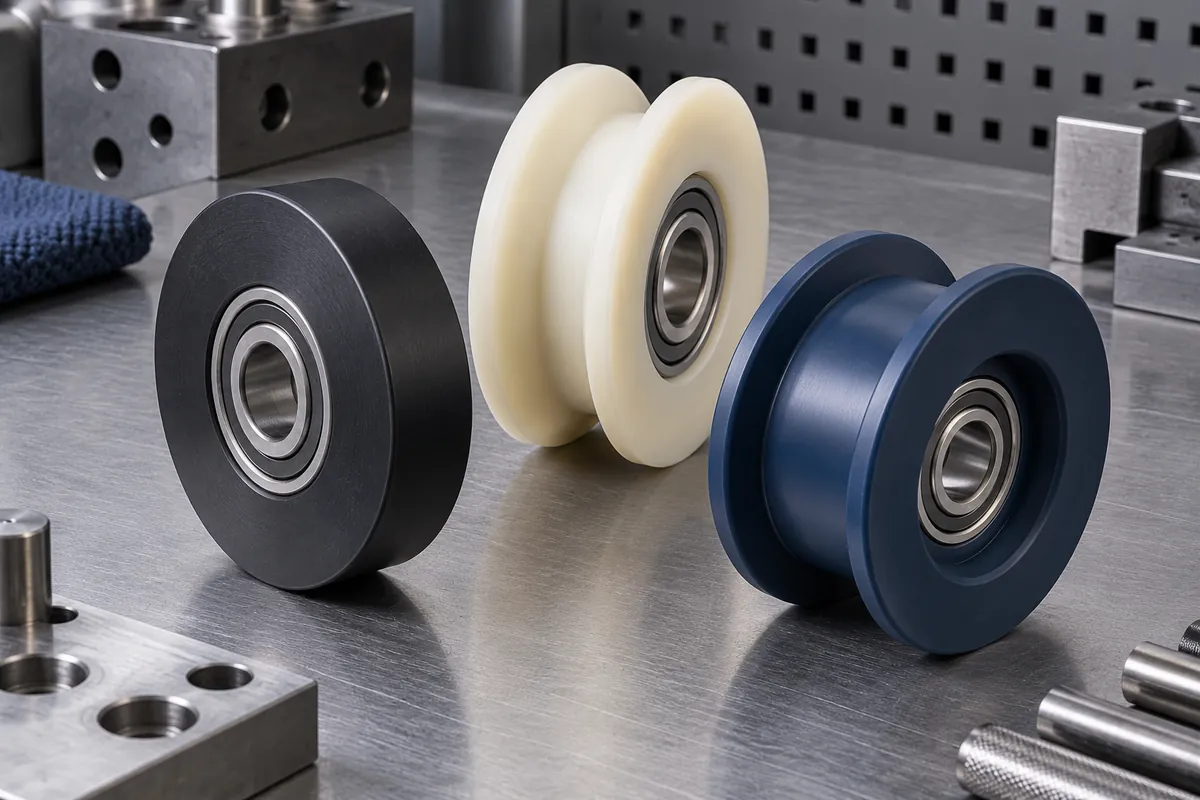
Product design illustrations. Final geometry, materials and acceptance criteria are project-specific.
A plastic pulley quotation can cover a molded wheel, a wheel with a purchased bearing, or an inspected assembly ready for installation. Those are different deliverables. Before comparing prices, describe the boundary of the purchase. Otherwise a low unit price may simply exclude bearing procurement, assembly, runout inspection or the trial work needed to establish a repeatable fit.
First check whether a standard catalog pulley meets the application. Custom injection molding becomes relevant when the running profile, available space, mounting arrangement or repeat-volume requirement justifies dedicated tooling. A photograph of a similar wheel helps communicate the concept, but it does not establish a specification or identify a safe replacement for an existing drive component.
Define the contact and load path
Identify whether the component guides a belt, supports a moving strip, redirects a cord or transmits torque. State the mating component and where contact occurs. A smooth backside idler is not equivalent to a toothed drive pulley, even if the outside dimensions match. Send the relevant assembly view so the supplier can see flange clearance and alignment constraints.
Provide the applied load, speed, duty cycle and environment as application requirements, not as assumptions for the molder to guess. Include starts, stops, reversals and any side loading. The belt tension alone may not describe the load acting at the bearing. The equipment designer should define the forces and qualification criteria appropriate to the complete assembly.
Connect the drawing to the installed part
Give the drawing revision and mark the surfaces that locate the pulley. Define the running diameter, groove or tread profile, width and required relationship to the bearing axis. Use a consistent datum scheme. A tight outside-diameter tolerance cannot substitute for a requirement controlling how that surface runs after the bearing is installed.
State how dimensions will be assessed: free molded part, conditioned part or completed bearing assembly. These states may produce different observations. A supplier measuring a loose wheel on an expanding mandrel is not necessarily checking the same relationship as a customer measuring it on the production shaft. Agree the inspection setup before approving the tool.
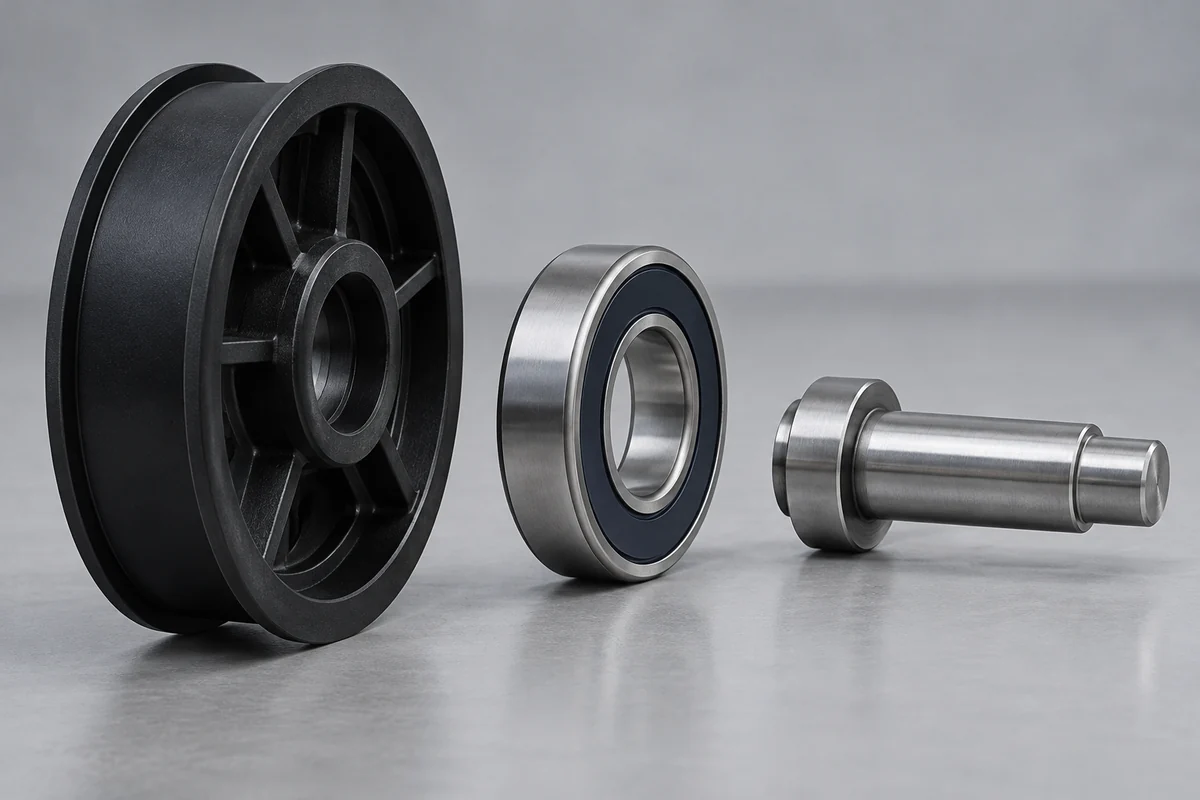
For a purchased bearing, specify the manufacturer or approved alternatives, full designation, seal arrangement and traceability requirements. Identify who purchases and inspects it. Similar dimensions do not establish identical seal drag, lubricant or application limits. If the bearing will be insert molded, review its exposure to the molding process as a separate engineering question.
Ask for an explicit material proposal
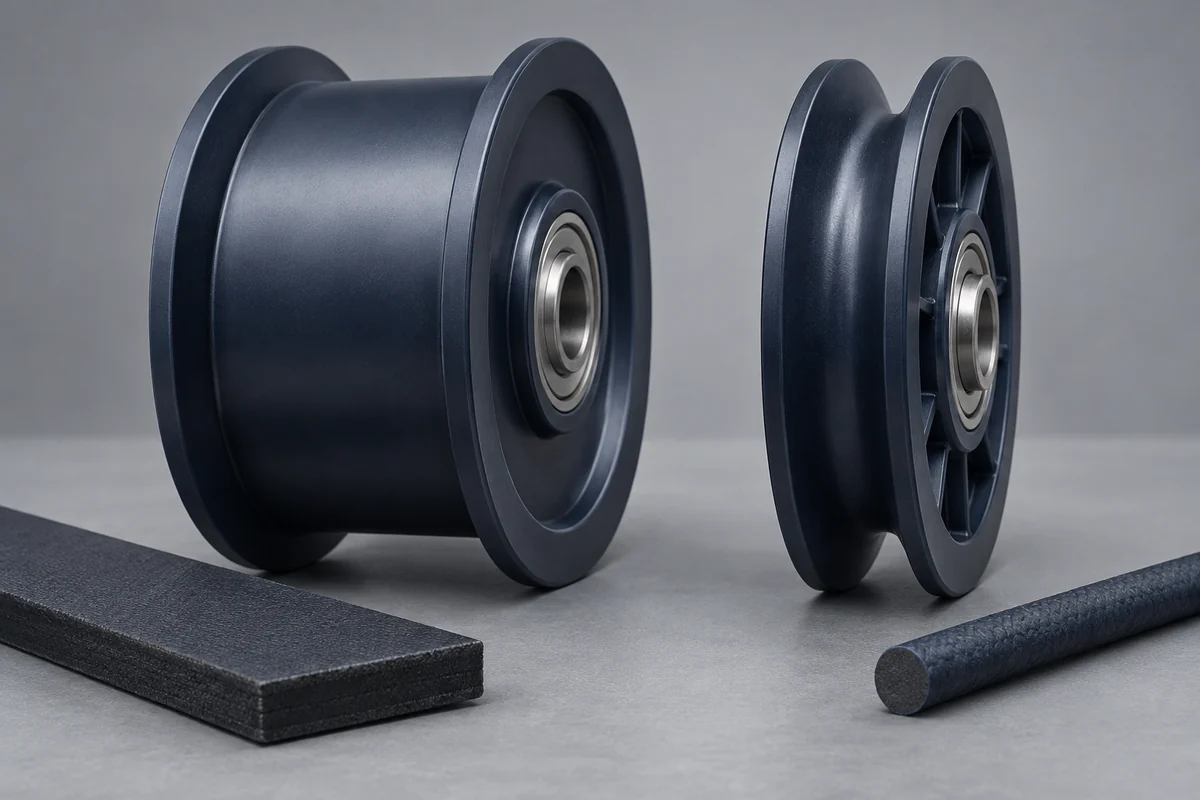
Name the approved compound when one exists. Otherwise provide the functional requirements and request grade-specific candidates. Nylon and acetal describe material families with many formulations. A generic request for a self-lubricating plastic does not identify the additive package, moisture condition or counterface against which the part must perform.
Our nylon versus acetal guide explains why a material comparison needs the same service conditions. Allow alternatives only through an agreed review. Changing the compound may affect the tool compensation, fit or validation plan, so it should not be treated as a purchasing substitution based only on color or nominal family name.
Separate development from recurring supply
List the trial quantity, first order and annual forecast separately. Tool cavity count and loading automation may depend on the forecast, while sample inspection effort depends on the trial objectives. Ask for tooling ownership, maintenance responsibility and the included correction stages. A production forecast is not the same as a guaranteed purchase quantity.
Compare molded-in bearing retention with a separately assembled bearing when both are feasible. The bearing integration guide discusses the trade-off between molding exposure and assembly control. Ask the supplier to identify the operations included in each proposal and the evidence required to accept the completed wheel.
Specify packaging that protects functional surfaces and preserves lot identity. Parts dumped into a bulk container may be acceptable for one application but unsuitable where cosmetic damage, contamination or mixed bearing lots would create a problem. Describe the actual requirement instead of relying on a general instruction to pack carefully.
Make acceptance measurable
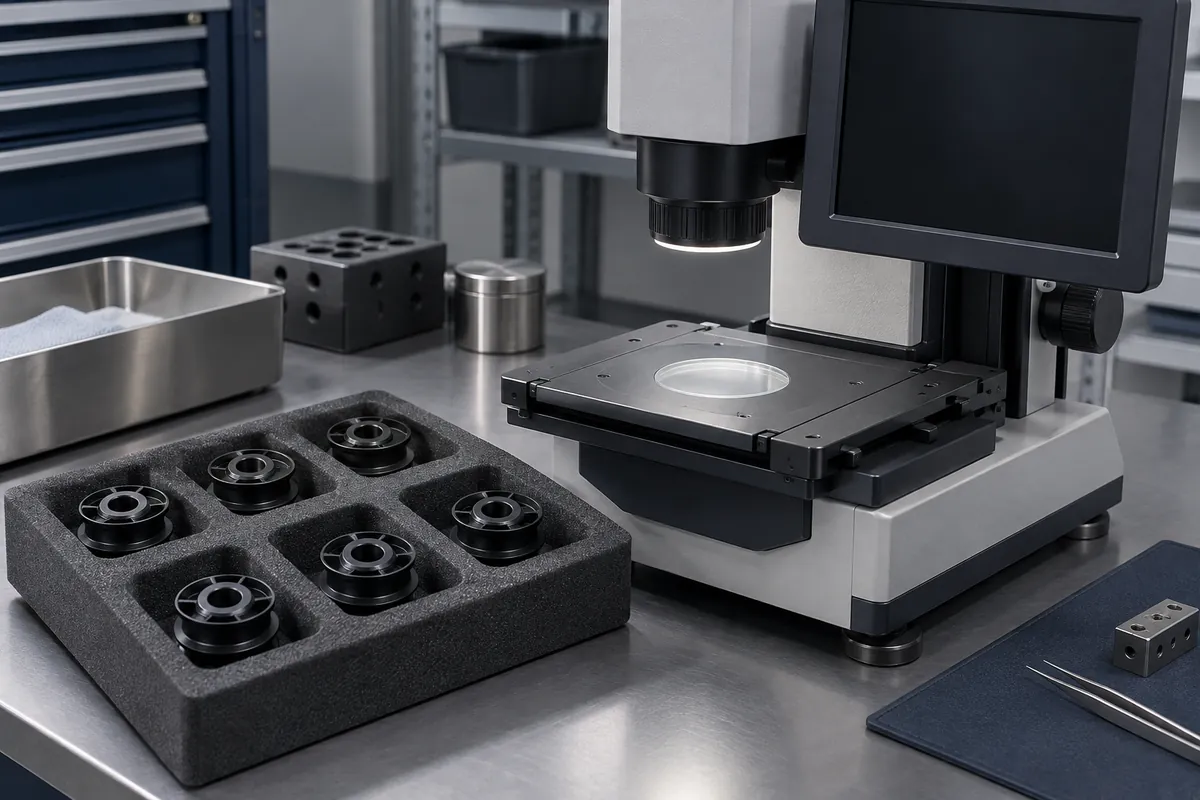
Separate dimensional approval, free rotation, loaded operation and wear evaluation. Each answers a different question. Define samples, fixtures and pass criteria for the tests you need, and identify customer-owned qualification work. A short unloaded spin check should not be presented as proof of service life, load capacity or suitability for an entire machine.
A useful RFQ ends with a list of fixed requirements and open engineering decisions. The supplier can then price a defined contribution rather than promise an unspecified result. Keep those assumptions with the approved quotation so later drawing, bearing or material changes trigger the appropriate technical and commercial review.
Discuss a defined pulley application
Explore our custom injection-molded plastic pulleys. Send the component drawing, mating belt or track, bearing specification and acceptance requirements to review tooling, molding and inspection as one supply scope.