
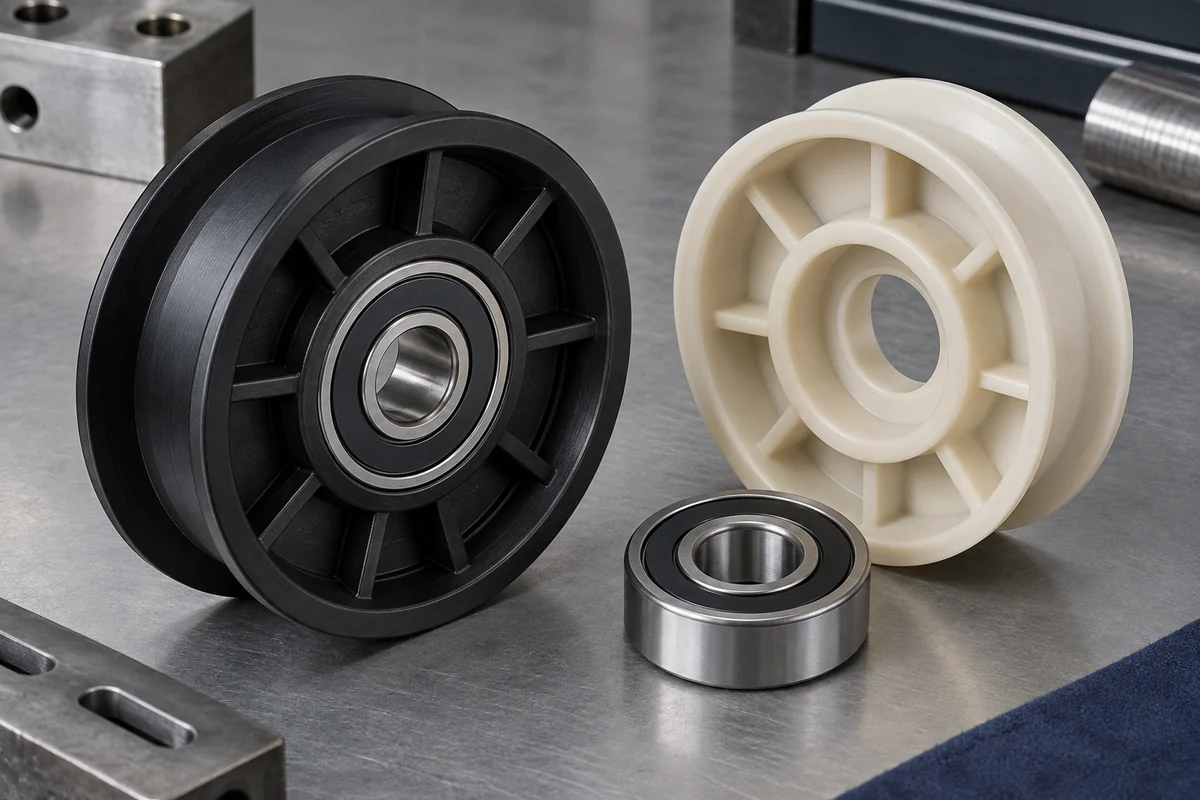
Product design illustrations. Final geometry, materials and acceptance criteria are project-specific.
A plastic pulley with a bearing can be manufactured by molding around an insert or by installing the bearing into a molded wheel afterward. Neither route is automatically superior. Each moves the engineering risk to a different set of interfaces and process controls. The choice should follow the bearing specification, load path, geometry and acceptance requirements of the completed assembly.
Start with the reason the bearing is there. It may support continuous rotation, intermittent movement or a lightly loaded guide. The outside ring must remain adequately located while the intended rotating elements remain free. Holding the bearing securely and allowing it to function are separate requirements; excessive constraint can solve one while compromising the other.
Review molding exposure before selecting an insert route
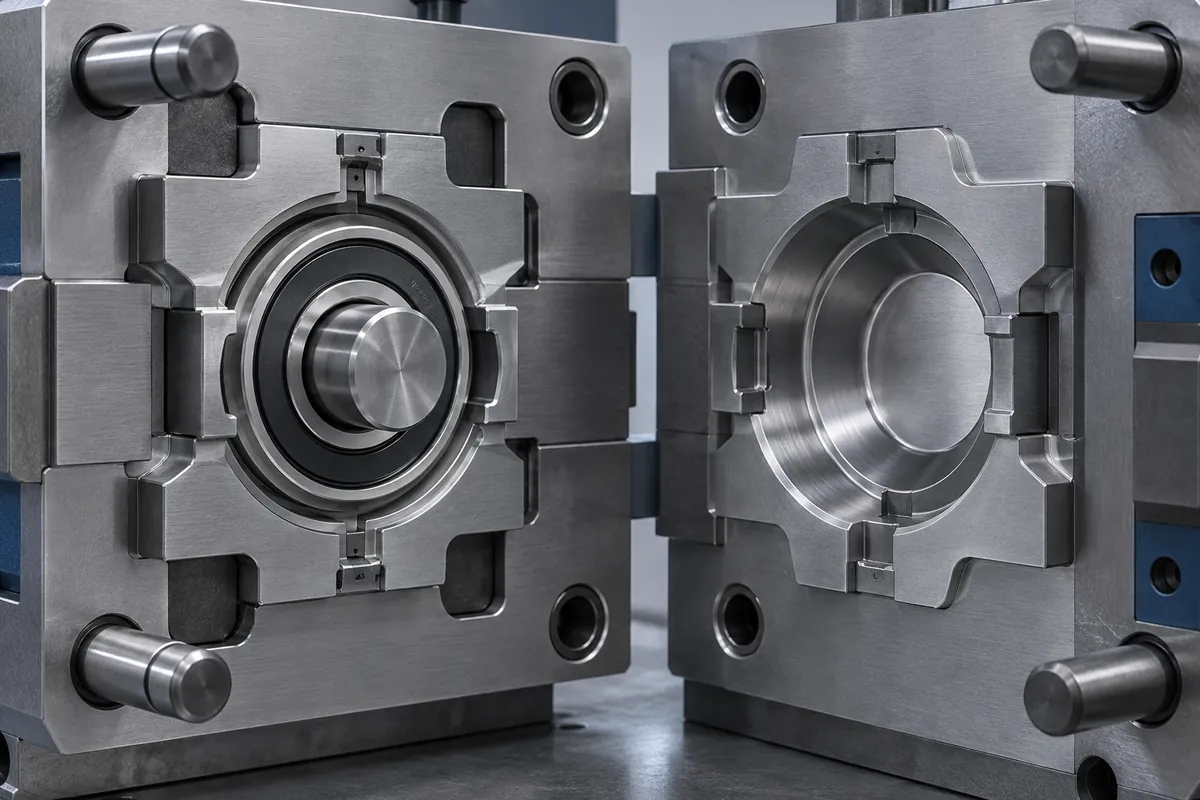
Insert molding places the bearing in a tool before polymer enters the cavity. That makes bearing location, sealing of the cavity and loading consistency part of the molding process. Review the permitted temperature, pressure exposure and handling with the selected bearing supplier. A designation and outside diameter alone do not demonstrate that seals and lubricant will tolerate the proposed process.
The tool must locate the insert without allowing plastic into areas that need to remain clear. Identify the shutoff surfaces and how variation in the purchased bearing affects them. A robust concept needs more than a close-fitting hole in the mold. Include the insertion sequence, support and checks for a misloaded or damaged bearing.
Separate retention from distortion
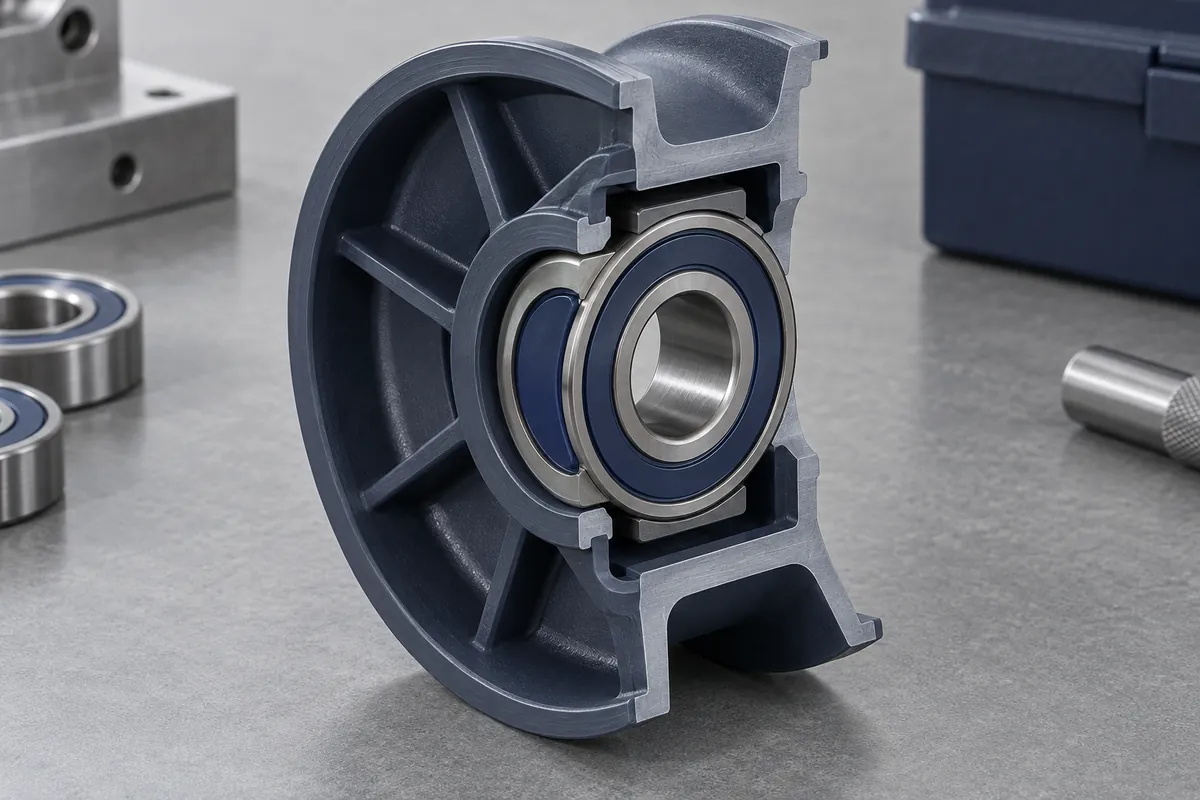
As the molded polymer cools, the relationship between the wheel and bearing develops under the specific geometry and processing conditions. Do not assume that greater shrink grip always improves the part. The project needs sufficient retention without unacceptable distortion or rotation resistance. Review wall transitions and local loading around the metal insert.
A mechanical retention feature may help locate the bearing axially, but it must be compatible with the approved bearing design. Do not modify a purchased bearing ring or seal simply to create an anchor without supplier review. Consider the available envelope and an alternative retention method when the original concept forces unsuitable changes to the bearing.
Inspect the assembled relationship, not just the wheel outline. A centered cavity can still produce a poor-running assembly if the insert moves or the functional tread is distorted. Our pulley runout guide explains why the datum, support fixture and measurement direction must match the requirement being assessed.
Understand what post-assembly changes
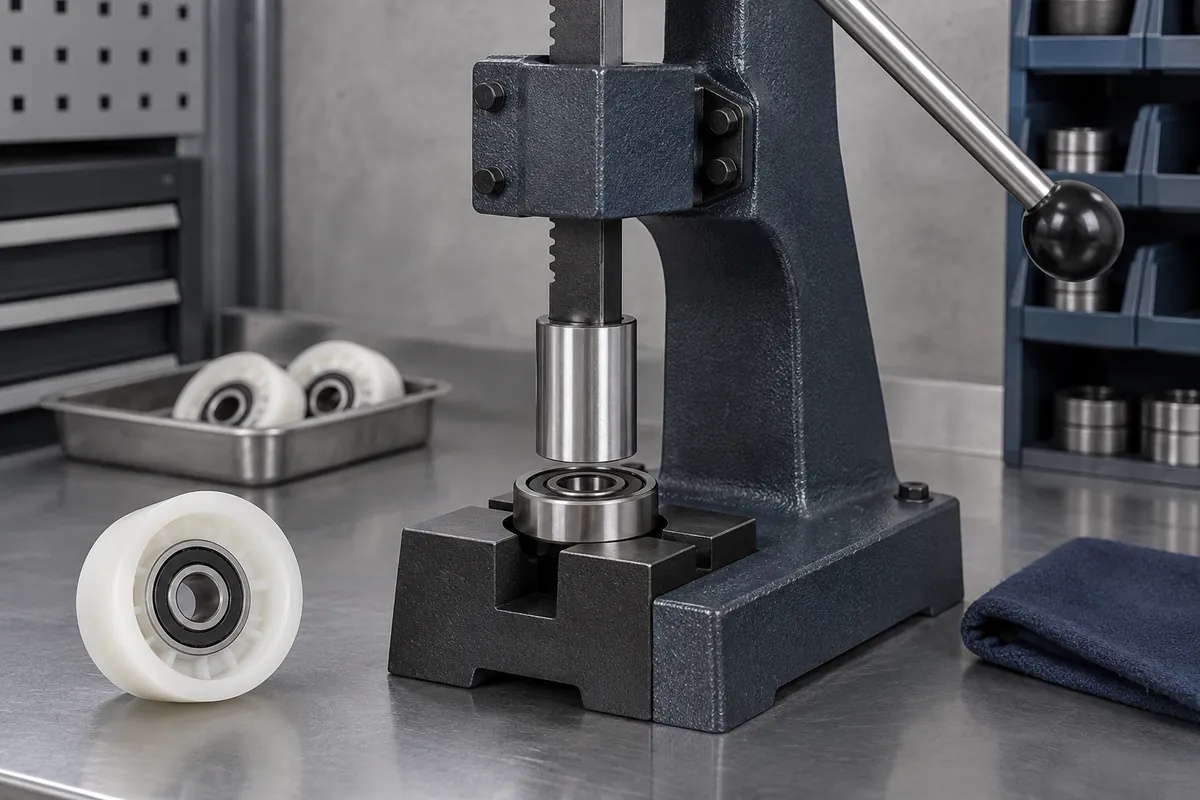
Installing the bearing after molding separates it from the molding temperature and cavity pressure. It also introduces a controlled assembly operation. The receiving geometry, lead-in, material condition and permitted installation method need to be defined. A nominal bearing outside diameter is not enough to choose a universal interference value for every plastic wheel.
Support the part and apply installation force through the intended fitted ring according to the bearing supplier's instructions. An unsuitable tool can transfer force through rolling elements or damage the wheel. Review the actual equipment, alignment and stop condition; a successful hand-built prototype does not necessarily represent a repeatable production operation.
Compare the full manufacturing scope
Insert molding may combine operations but can make an incorrectly loaded insert a molding loss. Post-assembly allows separate inspection before installation but adds handling, fixtures and an assembly control plan. Compare total scope, including rejected components and the agreed inspection work, rather than choosing solely by the number of process steps.
Discuss repair and replacement. Some assemblies are intended to be replaced as a unit, while others need bearing replacement without destroying the wheel. That requirement influences retention and access. State it before tooling starts; adding serviceability after the geometry is fixed may require more than a change in the press operation.
Keep bearing lot and wheel cavity identity where useful for troubleshooting. If rotation resistance changes, those records help distinguish a purchased-component issue from a particular cavity or assembly setup. Sampling should reflect the risks being controlled. A mixed box of anonymous trial parts makes both acceptance and root-cause analysis unnecessarily difficult.
Validate the completed assembly
Define the rotation test rather than writing only “turns freely.” State whether the result is starting or running torque, how the inner ring is held, the rotation conditions and the instrument used. Unloaded resistance may help identify a damaged or constrained bearing, but it does not establish loaded efficiency or the life of the complete pulley.
Evaluate retention, runout and loaded function with the relevant environment and service conditions. If the route changes from molded-in to post-assembled, review which evidence must be repeated. The approved outcome is a documented manufacturing route with a controlled bearing and drawing revision, not a general assurance that either method always produces the same part.
Discuss a defined pulley application
Explore our custom injection-molded plastic pulleys. Send the component drawing, mating belt or track, bearing specification and acceptance requirements to review tooling, molding and inspection as one supply scope.