
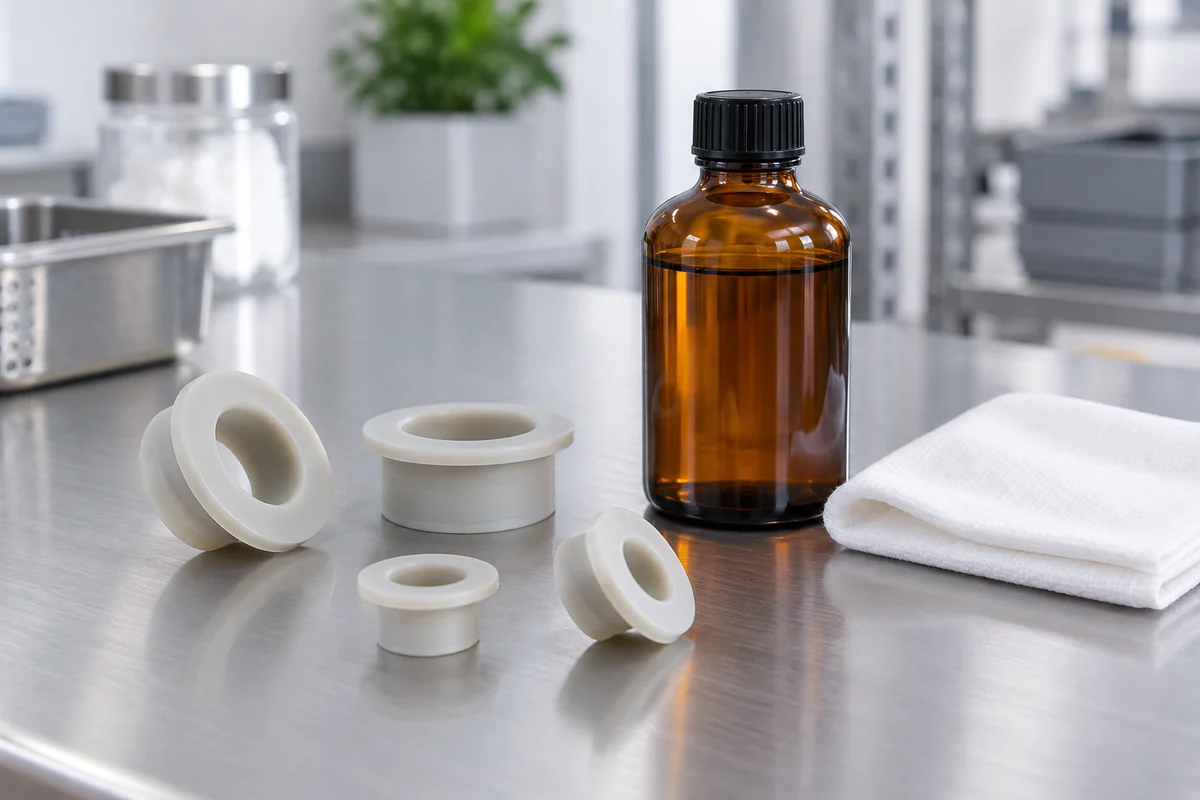
Product design illustrations. Final geometry, materials and acceptance criteria are project-specific.
A silicone cable grommet may remain visually intact after one wipe and still need a more complete cleaning evaluation. The material, cleaner, exposure and installed strain all matter. A useful plan asks what cleaning does to the component's required function, rather than treating the word silicone as a universal compatibility statement.
First separate material compatibility from cleaning effectiveness. A part that does not crack after exposure has not demonstrated that a cleaning procedure removes contamination or disinfects equipment. Those are different validation questions with different owners. This guide addresses the component and assembly effects of a defined exposure, not an approved medical cleaning procedure.
Identify the cleaning agent and the way it is applied
Record the commercial formulation, concentration, preparation method and relevant contact conditions. An alcohol name alone does not describe additives, dilution or a finished wipe product. Retain the supplier instructions and safety information as part of the test planning. Do not replace the equipment manufacturer's cleaning instructions with an improvised concentration or procedure.
Describe wiping, spraying and immersion separately. They create different contact patterns and mechanical effects. For a wiping evaluation, define the cloth or wipe, wetness control, stroke, applied load or fixture approach and the meaning of one cycle. “One hundred wipes” is ambiguous if one operator counts each pass and another counts a back-and-forth pair.
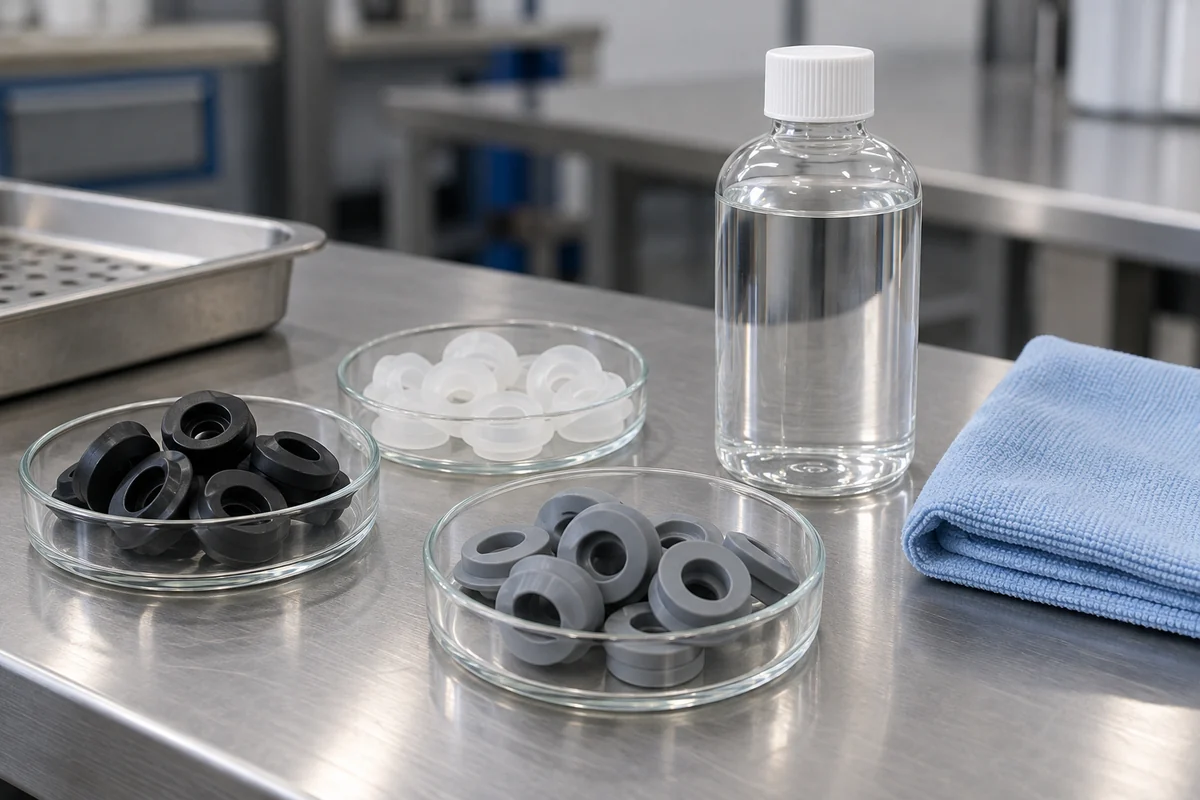
Use specimens that represent the supplied condition
Identify the exact compound, color, molding condition and any post-cure or secondary cleaning included in production. A flat material coupon can be useful for an initial comparison, but it is not automatically equivalent to a thin molded lip. Record whether the sample is a coupon, a free component or an assembled grommet.
Where the application cleans the grommet while installed, consider a representative panel and cable assembly. The stretched bore and seated flange may expose surfaces and stresses differently from a relaxed sample. A cleaner can also contact the cable jacket, panel coating or other nearby material, so component-only results should not be presented as acceptance of the entire equipment.
Keep untreated control specimens where the plan calls for comparison. Record their storage and measurement conditions too. Without a comparable starting point, a small dimension or hardness difference can be difficult to attribute. Use a documented method and an appropriate specimen rather than treating every change in a handheld reading as a material effect.
Choose measurements that connect to the function
Appearance checks can cover cracks, surface tack, visible residue, color change or damage at a lip, using agreed lighting and magnification. Define which observations are unacceptable. A statement such as “looks normal” is less repeatable than a controlled description with representative reference photographs and a named inspection stage.
Dimensions, mass or hardness can provide additional information where suitable methods are available. State the measurement timing after exposure and any recovery period. A specimen measured while wet may differ from one measured after controlled drying. The method should answer the question being asked, not simply produce several numbers that cannot be compared.
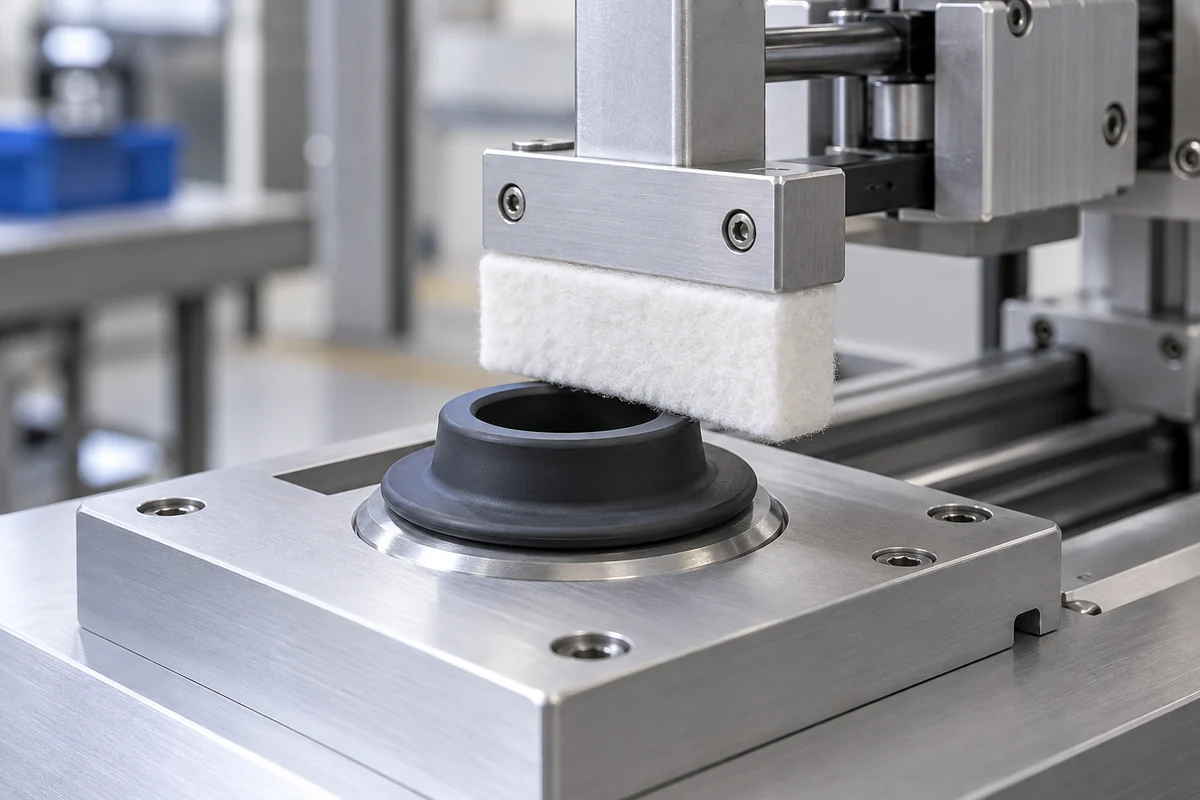
Repeat the relevant assembly checks after exposure
If sealing is required, inspect the exposed assembly and repeat the agreed water-ingress check where the validation plan requires it. No visible cracking alone does not demonstrate unchanged sealing. Likewise, a retention requirement needs its own method; a clean surface is not evidence that the cable cannot move.
Review the exposure sequence against actual use. Repeated wetting and drying, wiping while a cable is bent, and cleaning after thermal aging may be different questions from one uninterrupted immersion. Choose conditions through the equipment's engineering and risk review. More severe-looking conditions are not automatically representative, and they should not be converted casually into years of service.
Distinguish screening from qualification. A few specimens may help reject an unsuitable candidate or compare two designs, but they do not necessarily establish a production acceptance plan or a statistical reliability claim. State the sample count and inspected features with the result. Do not generalize a small study to every grade in a polymer family.
Report exactly what was observed
A useful conclusion names the material or controlled sample, the agent, the procedure, the number tested and the observed result. It also identifies untested conditions. For example, a limited wipe study should not become a claim covering all disinfectants, sterilization processes or biological-contact requirements. Those additional claims need their own relevant evidence.
The WACKER material and processing guide provides general silicone background, but grade-level selection still needs current supplier information and application testing. Keep external material guidance distinct from your own result. A manufacturer reference explains a material family; it does not certify the cleaned assembly in your project.
Finally, make substitutions reviewable. Changing a wipe brand, concentration, compound, pigment or post-cure condition can change the assumptions behind an earlier study. Link the accepted procedure to component and equipment revisions. That creates a practical path for reassessment instead of leaving future buyers with an unqualified “chemical resistant” phrase.
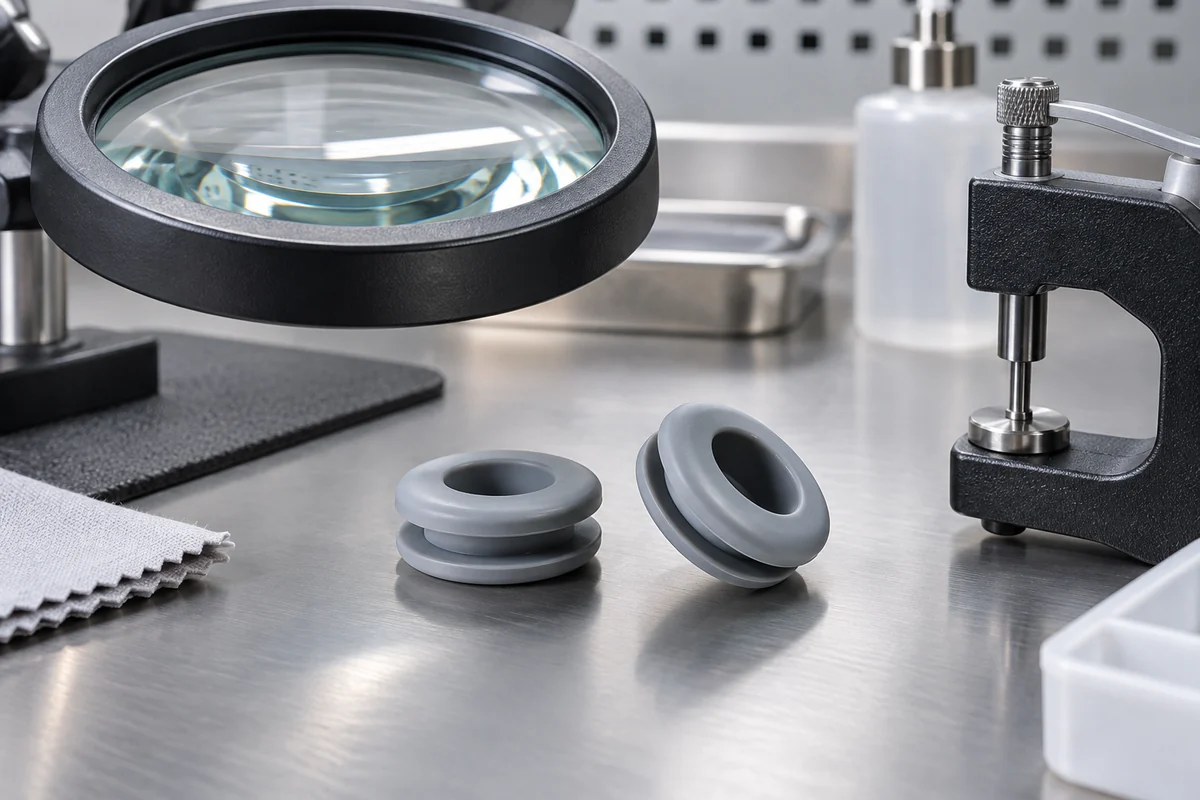
Review a defined cable-entry assembly
Explore our custom LSR silicone cable grommets and the cable-grommet pilot validation case study. Send the part drawing, panel and cable specifications, service conditions and acceptance plan to scope tooling, molding and inspection together.