
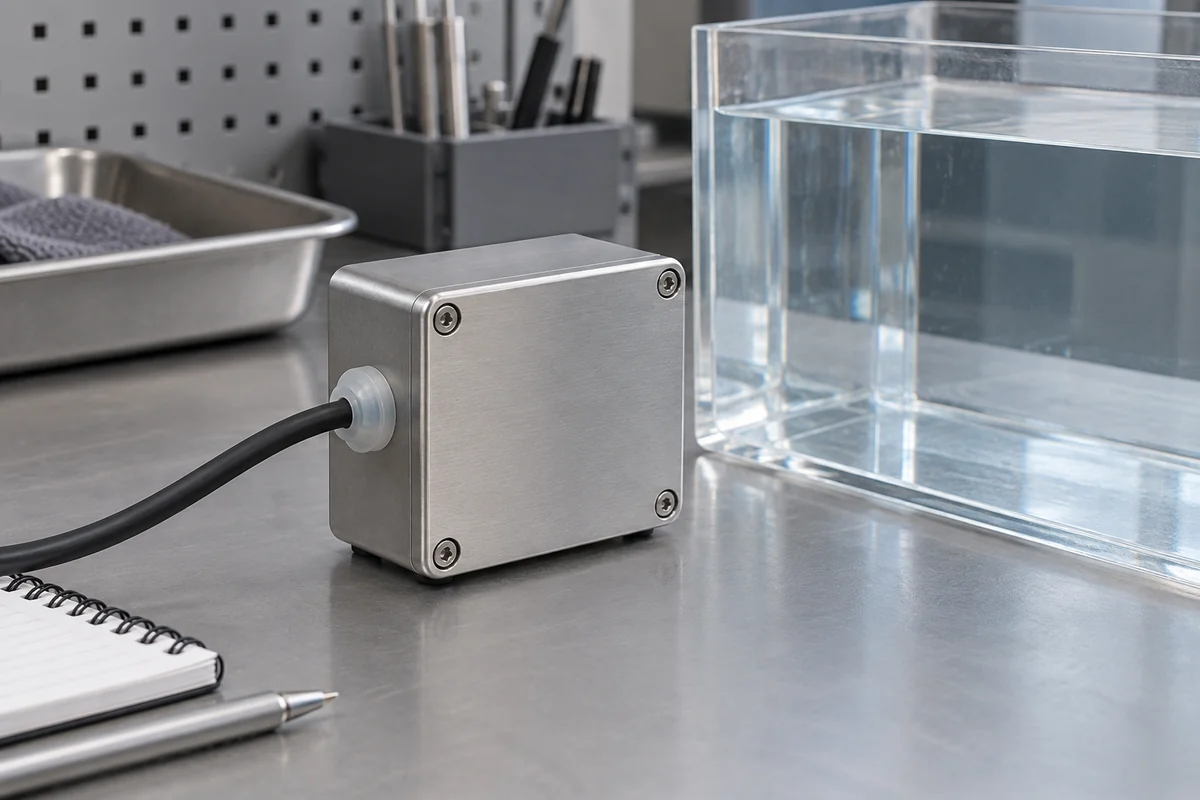
Product design illustrations. Final geometry, materials and acceptance criteria are project-specific.
Putting a loose cable grommet in water cannot establish the sealing performance of an enclosure. The relevant leak paths appear where the grommet contacts the panel and cable, and sometimes through other parts of the test fixture. A useful water-ingress plan therefore begins with a defined assembly, not a material label or a waterproof claim attached to a product image.
Decide whether the activity is an engineering screening check, a customer acceptance test or a formal assessment against a named standard. Those activities can use related equipment but have different documentation and decision requirements. A supplier should not turn an informal immersion observation into a certification statement simply because the duration resembles a familiar test.
Describe the assembly that will actually be tested
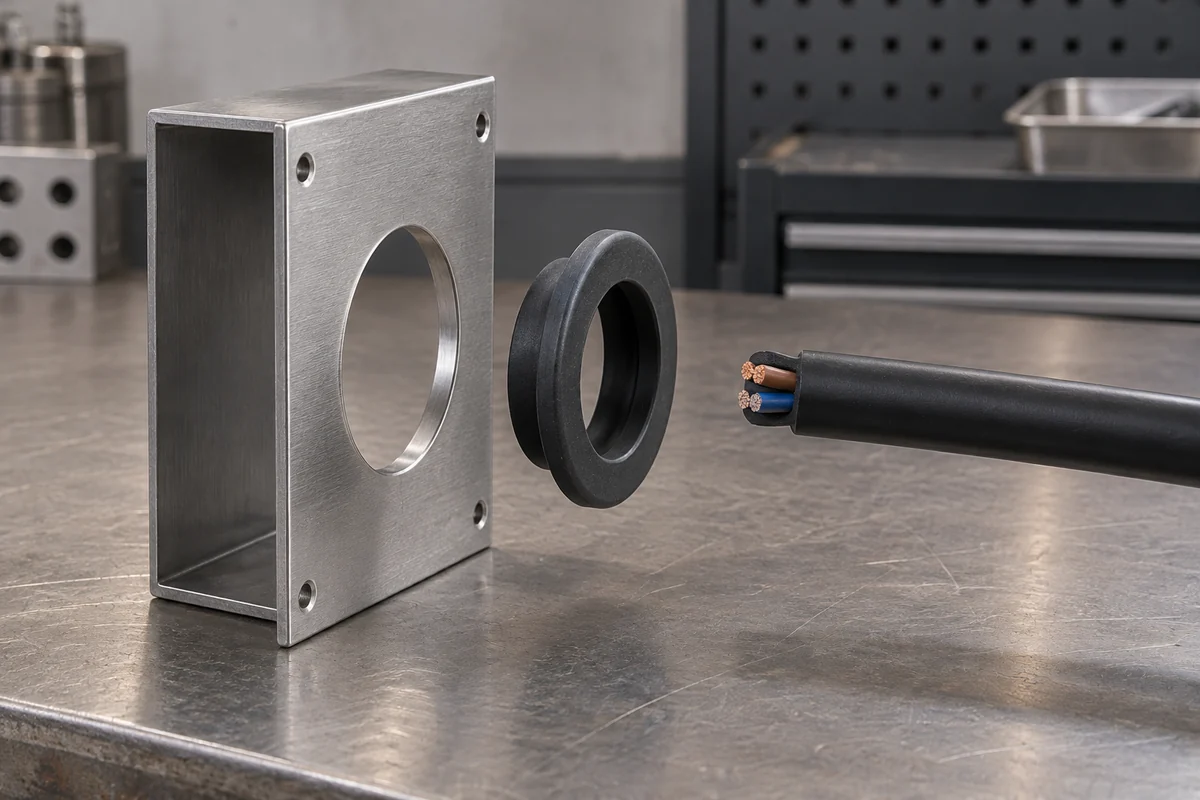
Identify the panel drawing and finished opening, the grommet revision and compound, and the cable jacket specification and diameter. Record how the grommet is inserted and whether any assembly aid is allowed. Include the orientation and cable routing. A straight, unloaded cable on a bench may not represent a cable bent sharply inside the final equipment.
Document all fixture closures. If cable ends or unrelated openings are sealed for the test, state where and how, and make sure those closures do not artificially reinforce the interface being evaluated. Leakage elsewhere in a fixture can obscure the grommet result. Conversely, sealing over the grommet contact path would remove the very mechanism the test is intended to assess.
Keep the exposure conditions explicit
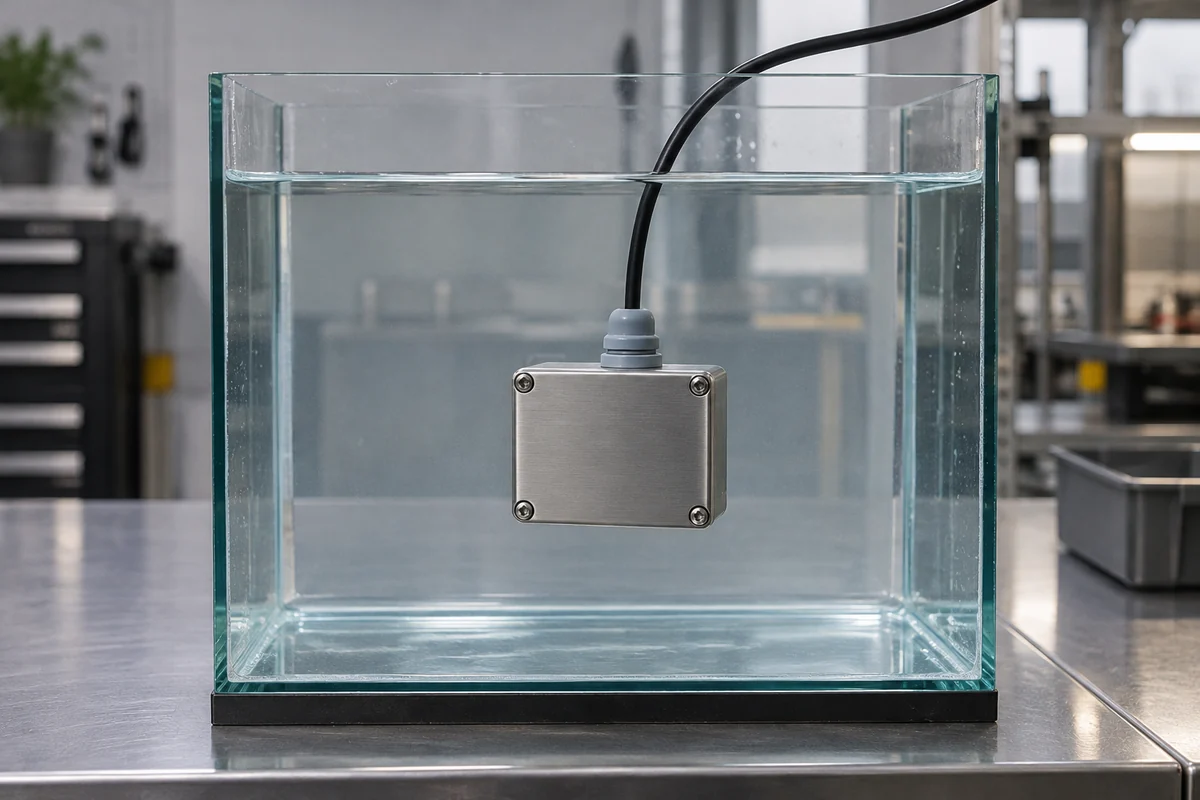
For an immersion check, specify the applicable method, water depth and reference point, duration, orientation and relevant temperatures. If following a standard, use the specified conditions and acceptance rules rather than replacing them with an informal summary. “One metre” alone does not fully describe every specimen arrangement or method requirement.
Establish how ingress will be detected and what result counts as acceptable before testing starts. Define the handling after removal so water on the exterior is not accidentally introduced while opening the enclosure. Record actual observations with specimen identity. A photograph of a dry exterior is not evidence that the inside remained dry throughout the test.
Consider any required preconditioning. The intended service may involve cable movement, cleaning or temperature exposure before water contact. A new, unstressed assembly answers a narrower question than an aged or mechanically exercised one. Keep each sequence explicit; do not describe an initial immersion pass as evidence for conditions that were never applied.
Do not combine water and dust conclusions
The IEC explanation of IP ratings distinguishes protection associated with solids from protection associated with water. A water-only result does not establish the dust part of a combined code. If only immersion was assessed, keep the public wording limited to that assessment and the tested configuration.
Likewise, distinguish a reported IPX7 test from independent certification of an entire product. State the report scope and issuing party where that evidence is available. If the activity is an internal engineering check, describe it as such. A component supplier's result does not automatically transfer to every enclosure, cable size or installation that uses a similar-looking grommet.
Keep sample counts and trial stages separate
A tool trial may produce parts for dimensions and appearance, while a later pilot batch supplies assembled specimens for immersion. These are different populations. Label the trial stage, batch, number produced, number assembled and number actually tested. Do not attach a later pilot result to the earlier trial merely because both used the same project name.
Record results by specimen or by a documented batch method. If all tested specimens pass, report the count and observed outcome directly. Zero observed leaks in a finite sample is not proof of zero future leakage or a lifetime reliability figure. An improvement percentage also needs comparable baseline and revised test conditions, not just two numbers from separate summaries.
Our LSR cable-grommet pilot case keeps the T2 dimensional stage separate from a later 200-piece assembled immersion check. That distinction is useful when reviewing any supplier case: look for the configuration and population behind the result, not only a large success number in the headline.
Use the findings to control future changes
When a specimen fails, preserve the assembly long enough to investigate the path where practical. Check seating, lip damage, mating variation and fixture closures before changing the compound. The failure location may indicate a geometry or installation problem. Altering material hardness without that information can make the next result harder to interpret.
Finally, list changes that trigger review: a new cable jacket, altered panel coating, revised groove, different compound or changed assembly aid can all move the test outside its original scope. The useful output is a controlled acceptance record and change process. A broad waterproof label is easier to write, but much less useful for purchasing a repeatable component.
Review a defined cable-entry assembly
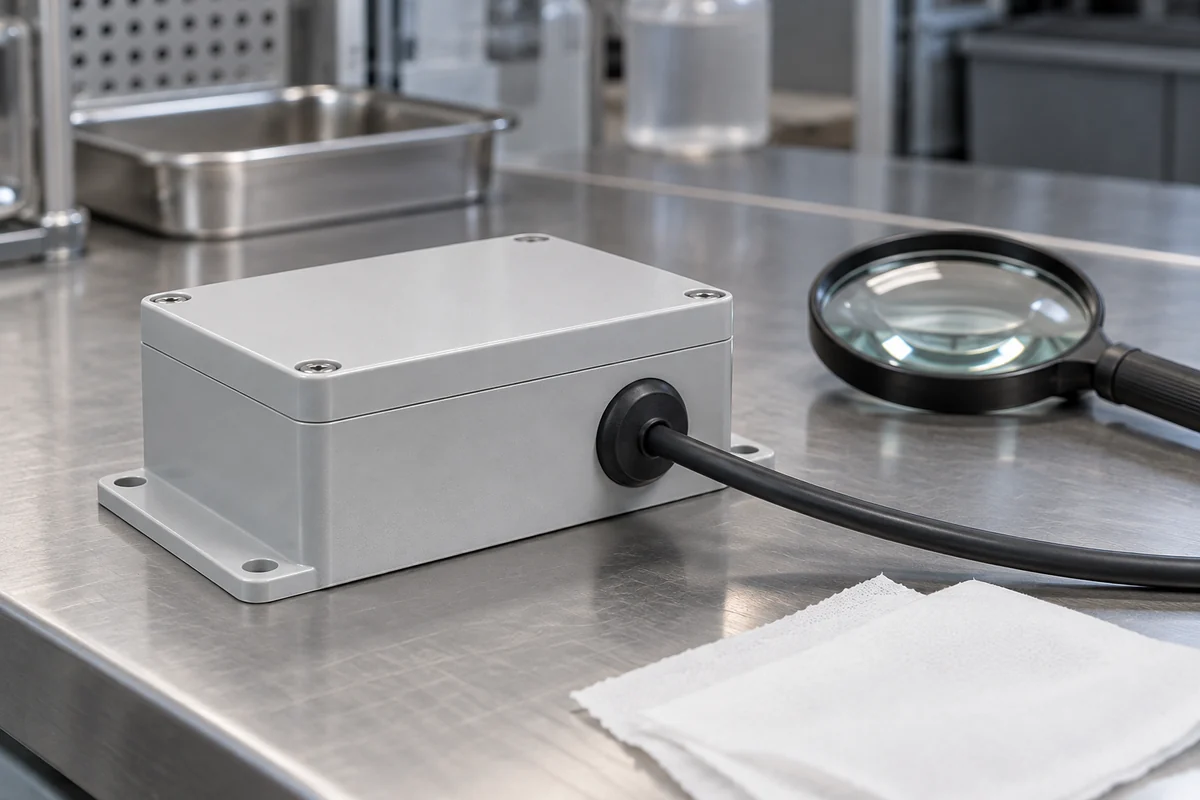
Explore our custom LSR silicone cable grommets and the cable-grommet pilot validation case study. Send the part drawing, panel and cable specifications, service conditions and acceptance plan to scope tooling, molding and inspection together.