
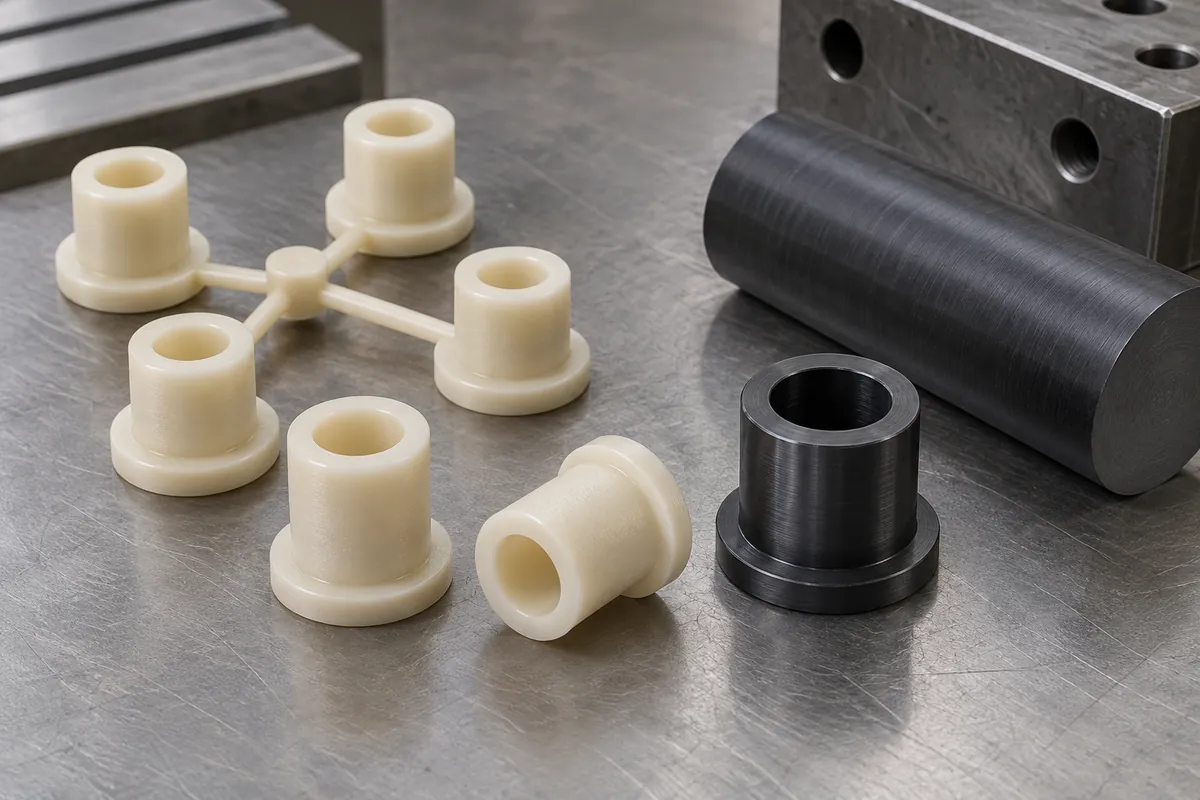
Product design illustrations. Final geometry, materials and acceptance criteria are project-specific.
Machining and injection molding can both produce a plastic spacer, but they do not create the same purchasing decision. A machined prototype can answer a fit question before a mold exists. A molded production part can combine repeated geometry with features that would require several machining operations. The useful comparison is the cost and risk of obtaining the approved component, not simply the cheapest price per loose part.
Start by checking whether a standard component already meets the requirement. Custom manufacture adds drawing control, material selection and approval work. If the needed spacer is genuinely different, describe that difference: an unusual height, locating shoulder, integrated clip or a controlled bearing face is more informative than asking for a generic tube in large quantities.
Separate early learning from recurring supply
A development order may be intended to confirm access for a screwdriver, board spacing or assembly sequence. For those questions, a quickly available sample can be valuable even if its manufacturing route differs from the eventual production route. State what it will establish and what remains open. A successful fit check does not by itself approve the molded material or tooling.
Recurring supply introduces other questions: how often orders repeat, whether dimensions are stable, how parts will be packed and what changes require reapproval. An order forecast should distinguish a first sample batch from credible repeat demand. Tooling economics based on a speculative lifetime quantity can look attractive while obscuring the cash and revision risk at the start.
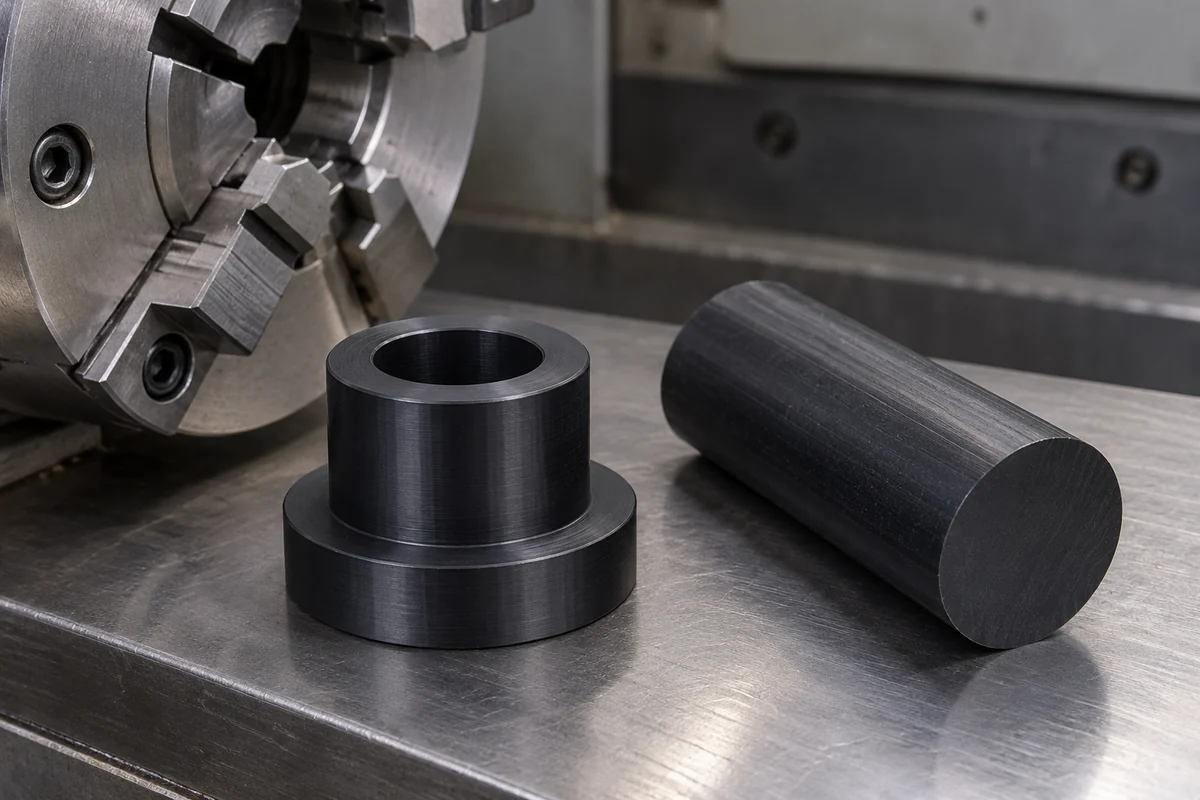
Compare the same drawing, not two loosely related parts
Use one controlled drawing when seeking alternatives, then list any route-specific changes proposed by the manufacturer. A molded part may need draft or a revised wall transition. A machined part may need additional setup access. If these changes affect the bearing faces or mating fit, evaluate them before treating the quotations as interchangeable.
Specify which dimensions must be controlled as manufactured and which can be checked after agreed conditioning. Do not assume that rod stock and injection-molding pellets with a similar polymer name give identical finished-part behavior. Record the actual material designation and ask what evidence is needed if the material form or process changes during development.
Look for features that change the route decision
A plain, low-quantity sleeve and a spacer with several integral locating features are different economic problems. Count the operations and controls required to produce the functional shape. Features that save assembly work may increase mold complexity; features that are easy to machine may require a more complicated molding direction. The design review should make those trade-offs visible.
Published injection-molding cost guidance from Protolabs discusses how geometry and tooling choices influence cost. It does not establish a universal quantity at which every spacer should be molded. Ask for a quotation tied to your specific geometry, material and approval scope instead of applying a generic break-even number.
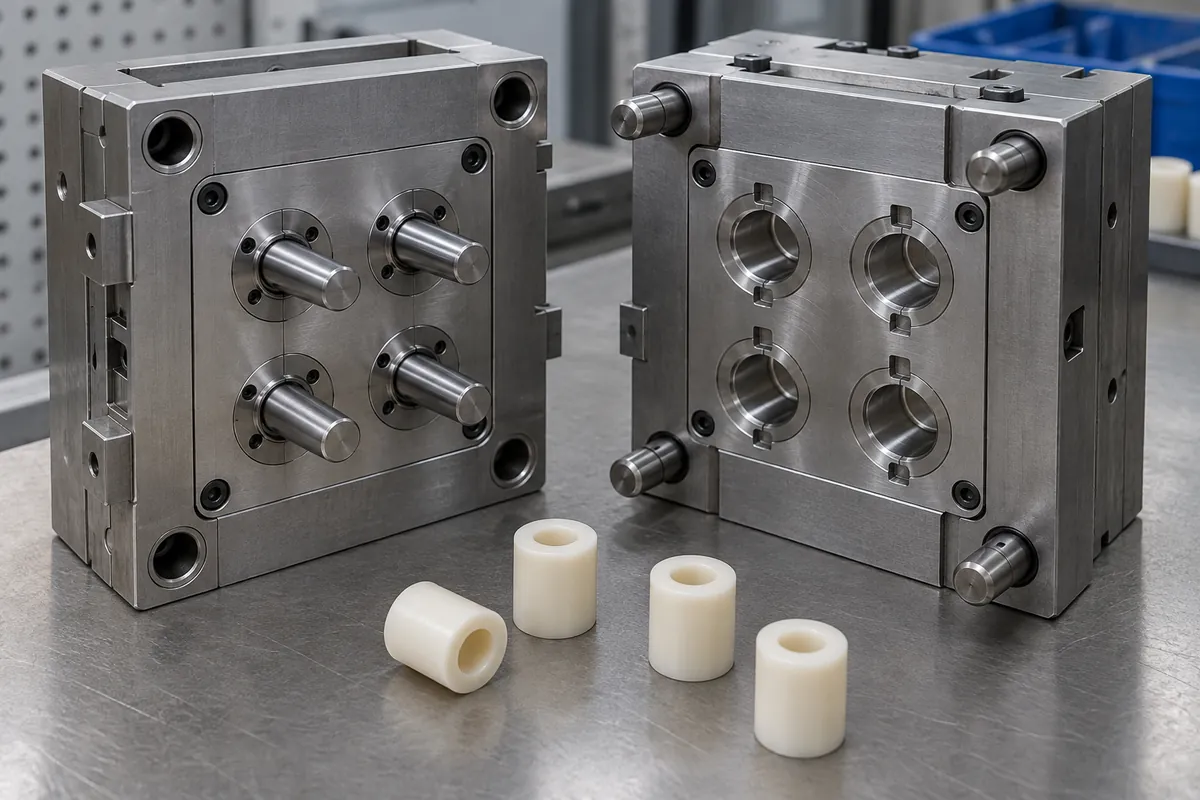
Calculate a transparent scenario
For a simple comparison, separate one-time tooling and development charges from recurring unit, inspection and packing charges. Then compare totals at realistic order quantities. Include secondary operations and any route-specific sample approval. Keep the assumptions visible so a change in quantity or drawing revision can be evaluated without starting the comparison again.
A break-even calculation is only as complete as its inputs. Excluding a necessary machining operation from one quote or including a full inspection report only in the other produces a misleading result. Identify who owns the mold, how maintenance is handled and what happens if the part changes. These commercial details belong alongside the unit price.
Approve the production route explicitly
When moving from machined development parts to molding, create a new approval step for the molded configuration. Confirm dimensions, assembly fit and any relevant performance requirements using the intended material and process. Preserve earlier learning, but do not label an untested manufacturing transfer as a production-equivalent substitution.
The sample plan should address the features that make the spacer useful, such as height between bearing faces and bore clearance. Our tolerance-stack guide explains that relationship. A clean approval record makes it easier to understand whether a later issue comes from geometry, material condition, production variation or the surrounding assembly.
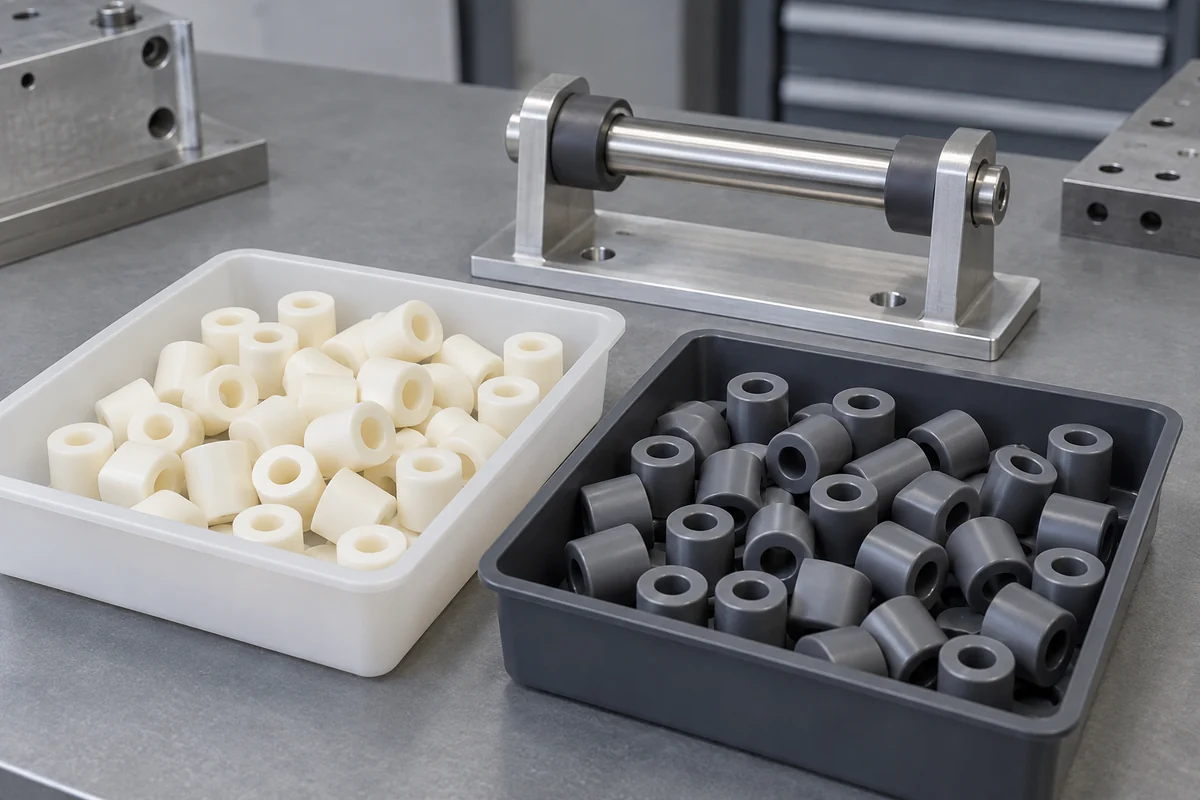
For FECISION's injection-molding review, send the current drawing, exact material requirements, development quantity and expected repeat orders. If machining or a standard component remains the better development option, keep that comparison open. The aim is a justified production decision, not forcing every spacer into a mold before its requirements are stable.
Discuss your custom spacer
Explore our custom injection-molded plastic spacers and standoffs. Send the drawing revision, mating components, material requirements and expected quantities. FECISION can review the molding and sample-approval scope; application ratings and final acceptance must follow the agreed project requirements.