
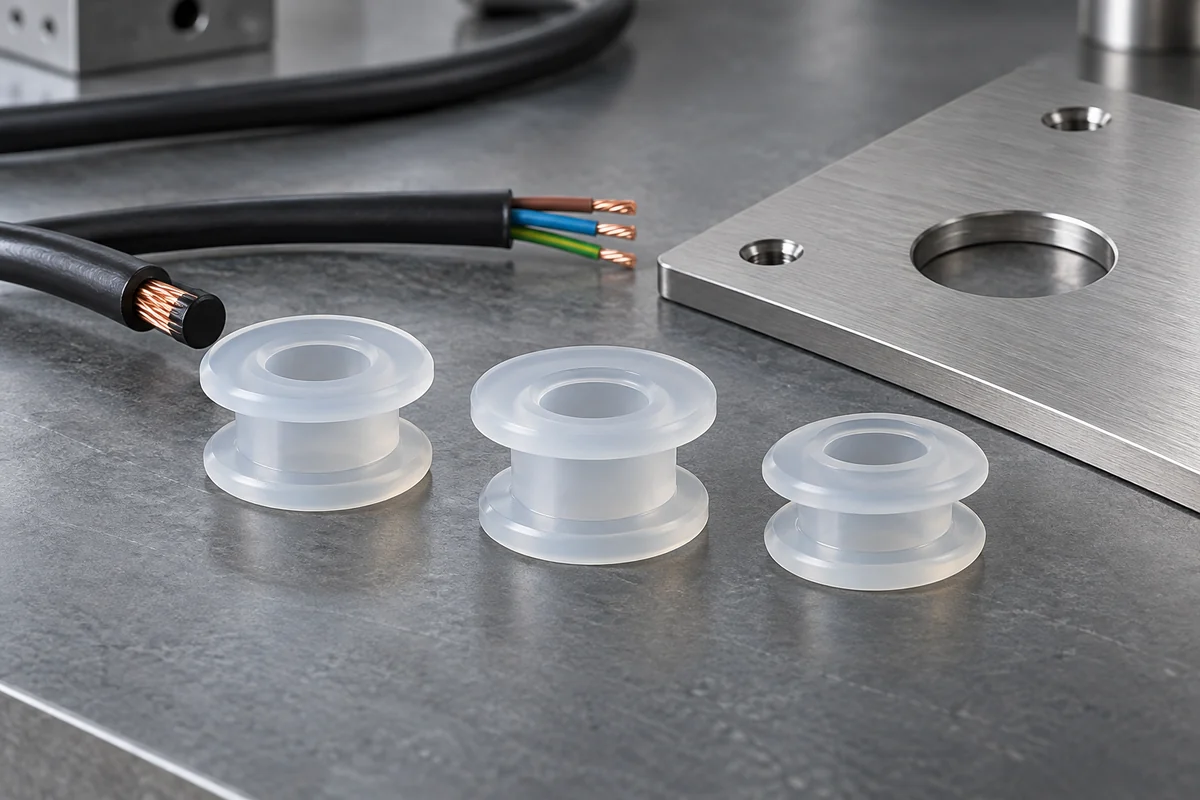
Product design illustrations. Final geometry, materials and acceptance criteria are project-specific.
A custom silicone cable grommet is a small part with several jobs that are easy to confuse. It may protect a cable from an enclosure edge, locate the cable, limit movement or contribute to a seal. Those functions are not interchangeable. Before requesting a molding quotation, decide which ones the purchased component must provide and which remain the responsibility of the complete assembly.
Begin with a catalog-versus-custom decision. A standard grommet may already fit a standard panel and cable. Custom tooling is more useful when the panel profile, cable arrangement, available space or controlled sealing feature differs from those existing options. The RFQ should explain that difference so a supplier can price the actual engineering work rather than simply imitate a photograph.
Define the three interacting components
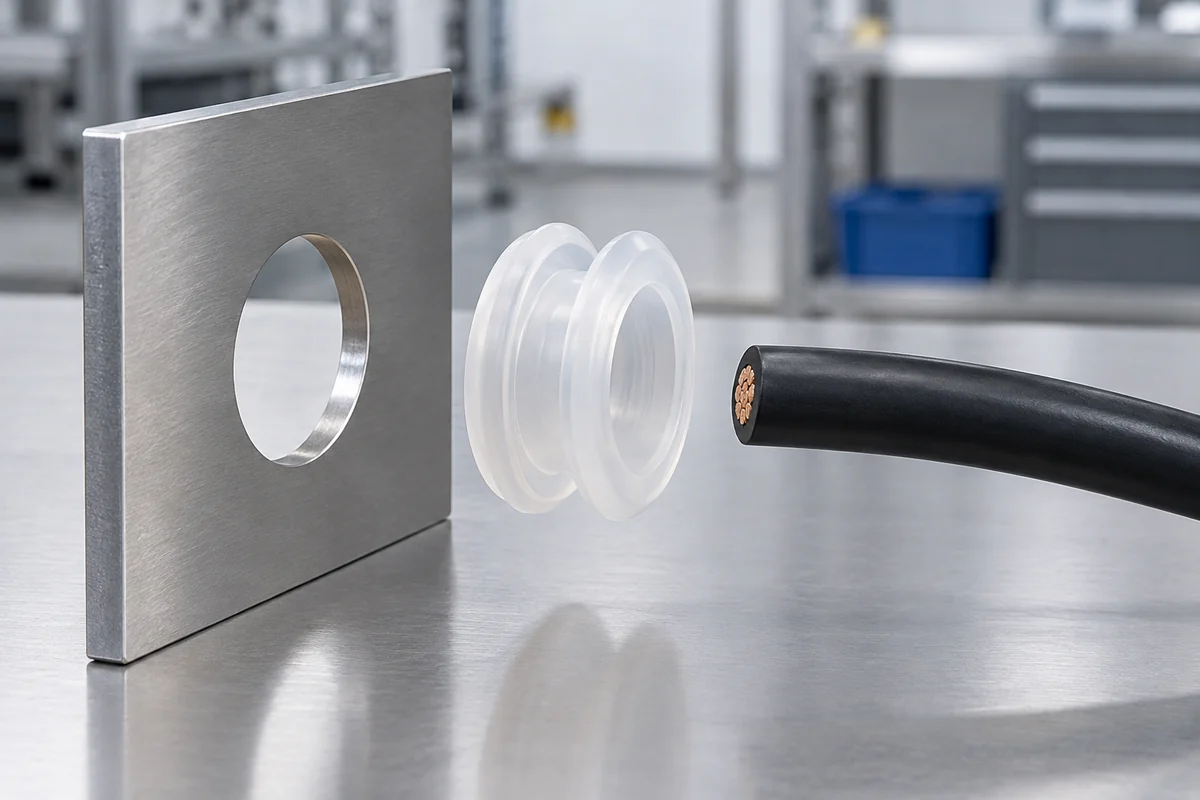
Provide the grommet model and drawing together with the panel opening and cable specification. Include panel thickness, hole shape, edge condition and tolerances. Identify the cable jacket material and its outside-diameter range. A nominal cable diameter alone does not describe the surface that contacts the silicone or the variation expected from different approved cable lots.
Explain the installation sequence. A continuous grommet may need to pass over the cable before a connector is fitted, while a split design may permit later installation but introduce another possible leak path. Access from one or both sides of the panel also matters. A part that fits in a model can still be impractical to seat in a crowded enclosure.
Specify the material without promising an application approval
State the exact silicone grade when it has already been approved. Otherwise describe the required hardness range, exposure, appearance and documentation, then ask for candidate materials to be reviewed. As Dow describes its LSR materials, these are two-part silicones processed into cured elastomers. That processing family does not mean every grade has the same end-use evidence.
Keep supplier material information separate from finished-component acceptance. A raw-material data sheet cannot by itself demonstrate that an assembled enclosure meets a water-ingress requirement. Likewise, a soft hardness value does not establish biological suitability or suitability for a particular cleaning process. Ask for the specific document behind any requirement instead of leaving a broad compliance phrase unexplained.
Record whether color, post-curing or secondary cleaning is controlled. These can affect the quoted process and the documentation expected with samples. If alternatives are permitted, require them to be identified rather than silently substituted. A lower quote based on a different compound or omitted secondary operation is not a like-for-like commercial comparison.
Separate geometry acceptance from functional tests
List the critical bore, groove and lip features and how they will be measured. Soft parts can deform under contact measurement, so the drawing and inspection method need to agree. Specify the conditioning or elapsed time before measurement where relevant. Our panel-hole and groove guide explains why those measurements must be connected to the mating parts.
Describe any water, retention or movement test as a separate deliverable. Identify the test assembly, sample count, loading or exposure conditions and acceptance criteria. A dimensional report does not replace an assembly test, and a trial assembly test does not necessarily define the routine inspection for every production lot. Ask who supplies and assembles the cable and panel specimens.
Make tooling and purchasing assumptions visible
Separate development quantity, first production order and annual forecast. These numbers support different decisions. The forecast may inform cavity count, but it is not the same as a purchase commitment. Ask the supplier to identify tool ownership, planned cavity identification, trial stages and what is included if the initial samples need a geometry correction.
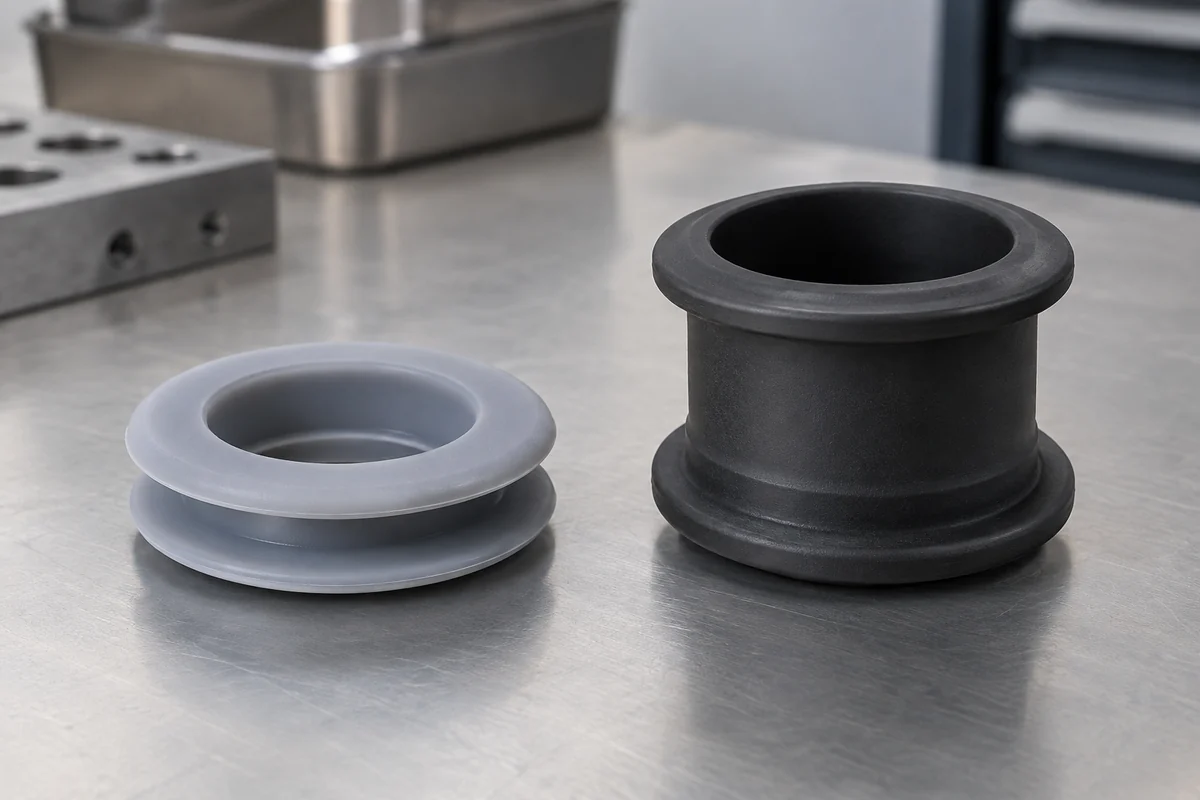
Discuss the parting line and gate location relative to the sealing surfaces. A convenient tool split may place a witness line at a sensitive contact area. The solution may be a different tool arrangement or an agreed surface limit, not simply a request for a visually perfect part. Define acceptable evidence before the tool is manufactured.
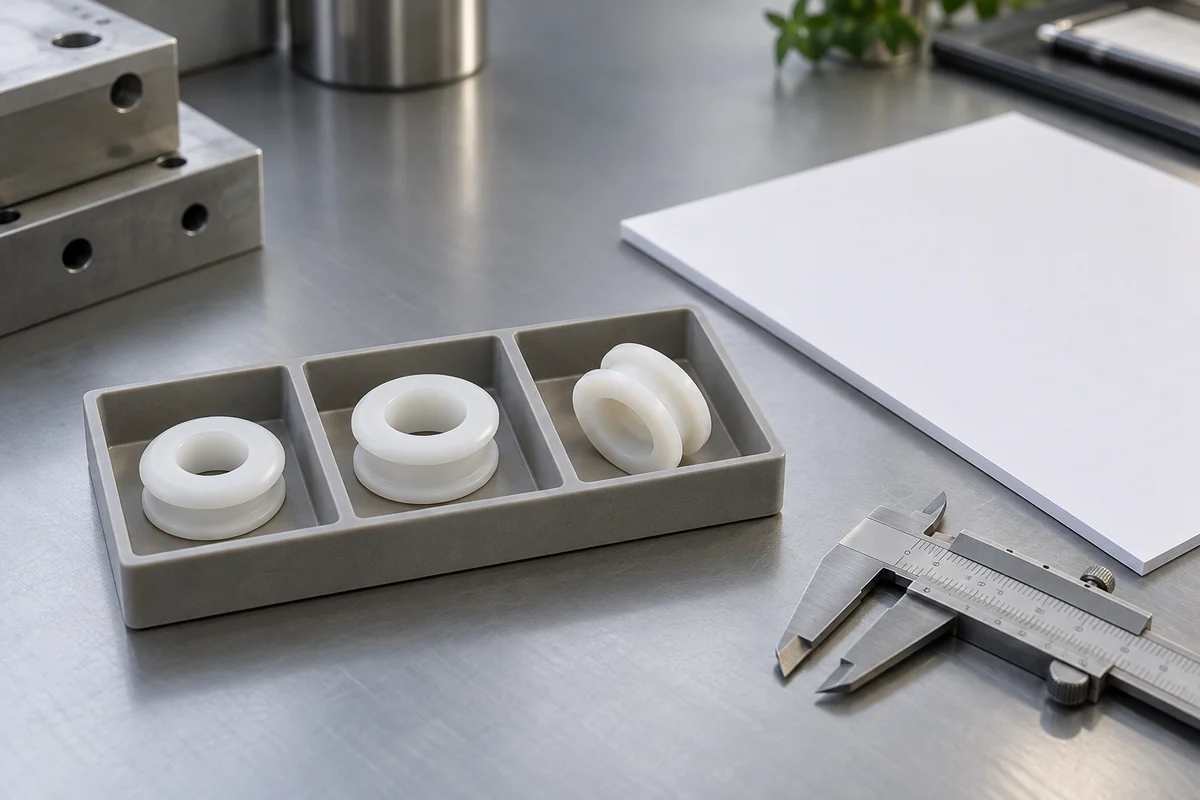
Packaging also belongs in the comparison. Loose bulk packing, separated compartments and specified cleanliness controls are different services. If lint or particulate contamination would affect your assembly, describe the requirement and its assessment method. A clean-looking photograph is not evidence of a controlled cleanliness classification.
Finish the RFQ with a clear decision boundary: which requirements are fixed, which need engineering input, and which tests the customer will perform. That allows a supplier to price molding, sampling and support realistically. It also creates a useful basis for approving changes when the panel, cable or compound changes after the first order.
Review a defined cable-entry assembly
Explore our custom LSR silicone cable grommets and the cable-grommet pilot validation case study. Send the part drawing, panel and cable specifications, service conditions and acceptance plan to scope tooling, molding and inspection together.