
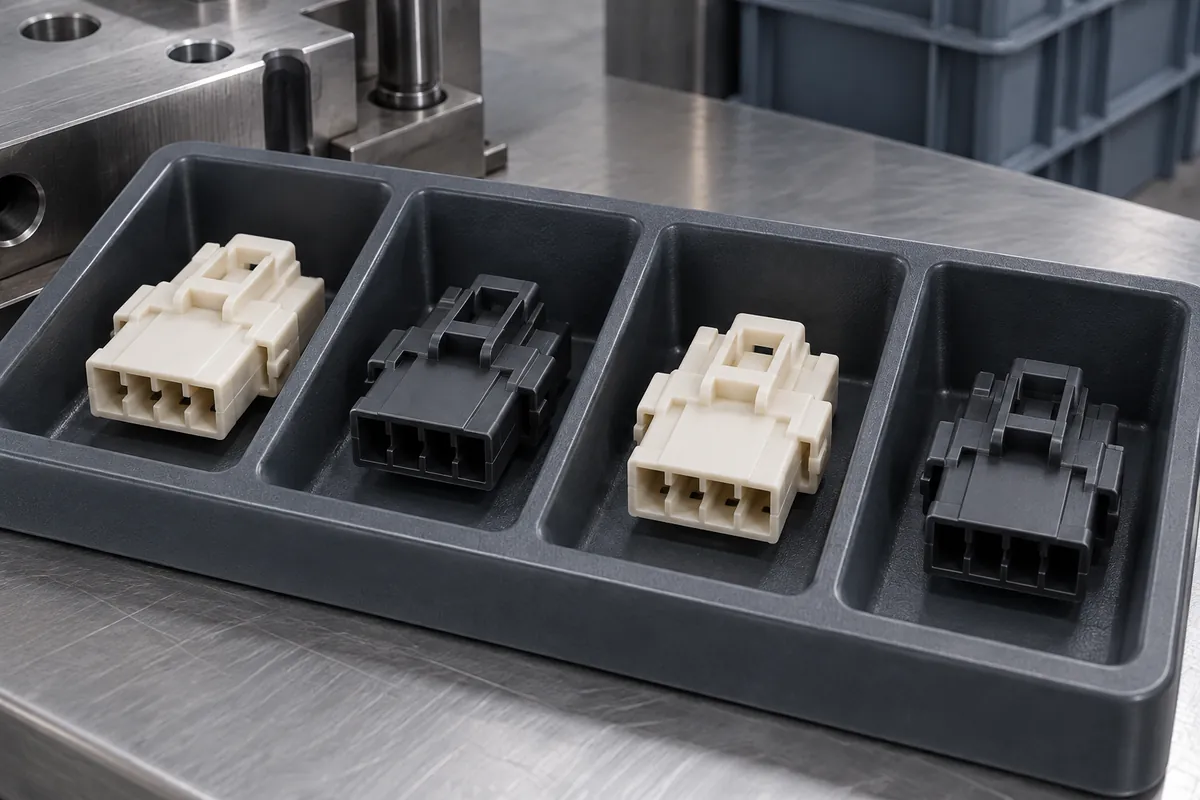
A small cavity number molded into a connector carrier can be valuable, but it cannot tell you which material lot was used or when the part was produced. A carton label may provide the production interval but lose the link to a particular sample after parts are mixed on an inspection bench. Neither record is complete on its own.
Cavity-level traceability is a chain of relationships, not one mark on the plastic. Define the chain from tool and cavity to run, material, sample, measurement and shipment. Its detail should match the customer's actual risk and record requirements; this guide proposes a practical structure rather than claiming that every connector program needs individual serialization.
Product design illustrations. Final geometry, materials and acceptance criteria are project-specific.
Decide the question the records must answer
Start with a retrieval exercise: if a terminal-window problem is found during assembly, what must the quality team identify? The answer may include affected cavity, production interval, material lot and cartons supplied. If the contract needs more, such as individual serial history, specify that separately before designing the record system.
Do not collect fields merely because a machine can export them. Record the configuration identifiers and process information needed to support the agreed investigation and release decisions. ENGEL describes documented quality and traceability in its digital molding production guidance; using any particular software is not evidence that your part-to-record link is complete.
Build the smallest complete record chain
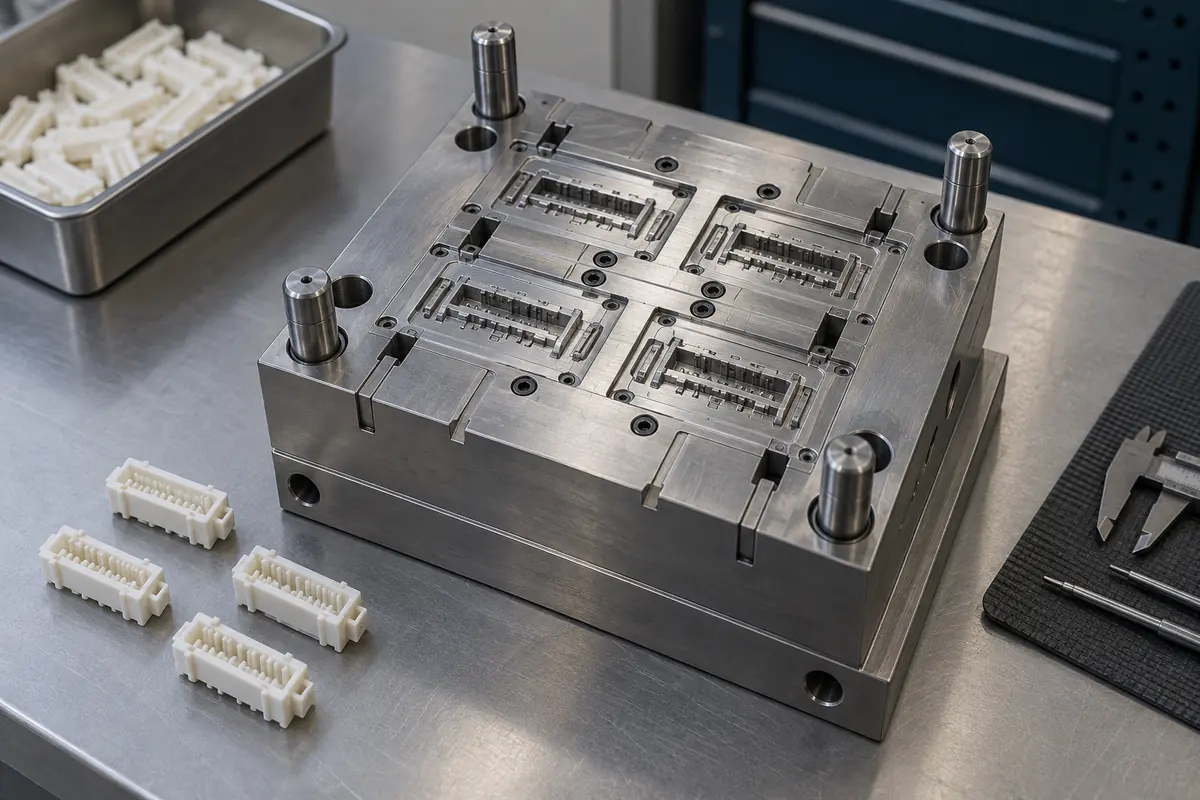
A useful starting point is a run identifier linked to drawing revision, tool revision, active cavities and material lots. Individual inspection samples then carry a sample ID and cavity ID, plus the time or production interval that connects them to that run. The inspection report references the same sample IDs rather than renumbering them independently.
If parts are transferred into different trays or packaging, preserve the relationship during transfer. A temporary handwritten label can be a controlled part of the method if it is legible, consistent and later reconciled. Conversely, a barcode is not useful if its database entry cannot identify the part revision or the sample it was supposed to represent.
| Record group | Fields to complete | Link to preserve |
|---|---|---|
| Configuration | Part revision; tool revision; active cavity list. | Which approved configuration was running? |
| Production | Run ID; interval; material lot; relevant change events. | Which output belongs to the recorded conditions? |
| Sample | Sample ID; cavity ID; collection point; condition. | Which physical item produced each result? |
| Disposition | Inspection reference; approval or hold decision; shipment IDs. | Where did the accepted or held output go? |
This is a proposed field list, not a populated production record. Do not create plausible-looking sample results to fill empty rows. Missing evidence should remain visibly missing until an actual record is produced and approved.
Keep cavity results separate before summarizing
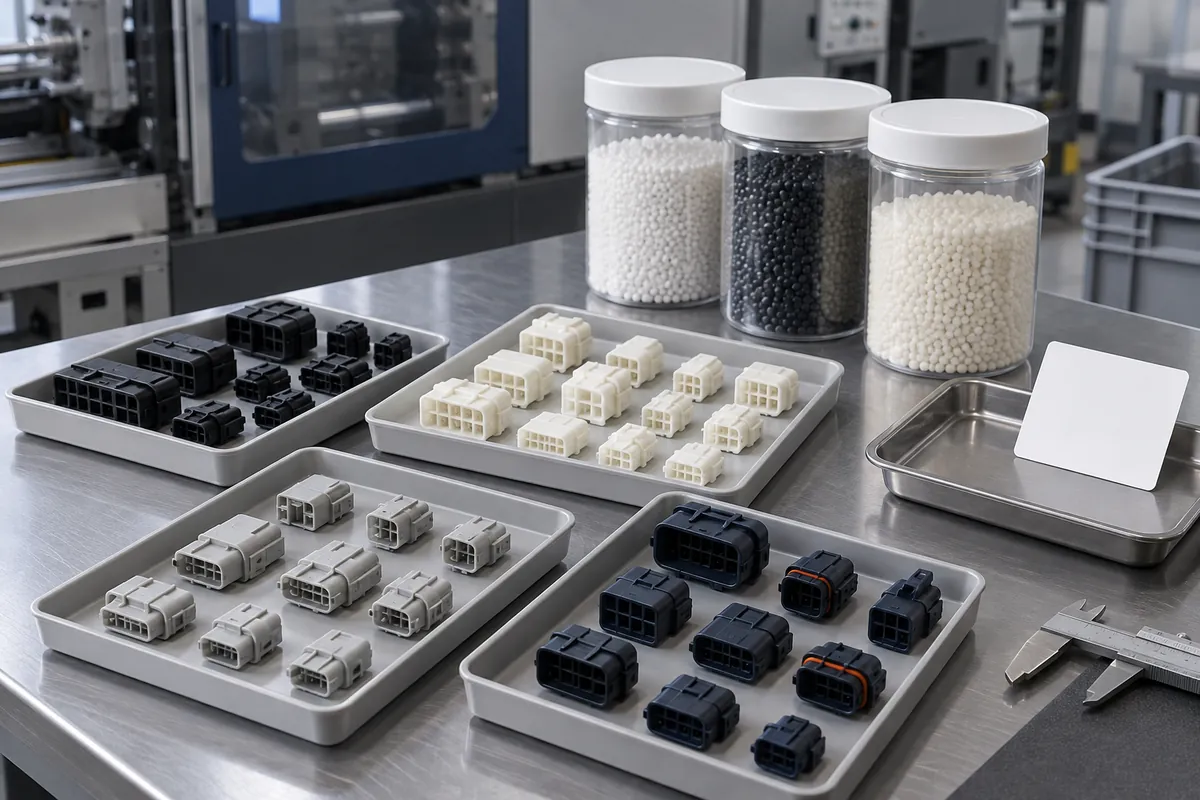
For a multi-cavity tool, first examine individual results by cavity and by the relevant production interval. A pooled summary can hide a cavity-specific offset or a change that occurred partway through a run. The purpose is to preserve enough detail to ask the right question, not to assume that every difference is caused by the cavity.
Record other changes that could explain the difference: material lot, maintenance, restart, blocked cavity or a measurement-method revision. Avoid treating a temporal coincidence as proof of cause. A cavity-level pattern is an investigation lead; it still needs supporting evidence and an engineering assessment.
Make mixed output an explicit decision
Decide whether output may be mixed across cavities or runs and under what conditions. If mixing is allowed, the shipment record should retain the contributing groups. If the requirement prohibits mixing, the packing and handling method must support that requirement throughout the route, not just at the final label.
Rework and sorting need their own links. Identify the original group, the sorting method, the disposition of rejected parts and the identity of the released output. A new carton label should not erase the original manufacturing history. For customer-supplied terminals or inserts, include the additional incoming-lot relationship when relevant to the agreed scope.
Test retrieval before the first shipment
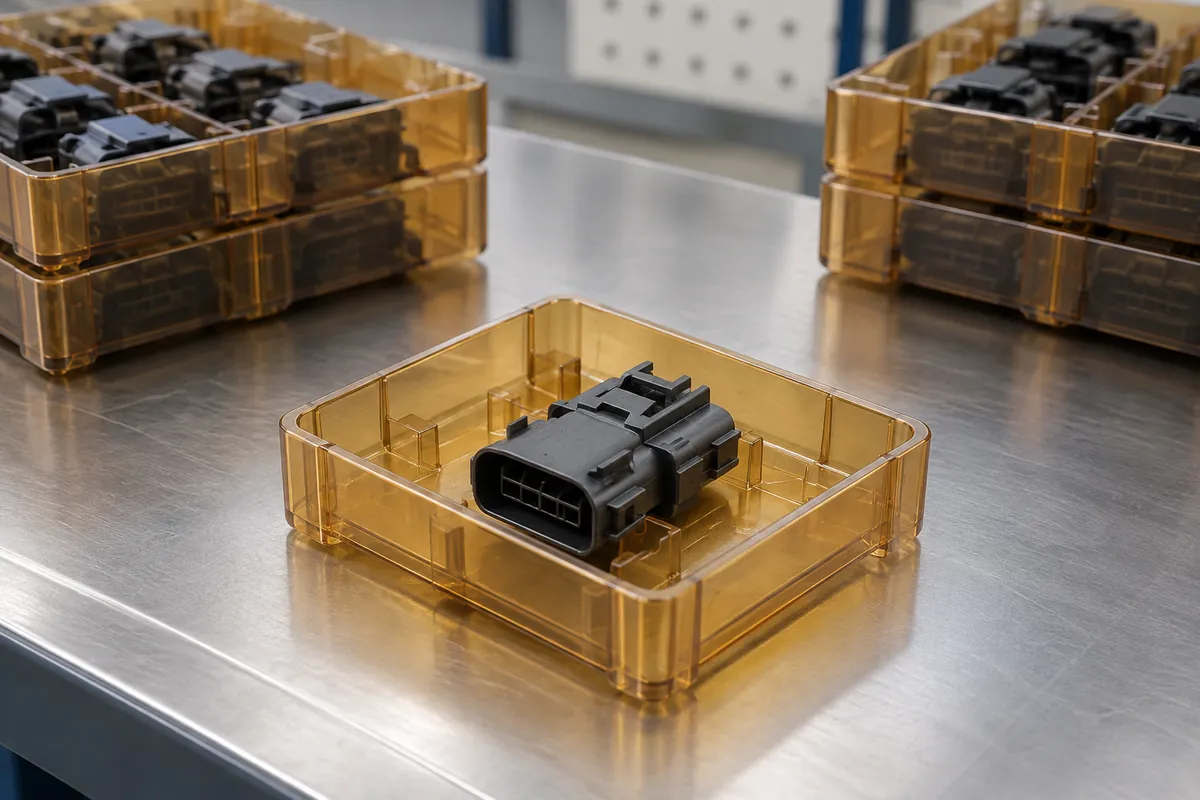
Choose an identified trial sample and ask the team to retrieve its drawing revision, cavity, material, collection interval and inspection result. Then work backward from a proposed shipment label. Any broken relationship found during this rehearsal is easier to fix than one discovered during a customer complaint.
Agree record retention, access and responsibilities in the purchase scope. Not every internal process parameter needs to become a customer deliverable, but the promised evidence must be retrievable. Link these requirements to inspection and gauge records and the connector RFQ checklist. Traceability supports a release decision; it is not a substitute for the inspection or validation itself.
Turn the review into a defined molding scope
Explore our custom molded connector insulators and terminal carriers and the related illustrative engineering study. Send the drawing revision, counterpart details, intended use and the decisions still open. Development samples and production approval should have separate, agreed deliverables.