
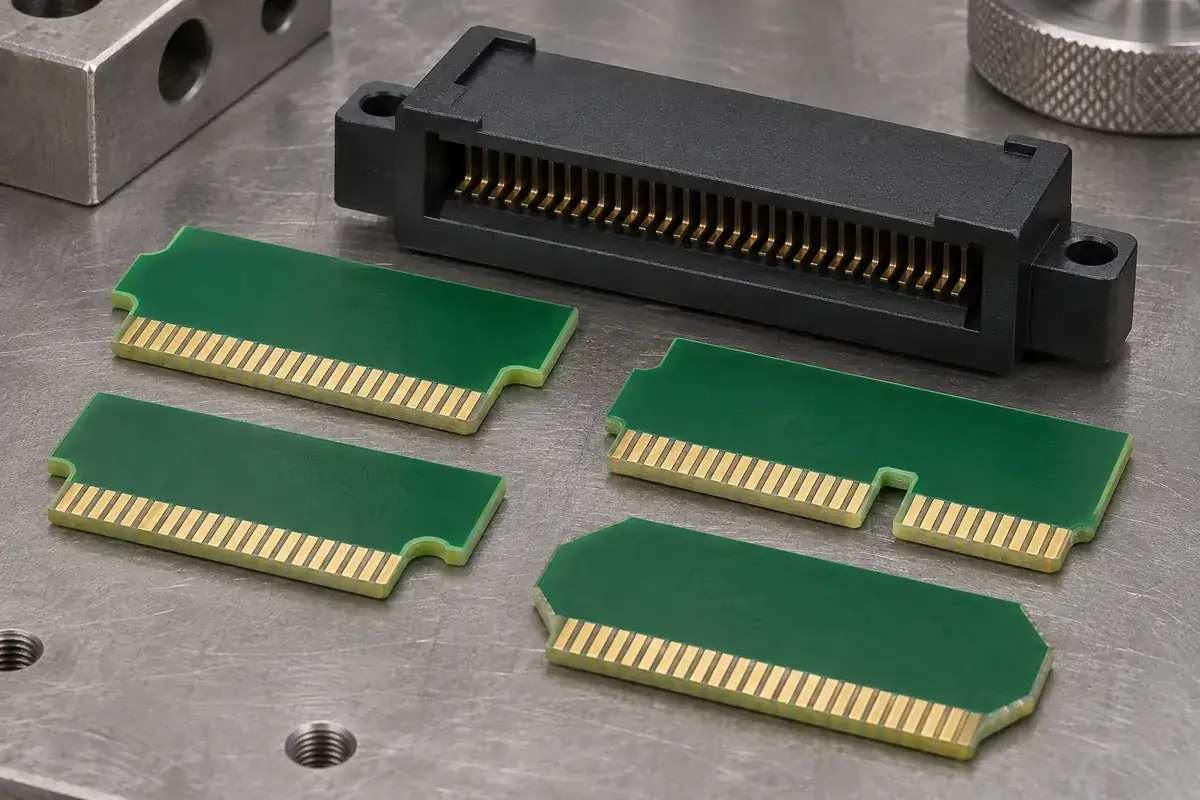
A small PCB coupon can make an early card-edge fit review quicker and easier to observe. It can also give a misleading result if it omits the feature that controls the real assembly. The useful coupon is not simply a short piece of board that enters the socket. It is a controlled representation of the interface needed to answer a defined question.
Start by stating that question. Checking an empty housing's clearance requires different evidence from evaluating a completed connector's engagement or a long card's guidance. A coupon can be well suited to one of those tasks and unsuitable for another. Making its purpose explicit prevents an encouraging bench fit from being reported as approval of the entire product.
Product design illustrations accompany the interface and manufacturing explanations below.
Preserve the features that establish the local interface
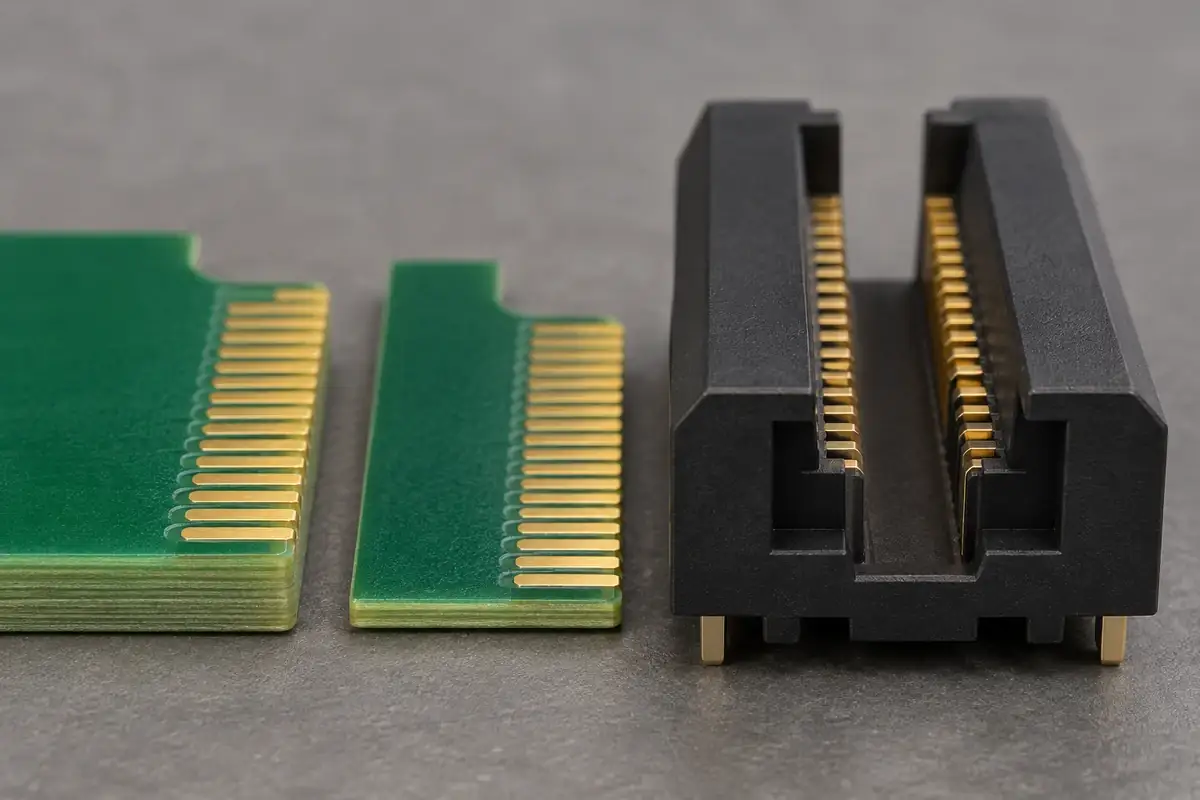
The finished thickness at the mating region is a primary input. Include the relevant board stack and surface condition rather than relying on a nominal laminate description. A coupon with a different contact finish or an omitted surface layer may pass through the plastic opening differently from the production board, even when both are described by the same nominal thickness.
The leading edge should represent the specified bevel, remaining edge thickness and edge condition. A hand-sanded coupon can be useful during exploration, but it needs to be identified as that condition. It should not become an undocumented acceptance sample whose geometry differs from the drawing used to manufacture the actual card.
Preserve the contact-finger pattern where it is relevant to the question. Pad position, length and relationship to the board edge matter when reviewing contact engagement. A solid blank strip may help assess a simple plastic clearance, but it does not reproduce the contact-facing geometry or surface finish of the completed board interface.
A polarizing notch should use the production references and profile when the review includes keying or final insertion. A simplified oversized notch can eliminate the very interference that the coupon is intended to investigate. Keep the relationship between the notch, board outline and finger pattern visible in the coupon drawing.
Decide how much of the real card must remain
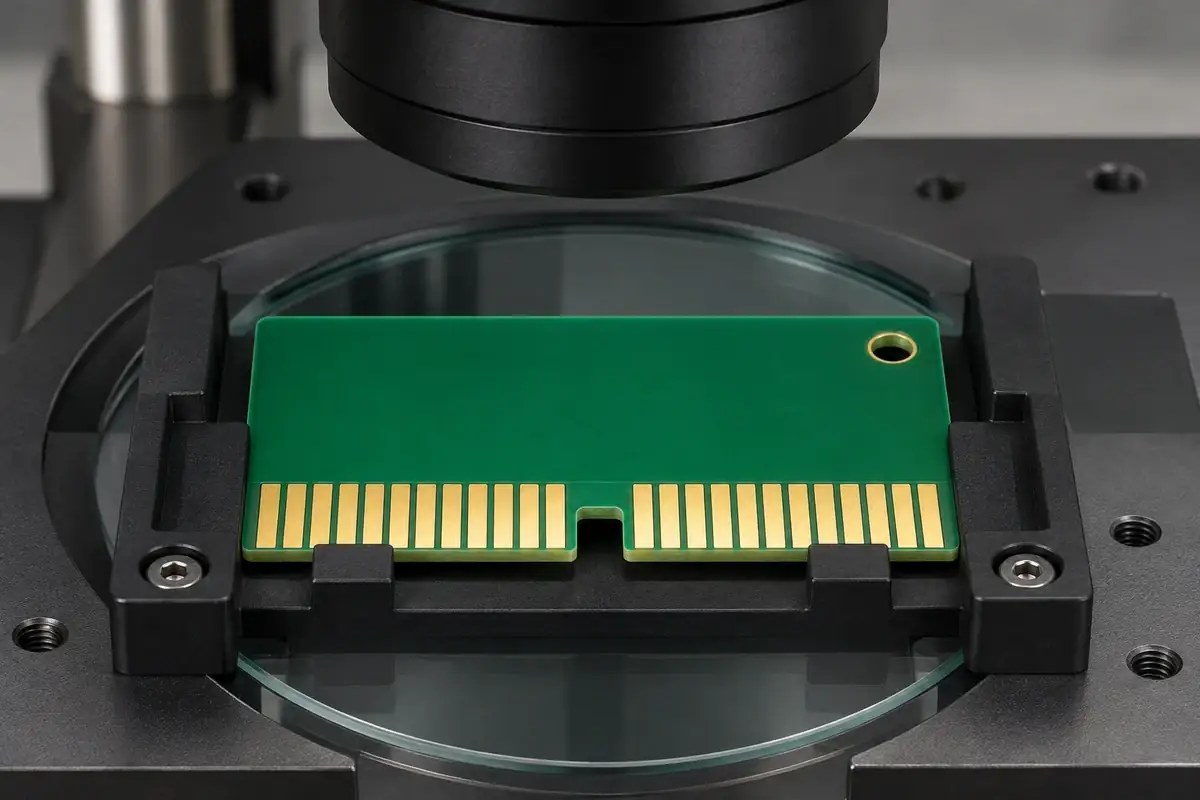
A short coupon is easier to handle but may be much stiffer over its unsupported span than the full card. If the investigation concerns long-board guidance or bending during insertion, a small local coupon may not reproduce the behavior. Choose the sample size to match the question rather than always minimizing material and fabrication cost.
The board outline outside the fingers can matter as well. A shoulder may stop against a closed housing end, or an adjacent cutout may provide clearance around a mounting feature. Removing those details from the coupon can make it fit where the real board cannot. Include the nearby outline that participates in the approach and final seating.
Mounting holes and guide-contact edges may establish the card position in the equipment. If the coupon is held differently, the fit review answers a different question. State the fixture references and reproduce the relevant locating features so the observed alignment can be related back to the installed assembly.
Component and hardware envelopes can be represented when access is the concern, but their role should be clear. A local coupon without those items may establish basic interface clearance while saying nothing about service removal. The orientation and access discussion explains why the full approach envelope can control an otherwise plausible layout.
Use connector requirements to define the review boundary
Samtec's MEC1 product information provides access to configuration-specific connector documentation. That is the appropriate type of reference for defining a mating board interface. A coupon intended for a selected connector should follow the relevant drawing rather than a generic card-edge outline copied from an unrelated family.
Separate dimensional checks from functional checks. Measuring a coupon can establish that it represents the intended board geometry. Inserting it can provide an observation about a defined assembly condition. Neither step alone establishes electrical performance, rated durability or suitability for an unspecified operating environment.
If the review needs to explore dimensional variation, identify the conditions represented by each sample. An oversized or undersized coupon is meaningful only in relation to an agreed tolerance or investigation objective. Labeling a coupon as a maximum condition without documenting what is maximum can create more confusion than using one well-characterized nominal sample.
Keep the coupon and connector histories. Repeated insertion may change a surface or contact condition, and a modified coupon may no longer represent its original drawing. Record revisions and any intentional adjustments. This makes it possible to distinguish an interface change from the accumulated condition of the samples used to investigate it.
Turn the coupon into useful manufacturing evidence
A coupon drawing should state its purpose and the controlled features needed for that purpose. Include the relevant datums and measurement locations. Our connector inspection-reference guide explains why an apparently regular pattern can still be incorrectly located relative to the features used during assembly.
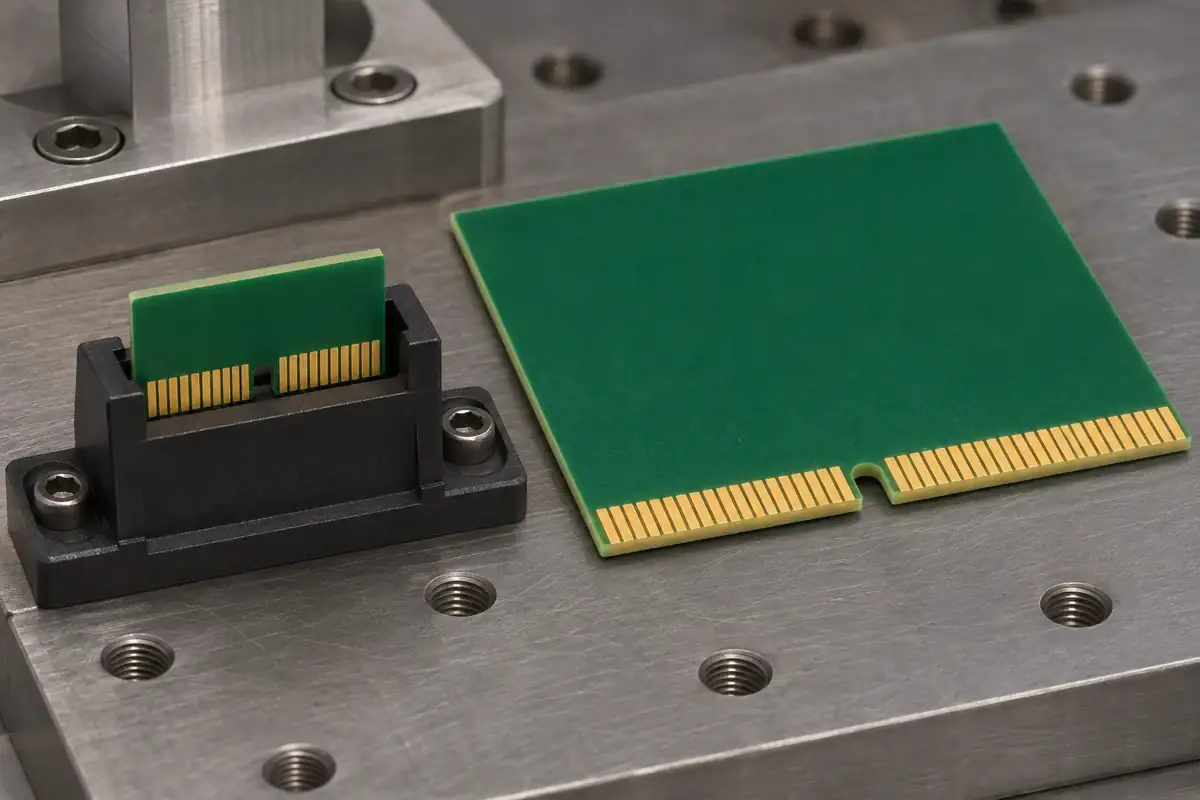
Agree how the coupon is used with the empty molding and with the completed socket. Those stages can isolate different relationships. For example, an empty-housing check can help identify a plastic obstruction before installed contacts add their intended interaction. Keep the conclusions specific to the stage that was actually evaluated.
The board-thickness and slot-fit discussion covers why entry alone is insufficient. Use the coupon to support the required observations about approach, travel and final position. If a condition depends on a full board, guide system or enclosure, retain that as a separate task rather than stretching the coupon's conclusion.
For custom card-edge housings, send the proposed coupon definition alongside the production board and connector drawings. Explain which decision the sample is intended to support. This helps align tooling review, sample quantities and inspection records with a concrete next step while preserving a clear boundary between local fit evidence and complete assembly approval.