
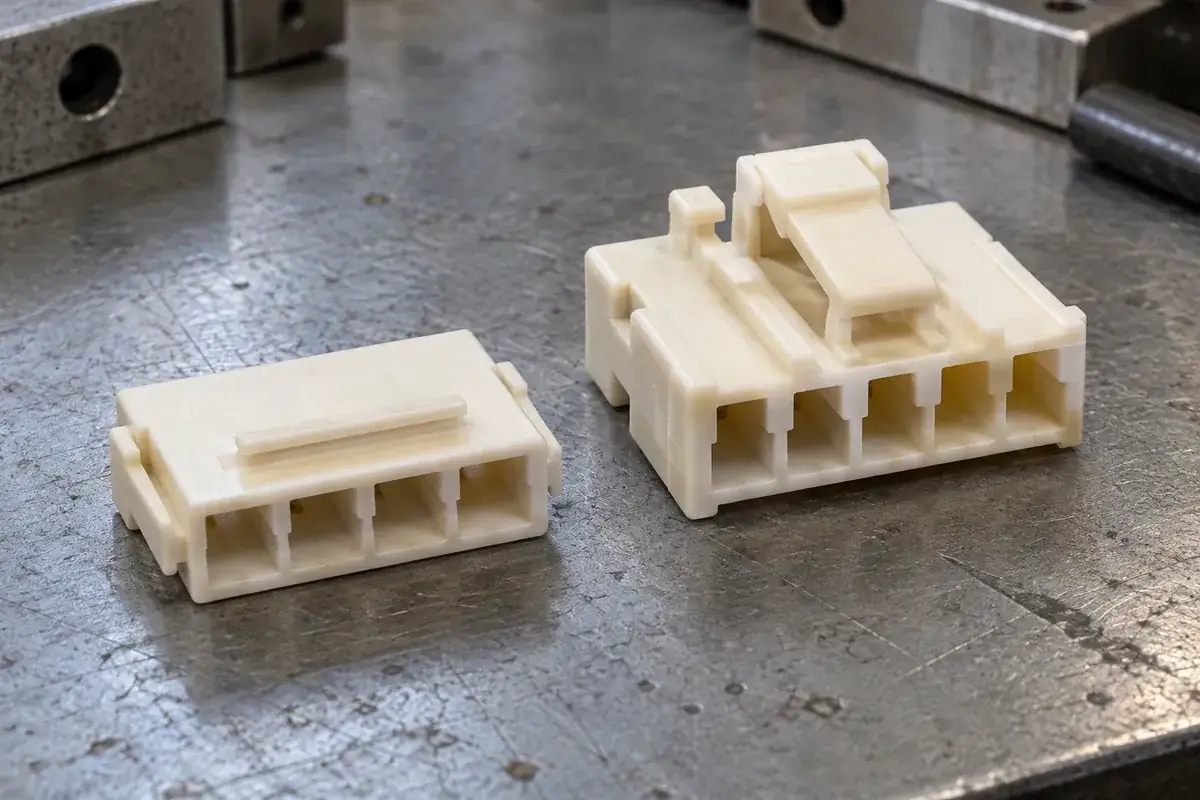
A connector that stays mated on a bench may be awkward to use inside a product. The wire bundle can pull sideways, a nearby wall can hide the release tab and an operator may have no place to grip the housing. Choosing a latch from its appearance or a nominal pull-force target misses those conditions.
Friction retention and a positive latch answer different mechanical questions. A friction-retained interface resists separation through its designed contact and housing interactions. A positive latch adds a feature that engages a stop and requires an intended release action. The right choice depends on the complete harness installation and service route, not on which feature looks more substantial.
Product design illustrations accompany the assembly and manufacturing explanations below.
Identify which motion the interface must resist
Start with the likely directions of load at the connector. An axial pull tends to separate the mating halves. A side load can rotate the housing or press against a guide wall. A short, stiff bundle can apply a persistent moment even when no one is pulling on it. These conditions should be distinguished before a retention requirement is assigned.
The application may also expose the connector to repeated handling, equipment movement or a constrained cable route. Define those conditions using the actual product configuration. A catalog connector's result under its published test setup is not a substitute for evaluating a different custom housing and harness arrangement.
TE's wire-to-board overview includes both friction-lock and full-lock arrangements. That range is useful evidence that the choice is application-dependent. It does not imply that the two mechanisms are interchangeable within an existing mating interface.
What a friction-retained interface asks of the assembly
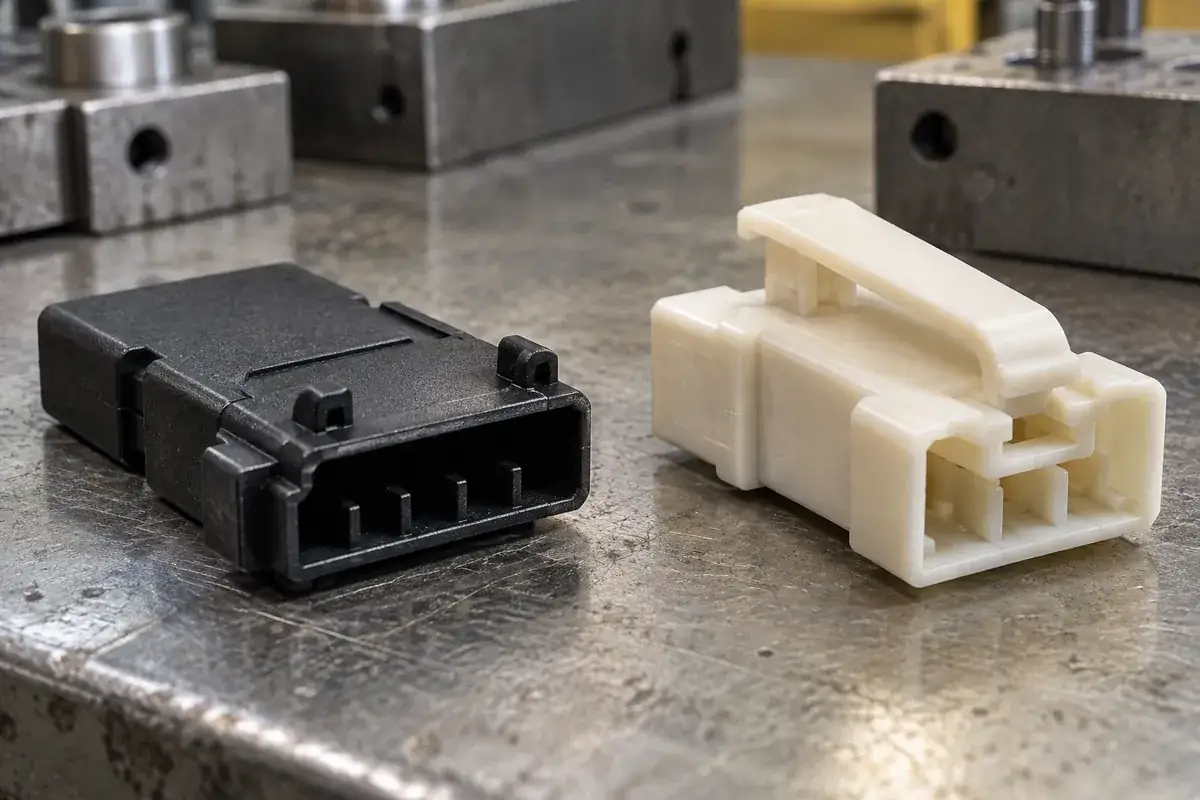
A friction-retained design can keep the housing compact and avoid a separate release action. That can be useful where the connector is protected inside an enclosure and the harness is supported nearby. It still needs a defined grip surface and a withdrawal path. If the only accessible item is the wire bundle, servicing can transfer the removal load through the crimps.
Retention depends on the features that create the resisting interaction and their condition. Material response, dimensions, wear and the selected contacts can all be relevant. Avoid treating the outside plastic dimensions as the only contributors when the contact system also affects mating and unmating behavior.
Assembly confirmation may be less obvious when there is no separate latch event. Agree a visible seating reference, a controlled final position or another suitable check. A housing that feels firm partway through insertion is not necessarily fully seated. The confirmation should indicate the required mated state, not merely the presence of resistance.
What a positive latch changes
A positive latch provides a defined engagement feature and a deliberate release action. Its benefit depends on the latch reaching its stop in the real assembly. A guide wall, wire bend or misaligned mating half can leave the connector short of that position even if the parts appear close together.
Release access is part of the mechanism. The finger or approved tool must reach the release area and move it through the required travel without colliding with the enclosure. In a custom layout, review this access with adjacent connectors populated. An isolated CAD view often overstates the space available around the latch.
Protecting a latch from accidental operation introduces a trade-off. A guard can reduce incidental contact but also make service more difficult. A taller release feature can be easier to reach but more exposed during harness handling. Decide which risks matter in the application and evaluate the complete geometry, rather than adding protection until the release becomes inaccessible.
Support the harness before increasing retention
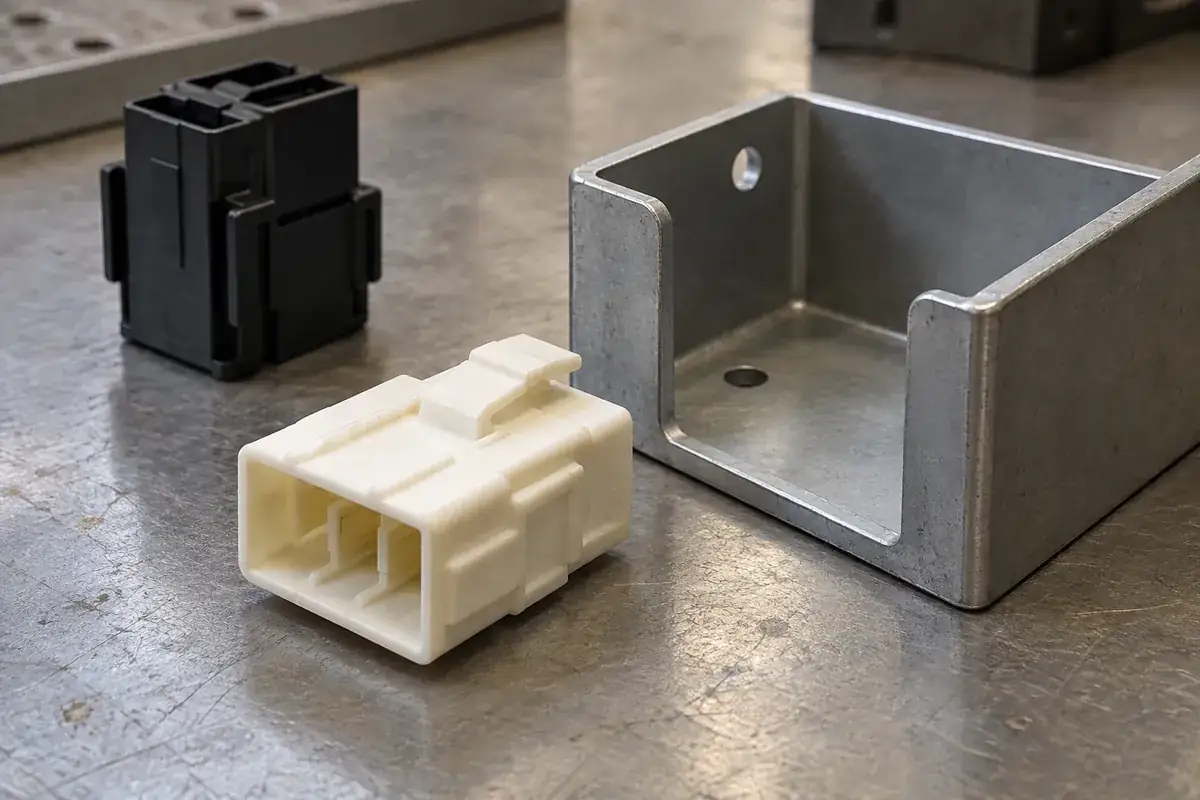
If the wire route continuously bends the connector away from its intended axis, a stronger latch may conceal the underlying packaging problem. Review where the harness is supported, how the wires leave the rear opening and whether the cover directs them without pinching. Moving a support can change the load path more effectively than thickening a locking beam.
Keep contact retention and connector retention separate in the specification. A latch holds the two connector halves together; the terminal retention features hold individual contacts inside their housing. A successful latch engagement does not prove that every wire terminal is correctly seated. The two checks should remain identifiable during assembly and repair.
Also distinguish installation load from service load. The process of pushing the connector into position should act on suitable housing surfaces. Pulling it out should follow the approved release and grip method. Neither action should rely on exposed wires simply because the housing is hard to reach.
Compare designs under the same useful conditions
A development comparison should use the agreed mating half, contacts, wire configuration and support arrangement. Record whether measurements describe insertion, withdrawal after release or resistance while the latch remains engaged. Combining those states into one force value makes two mechanisms look comparable when they are doing different jobs.
Inspect the mechanism after the intended operations as well as before them. A release tab may return to position while its engagement edge is damaged. A friction interface may look unchanged while its feel has altered. Agree the cycle count, conditioning, acceptance forces and inspection method with the application team before comparing the results.
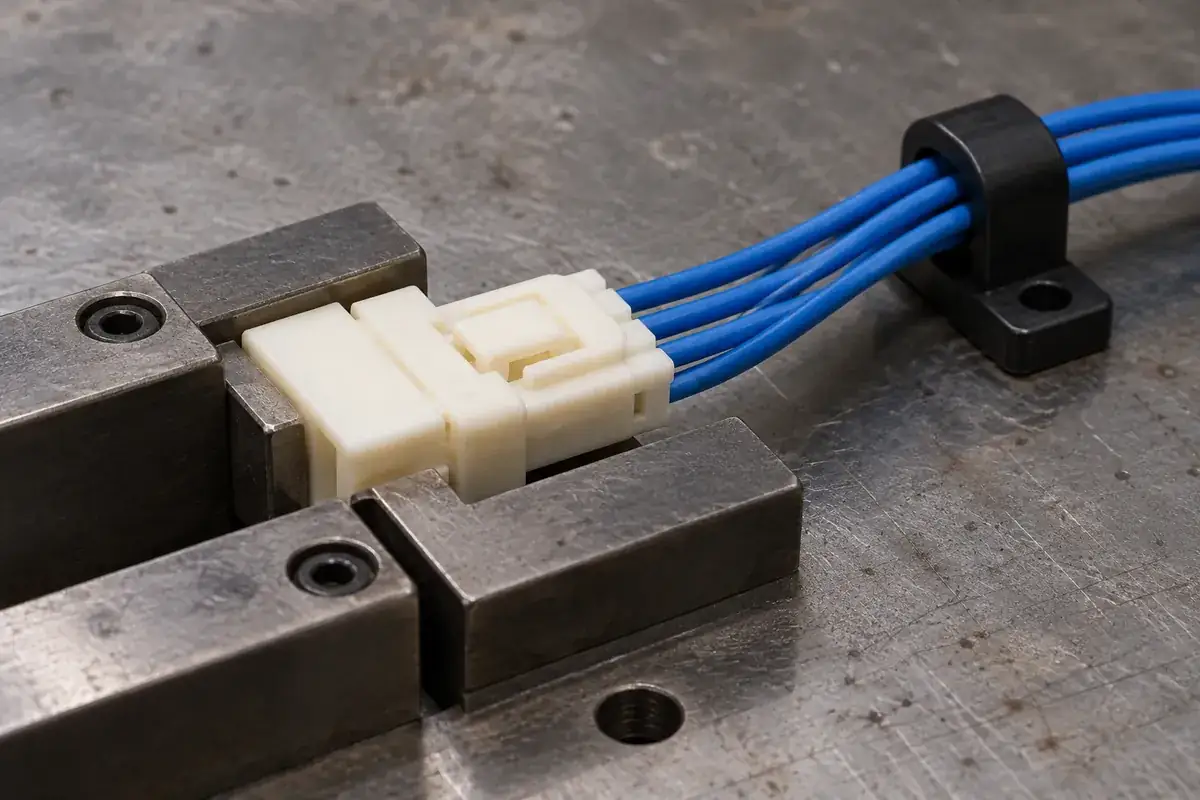
The decision becomes clearer when the review includes load direction, seating confirmation, release access and harness support. Those requirements can be taken into the custom housing feasibility review before the latch detail is frozen.
If the difficult part is the cable route, start with wire-exit and bend space. If it is servicing an individual contact, use the separate terminal extraction review; releasing a connector latch does not release its terminals.