
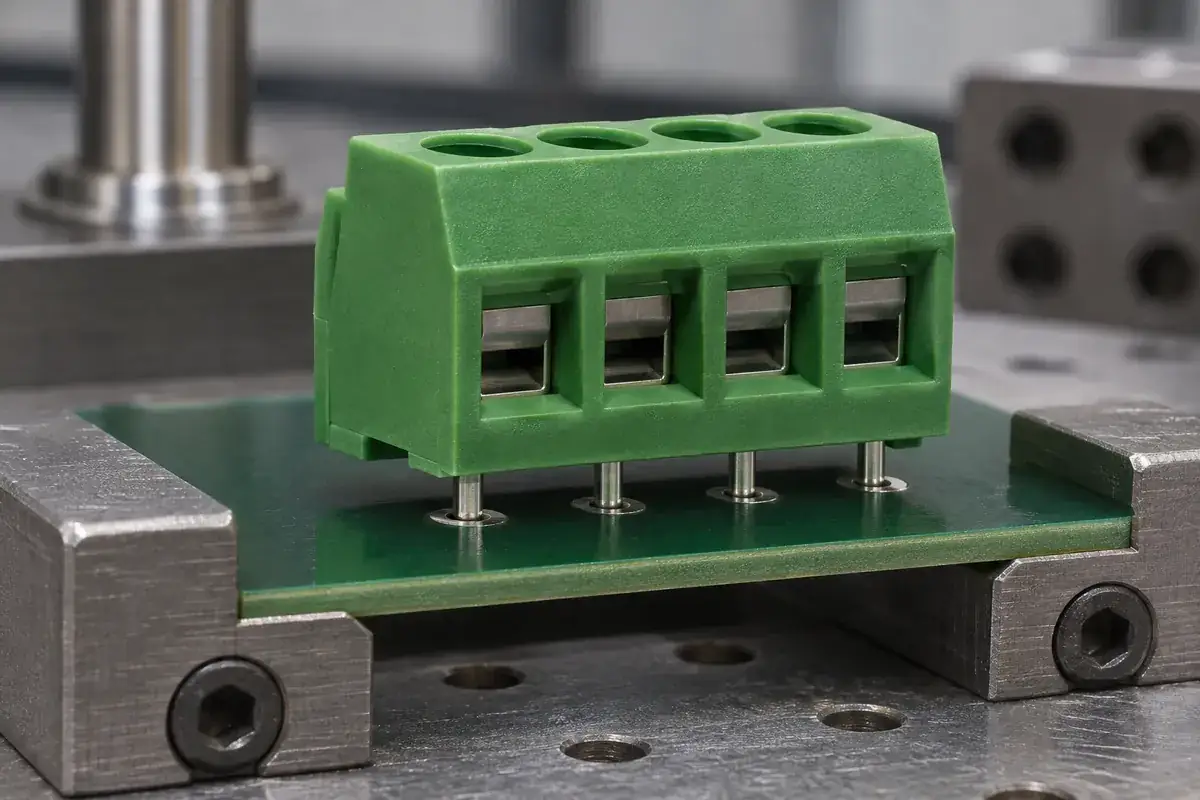
A board can look dry around a terminal block while liquid remains in a sheltered recess underneath it. The plastic body creates an area that is hard to see and may be difficult to rinse or dry. If cleaning is part of the manufacturing process, that hidden space deserves a design review before the housing geometry is frozen.
Drainage is only one part of the problem. The cleaning medium must be suitable for the materials, the intended surfaces must be reached, and the completed assembly must meet its cleanliness and drying requirements. For custom terminal block housings, these questions should be connected to the actual PCB process rather than reduced to a generic claim that the plastic is washable.
Product design illustrations accompany the assembly and manufacturing explanations below.
Define the cleaning process before changing the housing
Establish whether the assembly will be cleaned at all and at which stage. The answer may differ between a soldered header, a detachable plug and a fully wired unit. Identify the flux system, intended cleaning chemistry, exposure conditions and drying method with the electronics manufacturing team. A housing proposal cannot supply these process assumptions by itself.
TE's Micro MATE-N-LOK application specification treats post-solder cleaning as a defined process and directs users to the solder and flux supplier for cleaner recommendations. Its product-specific limits are not transferable to a custom terminal block, but the need to coordinate chemistry and component requirements is directly relevant.
Also identify components that cannot follow the proposed cleaning route. A terminal assembly may include metals, lubricants, markings and accessories with requirements different from the base resin. Checking only a polymer compatibility chart leaves those interfaces outside the decision. Record the complete bill of materials and obtain the relevant processing guidance.
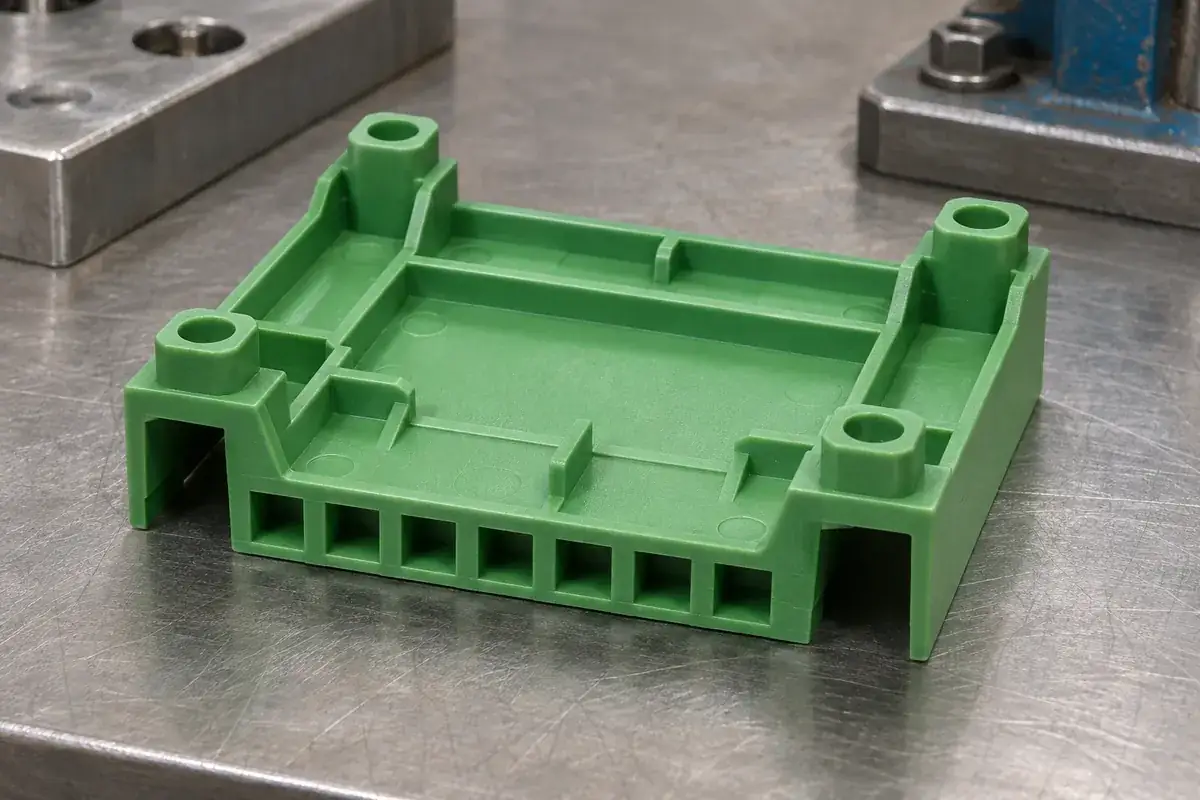
Trace the liquid path under the installed component
Use a section through the housing and board, including solder joints and nearby components. A visible gap along one edge does not prove that all underside cavities communicate with that gap. Ribs may divide the space into pockets, while mounting feet or adhesive can obstruct the route that looked open in the isolated CAD model.
Consider the orientation in the cleaning carrier. A recess that drains when the board is vertical may retain liquid when it is horizontal. If the process includes changes of orientation, show them. Design reasoning is more useful when it follows the real route through the machine than when it assumes gravity always points toward the largest opening.
Increasing standoff height can improve access beneath a component, but it changes other relationships. The terminal may have more leverage against the board, the exposed pin length changes, and the component can sit differently in its insertion fixture. Evaluate those effects before treating a larger gap as a universally better design.
Keep drainage channels out of competing functions
A new opening or groove can alter an insulating surface, reduce local support or admit contamination during service. Review the proposed channel against the complete housing function. The shortest manufacturing solution is not necessarily to remove material wherever a trapped pocket appears; a rib layout or process orientation change may be more appropriate.
For terminal blocks with defined insulation requirements, involve the responsible electrical designer before changing the underside geometry. The creepage and clearance discussion explains why surfaces and surrounding conductors need to be considered together. Drainage approval should not silently bypass that assessment.
Keep mechanical support intentional. Several small feet may establish a stable seating plane, while a long continuous support can create a sheltered cavity. Choose the arrangement in relation to placement, soldering and service loads. The objective is a controlled interface with the board, not simply the maximum possible open area.
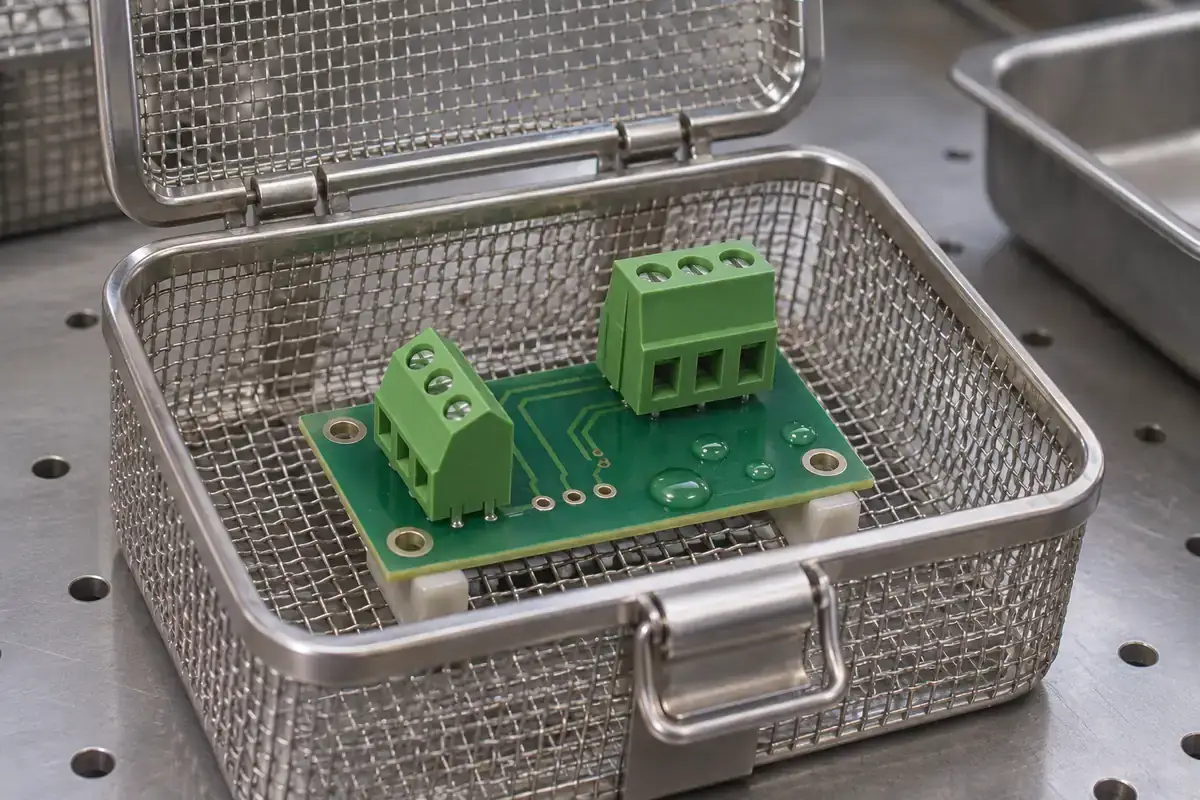
Drying needs its own acceptance basis
A rinse that reaches the underside does not prove that the liquid will leave it within the available drying time. Air may pass around the outer housing while sheltered areas exchange slowly. Ask how the process team will evaluate those areas, especially after soldering and assembly have changed the original access paths.
Do not use a visually dry top surface as the only release criterion. The relevant checks depend on the product and process, and may include inspection for residue, a defined cleanliness assessment or other agreed verification. Specify who owns that acceptance decision and how the sample preparation represents the real assembly.
Residue and retained liquid are related but different observations. A component may be dry while unwanted material remains beneath it; a clean-looking cavity may still retain fluid. Keeping those findings separate helps the team change the right part of the process instead of increasing drying time when rinsing access is the actual issue.
Use molded samples to answer the geometry questions
During mold tooling review, identify the support feet and channels as functional features. Small amounts of flash can narrow a passage, and distortion can reduce a planned gap. Agree which surfaces and dimensions will be checked on molded parts before the assembly team starts process evaluation.
Evaluate the intended resin grade and manufacturing condition. A prototype made with another material may be helpful for seeing the liquid path, but it does not establish chemical compatibility or production behavior. Separate geometry learning from material and process qualification so that an early trial is not mistaken for final release evidence.
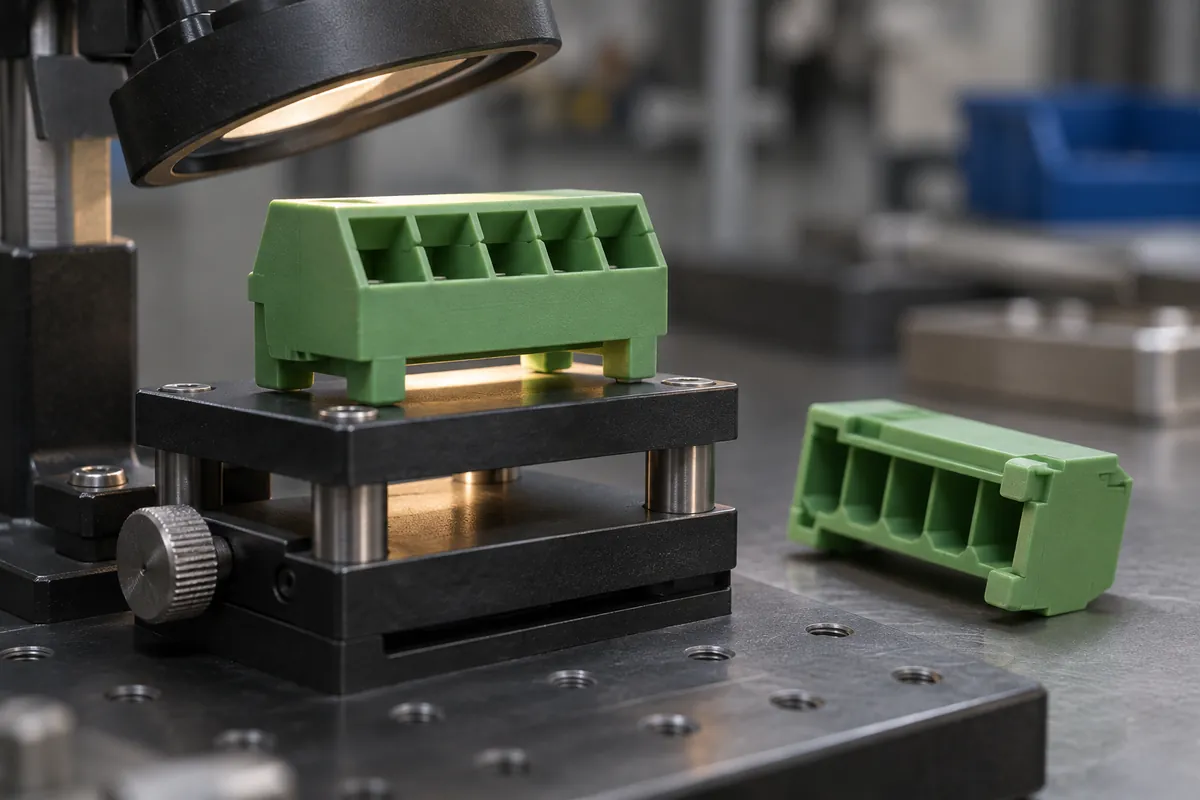
Document a reproducible process boundary
Record the housing revision, board configuration, solder process and cleaning conditions used during evaluation. If the design later changes a standoff, rib or nearby component, revisit whether that change affects the validated route. A small geometry edit can matter even when the terminal count and external footprint remain unchanged.
For supplier discussions, distinguish the plastic-part scope from electronics assembly and cleaning. The molding supplier can evaluate geometry, material processing and part inspection. The assembly process owner must define and qualify the cleaning route for the complete product. Clear ownership avoids a broad washability statement that neither party has actually tested.
Send the housing and PCB envelope with your injection molding inquiry, together with the planned process and critical underside features. That gives the team a practical basis for improving access, support and inspectability without making unsupported claims about the finished electrical assembly.