
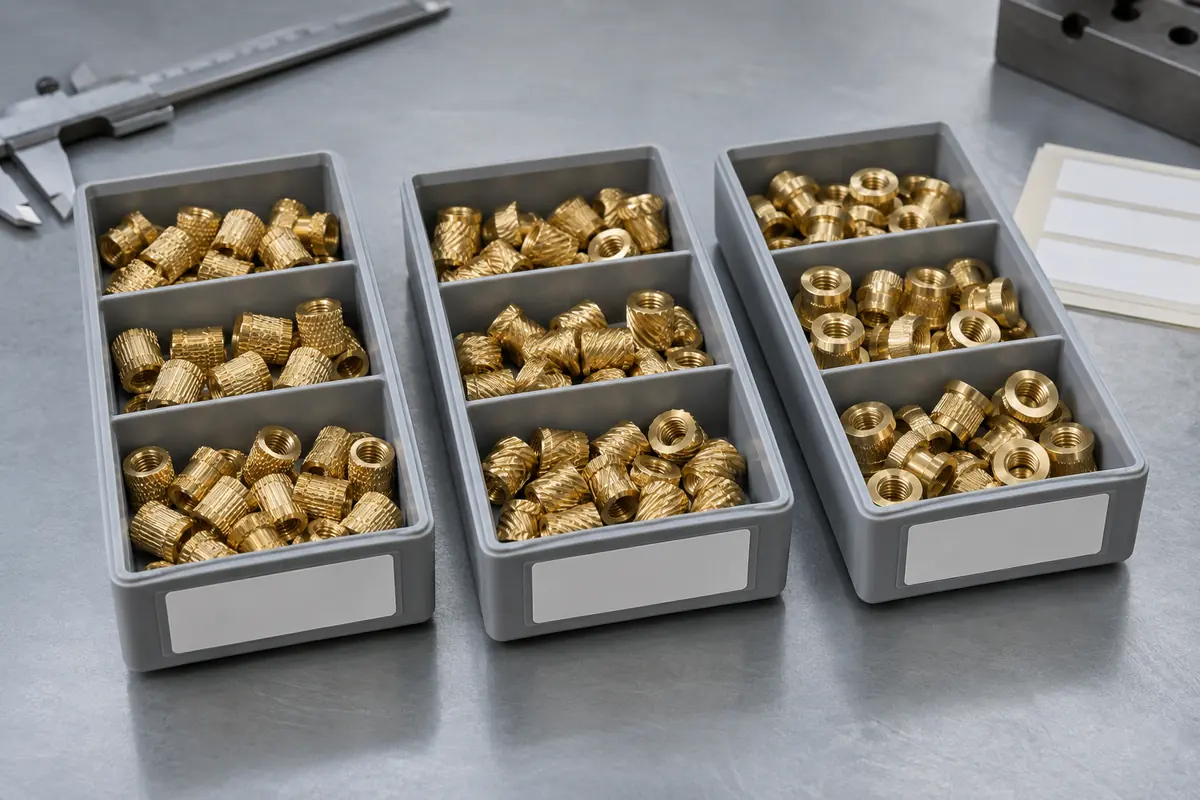
A customer sends the inserts, a molder supplies the plastic and both expect the arrangement to simplify purchasing. It can work well, but only if the handoff answers questions that disappear inside an ordinary unit price: which hardware was received, whether it was approved for use and which finished parts contain it.
Customer ownership does not eliminate the need for a controlled specification and a traceable release decision. This guide addresses small metal threaded inserts supplied for molding. It is deliberately different from handling customer-supplied plastic substrates for overmolding: hardware identity, thread condition, retention geometry and mold-location dimensions are the central issues here.
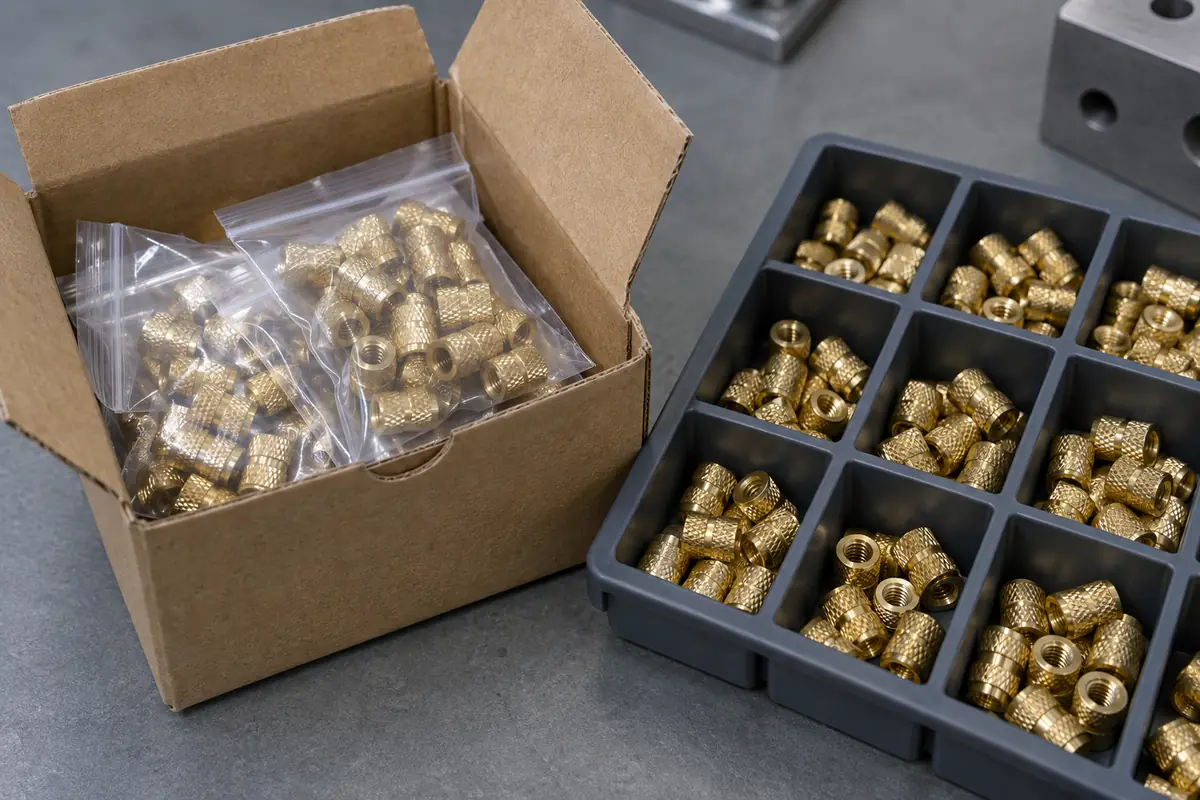
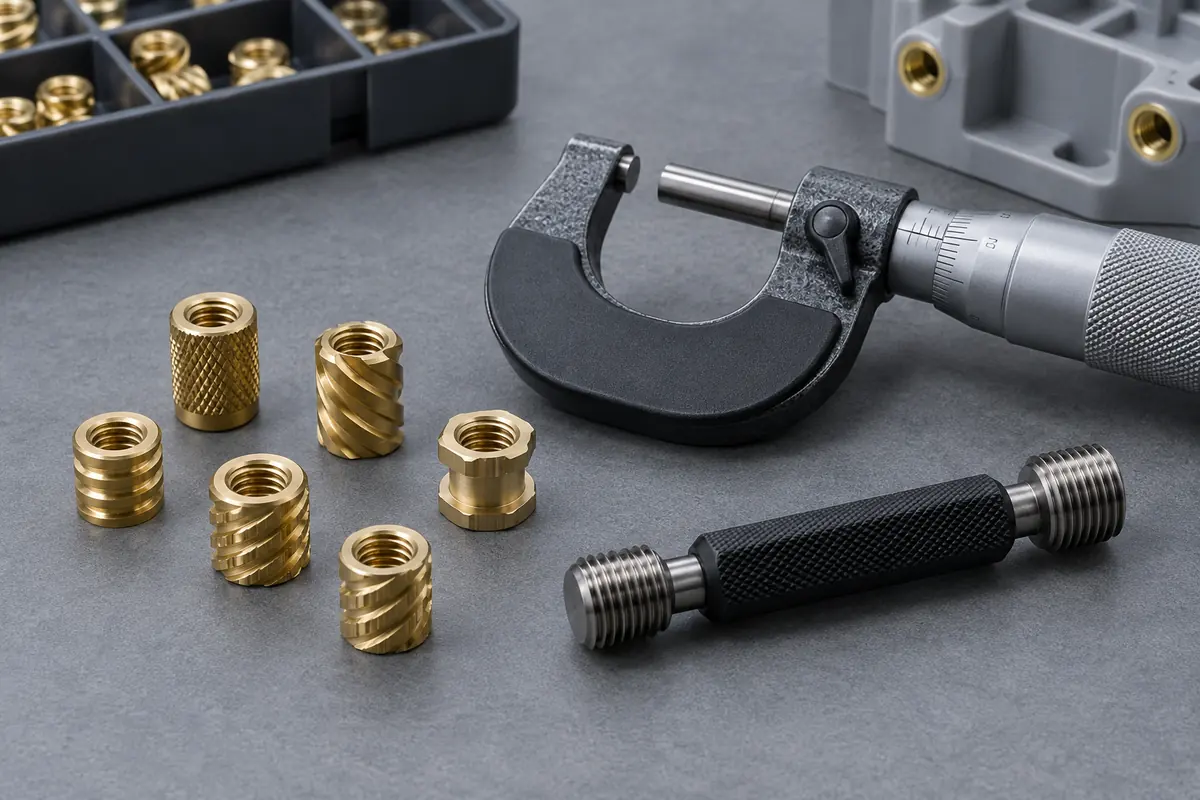
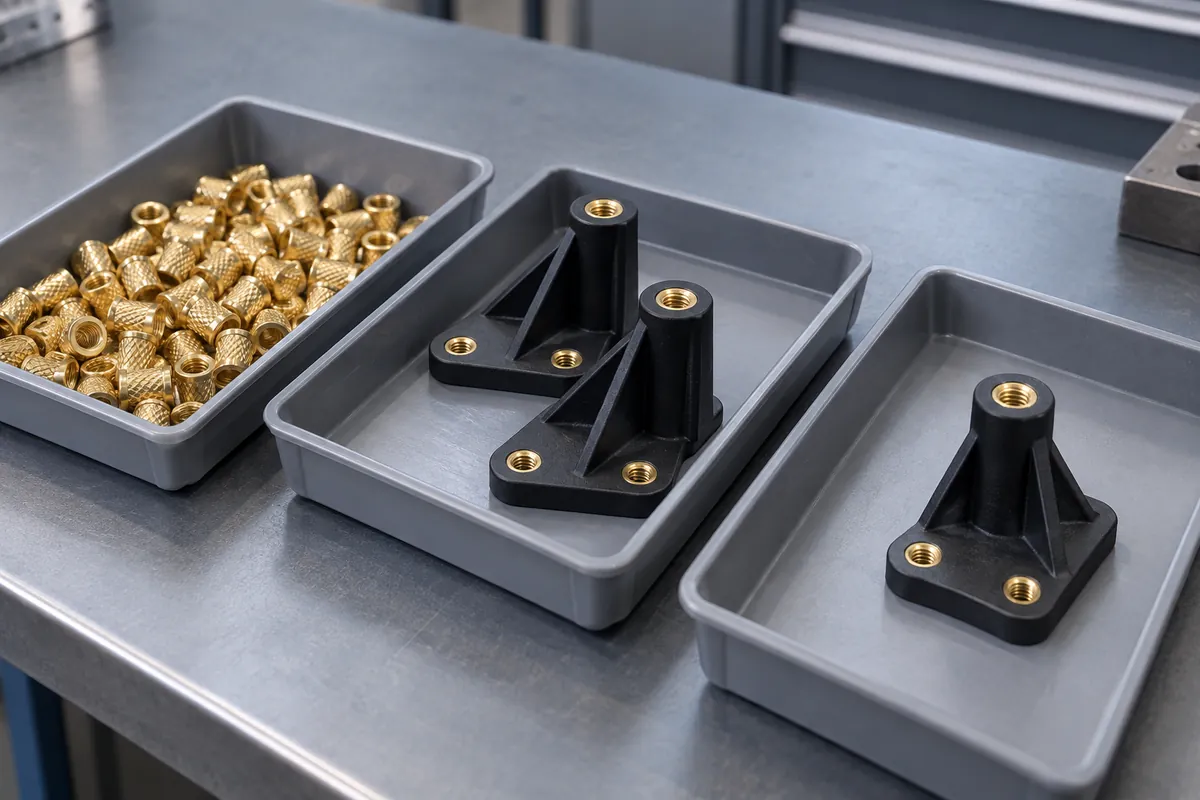
All images in this article are newly AI-generated illustrations of engineering concepts, not photographs of a customer project or evidence of completed testing.
A Thread Size Is Not a Complete Part Identity
Two inserts with the same internal thread can differ in length, outside geometry, material, finish or intended installation route. Identify the manufacturer part number and controlled drawing revision, including any custom requirements. If an alternate source is allowed, define who approves equivalence and what evidence is required before the alternate enters a production batch.
The insert supplier's own product-family information can help distinguish intended uses. For example, SPIROL separates molded-in inserts from post-mold installation families. That is a reason to verify identity, not a recommendation to substitute one catalog item for another without a drawing review.
The incoming record should link the purchase or customer shipment reference to the insert identity and the supplier's batch information where provided. A certificate can accompany the shipment, but it should not be presented as proof that every dimension or assembled function has been inspected unless that is actually what the document establishes.
Choose Checks That Protect the Molding Handoff
Review the features that the tool uses to locate or support the insert, the geometry needed for retention and the thread requirement. Agree an incoming inspection scope from the drawing and project risk. Do not infer that checking the thread alone verifies the outside dimensions, or that a visual match verifies the material or surface specification.
Inspect packaging condition and visible contamination or damage against agreed criteria. If cleaning is required, confirm the method and its ownership before altering the hardware. An undocumented cleaning or coating step may change the condition originally reviewed for the project. Record an approved preparation process as part of the part history rather than an informal bench activity.
Sampling, acceptance and escalation also need agreement. The customer and molder should know whether incoming material waits for approval, who can authorize its use and what happens when documents or checks are incomplete. Ownership of the metal does not authorize the supplier to consume questionable material or discard it without a defined disposition.
Link Incoming Hardware to Finished Batches
A useful traceability record follows material through receipt, release, issue to molding and the resulting finished batch. Where inserts are repacked into smaller containers, carry the identity forward. If two approved lots are combined, record the combination and identify the resulting scope rather than pretending the finished batch came from only one lot.
This does not require inventing an elaborate digital system. A controlled record can be simple as long as it can answer a real investigation: which received inserts could be inside these finished brackets, and which other finished batches could share that input? The required granularity should be agreed with the customer before production begins.
| Stage | Identity to preserve | Decision to record |
|---|---|---|
| Receive and inspect | Shipment, insert part/revision, supplier lot, received quantity: ____ | Checks, document status, hold/release and authorizer: ____ |
| Issue and mold | Incoming lot, container, molding run and finished batch: ____ | Trial allowance, line issue, changeover and exceptions: ____ |
| Reconcile and close | Accepted parts, scrap, unused hardware and held material: ____ | Disposition, return authorization and record reference: ____ |
Reconcile Hardware Without Hiding Trial Consumption
Trial work and process setup may consume inserts before an order produces acceptable parts. Agree the allowance and how actual usage will be reported instead of assuming every received insert must become a shipped bracket. Keep rejected hardware, molded scrap and unused stock separate in the reconciliation.
If a discrepancy appears, investigate it using the issue and disposition records. Do not “balance” a log by assigning unexplained differences to scrap. Purchasing needs an honest account of customer-owned material, including uncertainty that has not yet been resolved. This also informs whether more hardware is needed before continuing the order.
The Next Shipment Is a New Release Decision
Require notice of changes to the insert drawing, source, material, finish, thread or packaging where they may affect the approved process. An unchanged customer part number does not establish that all those details stayed constant. Assess the change before merging new hardware with remaining approved stock.
Connect the incoming plan to finished-thread checks, the agreed retention-test scope and the purchase requirements for injection-molded mounting brackets. Send your insert specification, supply responsibility and bracket drawing for a quotation. The response should state what inspection, handling and evidence are included.