
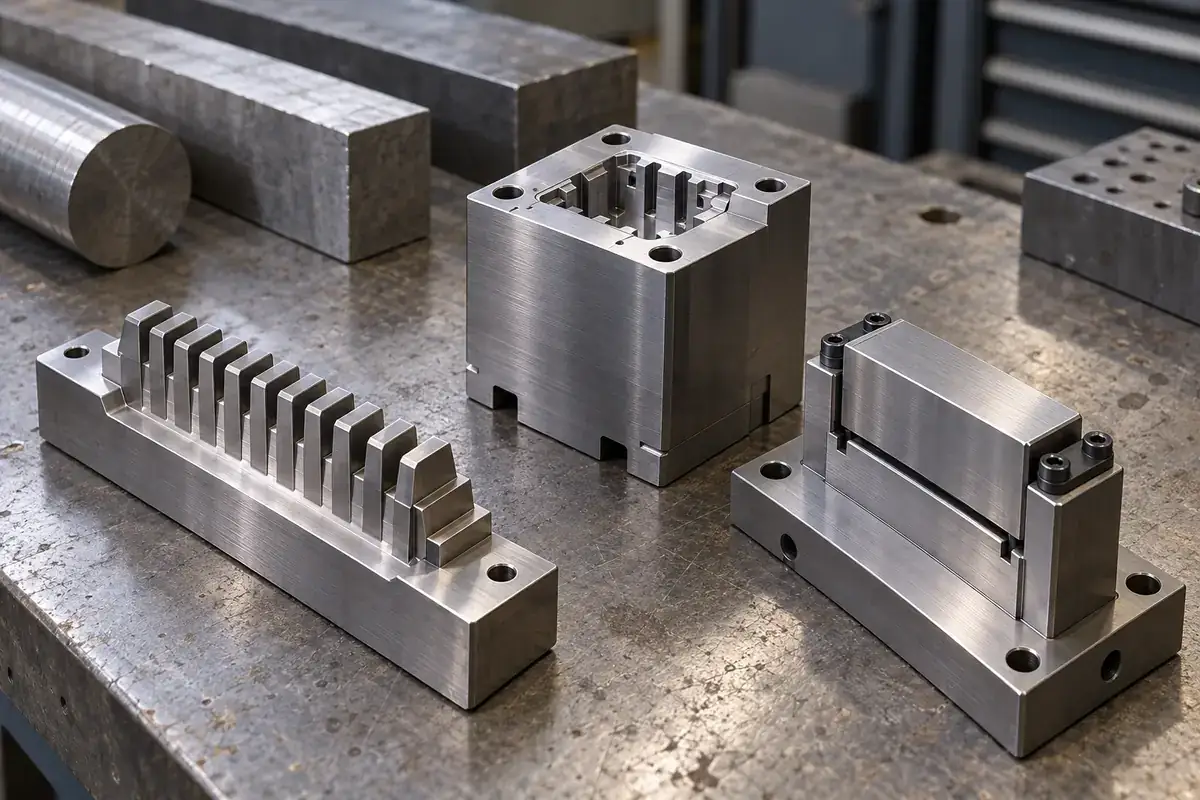
Product design illustrations accompany the tooling and manufacturing explanations below.
The hardest available steel is not automatically the best choice for a connector mold insert. A narrow core blade, a broad cavity face and a small shutoff feature face different demands. Choosing one material for all three without examining those demands can exchange one problem for another: resistance to wear means little if a delicate feature chips during handling or service.
Start with the feature that is difficult to preserve. It may be an edge controlling flash, a polished molding face, a slender blade defining a terminal opening or the seat that keeps a replaceable component aligned. The steel selection needs to protect that function within a practical design, manufacturing route and maintenance process.
Translate the molding application into steel requirements
The actual molding compound matters more than its broad polymer-family label. Reinforcement, additives and processing conditions can change the demands on the tool. A connector specified only as “PBT” or “LCP” leaves too much uncertainty for a detailed wear review. Use the approved grade and the supplier’s relevant processing information, then examine where that material flows or contacts fine tooling features.
The expected production pattern also matters. A mold used for repeated short runs may experience frequent storage and setup, while a longer campaign creates a different maintenance rhythm. Neither pattern leads automatically to a particular steel. They help explain which risks need attention and whether easy local replacement is valuable alongside material durability.
Uddeholm’s guide to steel for molds treats wear resistance, toughness, corrosion resistance, thermal properties and surface requirements as selection factors. Those competing properties are a useful framework. They should lead to a grade-specific proposal, rather than a claim that a single hardness number defines mold quality.
Fine geometry changes the meaning of durability
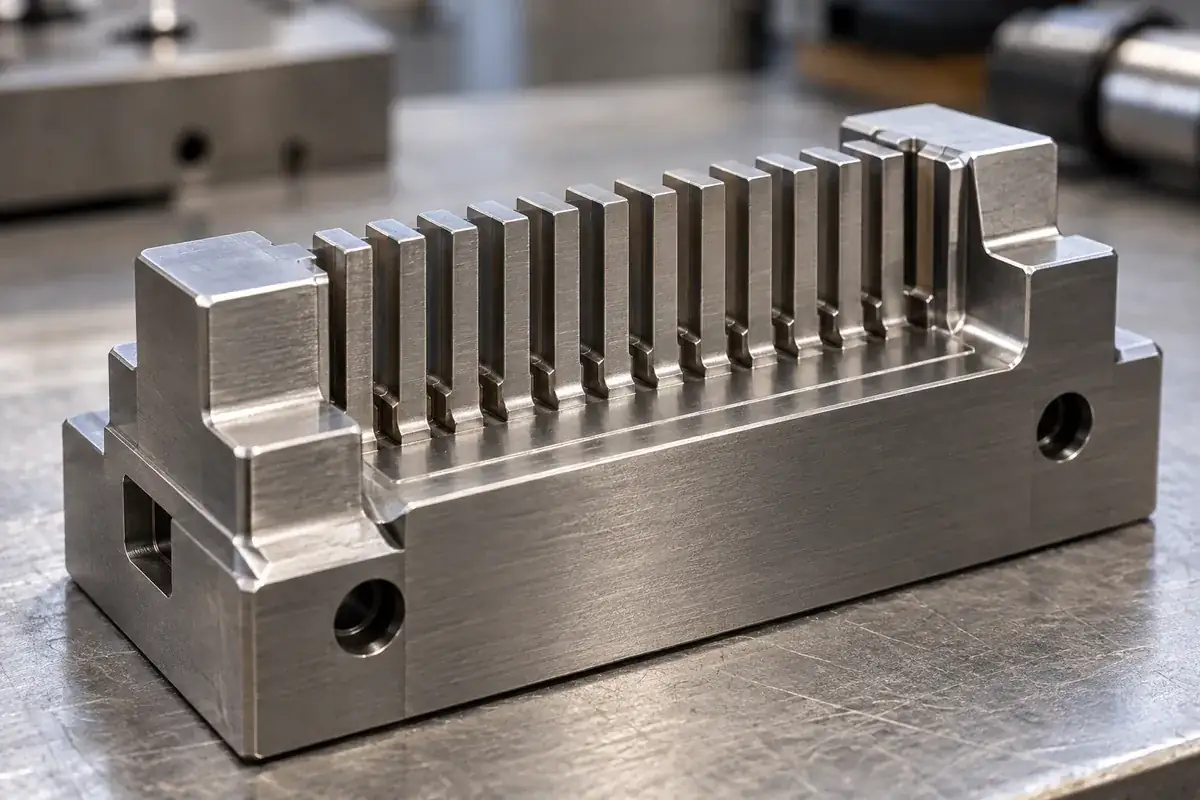
Consider an illustrative comb-shaped core that forms a row of narrow connector openings. The blades have limited room for generous cross-sections, while their roots transfer loads into the base. Material toughness is relevant, but it cannot compensate for an unnecessarily sharp root or an unsupported span. The geometry and the steel should be reviewed as one system.
Wear is also local. An edge repeatedly exposed to abrasive contact may need a different response from a protected locating surface. Before increasing hardness across the entire component, identify where the change is expected to help. It may be more effective to isolate the vulnerable feature or revise its support than to change every part of the insert.
A nominal steel grade does not describe the whole delivered condition. Supplied condition, heat treatment where required, final hardness range and subsequent finishing all affect the usable component. The drawing and manufacturing record should distinguish the starting stock from the approved final insert. A procurement label cannot substitute for that relationship.
This is particularly important for replacement parts. A spare with the same outline but a different final condition can behave differently in service or during fitting. If a substitution is proposed, compare the functions that drove the original selection. Similar commercial descriptions are not sufficient evidence that two materials are interchangeable for a delicate feature.
Look beyond the molding face
Corrosion deserves a specific assessment rather than a broad assumption about every flame-retardant or reinforced resin. The relevant compound, processing environment, cooling circuit and storage practice can all influence the decision. Uddeholm’s mold-steel guidance includes both molding-related and environmental corrosion concerns. The practical question is what the actual insert will encounter throughout its use.
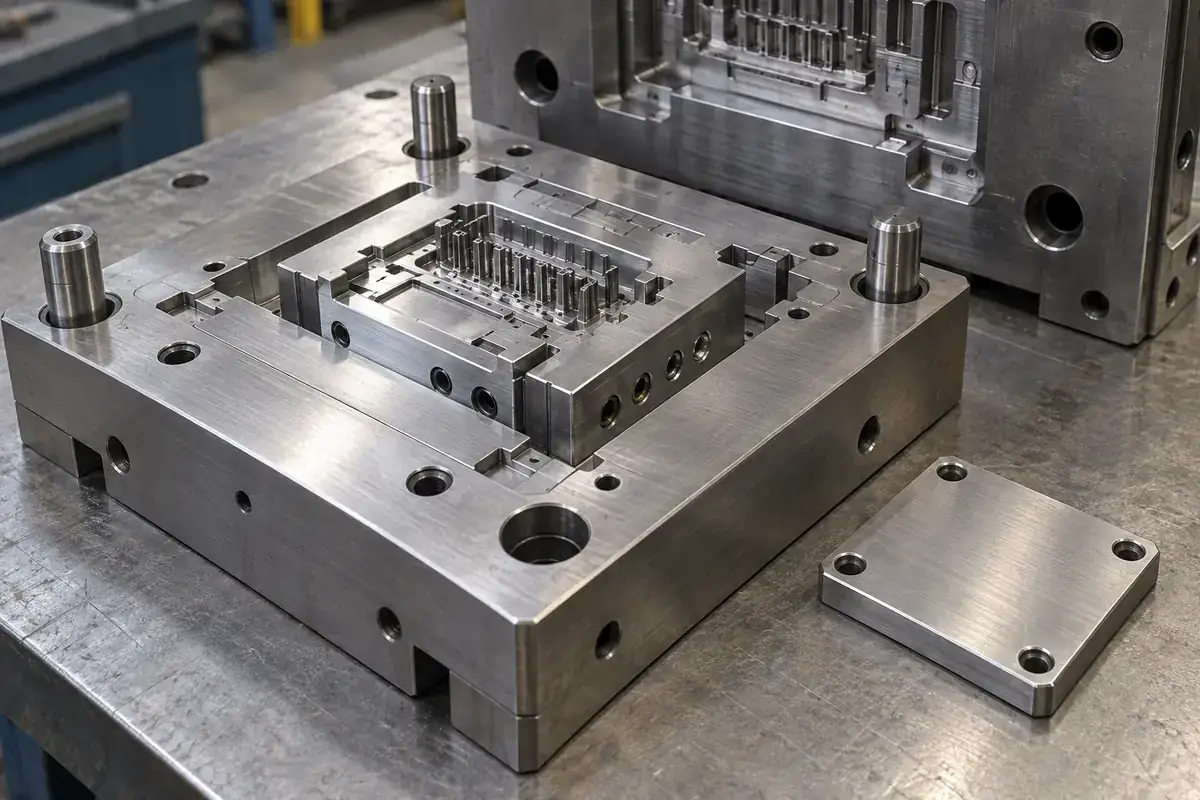
Cooling performance also depends on more than a material label. An insert’s section, contact with supporting steel and relationship to cooling passages determine the practical heat path. A favorable thermal property on a data sheet does not remove a poorly supported or poorly located region. Review the component in the mold assembly before claiming a production benefit.
Surface finishing requirements can narrow the options further. An exposed connector surface may need a specified appearance, while another region mainly controls geometry. The steel and finishing sequence should suit those distinct roles. Polishing every surface to the same visual standard can add work without improving the molded feature and may disturb small edges that need to remain controlled.
Machining access and final condition interact with the material decision. The wire and sinker EDM comparison explains why through-features and blind pockets may require different routes. When reviewing steel, include the intended machining and finishing operations so the proposal describes an achievable finished component, rather than an isolated material preference.
Treat coatings as a separate engineering decision
A coating may address a particular surface need, but it is not a general repair for weak underlying geometry. The substrate must support the coating, and the finished dimensions must account for the selected treatment. On small connector tooling, an unspecified surface treatment can affect an interface that previously appeared correct on the uncoated drawing.
Uddeholm’s coating guidance emphasizes the relationship between coating performance and the supporting tool material. Use that principle to ask what problem the coating is intended to solve. If the underlying concern is blade support, cracking or dimensional registration, a coating proposal needs more than a promise of a harder surface.
Repairability should be considered at the same time. A component that may require local correction needs an approved route consistent with its material and treatment. Removing or restoring a coating, reworking an edge or replacing a segment can involve different consequences. These should be understood before a repair becomes urgent, not discovered during an unplanned interruption.
Make the selection traceable to the function
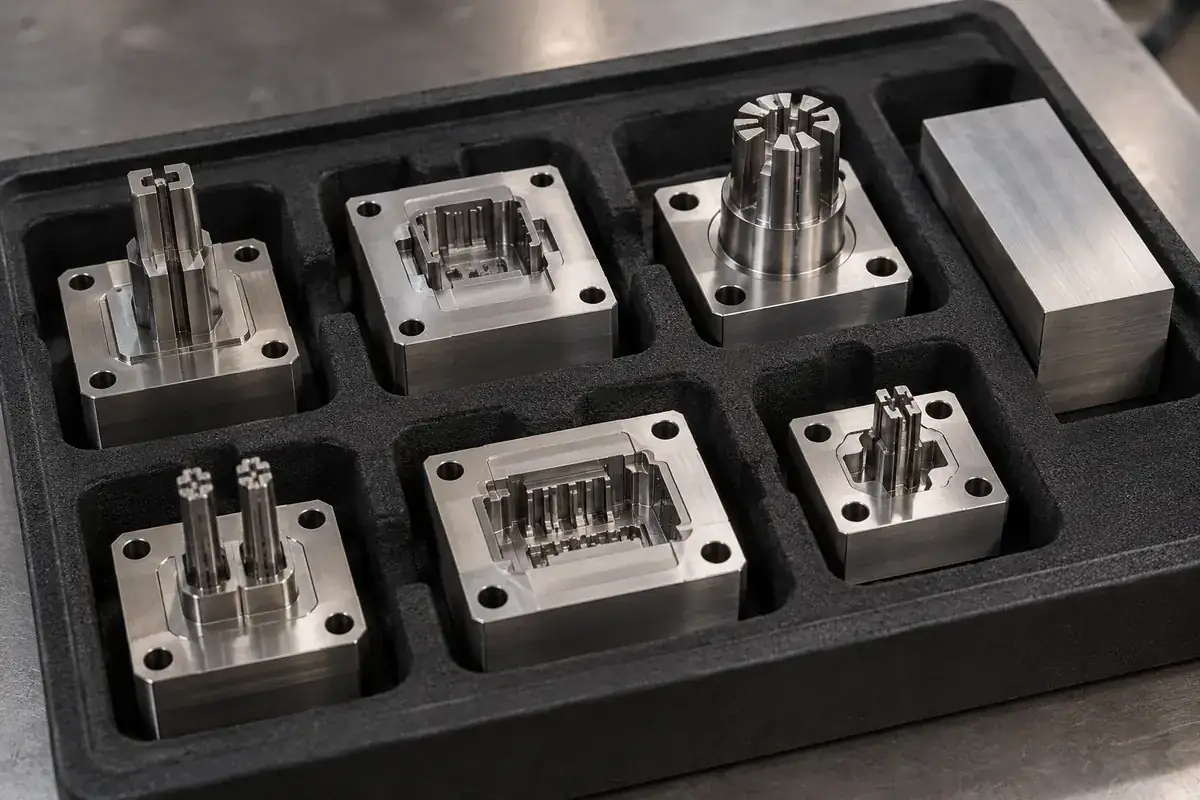
A useful steel specification explains why the selected grade and condition suit the local feature. It can connect a fine blade with toughness and support, a wearing interface with the relevant contact condition, or a molding face with its finish requirement. This reasoning also makes a later substitution easier to evaluate without starting the discussion from scratch.
The replaceable-insert strategy can preserve options when different regions have different needs. However, splitting an insert introduces seats and joints that need their own support and registration. Material selection and modular construction should therefore be reviewed together; neither is an independent shortcut to a durable tool.
For precision connector mold inserts, provide the compound grade, important forming features, required surface condition and intended operating context. The resulting proposal should identify the steel and final condition, explain the local trade-offs and keep approved changes traceable. That produces a defensible material decision without inventing a universal tool-life guarantee.