
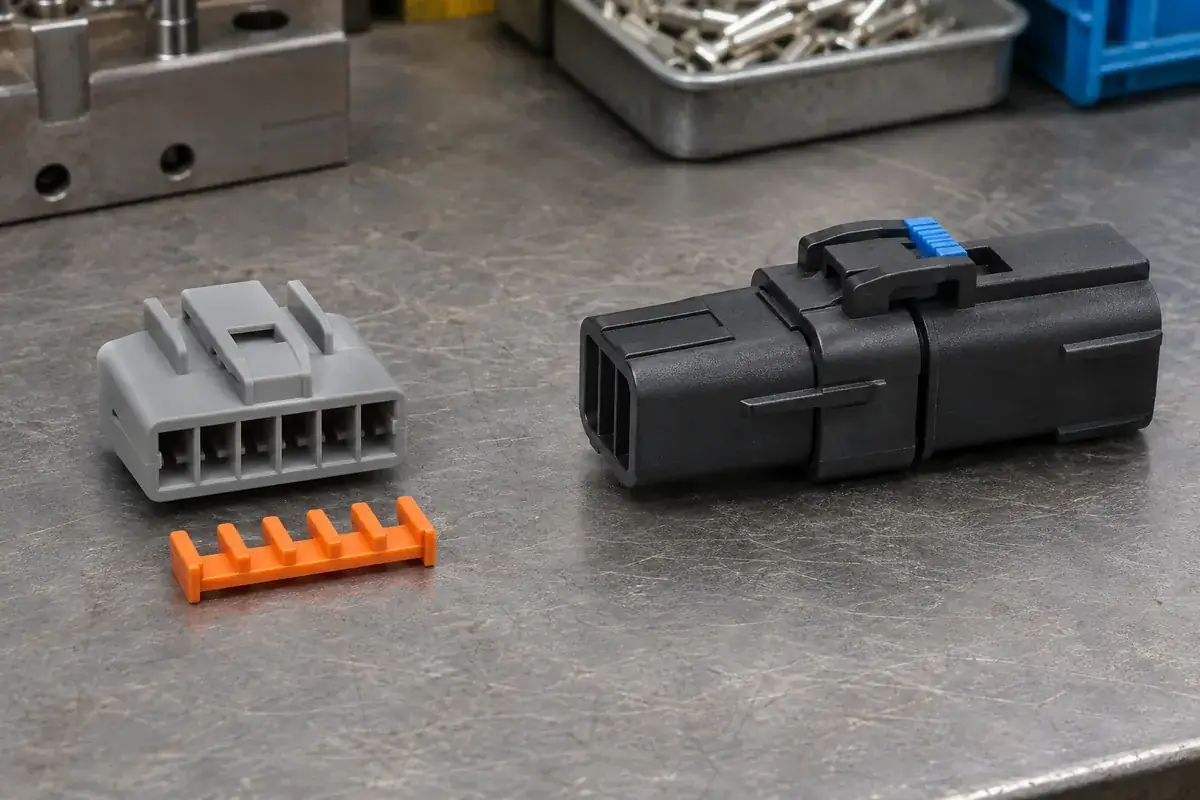
A wire can move out of a connector even while its two housings remain firmly joined. The opposite can also happen: every terminal stays inside its cavity, but the plug separates from the socket. These are different mechanical failures. Calling both solutions a secondary lock can hide which interface a small plastic component is actually supposed to control.
Terminal position assurance, or TPA, concerns the relationship between terminals and their housing. Connector position assurance, or CPA, concerns the mating relationship between connector halves and the operation of their latch. For custom molded parts, the useful starting point is therefore the movement that must be restrained, followed by the surfaces that will restrain it.
Product design illustrations accompany the assembly and manufacturing explanations below.
Follow the terminal before looking at the outer latch
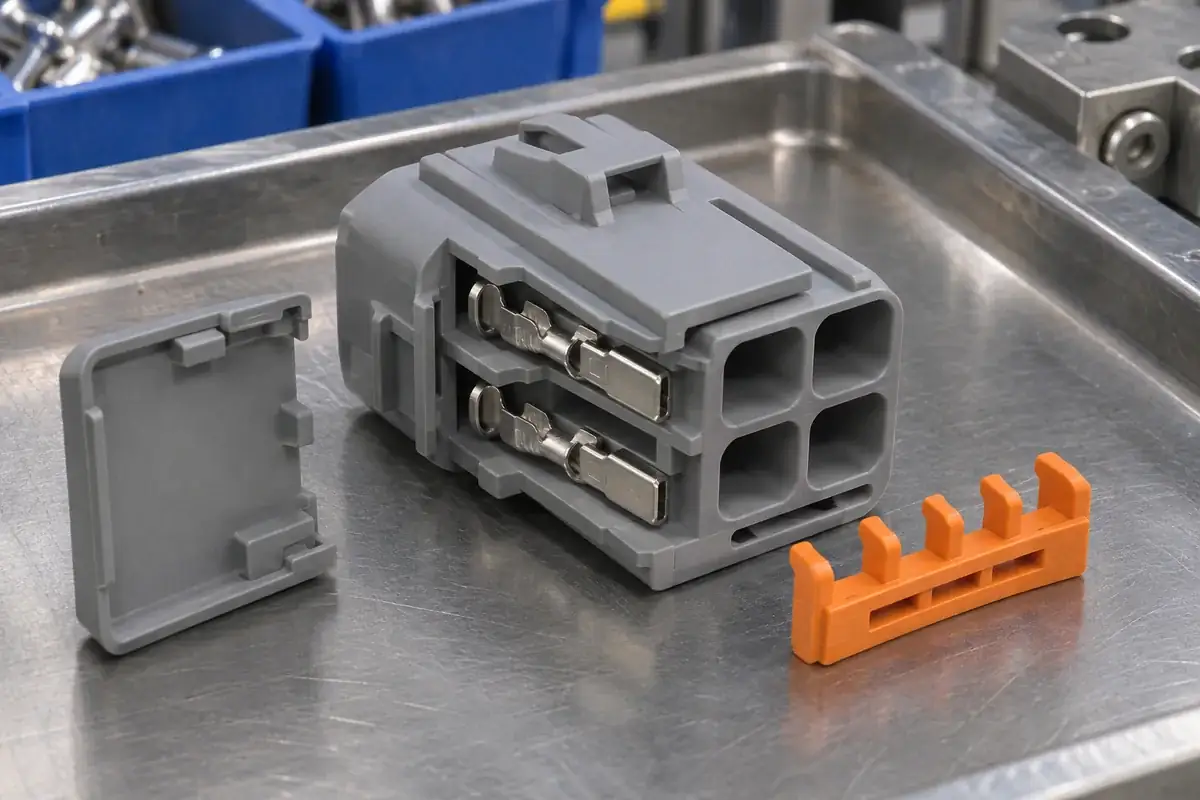
A terminal enters a cavity along a defined path and reaches a specified seated position. Retention may involve a resilient feature on the metal terminal, a molded feature inside the housing, a separate retaining part, or a combination. The exact arrangement determines which surface opposes withdrawal and what must move when the terminal is intentionally removed for service.
A TPA component can add retention through a shoulder, window or another defined interface. Some arrangements also prevent the lock reaching its final position when a terminal has not reached the required location. That behavior depends on actual geometry. The name TPA alone does not establish how the device detects position, which terminals it accepts, or the allowable assembly sequence.
Molex's contact-retention guide describes several retention approaches and explicitly shows that TPA implementations differ. In one example the terminals are not retained until the TPA is fitted; other systems combine a primary retention feature with a secondary lock. Identify your selected construction before prescribing a terminal pull-back step or assuming a loose housing will retain loaded contacts.
The design drawing should connect the terminal seating reference to the TPA engagement feature. An exterior dimension can help locate the lock, but it does not necessarily reveal the remaining overlap behind a contact shoulder. Review the metal terminal and plastic components together, including the permitted variation in the features that establish that overlap.
CPA acts at a different assembly boundary
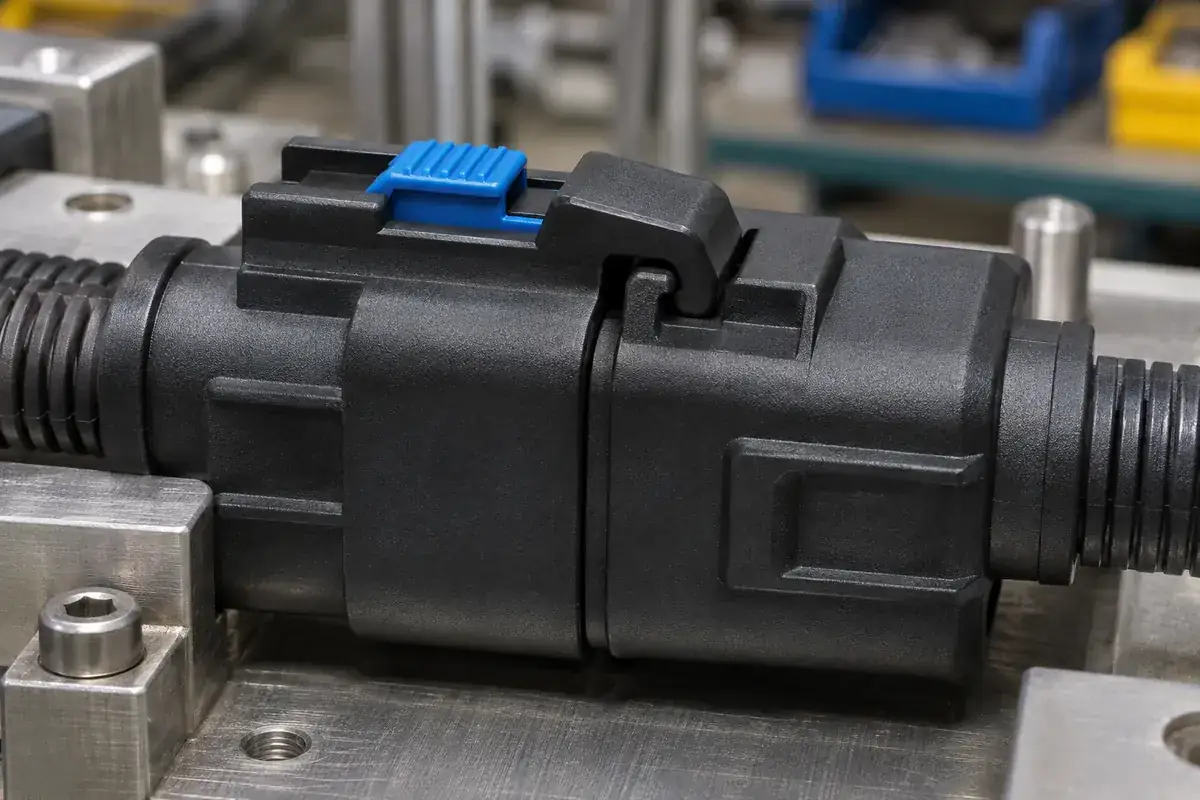
When the plug and receptacle mate, a primary latch usually provides the intended mechanical connection. A CPA may then occupy a position that restricts latch release or otherwise supports the defined mating condition. Its guide, stop and engagement surfaces belong to the housing-to-housing relationship, even if the CPA sits physically close to the terminal cavities.
Many CPA designs are intended to reach their final position only after the mating interface reaches the required condition. Verify that sequence against the selected connector design. A visible colored slider is not enough to establish the blocking logic: examine what moves out of its path during mating and what prevents an unintended route around the obstruction.
The loads are also different. Pulling a wire directly challenges terminal retention and the crimped connection. Pulling the connector bodies apart challenges the mating latch and associated housing structure. Cable routing can introduce both effects, but a stronger CPA cannot correct a terminal that is incompatible with its cavity, and a TPA does not replace the connector mating latch.
This distinction should remain clear in the language used during fault analysis. Record whether a terminal moved, a primary retention feature released, a housing latch disengaged, or the connector never reached full mating. A photograph of the complete assembly may show the final symptom while concealing the first interface that lost its intended position.
Give each lock its own assembly and service states
For a typical design review, identify the supplied state, the contact-loading state, the terminal-retained state, the connector-mated state and the service-release state. Some products combine or omit steps; others require several separate actions. Naming the states makes it easier to see whether the proposed production fixture or work instruction assumes a movement that the component does not permit.
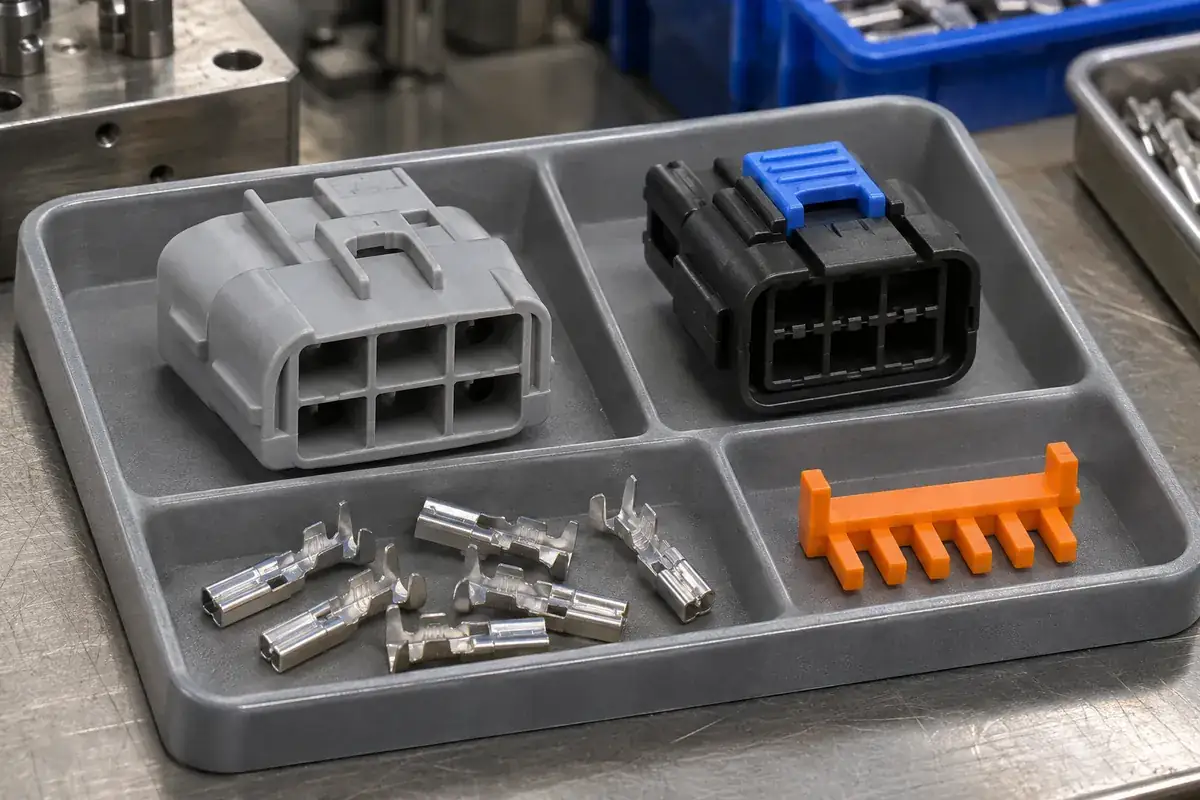
The TPA may be supplied loose, captured in a preliminary position or integrated into the housing. A CPA may also be retained on one housing before mating. These choices affect transport, feeding and handling. A captured part reduces loose-piece handling, but its exposed actuator must be protected from being moved accidentally by a tray wall or the assembly nest.
Service requirements need equal attention. Determine whether the connector must first be unmated, the CPA withdrawn, the TPA returned to a release position, or a separate terminal tool applied. Review the order using a populated connector in its installed surroundings. An accessible release feature on an empty bench sample can disappear behind wires, brackets or an enclosure wall.
Our guide to pre-lock and final-lock assembly states explains that sequence in more detail. For the plastic component quotation, specify which states are supplied and which operations belong to your assembly process. A loose lock and a preassembled housing-and-lock set require different inspection, handling and delivery definitions.
Turn the function into a moldable component definition
Both lock types can depend on small flexible beams, narrow guides and positive stops. Their geometry should be reviewed with the intended resin, molding direction and acceptable surface condition. Flash on a guide or an unsuitable gate vestige can interfere with motion even when the overall dimensions look correct. Identify these functional surfaces before finalizing the tooling concept.
Sample evaluation should separate dimensional inspection from assembly behavior. Measure the agreed plastic references, then assemble identified counterparts and examine the specified states. Any force, displacement, durability or environmental requirements need their own agreed method and acceptance criteria. A successful hand assembly of one pair is useful feedback, but it is not a substitute for those defined evaluations.
For custom TPA and CPA connector secondary locks, provide the lock CAD, housing and terminal revisions, the intended assembly sequence and the required supplied condition. Include your mold tooling and component-inspection expectations. Clear interfaces let the manufacturing review concentrate on the small features that make the correct movement possible and the wrong movement difficult.