
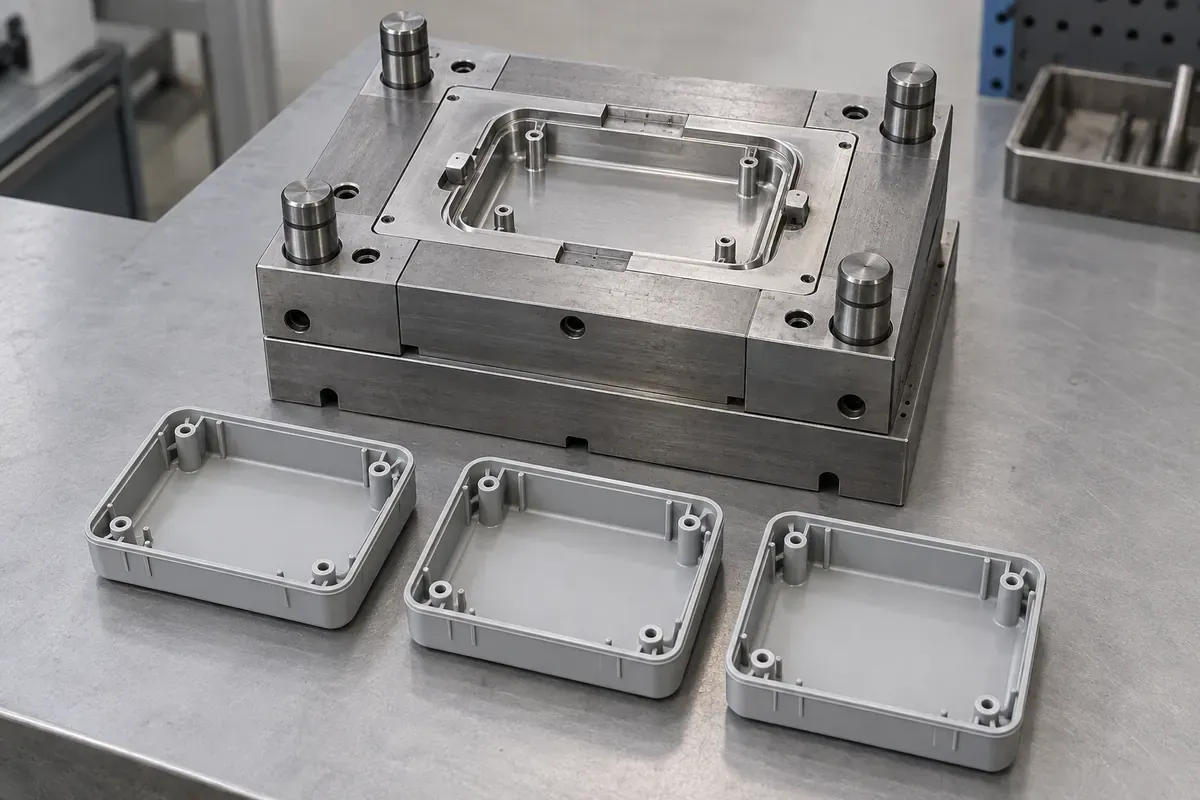
An injection mold can arrive safely at a new manufacturing site and still leave the receiving team with important work unresolved. The crate contains a physical tool, but it does not automatically contain the knowledge of its approved configuration, included accessories, maintenance history or prior sample decisions. A successful handover has to transfer that context as well.
The useful objective is not simply to move a mold; it is to give the receiving team an identified package and a defensible route to production approval. That applies to a newly completed tool and to a transfer between existing production sites. The discussion below is technical procurement guidance, not legal advice or a guarantee that a particular mold can run at another location. Commercial rights and technical compatibility both require confirmation.
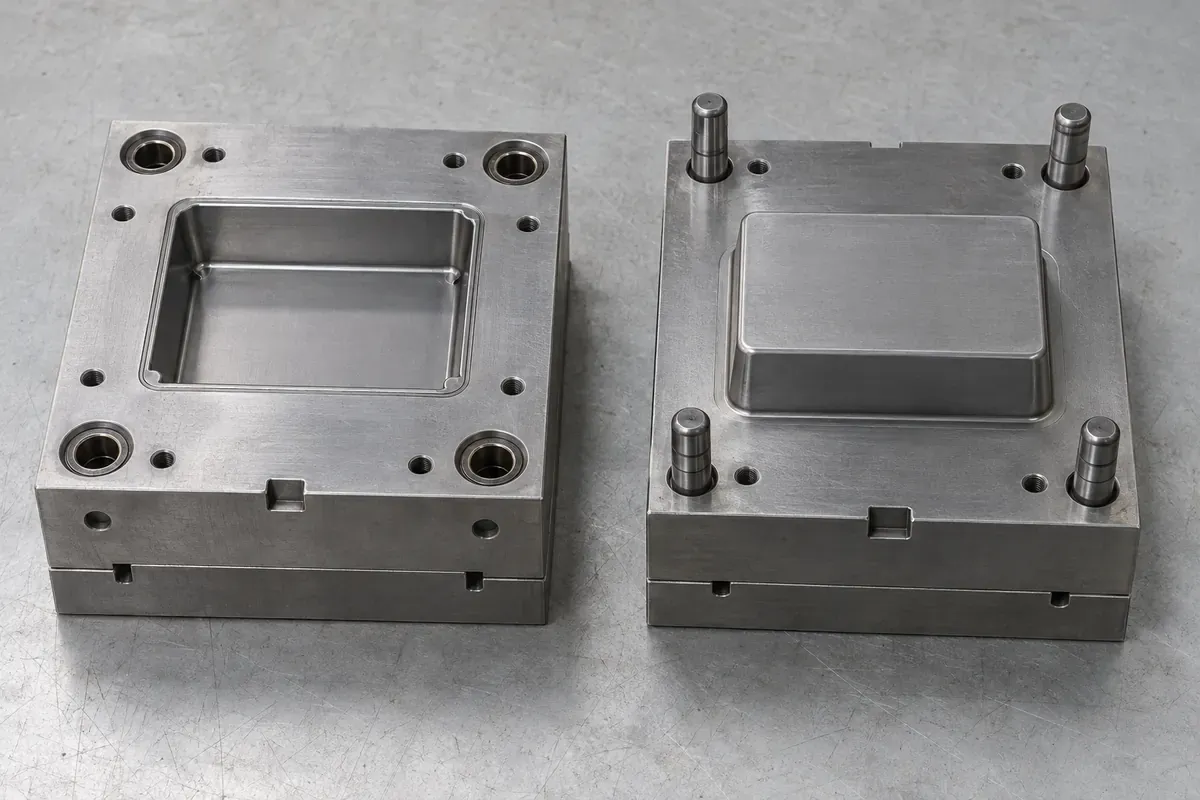
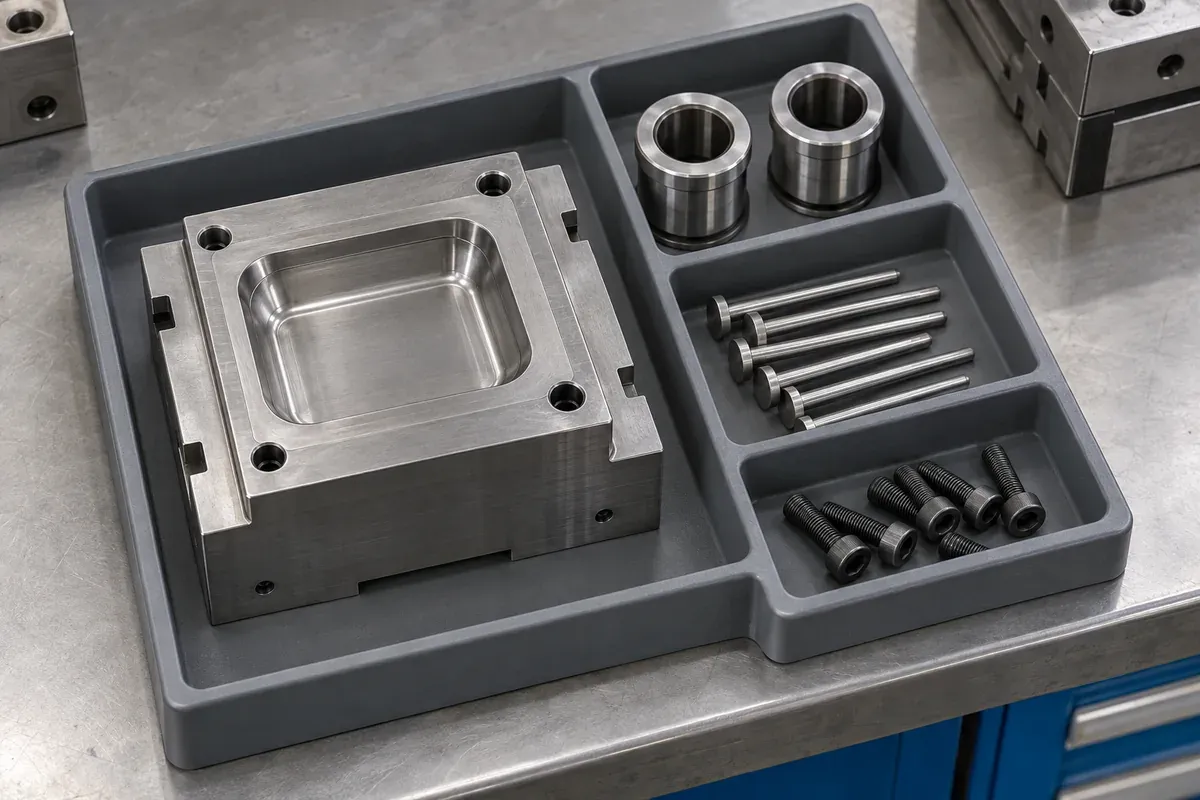
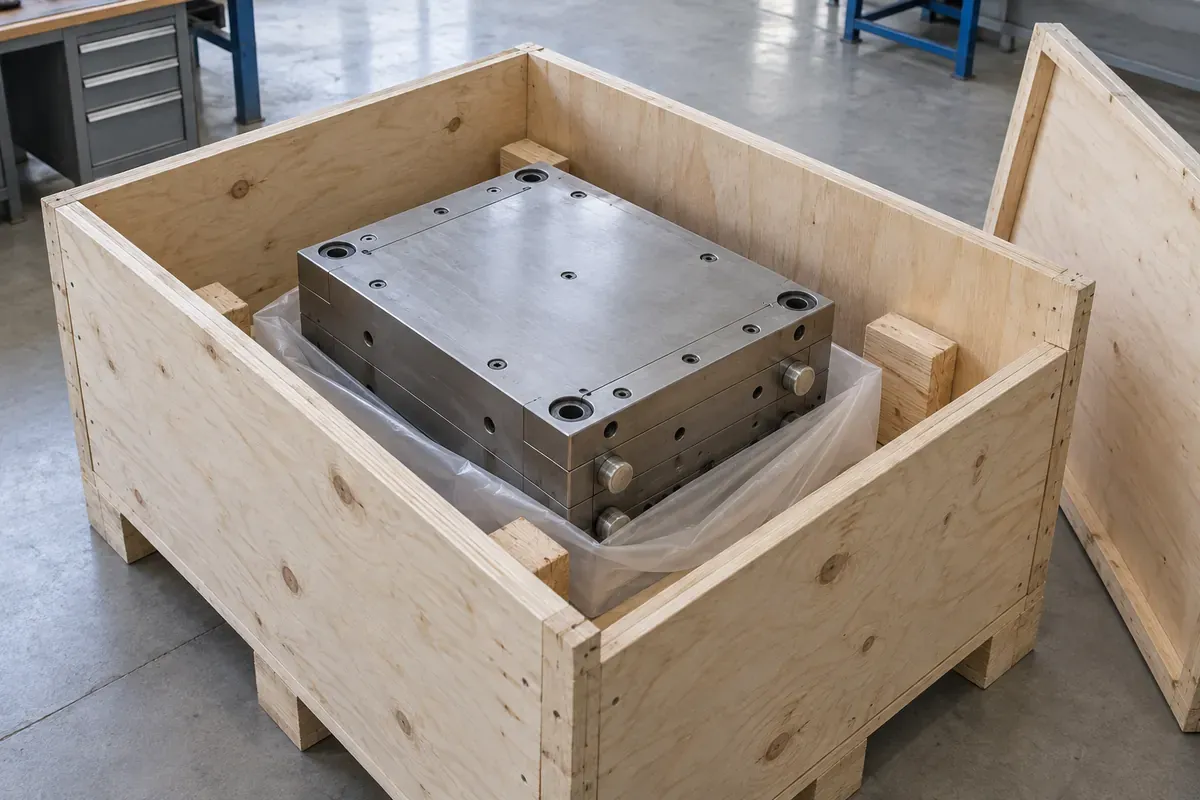
All images in this article are newly AI-generated illustrations of engineering concepts, not photographs of a customer project or evidence of completed testing.
“The Tool” May Not Mean the Same Package to Both Parties
List the tool identifier, associated part numbers, approved revisions, cavity count and included items. Distinguish a complete mold from removable cavity inserts, a shared base, a controller and accessories. A buyer who expects a complete assembly may otherwise receive a technically different package from the one the receiving site planned to install.
Document who owns each item, who authorizes release and which contractual conditions must be satisfied. Do not infer transfer rights or file ownership from a tooling invoice alone. For example, the Protolabs Network molding FAQ distinguishes customer custom tooling from proprietary reusable components. That illustrates why scope should be explicit; its terms do not govern a FECISION project.
This is why a future transfer requirement belongs in the original purchasing discussion where possible. If the buyer expects another molder to receive a complete working package, that expectation should be understood before tooling is commissioned. Discovering later that a proposal covered only part-specific inserts creates a different technical and commercial question from arranging transport for a complete assembly.
Documents Explain the Configuration the Crate Cannot Explain
A document package is useful when it answers a receiving question. Which part revision does this cavity produce? Which items belong with the mold? What was the last accepted sample configuration? A large folder without revision control may create more ambiguity than a smaller, well-indexed package whose limitations are stated clearly.
| Package | Items to agree | Check at receipt |
|---|---|---|
| Product and tool definition | Approved revisions, component list and agreed drawings. | The records identify the shipped configuration. |
| Interfaces and operating reference | Equipment connections, dimensions, process references and setup notes. | The receiving team has a reviewed basis for its own setup work. |
| Condition and approval history | Condition records, open items and identified sample evidence. | Receipt and trial decisions can be compared with a known baseline. |
Give each register entry a revision or date, file location and responsible person. If a record is unavailable, identify the gap before dispatch and decide whether it blocks transfer or requires a receiving-site check. Do not replace missing history with an invented shot count or assumed maintenance interval.
Spare items need the same discipline. A loose insert or replacement component is only useful if the receiving team understands what it is, whether it is current and how it relates to the mold configuration. The packing list should distinguish installed items, included spares and items that remain with the original site. This avoids mistaking a box of hardware for a verified spare-parts package.
Condition Records Are Most Useful Before a Disagreement
Ask the shipping and receiving teams to agree how condition will be recorded. Photograph the identified mold and included items before packing, note known damage or pending work and reconcile the parts list. Record preservation and packing arrangements with the party responsible for transport.
Keep known issues separate from transport damage. A dated dispatch record is useful only when it identifies the same surfaces and components checked at receipt. Assign an owner and proposed resolution for each open item rather than treating an incomplete punch list as a final acceptance document.
The principle is continuity: the shipping and receiving teams should be able to discuss the same identified area. General photographs of a closed crate do not answer the same question as records of the relevant tool surfaces before preservation and packing. The needed detail should reflect the actual transfer risks and agreed responsibility, rather than collecting images without a clear purpose.
A Delivered Mold Is Not Yet a Released Production Process
The receiving site should first check the physical package and the agreed equipment interfaces. Its engineering team then determines the setup, trial and inspection work needed for the new location. A process record from the previous machine should not be copied without technical review or treated as evidence that the new setup produces acceptable parts.
Plan the trial against the approved product requirements, not just against the fact that the mold opens and closes. Use our first-article approval checklist to identify sample records, application checks and the customer release decision. Protolabs' quality overview provides background on documented molding processes and inspection scope; it does not establish acceptance criteria for your transfer.
A previous approval is valuable context because it identifies what was accepted at that time. It is not a reason to skip the receiving team's assessment of the new operating arrangement. The project should state which evidence can be used as reference, which checks need to be repeated and who decides the release. That keeps the transfer focused on the product requirements instead of treating relocation as a purely logistical event.
The Transfer Budget Should Follow the Whole Handover
Agree responsibility for document preparation, missing accessories, repairs, packing, transport, installation trials and renewed approval. Identify which are already included in the original tool order and which require a separate proposal. This complements the mold cost checklist; a low original tooling price is not a complete transfer budget.
Finish with three separate records: authorization to release the tool, confirmation of receipt and authorization to produce. Keeping them separate prevents a signed delivery note from being mistaken for approval of the molded part. For programs still choosing their tooling approach, discuss the future transfer requirement during rapid tooling planning, not after the tool is built.
FECISION coordinates the requested documentation and technical review with the assigned manufacturing partner. Availability and transfer scope must be confirmed for the actual tool. Discuss your tooling and handover requirements.