The fast-growing medical device industry (8.3% annual growth until 2030) needs safer materials to survive strong sterilization methods. Recent product recalls in the healthcare field have pushed manufacturers to adopt better materials like injection molding of liquid silicone rubber.
Liquid silicone rubber is a platinum-cured silicone used since the late 1970s for high-volume parts. Unlike regular rubber materials, this special silicone has a unique chemical structure that naturally resists heat damage and chemical reactions.
Its advanced manufacturing process allows the creation of extremely small medical parts that were unachievable before, and it relies on automated systems to deliver tight repeatability and low contamination. These technical advantages make it ideal for producing precision components in medical tools, protective equipment, and scientific instruments.
In this guide you will learn what this approach is, why it often beats thermoplastics and high-consistency rubber, and how design choices affect tolerances and long-term performance.
LSR Injection Molding Definition
LSR injection molding is a modern method where liquid silicone gets shaped in special molds. Compared to older methods, this technique creates products with smoother surfaces and more exact sizes because the liquid silicone fills molds completely and hardens quickly. This special silicone material performs well in extreme temperatures, blocks electricity safely, and works with human tissues – making it perfect for medical devices, electronics, and industrial equipment manufacturing.
Liquid Silicone Rubber Explained
Liquid silicone is an inorganic polymer with a siloxane (Si–O) backbone plus carbon and hydrogen. That backbone gives the silicone rubber stability, chemical inertness, and good performance in harsh environments.
Platinum-cured vs Peroxide-cured
LSR parts are typically produced from two-part compounds: Compound A (base) and Compound B (catalyst). Ratio control matters because it drives consistent cure and part quality.
Platinum-cured silicone offers better tensile and tear strength, clarity, and no peroxide residues—so specify platinum for medical, food, or skin-contact use. Peroxide-cured grades can be acceptable for some industrial or automotive parts, but they may leave byproducts and need different validation.
Comparing Processes and Materials
In LSR molding, the two-part liquid is injected into a heated mold where it crosslinks and cures into an elastomeric rubber. That curing is irreversible, unlike thermoplastics that melt and re-solidify, which changes runner design, cycle time, and shrink behavior.
Understanding these differences helps you choose the right material and expect stable sealing, consistent properties, and long service life for your parts.
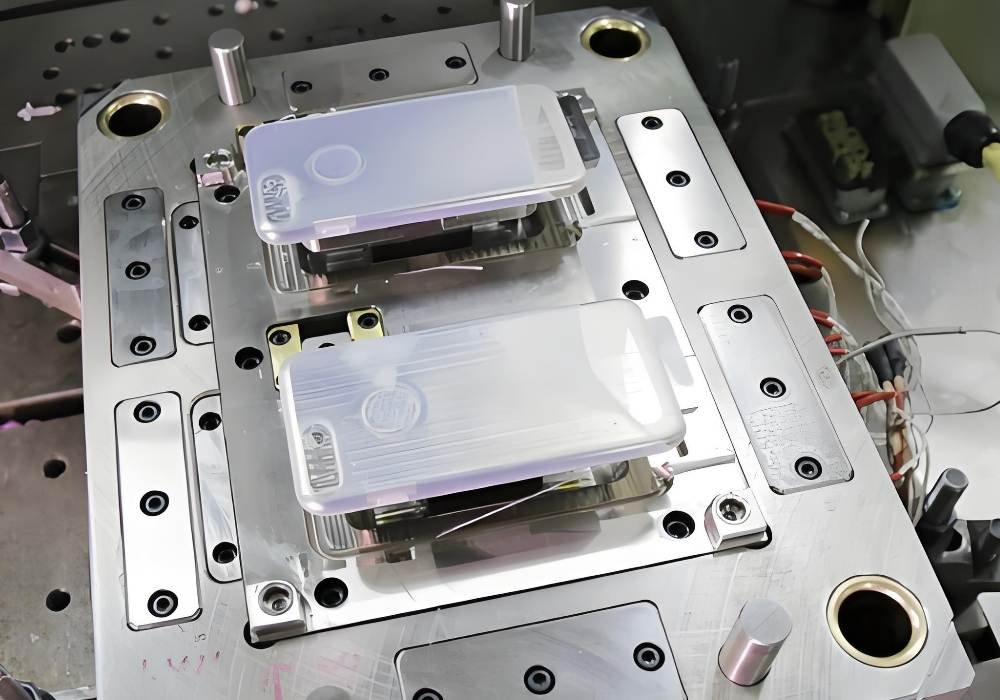
Why LSR Injection Molding Is Superior to Traditional Methods
If consistent component quality at scale matters to you, liquid silicone processing changes the outcome. This approach combines tight control of shot size, injection rate, and cure conditions to give repeatable accuracy for complex geometries.
Precision and Repeatability for Complex Parts
You get consistent tolerances cycle after cycle, which matters for leak-free seals and reliable valve action. Correct tooling, vents, and gated runners let the liquid fill intricate features without distortion.
Cleaner Production with Automation
Automated cells reduce touchpoints, cutting contamination risk for hygienic and regulated products. Hands-free demolding also lowers operator exposure to heat and raises throughput for higher volumes.
Better Performance across Extreme Temperatures
Liquid silicone keeps elasticity and sealing force from about -60°C to 180°C, so parts hold up under thermal cycling and harsh environments. Its insulating properties also suit electronics and EV components where stable performance is essential.
How does Liquid Silicone Rubber Injection Molding Work?
1. Material Preparation
First, we need two parts: Part A and Part B.
• Part A is like a thick liquid (they call it “base polymer”). Part B has special chemicals to make it hard (called crosslinker).
• Before mixing, we must stir both parts very well. Why? Because if we don’t mix them properly, the chemical reactions won’t work evenly. Imagine making cake batter with lumps — it’s the same problem.
2. Mixing Process
Now, mix Part A and Part B in exact ratio. Usually 1:1, but sometimes different.
• The ratio is super important. If you add too much Part A, the silicone stays sticky. If too much Part B, it hardens too fast. Like cooking rice — wrong water amount makes it mushy or burnt.
• While mixing, avoid bubbles! Bubbles make the final product weak. How? Mix slowly or use vacuum machines to suck out air.
3. Injection Molding
Put the mixed liquid into a mold with liquid silicone rubber injection molding.
• Molds are usually metal (steel or aluminum). The shape must be perfect — even a 0.1mm error can ruin the product.
• Mold heating and curing: Unlike thermoplastics, the tool is heated so heat plus pressure cure the liquid silicone in the cavities. Proper gate and vent strategy shapes cosmetic quality, flash, and dimensional repeatability.
• Control temperature (120–180°C) and pressure. If the temperature is low, the silicone won’t cure. If the pressure is too high, the mold breaks. It’s like baking cookies — too hot burns them, too cold makes them raw.
4. Post-Processing
Demolding and automation: Robots, conveyors, and chutes remove parts to reduce contamination and stabilize cycle-to-cycle control. Automation also speeds throughput for higher production volumes.
After taking it out from the mold, do the extra steps:
• Vulcanization: Heat the product again. This makes it stronger, like turning soft clay into hard ceramic.
• Trimming: Cut off extra edges (“flashing”) with tools. Makes it look neat, like trimming fingernails.
• Quality Check: Look for bubbles, wrong shapes, or color problems. Throw away bad ones — no one wants a phone case with holes.
Key Tips for Better Results
The right combination of heat, time, and pressure keeps parts consistent and lowers scrap.
1. Measure twice, mix once
Always check the A/B ratio with digital scales.
Slow mixing = fewer bubbles: Injection rate and fill profile influence air entrapment, knit lines, and surface finish. Use a machine mixer at 200 RPM (rotations per minute). Hand mixing takes 15 minutes and makes the arm tired.
2. Mold design matters
A good mold has tiny vents for air to escape. Bad molds trap air — products look like Swiss cheese. Proper clamp also protects dimensional stability across long production runs.
3. Temperature control trick
Mold temperatures for silicone curing run much higher than for most thermoplastics — roughly 320–450°F (160–230°C) versus under ~170°F for many thermoplastic runs. These higher temperatures affect tooling choice, press insulation, and cycle planning.
Use an infrared thermometer to check mold temperature. If no thermometer, wait 2 minutes after heating before injection.
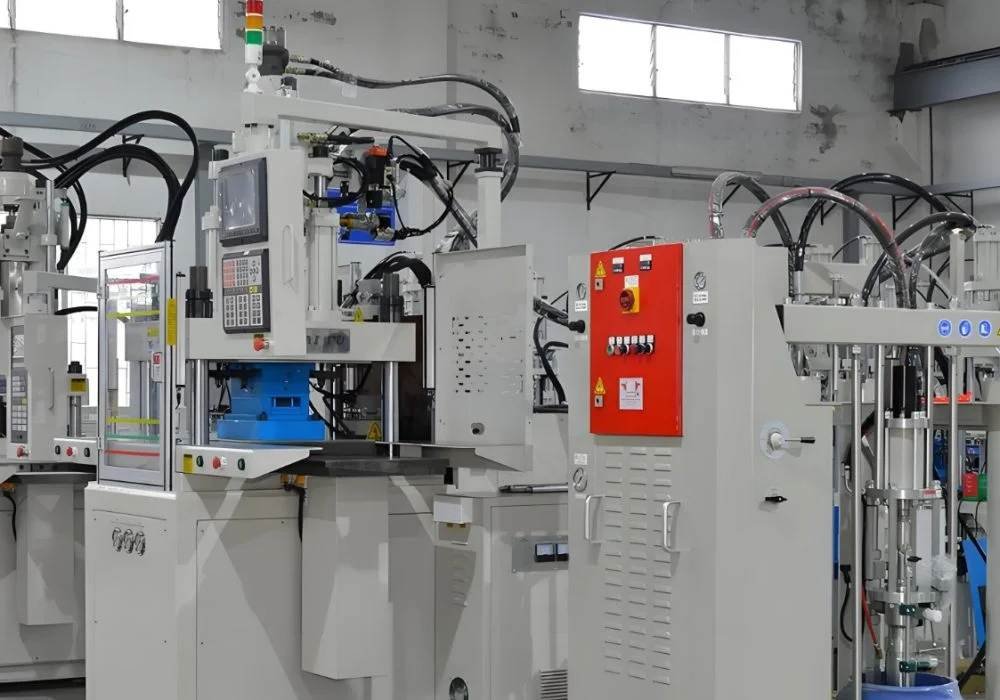
Advantages of Liquid Silicone Rubber Injection Molding
Production managers favor silicone systems because they turn repeatable chemistry into steady throughput. Automated dosing and closed mixing reduce operator steps and contamination. That means more consistent parts and fewer surprises at scale.
1. High Production Efficiency
Injection molding machines work very fast. They can make many products at the same time in one cycle. Because the machines work by themselves (automation), workers don’t need to do much. For example, some machines use robots to take out finished products automatically. This saves time and allows factories to produce more items every day.
2. Design Freedom and thin-wall fills
Silicone flow fills thin sections and tight radii that challenge other rubber grades. That lets you design compact seals, membranes, and intricate features without compromise.
3. Stable Product Quality
LSR injection molding machines control temperature, pressure, and time very carefully. Sensors check everything automatically. If something is wrong, the machine will stop and show a warning light. This means all products look the same and meet the required standards. For medical parts or phone cases, this precision is super important.
4. Low Production Costs
The main material is thermoplastic pellets, which are cheap and easy to buy. Even better, leftover plastic can be melted and reused. Factories save money because they don’t waste materials. Tight tool shutoffs and correct clamp settings can produce near-flash parts. Less trimming lowers labor and material waste, reducing total cost of ownership. Also, machines run 24/7 with few workers, so labor costs stay low.
5. High Precision Manufacturing
By adjusting machine settings, workers can control product size and weight very accurately. Some machines make parts with 0.01mm precision—like the thickness of a hair! This is perfect for making tiny gears in watches or connectors for computers. Even complex shapes come out exactly right every time.
6. Durability and mechanical properties
Parts show strong tear and tensile strength for assembly and actuation. Excellent compression set (rebound resilience) keeps buttons and seals returning to shape over time.
7. Environmentally Friendly
Plastic pellets don’t create dust or dirty water like metal cutting does. Modern machines also use filters to clean smoke and gases before releasing them. Many factories now recycle 90% of their plastic waste. This helps protect the environment and follows green production rules.
8. Wide Application Range
You can make almost any product with LSR molding machines. Small items like toy bricks, medium things like kitchen containers, and large parts like car dashboards—all are possible. Different molds let one machine produce phone cases today and medical tools tomorrow.
These advantages translate to cleaner production, less rework, and predictable output—so your application-level performance and cost targets are easier to meet. Material selection and process validation unlock these wins reliably at scale.
Design and Manufacturing Considerations for LSR Molding
Good design shrinks launch risk by matching part geometry to the flow and cure behavior of silicone elastomers.
Tolerances and Dimensional Accuracy
Plan tolerances tightly because the liquid nature of the material and any flash affect final size. Call out critical dimensions, datums, and preferred parting-line direction on drawings. Specify allowable variation and how you will measure parts so suppliers can control cavity pressure and compression to hit accuracy targets.
Shrinkage and Prototyping
Shrinkage commonly runs higher than many thermoplastics—often around 5–7% and variable by grade and process. Prototype early to validate size and adjust cavity dimensions. Sampling reduces surprises and lets you refine gates, vents, and wall sections before committing to production tooling.
Wall Thickness, Drafts, and Demold
Thin walls fill well, but you still need balanced flow paths, vents, and small gates to avoid trapped air and blemishes. Draft is often minimal, yet texture, undercuts, and automated removal affect distortion risk. Design undercuts where useful, but limit extreme stretching to prevent hot tearing during ejection.
Parting Lines, Gates, Vents, and Durometer
Place parting lines to hide any gate vestige and use vents or overflow channels to evacuate air. Smaller gates work for liquid flow but must match your pressure and cycle plan. Choose durometer by balancing comfort, sealing performance, and handling. Softer grades seal better but change ejection forces and assembly behavior.
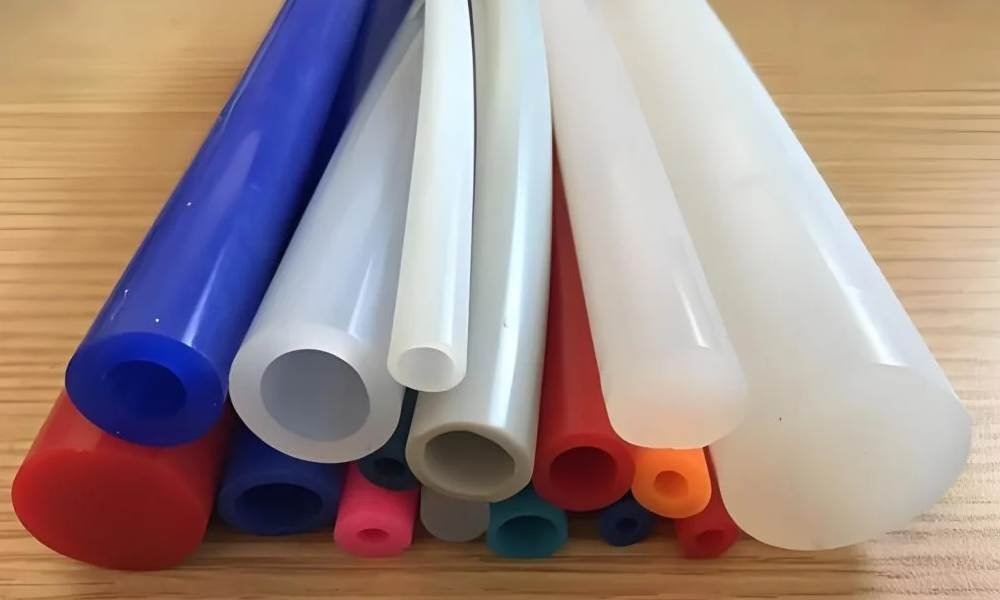
Material and Grade Selection for Your Application
Choose the right silicone grade to match the exact conditions your product will face in service.
General-purpose vs Specialty Formulations
Start with use conditions: temperature exposure, contact fluids, UV, and mechanical loads. General-purpose liquid silicone rubber has lower filler levels and offers steady baseline properties for many products. When you need extra heat or fluid resistance, consider specialty materials with fillers or additives that raise thermal limits or improve chemical resistance.
Regulatory Grades for Medical and Food Use
Medical-grade silicone rubber must meet biocompatibility standards like ISO 10993 and include full lot traceability. Food-contact materials should have supporting FDA documentation and validation plans to show safe use.
Fluoro and High-temperature Options
Fluoro silicone improves resistance to fuels and oils but costs more. High-temperature silicone blends extend service temperature and survive repeated thermal cycling near engines or heaters.
Color, Translucency, and Appearance
Liquid silicone rubber is naturally translucent or white and takes pigment well for brand color matching. Specify translucency where light transfer or aesthetic effects matter.
Tooling for LSR Injection Molding
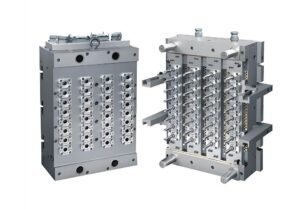
Tooling decisions set the baseline for part quality, program cost, and production uptime. Expect tooling to be the longest lead item in your schedule and the primary capital driver for a successful run.
Why Hardened Stainless is Common
For production LSR injection molds, hardened stainless steel is the usual choice. It resists high temperature, corrosion, and long-term wear so your mold life stays predictable.
How CNC and EDM Make Precise Cavities
Manufacturers use CNC milling for bulk geometry and EDM to refine tight features and shutoffs. That combination gives the precision needed to control flash and repeatability on small parts.
Challenges Unique to Silicone Processing
The low-viscosity material and high mold temperatures (around 215°C) demand tight tolerances. Small gaps at parting lines let flash form and raise trimming labor and scrap. Plan for routine maintenance and robust venting. Ask suppliers about experience handling pressure, temperature cycles, and abrasive wear so you reduce launch risk.
Applications of Liquid Silicone Rubber (LSR) Injection Molding
Medical Industry Applications
Liquid silicone rubber is perfect for medical tools and parts because of its special properties.
• Why it works: It can handle high heat (like sterilization) and kill bacteria, making it safe for hospitals.
• Common products:
◦ Seals for medical devices (e.g., syringe stoppers)
◦ Tubes for IV drips and catheters
◦ Soft parts for artificial organs (e.g., heart valves)
◦ Baby products like bottles and pacifiers (no harmful chemicals, easy to clean)
• Bonus: Doctors trust it because it meets strict safety rules (like FDA standards).
Electronics Industry Uses
LSR keeps electronics safe and working longer.
• Key features:
◦ Stays stable in extreme temperatures (-50°C to 200°C)
◦ Blocks electricity (good insulation)
• Examples:
◦ Seals for phone/tablet ports (e.g., waterproof SIM card trays)
◦ Protective layers on cables and circuit boards
◦ Soft touchscreens that resist scratches (like phone screens)
• How it helps: Phones last longer even in rain or heat.
Automotive Parts Manufacturing
Cars rely on LSR for tough conditions under the hood.
• Why cars need it:
◦ Handles engine heat (up to 180°C)
◦ Stays flexible in cold weather
• Typical parts:
◦ Wiper blades and waterproof seals (no leaks)
◦ Engine gaskets and air filters
◦ Fuel lines and hydraulic hoses
• Special use: It bonds with metal/plastic parts in one step, saving time.
Household Products
LSR makes daily items safer and comfier.
• Why families love it:
◦ Soft texture (like silicone spatulas)
◦ Safe for food and babies (no toxins)
• Products you might use:
◦ Kitchen tools (heat-resistant baking molds)
◦ Baby teething toys and bottle nipples
◦ Durable phone cases and remote buttons
• Design trick: Its moldable nature allows creative shapes (e.g., animal-shaped toys)
LSR Injection Molding FAQs
When Is Liquid Silicone Rubber the Better Choice for Your Part?
Choose liquid silicone rubber when you need biocompatibility, repeated sterilization, chemical resistance, or stable electrical insulation. It excels in medical devices, wearable products, seals for automotive and EV systems, and consumer parts that require soft-touch surfaces or long-term durability across extreme temperatures.
What Process Parameters Most Affect Part Quality and Consistency?
Mold temperature, shot size, and curing time strongly influence cure and dimensional stability. Cycle time depends on chemistry, part geometry, and barrel or runner preheating. Clamping force and injection rate control part fidelity and flash. Monitoring these parameters ensures consistent mechanical properties and repeatable production.
How Do You Handle Tolerances and Shrinkage for Liquid Silicone Rubber Parts?
Plan tolerances to account for silicone’s low but measurable shrinkage; prototyping de-risks final tooling. Use metrology and inspection to validate critical dimensions. Design generous radii and consistent wall sections to minimize differential shrink and ensure dimensional accuracy across production runs.
Can You Achieve Flashless Molding and Reduced Waste with This Process?
Yes. Proper mold design, precise clamping, and tight tolerances can greatly reduce or eliminate flash. Automated gating and runner systems, combined with accurate material metering, lower scrap and improve material utilization for high-volume runs.
What Secondary Operations Are Typical after Molding?
Typical steps include deflashing or trimming, ink marking or pad printing, bonding or overmolding with inserts, and post-curing for enhanced properties. Automated trimming and inspection systems help keep costs down while maintaining tight quality control.
Best LSR Injection Molding Service Provider
The products made by the LSR injection molding process have the characteristics of low-compression permanent deformation. This means that they can quickly return to their original shape after being subjected to external forces, without permanent deformation. This feature enables LSR molded parts to maintain stable performance over a wide temperature range, making them ideal for automotive parts in extreme environments.
In industries such as automotive and medical manufacturing, where every micron counts, finding a partner that can provide reliable, high-quality LSR injection molding services is critical. Fecision focuses on advanced engineering, flexibility, and customer-centric solutions that can be trusted.
Why Choose Fecision?
Decades of experience, global standards
With more than 20 years of industry experience, we have honed their expertise in a variety of sectors, from automotive to consumer electronics. Our processes meet the most stringent quality benchmarks. The Fecision team offers solutions that pass rigorous durability tests thanks to our deep understanding of material properties and thermal stability.
Cutting-edge technology, unparalleled precision
Precision is not just a buzzword here. In Fecision’s workshop, we can achieve tolerances of ±0.005 mm thinner than human hair. This level of accuracy is critical for components such as medical device housings or automotive sensor assemblies, where even minor defects can lead to failure.
Uncompromising flexibility
Whether you’re testing prototypes or mass-producing, Fecision has everything you need. Our rapid tooling service can complete functional prototypes in 15-20 days, helping companies iterate quickly on designs. In terms of production, Fecision’s molds are durable and support more than 1 million high-volume order cycles, making them ideal for automotive customers who need a stable production rate.
Smarter quality control
We used a real-time monitoring system and 3D scanning to check the molds at each stage. Before cutting steel, our engineers provide a free manufacturability design report, flagging issues such as uneven wall thickness or faulty gate placement.
Material technology
From ABS and nylon to advanced polymers such as PEEK and LSR, Fecision’s molds can handle it all. Our engineers help customers choose materials that balance performance and cost.
Ready to work with Fecision? If you need a mold that combines precision, durability, and affordability, Fecision is your choice. Our team works closely with customers to bring ideas to life, whether you’re building 100 prototypes or 10 million parts. Click now to visit and explore our services for your LSR injection molding needs.