Each plastic product obtains its shape from a critical phase: the ejection system. This part is responsible for the release of the completed part from its mold. It is essential; otherwise, production stops. And it represents a critical component of the overall efficiency and speed.
The significance of using the correct ejection system can hardly be overstated. A wrong ejection system will cause defects, which could lead to production delays and damage to the mold. Understanding the different types of ejection system in injection moulding will help produce better quality parts and increase production, which will further save time and money.
What Is the Ejection System in Injection Molding?
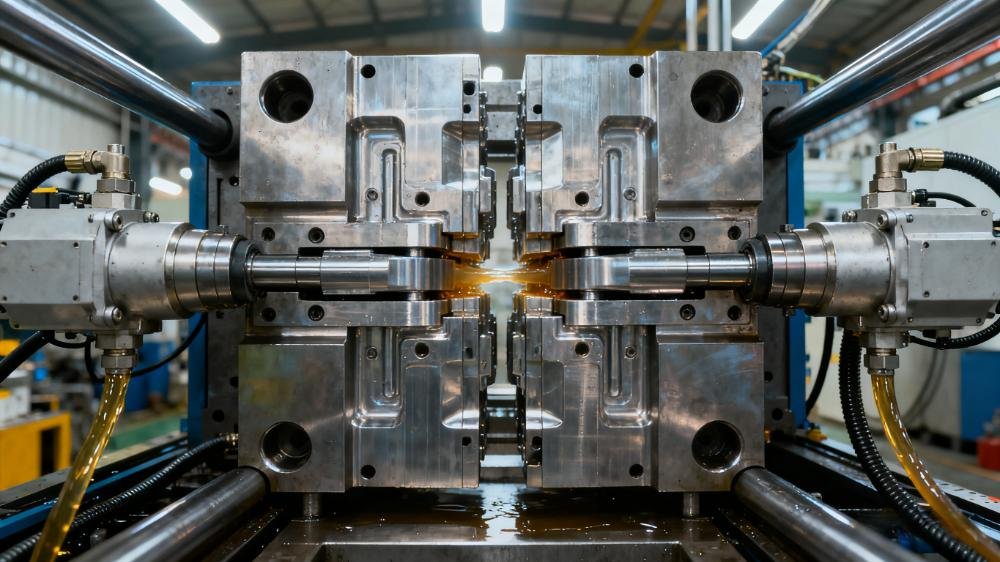
Definition and Basic Concept
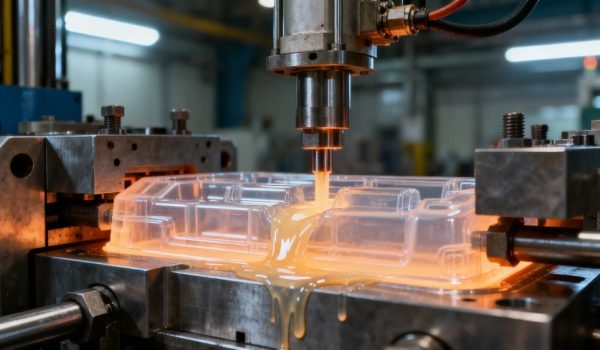
An ejection system in injection molding is a significant mechanism that is responsible for ejecting a solid plastic part from the mold cavity. When the hot plastic had been injected into the mold and cooled down to the desired temperature, the ejection method pushed the solid part out so that the mold could close to prepare for the subsequent cycle.
This final step is the last part of the injection molding cycle. It provides a way of determining how quickly you can produce parts and how good these parts will look. The eject system operates smoothly with the opening and closing of the mold and can fully automate the process to produce efficiently and quickly.
Key Components of Ejection System
| Component | Description |
| Ejector Pins | Thin rods that push the part out of the mold. |
| Ejector Plates | Plates that hold and move the ejector pins together. |
| Ejector Sleeves | Hollow cylinders used for ejecting parts with circular features. |
| Return Pins | Small pins that push the ejector system back into place. |
| Guide Pins and Bushings | These keep the ejector system in alignment and move easily. |
| Hydraulic/Pneumatic Cylinders | Power sources that provide the force for the automated ejection process. |
Functions of the Ejection System in Injection Molding
The ejection system in mould is much more than just a mechanism for removing a part. It is a major factor that will determine the production process and will have implications for the quality and efficiency of manufacturing.
Part Release
The primary function of the eject system ultimately is to push the cooled plastic part out of its mold. It applies a controlled force necessary to break the bond that holds the part to the mold and fully eject the part. This prevents the mold from closing on a leftover piece, which could cause significant damage.
Shape Protection
A good eject system safeguards the final shape of your part. It distributes the ejection force evenly to avoid warping or cracking the part, particularly on thin walls and fragile features. It also maintains a controlled degree of stress on your part that can help preserve dimensional accuracy during demolding.
Surface Preservation
The system strives to achieve the lowest visible marks on your finished components. Scratches and drag marks are minimized by optimizing specific contact points and controlling the ejection motion. This is especially the case for surfaces that are looking for cosmetic features to look as good as possible, such as textures and high gloss just out of the mold.
Design Flexibility
The ejecting system gives a great deal of flexibility in the design of your parts. It can adapt design elements, using different components (e.g., pins, sleeve, blade, or plate) that can align with your design geometry. This allows design freedom to produce parts with complex features, such as an undercut, rib, or hole, knowing that you can still eject the parts when completed without redesigning your part.
Vent Support
Some ejection components, such as ejector sleeves and pins, also have a hidden benefit. The small gaps can act as extra venting channels. The venting assists in the removal of trapped air and reduces the likelihood of defects, like burn marks or short shots, from occurring. The improved airflow leads to better cavity fill and stronger parts.
Cycle Automation
Ejection systems are a key part of automated production. They sync perfectly with the mold’s opening and closing actions for hands-free operation. By reducing the need for manual handling, they significantly boost your production throughput. The system’s repeatable action also ensures consistent and reliable production results every time.
Types of Ejection System in Injection Molding
Pin Ejection System
This is the most common ejection system. Small round ejector pins are used to help push the part out of the mold. It is especially effective for parts with simple shapes and flat surfaces, and also for low-cost projects.
Benefits of this system include low cost, simple setup, and compatibility with many different types of parts. Drawbacks, though, are that they can leave small round marks on parts. You’ll need to place the pins carefully to avoid cosmetic surfaces.
Blade Ejection System
A blade ejection system uses thin, flat blades instead of round pins. These blades are great for pushing out thin-walled parts or parts with large, flat surfaces. They are also gentle on delicate components.
The key benefit is their ability to distribute the force over a greater area. This means that the chance of part distortion is decreased. But they can be pricier than pins and need to be carefully aligned in order to work. The blades also tend to get damaged more easily.
Sleeve Ejection System
A sleeve ejection system uses hollow cylinders called ejector sleeves to push a part off a central core pin. This is perfect for parts with circular holes or tubular shapes. It’s a great choice when you need to avoid pin marks on a critical surface.
The system provides 360-degree support to the part while ejecting. Drawbacks of this system include more complex and costly manufacturing, and it needs to be very precise for perfectly fitting each unit.
Stripper Plate Ejection System
The stripper plate ejection system in mould has an entire plate that pushes against the bottom or edge of the part. This option is best for large parts or complex shapes that need additional support along the entire edge.
This system distributes the ejection force very evenly and creates less stress on the part. This system handles heavy parts very well. However, it requires a more complex mold design and can be more expensive. It also takes up more space in the mold.
Bar Ejection System
A bar ejection system uses rectangular bars instead of round pins. These are used for long, narrow parts, or parts with a lot of ribs or rectangular features. They provide better force distribution than pins for these specific shapes.
The main benefit is that they are very effective for structural parts. The downside is that they have limited applications and can leave marks on the part. You need to place them carefully to avoid problems.
Hydraulic Ejection System
A hydraulic system uses hydraulic cylinders to achieve a high rate of applied ejection force. This is great for heavy parts or parts made from strong materials. It would also work well for complex processes involving multiple stages of ejection.
The main benefit is the level of sheer power and control you can obtain. You can program the rate of force and speed to a great amount of precision. The main downsides are that it can be expensive, involve hydraulic equipment, and is costly to maintain.
Pneumatic Ejection System
A pneumatic system uses compressed air cylinders to eject parts from a mold. This is a good option for medium-duty applications. It is often more popular in clean environments, and it is also gentle on delicate parts.
This system is a cleaner option than a hydraulic operation and has reduced maintenance requirements. However, the main downside is that it won’t provide as much force as a hydraulic system, and you must have access to a reliable compressed air supply.
Air Ejection System
Air ejection systems use jet streams of compressed air to dislodge parts from the mold. This is useful for very light parts or parts with intricate details that could be harmed with physical contact. If you really need a completely non-contact option, this is ideal.
The biggest advantage is that when utilizing air ejection, there are no physical marks left on the parts. However, it has very limited force, and it often requires precise control of the airflow. This system will also frequently be paired with other mechanical systems for better results.
How to Choose the Right Ejection System for Your Project?
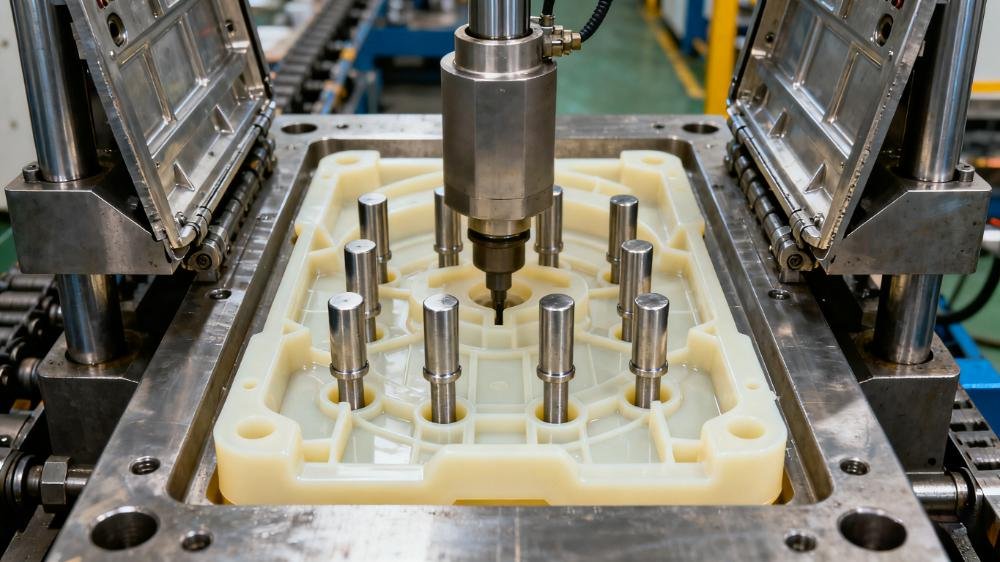
Choosing the appropriate ejection system in mould is vital to your project’s success. It is one decision that directly influences part quality and production efficiency. To arrive at the correct conclusion, you must consider several important factors.
Part Design Analysis
Look closely at your part’s design. Simple shapes work well with pin systems, while complex ones might need a stripper plate. For thin-walled parts, consider a blade or air ejection system to prevent damage. Pay attention to cosmetic surfaces and special features like undercuts or ribs, as they will dictate the best method to use.
Material Considerations
The plastic material is a key factor. Softer materials require a lesser force of ejection; otherwise, damage can occur. A material with high shrinkage would require more points of ejection. The thermal properties and the material’s tendency to stick to the mold are also vital. You must choose a system that complements the specific properties of your plastic.
Production Requirements
Your production goals are vital. For high-volume projects, choose a robust and fast system to meet your desired cycle time. The required quality standards will determine how many marks are acceptable on the part. If the process is automated, then a more complicated control setup may be necessary to allow it to operate smoothly.
Cost-Benefit Analysis
You will need to weigh the initial expenses of the system against its lifetime cost. The higher purchase price of a system can return savings in the form of reduced defects and maintenance. Remember your operational costs, particularly the cost of scrapped parts, if any. In addition, a more robust ejection system will provide benefits to your budget in terms of fewer replacements.
Expert Tips for Optimizing Ejection System Performance
An ejection system that is designed well is a tremendous asset; an ejection system that is poorly maintained can be a nightmare. The following expert advice will help keep your eject system in its optimal state and, in return, reduce defects and improve efficiency.
Right-size and Position Pins/Sleeves
Choosing the right size and location for your ejectors is vital. You should match the pin or sleeve diameter to your part’s thickness to avoid piercing or dimpling. Always place ejectors in rigid areas of the part, well away from cosmetic surfaces. Use enough ejectors to distribute the load evenly without crowding the mold cavity.
Vent and Channel Air Jets
Proper venting is critical for smooth ejection. You can machine tiny grooves or use porous inserts to relieve the vacuum pressure that holds the part in the mold. Directing air jets at specific part pockets can help release stubborn areas. Remember to regulate the air pressure and duration carefully to blow the part off, not blast it away.
Time and Sync the Sequence
The timing of your ejection sequence is crucial. Delaying ejection until the part has shrunk enough can prevent it from catching on undercuts. You also need to sync the hydraulic or pneumatic stroke with the mold’s opening speed. Always ensure all ejector pins have fully returned before the mold closes to prevent costly crash marks and damage.
Maintain and Fix Fast
One of the most impactful methods is to keep up with maintenance. You should plan, at regular intervals, to lubricate and check wear on your ejectors. Utilizing go/no-go gauges will help track both pin length and sleeve play. Also, log incidents of common issues such as sticking or drag marks, and then adjust the draft, force, or vents to alleviate the problem right away.
Conclusion
An ejection system is an important part of injection molding, used to release parts while being smooth and undamaged. Understanding the different types of ejection system in injection moulding and applications can help improve processes, reduce defects, and continually produce quality components.
At Fecision, we specialize in engineering advanced ejection systems that are built to perform. As an ISO 9001-certified supplier, we provide ejection systems engineered to remove components efficiently and effectively. With a focus on precision and durability, our ejection systems will minimize downtime and improve production quality regardless of your component’s complexity.
Our Ejection System Advantages:
- Precision Ejection: Our components hold a tiny ±0.003mm tolerance, perfect for flawlessly ejecting micro- and thin-walled parts.
- Rich Ejection System Components: From standard ejector pins to complex sleeves and blades, our extensive range of high-quality ejection system components is engineered for reliability.
- Maximum Lifespan: Made from vacuum-hardened steel with DLC coatings, our parts are built to last over 10 million cycles.
- Fast & Custom: We offer a rapid 10-day lead time on custom parts and have over 50 standard sizes ready to ship.
- Global Compatibility: Our components meet key global standards like DME, HASCO, and OEM specifications for seamless integration.
- Flawless Finish: A superior surface polish (Ra ≤0.2μm) ensures your parts are ejected without a single scratch.
Ready to improve your production quality? Contact Fecision today to discuss how our advanced ejection systems can elevate your injection molding process.