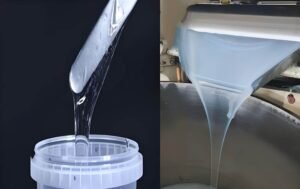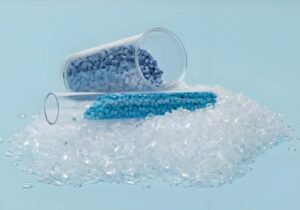
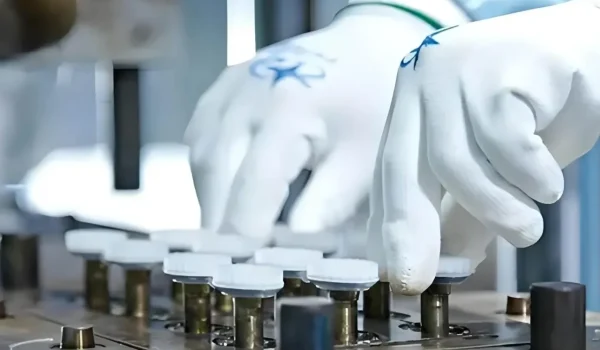
| LSR injection molding is a high-precision manufacturing process in which two-part liquid silicone rubber (Part A base + Part B platinum catalyst) is mixed at 1:1 ratio, injected at 100–1,000 bar into a mold heated to 170–230°C, and cured in 30 seconds to 2 minutes via platinum-catalysed crosslinking — producing biocompatible, thermoset elastomer parts. |
The medical device industry’s demand for repeatable, contamination-free, biocompatible component production has made LSR injection molding the process of choice for precision silicone parts.
This guide covers what LSR injection molding is, how the process works with engineering-level parameters, why it outperforms thermoplastic and HCR alternatives in medical contexts, the DFM decisions that govern quality, and what the 2026 FDA regulatory update means for your quality management system.
What is LSR Injection Molding?
Liquid Silicone Rubber (LSR) injection molding is a specialised manufacturing process for producing biocompatible silicone elastomer components. The material is a two-part compound: Part A contains the base polymer (a vinyl-functional polydimethylsiloxane) and Part B contains the platinum catalyst and a crosslinker. When the two parts are combined and exposed to heat, the platinum drives a hydrosilylation reaction — silicon-hydrogen bonds on the crosslinker add across the vinyl groups on the polymer backbone, forming permanent Si-C crosslinks.
This chemistry is what makes LSR a thermoset, not a thermoplastic. The crosslinking reaction is irreversible — once cured, the part cannot be remelted or reprocessed. This fundamentally changes runner system design (cold runners are essential to prevent pre-cure), cycle planning, and how scrap is managed.
LSR’s siloxane backbone (Si-O-Si) delivers the properties that make it indispensable in medical and industrial applications: chemical inertness, biological tolerance, thermal stability from -55°C to over 200°C, and resistance to oxidation, UV, and ozone. These are properties that organic rubbers cannot match at equivalent service conditions.
Platinum-Cured vs. Peroxide-Cured Silicone
Most medical-grade LSR is platinum-cured (addition cure). The platinum catalyst produces no acidic by-products — only the crosslinked polymer remains.
Peroxide-cured silicone — commonly used in HCR (High Consistency Rubber) grades — generates organic acid residues during curing that require a post-bake cycle at 200–250°C for 2–4 hours to remove. If the post-bake is shortened, residues migrate to the surface (‘blooming’) and appear in extractables testing.
For regulated medical applications, platinum cure is the standard.
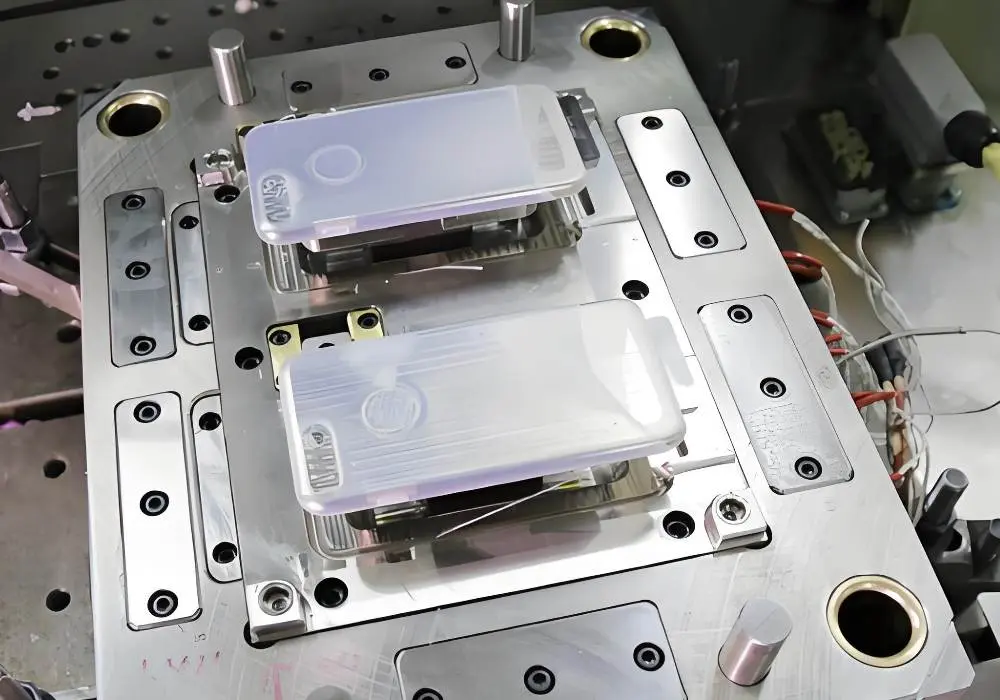
How LSR Injection Molding Works: Engineering Parameters
The process is a timed, multi-stage sequence. Understanding the parameter interactions — particularly the relationship between cold runner temperature, scorch risk, and cure time — is what separates reliable LSR production from a troublesome one.
1. Material Preparation and Metering
Part A and Part B are stored separately at controlled temperatures (typically 5–25°C) in drums. A dual-piston metering pump delivers both parts at a precise 1:1 volumetric ratio to a static mixer. Ratio deviation above ±2% changes the stoichiometry of the crosslinking reaction, shifting the cured material’s mechanical properties measurably.
Pigments and additives are introduced into the feed stream before the static mixer.
2. Mixing and Cold Runner Temperature Control
The mixed compound flows through the cold runner manifold — maintained at 40–80°C — to the injection nozzle and mold cavities.
The cold runner temperature window is critical: too warm and the material begins pre-curing in the channel (‘scorch’), producing short shots and fouled gates; too cold and the viscosity rises, increasing injection pressure requirements.
Increasing pressure within the injection molding range compresses the material and accelerates the curing reaction — meaning that injection pressure itself influences scorch risk, not only temperature. This interaction requires careful process parameter mapping during mould qualification, not just temperature control alone.
3. Injection Into the Heated Mould
The mold cavity is heated to 170–230°C. Injection pressure ranges from 100 to 1,000 bar depending on part geometry, wall thickness, and runner configuration; injection time is typically 0.5–3.0 seconds to prevent premature cure before the cavity is filled. [1]
The cavity temperature triggers the platinum-catalysed crosslinking. Cure rate is controlled primarily by temperature — higher mold temperature shortens cure time but narrows the process window before scorch. For tight-tolerance medical components, mold temperature uniformity of ±2°C is the practical target.
4. Post-Processing and Post-Cure
Once cured, parts are demolded — either manually or by robot. A key advantage of LSR over thermoplastic molding is that the part is fully cured at ejection; there is no cooling shrinkage post-ejection. Dimensional stability is achieved in the mold.
For components intended for continuous service above 180°C, or where very low compression set is specified, a post-cure at 200°C for 4 hours completes secondary crosslinking reactions and drives off residual volatile compounds. This step is documented and validated as part of the process qualification for medical applications.
Key Tips for Better Results
The right combination of heat, time, and pressure keeps parts consistent and lowers scrap.
1. Measure twice, mix once
Always check the A/B ratio with digital scales.
Slow mixing = fewer bubbles: Injection rate and fill profile influence air entrapment, knit lines, and surface finish. Use a machine mixer at 200 RPM (rotations per minute). Hand mixing takes 15 minutes and makes the arm tired.
2. Mold design matters
A good mold has tiny vents for air to escape. Bad molds trap air — products look like Swiss cheese. Proper clamp also protects dimensional stability across long production runs.
3. Temperature control trick
Mold temperatures for silicone curing run much higher than for most thermoplastics — roughly 320–450°F (160–230°C) versus under ~170°F for many thermoplastic runs. These higher temperatures affect tooling choice, press insulation, and cycle planning.
Use an infrared thermometer to check mold temperature. If no thermometer, wait 2 minutes after heating before injection.
Advantages of LSR Injection Molding for Medical Device Manufacturing
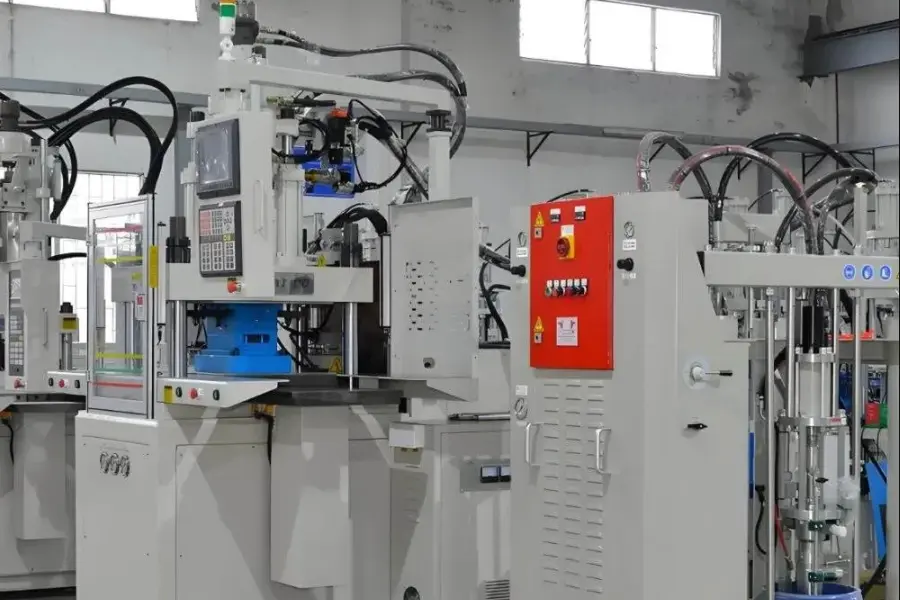
Production managers favor silicone systems because they turn repeatable chemistry into steady throughput. Automated dosing and closed mixing reduce operator steps and contamination. That means more consistent parts and fewer surprises at scale.
Biocompatibility and Regulatory Compliance
Medical-grade LSR formulations meet USP Chapter <88> Class VI biological reactivity requirements and are evaluated under the ISO 10993 series for biological evaluation of medical devices. USP Class VI tests include systemic injection, intracutaneous reactivity, and implantation testing. ISO 10993 adds cytotoxicity (10993-5), sensitisation (10993-10), and irritation (10993-23) evaluations.
Tight Tolerances and Dimensional Consistency
LSR injection molding achieves tolerances of ±0.05 mm or finer in production tooling, with part-to-part consistency driven by the closed-loop metering system and controlled cure parameters. The liquid nature of the uncured material allows it to fill thin walls (0.3 mm minimum feasible, 0.5 mm recommended), complex undercuts, and intricate surface details that HCR compression or transfer molding cannot reliably reproduce.
Sterilisation Compatibility
LSR is compatible with all major medical sterilisation methods: autoclave (steam at 134°C, 3 bar), ethylene oxide (EtO), gamma irradiation, and e-beam. The PMC study on LSR/ABS multicomponent molding for medical technology confirms that sterilisation by EtO or gamma does not degrade the adhesive bond of LSR to thermoplastic substrates — a relevant finding for combination devices [2].
Automation and Contamination Control
Fully closed LSR injection cells — where material never contacts a human operator from drum connection to demolded part — are achievable and are the standard for medical production. Fecision’s medical LSR cell operates in a Class 1000 (ISO 7) cleanroom.
The automated process also delivers higher throughput than compression or transfer molding of HCR, with average cure cycles of 35–50 seconds for typical medical components.
Material Efficiency with Cold Runner Systems
Unlike conventional rubber compression molding where material waste in the sprue system can exceed 20–30% of shot weight, cold runner LSR injection systems recover unvulcanised material from the feed channels. Because the cold runner material has not yet cured, it is fed back into the process rather than scrapped.
This reduces material cost and the production of waste — a meaningful advantage when running platinum-cured medical grades at current pricing.
LSR Injection Molding vs. Thermoplastic Injection Molding
The process and material differences between LSR and thermoplastic injection molding are fundamental, not just a matter of degree. The table below maps the key engineering parameters.
| Parameter | LSR Injection Molding | Thermoplastic Injection Molding | Notes |
| Material type | Thermoset elastomer | Thermoplastic polymer | Curing vs. melting |
| Cure mechanism | Platinum-catalysed crosslinking (addition cure) | Thermal solidification (cooling) | Chemistry |
| Mold temperature | 170–230°C (heated mold) | Cooled mold (material-specific) | Process |
| Cold runner temp. | 40–80°C to prevent pre-cure | Not applicable | Tooling design |
| Injection pressure | 100–1,000 bar | Typically 500–2,000 bar | Process parameter |
| Cycle time | 30 s – 2 min (LIM average 35–50 s) | 15–90 s (part-dependent) | Productivity |
| Flash risk | Low with hardened steel, tight shutoffs | Low with correct tooling | Quality |
| Reprocessability | Cannot be remelted (thermoset) | Regrind possible | Sustainability |
| Biocompatibility | Excellent — USP Class VI, ISO 10993 | Grade-dependent | Regulatory |
| Sterilisation compat. | Autoclave, EtO, gamma, e-beam | Material-limited | Medical suitability |
| Service temp. range | -55°C to +210°C (LR 3066 TDS) | Typically -40°C to +130°C | Performance |
| Shrinkage | ~3–4% (grade-dependent) | 0.2–3% (material-dependent) | Dimensional |
Why LSR Injection Molding Is Superior to Traditional Methods
If consistent component quality at scale matters to you, liquid silicone processing changes the outcome. This approach combines tight control of shot size, injection rate, and cure conditions to give repeatable accuracy for complex geometries.
Precision and Repeatability for Complex Parts
You get consistent tolerances cycle after cycle, which matters for leak-free seals and reliable valve action. Correct tooling, vents, and gated runners let the liquid fill intricate features without distortion.
Cleaner Production with Automation
Automated cells reduce touchpoints, cutting contamination risk for hygienic and regulated products. Hands-free demolding also lowers operator exposure to heat and raises throughput for higher volumes.
Better Performance across Extreme Temperatures
Liquid silicone keeps elasticity and sealing force from about -60°C to 180°C, so parts hold up under thermal cycling and harsh environments. Its insulating properties also suit electronics and EV components where stable performance is essential.
Design and Manufacturing Considerations for LSR Molding
Good design shrinks launch risk by matching part geometry to the flow and cure behavior of silicone elastomers.
Wall Thickness and Flow
LSR’s low viscosity allows reliable fill of wall sections from 0.5 mm to 5 mm in production tooling, with 0.3 mm feasible for simple geometries.
Unlike thermoplastics, LSR does not experience sink marks from differential cooling in thick sections — the thermoset cure prevents the post-ejection contraction that causes sink. Wall thickness uniformity is still recommended to ensure consistent cure time and minimize internal stress.
Shrinkage
LSR shrinks approximately 3–4% during the curing and cooling cycle, which is higher than most thermoplastics. Prototype testing to validate cavity dimensions is essential before cutting production tooling. The shrinkage value is grade-dependent and varies with durometer, filler loading, and post-cure conditions.
Draft Angles and Demold
Draft angles as low as 0.5° per side are adequate for most LSR parts because the cured elastomer is flexible enough to strip off undercuts without damage. For textured surfaces or deep-draw parts, increase draft to 1–3°. Unlike thermoplastics that require ejector pins for stiff-walled parts, LSR parts often demold cleanly with air eject or manual peel — a design simplification that reduces tooling cost.
Tooling Material
Hardened stainless steel (P20, S136, or equivalent) is standard for production LSR injection molds. The high mould temperatures (170–230°C), chemical environment of the platinum system, and the low-viscosity material that finds every gap at the parting line require tooling precision of ±0.01 mm at shutoff surfaces.
Flash threshold in a correctly fitted LSR mould is well under 0.05 mm at the parting line. EDM finishing of shutoff surfaces is standard practice for flash-critical medical components.
Catalyst Inhibition Risk
The platinum catalyst can be poisoned by contact with sulphur, phosphorus, tin, nitrogen (amines), or peroxide compounds. In a production environment, mold release agents, machine lubricants, and operator hand cream are all potential inhibitor sources. Catalyst inhibition produces uncured or under-cured parts — a process failure mode that must be addressed in the DFM and process control documentation.
LSR Grades for Medical Applications
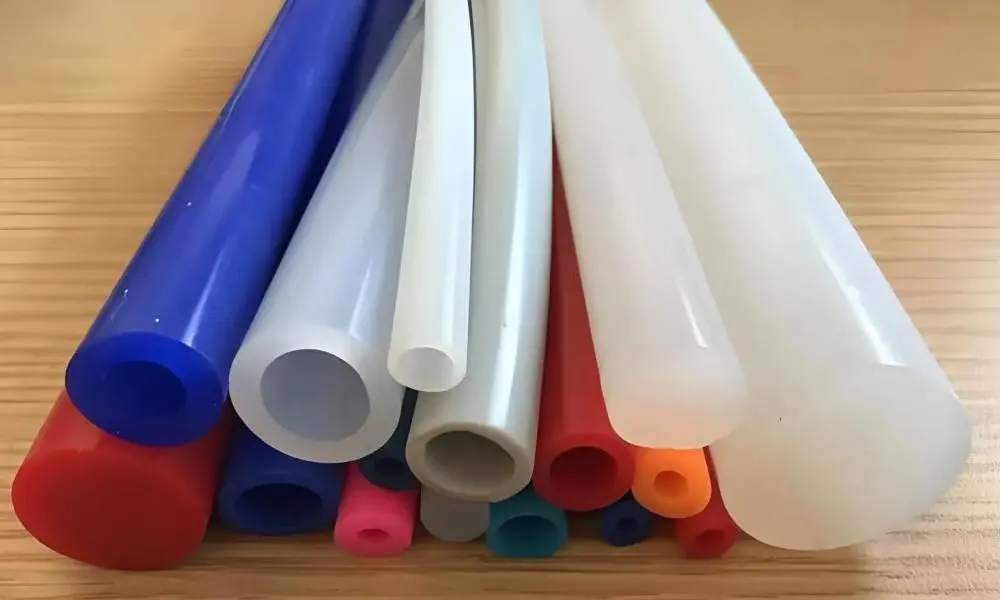
Standard Medical Grades
| Grade | Hardness | Key Properties | Typical Applications |
|---|---|---|---|
| LSR 2030 | 30 Shore A | Soft, flexible, excellent compression set resistance | Seals, gaskets, medical tubing |
| LSR 2050 | 50 Shore A | Balanced flexibility & strength, superior tear resistance | Valves, diaphragms, medical connectors |
| LSR 2070 | 70 Shore A | Firm structure, high tensile strength, abrasion resistance | O-rings, structural medical components |
Specialized Medical LSR Grades
Self-Lubricating LSR: Infused with internal lubricants to reduce friction in dynamic medical device seals and moving components.
Conductive LSR: Filled with conductive particles to provide EMI/RFI shielding for electronic medical devices and diagnostic equipment.
Radiopaque LSR: Formulated with contrast additives for X-ray visibility, enabling accurate tracking of surgical implants and minimally invasive devices.
Drug-Compatible LSR: Specially engineered to minimize chemical interactions with pharmaceuticals, ideal for drug delivery systems and infusion components.
Regulatory Compliance for Medical LSR Injection Molding
FDA QMSR — Critical Update Effective February 2, 2026
On February 2, 2026, the FDA’s Quality Management System Regulation (QMSR) became effective, amending 21 CFR Part 820 to incorporate ISO 13485:2016 by reference [3]. This is the first major revision of 21 CFR Part 820 since 1996.
The QMSR replaces the prior Quality System Regulation (QSR) and aligns FDA’s CGMP requirements with the international QMS standard used by other regulatory authorities globally.
ISO 13485:2016 — Quality Management System
ISO 13485:2016 governs the quality management system for medical device manufacturing. For LSR injection molding suppliers, the key clauses covering moulding operations are Clause 7.5 (Production and service provision), which requires validation of special processes, and Clause 7.5.6 (Validation of processes for production) [5].
Process validation follows the IQ/OQ/PQ framework: Installation Qualification (IQ) verifies equipment is installed correctly; Operational Qualification (OQ) validates that process parameters produce conforming parts across their defined ranges; Performance Qualification (PQ) demonstrates consistent long-run production.
ISO 10993 Biological Evaluation and USP Class VI
Medical-grade LSR must satisfy the biological evaluation framework established by the ISO 10993 series and the USP Chapter <88> Class VI biocompatibility programme. ISO 10993-1:2025 (the 6th edition published November 2025) now requires biological evaluations to be integrated into the device risk management process and to consider reasonably foreseeable misuse — not just intended use.
Contact duration categories (limited ≤24 h, prolonged >24 h to 30 days, long-term >30 days) determine the required biological endpoints [see our ISO 10993 biocompatibility article for the full update].
Quality Control for Medical LSR Molding
Quality control in medical LSR injection molding is a layered system — incoming material, in-process, and outbound — each tied to the regulatory documentation chain that supports the OEM’s 510(k), PMA, or CE Technical File.
- Material certification: Every lot requires a Certificate of Analysis (CoA) from the silicone supplier confirming compliance with the relevant specification (Shore A, tensile strength, elongation at break, compression set, extractables).
- In-process CMM verification: Critical dimensions are checked by coordinate measuring machine (CMM) at defined intervals. Fecision’s standard is CPK ≥ 1.67 on critical-to-quality features, with a ±0.003 mm measurement system resolution
- 100% visual inspection: Automated optical inspection for surface defects, contamination, and flash at every production cycle
- Functional testing: Seal integrity, compression set, tear strength — tested per ASTM D395 (compression set), ASTM D412 (tensile/elongation), and ASTM D624 (tear resistance)
- Full lot traceability: Raw material lot number, press ID, process parameters, operator (where applicable), inspection records, and batch release authorisation — all linked to the specific production lot in the Medical Device File
Medical Applications of LSR Injection Molding
The combination of biocompatibility, sterilisation resistance, mechanical flexibility, and tight dimensional tolerances makes LSR injection molding the default choice for the following medical device categories:
- Respiratory devices: Mask seals, respiratory valves, breathing tubing connectors, CPAP interface seals. Low durometer grades (Shore A 20–40) for comfort sealing
- Drug delivery systems: Auto-injector seals, infusion pump valves, needle shields, stoppers and pistons for prefilled syringes. Drug-compatible grades minimise chemical interaction with the active pharmaceutical ingredient
- Surgical instruments: Laparoscopic tool seals, electrosurgical cable insulation, ergonomic grips. Sterilisation compatibility (EtO, autoclave) is the primary requirement
- Diagnostic equipment: Fluid handling seals, analytical instrument gaskets, tubing connectors, microfluidic channel membranes
- Implantable devices: Pacemaker lead coverings (long-term implantable grade), cochlear implant components, shunt valves. Requires extended ISO 10993 testing including chronic toxicity and carcinogenicity evaluation
- Wearable medical devices: Skin-contact seals, sensor housings, continuous glucose monitor interface membranes. Self-adhesive LSR grades enable direct bonding to thermoplastic housings without primer
Frequently Asked Questions
What is the difference between LSR injection molding and HCR compression molding?
LSR’s automated injection process produces tighter tolerances, lower contamination risk, faster cycle times, and near-zero material waste with cold runner tooling. HCR’s advantages are lower tooling cost and suitability for large-cross-section parts.
What mold temperatures are used in LSR injection molding?
The mold cavity is heated to 170–230°C to activate the platinum-catalyzed crosslinking reaction. The cold runner system — which keeps material below the cure activation temperature before it reaches the cavity — is maintained at 40–80°C.
What is the minimum wall thickness achievable in LSR injection molding?
Minimum feasible wall thickness is approximately 0.3 mm for simple geometries with short flow paths. The recommended production minimum is 0.5 mm to ensure consistent fill, acceptable flash control at the parting line, and reliable demold without tearing.
Maximum wall thickness is typically 5 mm before cure-time economics become unfavorable compared to internal geometry modifications. Wall thickness range 0.25 mm to 10 mm is technically achievable with appropriate process and tooling design.
What secondary operations are typical after molding?
Typical steps include deflashing or trimming, ink marking or pad printing, bonding or overmolding with inserts, and post-curing for enhanced properties. Automated trimming and inspection systems help keep costs down while maintaining tight quality control.
Conclusion
LSR injection molding occupies a specific, well-defined position in medical device manufacturing: it is the process of choice when the application requires a flexible elastomeric component with biocompatibility certification, sterilisation resistance, tight dimensional tolerances, and scalable automated production. No other process delivers all four simultaneously.
Fecision‘s LSR injection molding operation is certified to ISO 13485:2016 and ISO 9001:2015. We produce medical LSR components in a Class 1000 (ISO 7) cleanroom. For a DFM review and process recommendation for your specific application, contact our engineering team.
References & Authoritative Citations
All sources publicly available. Accessed April 2026.
[1] Stockwell Elastomerics. ‘Liquid Silicone Injection Molding.’ Average cure cycle 35–50 seconds for LIM production components. https://www.stockwell.com/liquid-silicone-injection-molding/
[2] Schiffer M, et al. ‘MC-Injection Molding with Liquid Silicone Rubber (LSR) and Acrylonitrile Butadiene Styrene (ABS) for Medical Technology.’ PMC / NCBI. doi:10.3390/polym15203986. https://pmc.ncbi.nlm.nih.gov/articles/PMC10574965/
[3] U.S. Food and Drug Administration (FDA). ‘Quality Management System Regulation (QMSR).’ FDA.gov. Effective February 2, 2026. https://www.fda.gov/medical-devices/postmarket-requirements-devices/quality-management-system-regulation-qmsr
[4] Federal Register. ‘Medical Devices; Quality System Regulation Amendments.’ Final Rule, February 2, 2024. 89 FR 7496. https://www.federalregister.gov/documents/2024/02/02/2024-01709/medical-devices-quality-system-regulation-amendments
[5] ISO 13485:2016. Medical devices — Quality management systems — Requirements for regulatory purposes. Clause 7.5 — Production and service provision. https://www.iso.org/standard/59752.html