
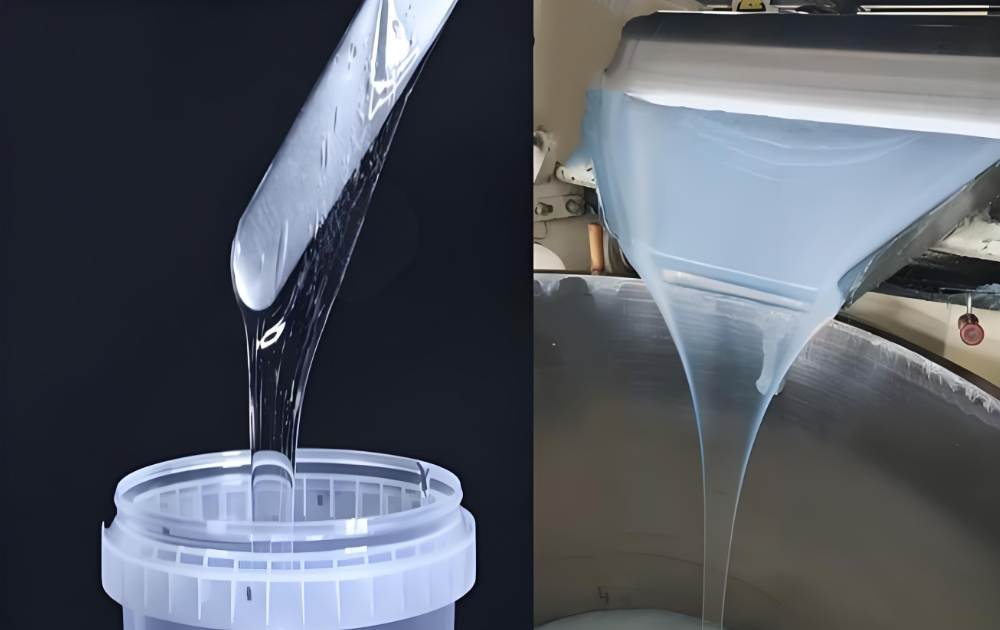
| Direct answer The FDA does not approve silicone as a raw material. It approves finished devices made from silicone that meet specific regulatory requirements. A silicone material is considered ‘FDA approved’ if it complies with 21 CFR 177.2600 — but that standard covers food contact, not medical devices. For medical use, additional certification layers apply: USP Class VI, ISO 10993, and in some cases, FDA PMA approval for the device itself. |
Pick up any food-grade spatula or medical catheter and you will likely see the words ‘FDA approved silicone’ somewhere on the packaging. The phrase is everywhere — and it means something different in each of those contexts.That is not a branding problem. It is a regulatory reality.
The same term covers a spectrum of compliance levels, from kitchen bakeware to long-term implantable devices. Understanding the difference matters — whether you are designing a product or sourcing a manufacturing partner for your project.
The FDA Does Not Approve Silicone — It Approves Devices
This is the most important sentence in this article. The FDA, as a regulatory agency, evaluates finished medical devices — not raw materials like silicone. [1]
When a manufacturer says their silicone is ‘FDA approved,’ what they typically mean is one of the following:
- The silicone compound complies with 21 CFR 177.2600 — the FDA regulation for rubber articles in repeated food contact.
- The material has passed USP Class VI biocompatibility testing, which is administered under the US Pharmacopeia’s General Chapter <88>.
- The finished device has received 510(k) clearance or PMA approval from the FDA, based on a full biocompatibility assessment of the device in its intended use.
Each of these is a genuinely different thing. They are not interchangeable. A silicone material can satisfy the first without satisfying the second. And a manufacturer can claim the first two without the third — which still does not constitute FDA approval of a medical device.
| Why this matters for sourcing decisions If you are procuring silicone components for a regulated medical device, asking ‘is it FDA approved?’ is not a sufficient qualification question. The more useful questions are: Which specific FDA regulation does the material comply with? Does it carry a USP Class VI test report? Has the device-level ISO 10993 biocompatibility package been completed for the intended contact type and duration? |

What 21 CFR 177.2600 Actually Covers
FDA 21 CFR 177.2600 is the section of the Code of Federal Regulations that governs rubber articles intended for repeated use in contact with food. It is part of Title 21 — the FDA’s authority over food, drugs, and medical devices. [2]
The regulation establishes a permitted ingredients list: approved base polymers (silicone is one), curing agents, accelerators, fillers, and plasticizers. It also sets extraction limits — the maximum amount of material that can leach from a rubber article into food under defined test conditions.
- Fatty food contact: extractables must be less than 20 mg per square inch after hexane reflux for 7 hours.
- Aqueous food contact: extractables must be less than 1 mg per square inch.
A silicone compound is ‘FDA compliant’ under 21 CFR 177.2600 if it contains only approved ingredients and passes those extraction tests. The compliance applies to the material formulation — not to the finished product molded from it.
This is why FDA-compliant silicone cooking utensils and FDA-approved silicone kitchen utensils both trace their safety claims back to 21 CFR 177.2600. The silicone compound used to make the spatula or the mixing bowl meets the regulation’s ingredient and extractable requirements. The FDA has not inspected or approved the spatula itself.
For consumer products, this distinction rarely matters in practice. The regulation is well-designed for its purpose and the compliance level is appropriate for kitchenware that contacts food. Where it matters is when the same language migrates into medical device contexts — and someone assumes that ‘FDA approved silicone’ on a medical component means the same thing as on a kitchen tool.
USP Class VI: The Next Compliance Layer
USP Class VI is the highest plastics classification defined in General Chapter <88> of the US Pharmacopeia and National Formulary. [3] It requires a material to pass three specific in vivo tests before it can carry the classification.
- Systemic Injection Test: Material extracts are injected intravenously into mice and monitored for 72 hours for signs of systemic toxicity.
- Intracutaneous Test: Extracts are injected under the skin of rabbits. Redness and swelling are scored against a control group for 72 hours.
- Implantation Test: Samples of the material are surgically implanted into tissue and observed for at least 120 hours for adverse tissue response.
All three tests must be passed. This is a pass/fail standard with no partial credit. If any single test fails, the material does not carry the Class VI classification.
Platinum-cured LSR (Liquid Silicone Rubber) grades from major suppliers — Wacker Elastosil LR 3003, Momentive TSE3032A, and equivalents — typically carry USP Class VI classification. The platinum catalyst produces no acidic byproducts during curing, which means no post-cure residue that could skew extractable results.
That said, the USP Class VI test applies to the compound as formulated. A change in formulation, catalyst ratio, or curing conditions can alter the extractables profile and may invalidate the original test. The classification belongs to the compound tested — not to all silicone from a given supplier.
ISO 10993 and Medical Device Biocompatibility
For medical devices, ISO 10993 is the framework that matters most to the FDA. The FDA adopted ISO 10993 as its primary biocompatibility standard in 1995 (guidance G95-1), effectively superseding USP Class VI as the primary tool for device submissions. [4]
Where 21 CFR 177.2600 tests the material and USP Class VI classifies it, ISO 10993 evaluates the finished device — accounting for the actual contact type (surface, external communicating, or implantable), contact duration (limited, prolonged, or permanent), and the specific patient population.
The standard is not a checklist. It is a risk-based framework. Which ISO 10993 sub-tests are required depends on what the device actually does in clinical use.
What ISO 10993 Covers That USP Class VI Does Not
- Genotoxicity (ISO 10993-3): Tests whether the material can damage DNA. Not covered by USP Class VI.
- Carcinogenicity: Required for devices with prolonged or permanent patient contact.
- Long-term implantation response: Tissue reaction over months and years — not five days. Required for devices implanted longer than 30 days.
- Reproductive toxicity: Required for devices used in reproductive medicine or by women of childbearing age.
A material that passes USP Class VI testing has cleared an important hurdle. But it does not automatically satisfy ISO 10993 for a medical device submission. The two are complementary — not equivalent.
| Dimension | 21 CFR 177.2600 (FDA Food Contact) | ISO 10993 (Medical Device Biocompatibility) |
| What it covers | Rubber and elastomeric materials used in repeated food contact. Applies to silicone, EPDM, nitrile, PTFE, and others. | Finished medical devices — evaluated for their actual patient contact conditions, duration, and contact type. |
| Governing body | U.S. Food and Drug Administration (FDA) — Title 21 of the Code of Federal Regulations. | International Organization for Standardization (ISO) — adopted by FDA in 1995 as its primary device biocompatibility standard. |
| What is tested | Material-level extractables. The compound is tested — not the finished part. Extractables in fatty food: <20 mg/in²; aqueous food: <1 mg/in². | Device-level biocompatibility based on contact type (surface / external / implant) and duration (limited / prolonged / permanent). |
| Medical relevance | Used as a baseline for medical material qualification. Many medical manufacturers require 21 CFR 177.2600 compliance as a minimum standard before USP Class VI testing begins. | Required for FDA 510(k) and PMA submissions involving patient-contact devices. Covers genotoxicity, carcinogenicity, and long-term implant response — not covered by 21 CFR 177.2600. |
| Implant use | Does not govern implantable devices directly. Compliance does not qualify a material for long-term implantation. | Implantable devices require ISO 10993 testing plus FDA Class III PMA approval — the most rigorous regulatory pathway. |
| Key limitation | Compliance does not mean a material is approved for all medical uses. The FDA evaluates the full device, not individual components. | Not a checklist — a risk-based framework. Which tests are required depends on the specific device and its intended use. |
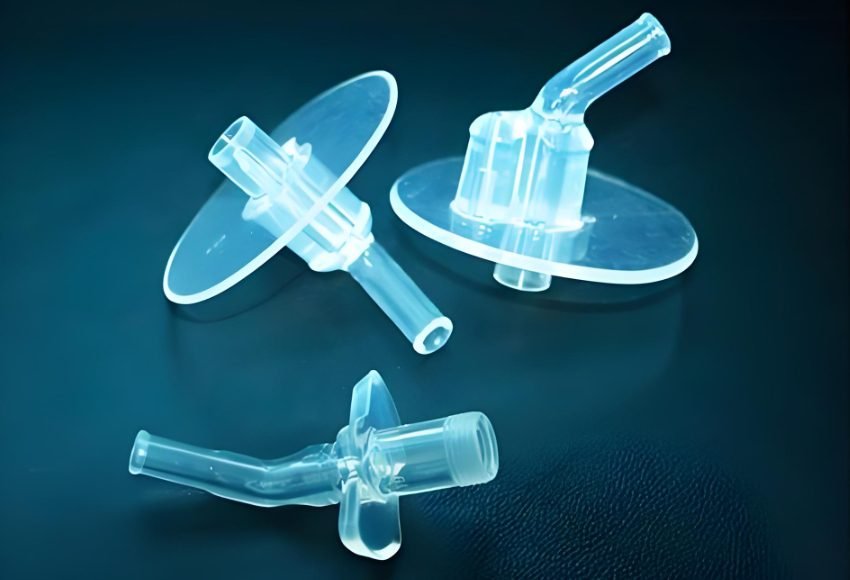
FDA Approved Silicone Implants: The Highest Compliance Level
Of all the uses of the phrase ‘FDA approved silicone,’ implant applications carry the most regulatory weight — and the strictest requirements.
Silicone-based implants — breast implants, cardiac pacemaker components, cochlear implant housings, and long-term catheter assemblies — are classified as FDA Class III devices. Class III is the highest-risk category, covering devices that sustain life, are permanently implanted, or present unreasonable risk of injury. [4]
Class III devices require Premarket Approval (PMA) — the FDA’s most stringent regulatory pathway. PMA requires comprehensive clinical trial data demonstrating that the device’s benefits outweigh its risks under actual patient use conditions.
This is fundamentally different from 21 CFR 177.2600 compliance. An FDA-approved silicone breast implant has gone through clinical trials, biocompatibility testing under ISO 10993, and a full FDA review of the finished device. The silicone material alone could not carry that designation — only the specific implant, as reviewed and approved, does.
For context: in September 2024, Establishment Labs received PMA approval for Motiva SmoothSilk breast implants — the first new breast implant PMA approved by the FDA since 2013. The silicone used in those implants had likely met 21 CFR 177.2600 and USP Class VI for years. Those two qualifications are necessary but not sufficient for implant approval.
| Key distinction for FDA approved silicone implants The phrase ‘FDA approved silicone implants’ refers to specific finished implantable devices that have received Premarket Approval from the FDA — not to a grade of silicone material.If a supplier tells you their silicone is ‘FDA approved for implant use,’ the correct follow-up is: Which specific implant device received that approval? FDA approval of an implant is device-specific, manufacturer-specific, and indication-specific. It cannot be transferred to a different device made from the same silicone compound. |
The Compliance Spectrum: Which Grade Do You Need?
Most sourcing confusion about ‘FDA approved silicone’ comes from conflating grades that serve different purposes. This table maps the spectrum from food-grade to implant-grade.
| Grade | 21 CFR 177.2600 | USP Class VI | ISO 10993 | Typical Applications |
| Food-grade silicone | ✓ | ✗ (not required) | ✗ (not required) | Kitchenware, food processing equipment, bakeware, beverage seals |
| FDA-compliant silicone | ✓ | Sometimes | ✗ | Pharmaceutical packaging, drug-contact tubing, sanitary equipment |
| USP Class VI silicone | ✓ (typically) | ✓ | ✗ | Medical device components — short to medium patient contact. Seals, gaskets, catheter tips |
| Medical-grade LSR | ✓ | ✓ | ✓ (device level) | Implant-adjacent components, fluid-path devices, wearable medical devices |
| Implant-grade silicone | ✓ | ✓ | ✓ + PMA required | Long-term implantable components (>30 days). Pacemaker leads, breast implants, cochlear components |
The key question to ask before selecting a grade is not ‘what is the silicone certified to?’ but ‘what does the finished part actually do, and how does it contact the patient or user?’
For a silicone spatula that touches food during cooking, 21 CFR 177.2600 compliance is exactly the right standard. For FDA-approved silicone kitchen utensils like reusable baking molds, that same regulation applies — and it is sufficient.
For a catheter seal that contacts blood for 24–72 hours, USP Class VI plus the relevant ISO 10993 sections are needed. For a device implanted permanently, the device itself needs PMA approval — and the silicone must meet implant-grade requirements throughout.
How Platinum-Cured LSR Satisfies All Three Frameworks
Platinum-cured Liquid Silicone Rubber is the material that most naturally threads through all three compliance levels.
The platinum catalyst drives a hydrosilylation reaction with no acidic byproducts. That clean chemistry is what enables platinum-cured LSR to meet the extractable limits of 21 CFR 177.2600, pass the three USP Class VI tests without residual contaminants, and support ISO 10993 biocompatibility programmes across multiple contact categories.
Peroxide-cured silicone is also widely used and can satisfy 21 CFR 177.2600 for food contact. But peroxide curing leaves acidic residues that must be removed by post-baking — typically 200°C for 2–4 hours — before the material meets medical and food-contact specifications. Skip or shorten that step, and the extractable profile changes.
What This Means in Production
The material certification is only the starting point. The manufacturing process determines whether a finished part actually behaves as the certification predicts.
- Post-cure: At Fecision, all medical-grade LSR parts undergo post-cure at 200°C for four hours. This removes residual volatiles and stabilises the crosslink network before shipment.
- Material lot verification: We verify the specific lot’s USP Class VI test report — not just the grade name. A formulation change at the supplier level can alter the compliance status of what looks like the same material.
- Cleanroom environment: Particulate contamination doesn’t affect the raw material’s certification but does affect the finished part’s bioburden — which matters for sterilisation efficacy and device-level biocompatibility.
- Traceability: Every production batch is documented from resin lot number to finished part — enabling trace-back in the event of a field complaint or regulatory audit.
Food-Grade Silicone: FDA Approval in the Kitchen
For FDA-approved silicone cooking utensils and FDA-approved silicone kitchen utensils, 21 CFR 177.2600 is the standard that matters — and it is well-suited to the task.
Platinum-cured food-grade LSR maintains stability from −55°C to 200°C, which covers everything from freezer storage to oven baking. It doesn’t absorb flavors, doesn’t stain, doesn’t crack under repeated flexing, and doesn’t leach at the levels measured by the FDA’s extraction tests.
The same injection molding process used for medical seals is used to produce food-contact silicone components. The difference is what the material is certified to, not how it is made.
One thing worth knowing: the label ‘food-grade’ and ‘FDA compliant’ can be applied to silicones that meet 21 CFR 177.2600, but the FDA does not maintain a list of approved silicone products or formulations. Compliance is self-declared by manufacturers against the regulation. Third-party testing and supplier-provided test reports are the primary verification tools available to buyers.
Frequently Asked Questions
Does ‘FDA approved silicone’ mean the FDA reviewed my product?
No. When manufacturers say their silicone is FDA approved, they almost always mean the material compound complies with 21 CFR 177.2600, or that it has passed USP Class VI testing. Neither involves an FDA review of the specific finished product.
What is required for FDA approved silicone implants?
Implantable silicone devices are FDA Class III — the highest-risk category. They require Premarket Approval (PMA), which involves clinical trial data, full ISO 10993 biocompatibility testing, and an FDA review of the complete device in its intended clinical use.
How do I know if a silicone supplier is actually compliant?
Ask for documentation — specifically the material’s 21 CFR 177.2600 compliance statement and, for medical applications, the USP Class VI test report from an accredited third-party laboratory.
Can the same silicone be used for both kitchen utensils and medical devices?
The same grade of platinum-cured silicone can satisfy both applications if it holds the appropriate certifications — 21 CFR 177.2600 for food contact, and USP Class VI (plus ISO 10993 data) for medical use.
Conclusion
‘FDA approved silicone’ is a phrase that carries real meaning — just not always the same meaning in every context it appears.
For FDA-approved silicone kitchen utensils and FDA-approved silicone cooking utensils, it describes a material that complies with 21 CFR 177.2600 — appropriate for the application and well-supported by that regulation.
For medical device components, it describes a material with USP Class VI biocompatibility classification and, at the device level, ISO 10993 testing matched to the specific contact type and duration.
For FDA-approved silicone implants, it refers to specific devices — not materials — that have received Premarket Approval from the FDA following clinical trials. The silicone material is a necessary but not sufficient condition for that approval.
The regulatory detail matters because it determines what testing is actually required, what documentation a manufacturer needs to provide, and whether a product can legally be marketed for its intended use. Treating all three as the same thing creates compliance gaps that surface at the worst possible time — during an FDA audit or a product recall investigation.
LSR Injection Molding for FDA-Compliant Silicone Components
Producing silicone components that hold their compliance across the full production run — not just in the lab sample — requires manufacturing controls that match the material’s certification.
FECISION coordinates silicone injection molding using the resin grade and manufacturing route agreed for each application. Cleanroom requirements, post-cure conditions and inspection criteria are matched to the selected manufacturing partner and product specification.
For a medical program, agree the material certificates, lot traceability, process records and inspection documentation with the assigned manufacturing site. Applicable ISO 13485 certification belongs to the partner and its certified scope; it does not constitute FDA approval of a silicone grade or finished device.
If you are selecting an LSR injection molding partner for medical components or food-contact applications, our engineering team provides material consultation and DFM review as part of the quoting process — helping you match the right certification level to your actual device requirements before tooling decisions are made.
References & Authoritative Sources
Accessed April 2026.
[1] Elastostar Rubber Corporation. ‘Complete Guide to FDA-Approved Silicone For Medical Use.’ (FDA approves finished devices, not raw materials; medical-grade vs. food-grade distinction; USP Class VI vs. ISO 10993 overview.) https://elastostar.com/is-medical-grade-silicone-fda-approved/
[2] U.S. Government Publishing Office — Electronic Code of Federal Regulations. ’21 CFR 177.2600: Rubber Articles Intended for Repeated Use.’ (Official regulation text; ingredient list; extractable limits for fatty and aqueous food contact.) https://www.ecfr.gov/current/title-21/chapter-I/subchapter-B/part-177/subpart-C/section-177.2600
[3] TBL Plastics. ‘What is USP Class VI Testing.’ (USP <88> General Chapter; three in vivo tests; systemic injection, intracutaneous, implantation; 72-hour and 120-hour observation windows.) https://tblplastics.com/usp-class-vi-testing/
[4] PMC / National Library of Medicine. ‘Review of Approvals and Recalls of U.S. Specific Medical Devices in General and Plastic Surgery.’ (PMA process for Class III devices; 510(k) vs. PMA regulatory pathways; breast implant approval history.) https://pmc.ncbi.nlm.nih.gov/articles/PMC11749930/