
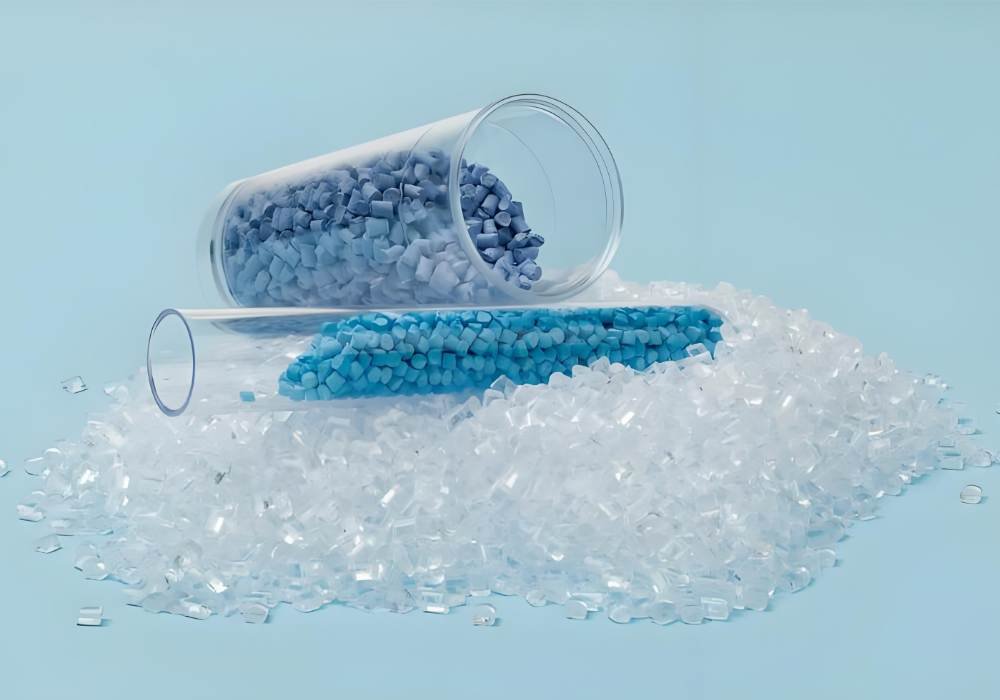
Plastic injection molding materials are thermoplastics forced into complex shapes under high pressure, setting mechanical strength, thermal stability, and chemical resistance. Do you need parts that survive drops, heat, and chemicals without cracking? Strongest plastic for injection molding balances tensile strength, impact resilience, and thermal stamina—yet picking the wrong resin risks field failure.
The strongest plastics for injection molding include PEEK (90-100 MPa tensile strength), PEI/Ultem (105 MPa), and PPS (80 MPa reinforced). These engineering thermoplastics withstand temperatures from 150°C to 250°C and offer superior chemical resistance per ASTM D638 testing standards [1]. Material selection depends on your specific load, temperature, and environmental requirements.
This guide simplifies high tensile strength plastics, compares impact resistant plastics, and provides a clear path to hard plastic injection molding success.
Key Material Properties to Consider
Before you pick a specific resin, you need to understand what “strength” really means in physical terms. The following outlines provide a framework to evaluate how various plastics react to actual stress loads.
Mechanical Strength
A material’s tensile and flexural strength determine its maximum load-bearing capacity. When designing structural components, using high tensile strength plastics such as PEEK or glass-filled nylon is essential in order to support heavy structural brackets, while unfilled polypropylene (PP) would often sag or deform under comparable loading conditions and is therefore not ideal for high-load industrial applications.
Tensile strength is measured per ASTM D638, the standard test method for tensile properties of plastics. This test uses a “dog bone” shaped specimen to ensure consistent load distribution during testing [2].
Impact Resistance
Charpy or Izod values predict how well your part survives a sudden drop or collision. Impact resistant plastics such as polycarbonate (PC) or ABS are engineered to absorb kinetic energy without brittle fracture. This is critical for handheld housings where accidental impact is a daily reality for the end-user.
Thermal Performance
The Heat Deflection Temperature (HDT) marks the point where a plastic begins to soften under load. If your parts operate in elevated environments, you must demand high-temperature resistant plastics such as PPS or PEI. These materials maintain their shape even when temperatures soar above 150°C.
HDT is measured per ASTM D648 at 1.8 MPa (264 psi) load. PEEK maintains dimensional stability up to 160°C under load, while unfilled PPS achieves 220°C and reinforced grades reach 260°C [3].
Chemical Resistance
Certain resin types swell or craze as a result of chemical exposure. Polypropylene and HDPE are good choices when working with a chemically hostile environment, while polycarbonate and ABS will show significant chemical degradation after only brief exposure to an aggressive industrial cleaner.
Dimensional Stability
Low shrinkage and minimal warping are vital for keeping tight tolerances in your robotic or CNC assemblies. While filled materials stay more stable, they can wear out tools faster during molding. The best plastic for injection molding successfully balances these physical strengths against the total manufacturing cost.
Wear and Friction
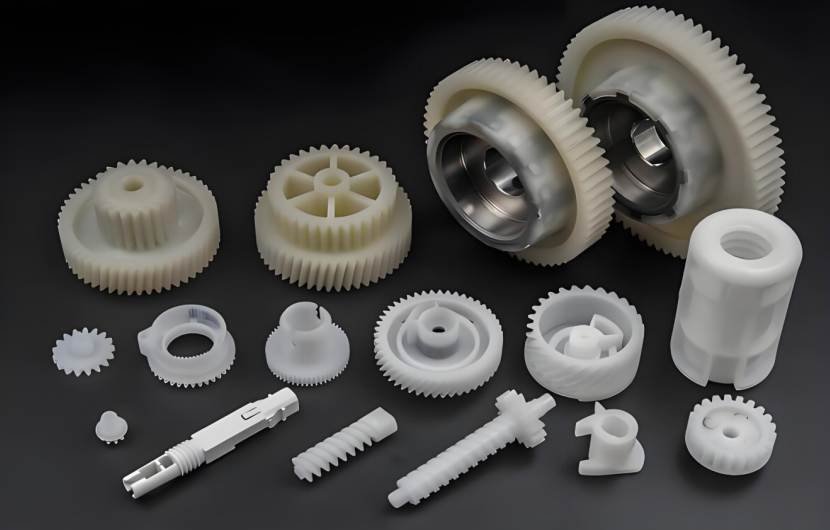
Moving parts like gears need a low coefficient of friction and high abrasion resistance to last. Acetal (POM) and nylon dominate these applications in hard plastic injection molding. The choice of the appropriate resin that has superior wear resistance properties will result in smooth operations of your mechanical assemblies and a reduction in the possibility of an assembly failing prematurely or creating excessive noise.
Electrical Properties
Electrical insulating properties are very important in the design and development of components for electronic housings and electrical connectors. Both unfilled PEEK and PEI provide reliable electrical insulation in very thin-walled applications, thereby helping to eliminate electrical arcing and short circuits while protecting against damage and contamination of electrical components.
Top 7 Strongest Plastics for Injection Molding
The selection of the polymer that is appropriate for your needs will be determined by a particular performance goal. According to Grand View Research, the global business market for engineering plastics is projected to reach USD 230.64 billion by 2030 due to the growth of demand in the medical sector, as well as in electronic and industrial segments [4]. With this in mind, here are the top seven materials leading the engineering plastics industry with respect to strength, durability, and reliability.
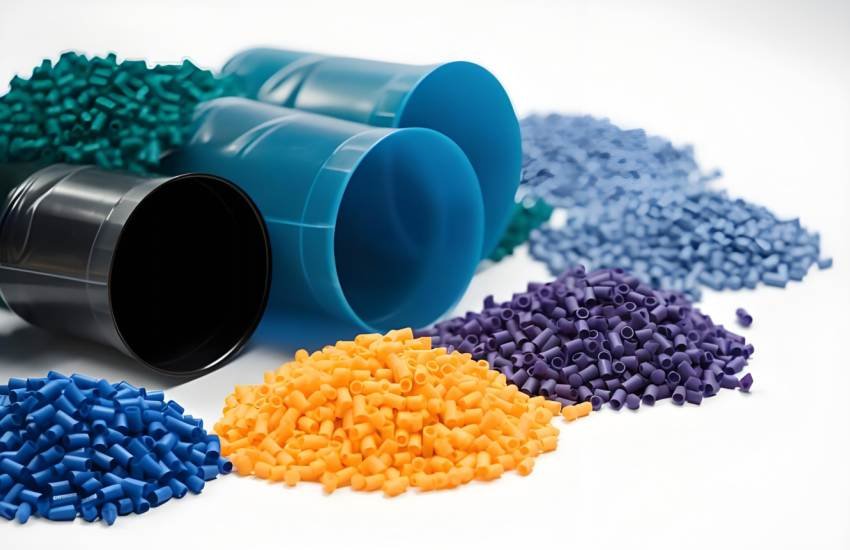
1. PEEK – The High-Performance Benchmark
PEEK is the “king” of polymers because of its incredible mechanical strength. It has a tensile strength of about 90–100 MPa and works perfectly in heat up to 250°C. For your most demanding robotic components, this material is almost impossible to beat.
| Property | Value | Test Standard |
| Tensile Strength | 90-100 MPa | ASTM D638 |
| Tensile Modulus | 3.6-4.3 GPa | ASTM D638 |
| Elongation at Break | 30-50% | ASTM D638 |
| Flexural Strength | 170-190 MPa | ASTM D790 |
| Compressive Strength | 118-138 MPa | ASTM D695 |
Source: ASTM D638 testing standards [5]
Because it resists almost all chemicals, PEEK often replaces metal in surgical robots and aerospace parts. While it costs more than standard resins, the price is worth it. Manufacturers use it for critical parts where failure is not an option or where saving weight is a priority.
2. Polycarbonate (PC) – Transparent Toughness
Polycarbonate is the best solution if you require a polymer that has optical clarity and extreme durability. It has notched Izod impact strength of 80 kJ/m², and as a result, it is very difficult to break. This is commonly used for safety shields and rugged medical housings.
PC maintains impact strength down to -40°C and offers HDT of 130-145°C. Its dielectric strength of 15-17 kV/mm makes it suitable for electrical applications per ASTM D149 [6].
Additives (UV stabilizers) are added to Polycarbonate (PC) to minimize yellowing from exposure to the elements, especially when used outdoors. This resin is one of the best plastic for injection molding for making light-transmitting components used by drones or other products that require light transmission into an exterior component, allowing internal electronics to be visible.
3. Acetal (POM/Delrin) – Precision Motion
Acetal is the material of choice for parts requiring very high stiffness and low friction. With a coefficient of friction around 0.2, it is ideal for producing gears and bushings. It also has excellent resistance to creep and therefore will provide very tight tolerances over long periods of use in a mechanical application.
POM exhibits tensile strength of 60-70 MPa and flexural modulus of 2.5-2.9 GPa. Its low moisture absorption (<0.2%) ensures dimensional stability in humid environments per ASTM D570 [7].
When these components are formed, the stresses inside the material are carefully controlled by the manufacturer so that no warping of the part occurs. While suitable for use with precision mechanical assemblies and valve applications, Acetal should not be used in a high acidity chemical environment or for a long time under direct UV lighting.
4. Polyethylene (HDPE) – Chemical-Proof Durability
HDPE has an excellent strength-to-density ratio as well as an excellent moisture barrier; it is well-suited for all types of liquid containers. In addition, HDPE has excellent resistance to the effects of stress cracking and is exceptionally durable and strong when exposed to even the most aggressive industrial chemicals.
You will see HDPE used for fuel tanks, industrial liners, and various bottles. It is a cost-effective workhorse for large, rugged parts. However, it is poor for precision fits because it shrinks significantly during cooling. Manufacturers choose it when durability and chemical resistance matter more than exact micron-level dimensions.
5. ABS – Balanced Engineering Workhorse
ABS is the ultimate engineering workhorse because it balances strength, impact resistance, and cost. It has a good tensile strength of around 45 MPa and is very easy to finish with paint or textures. This versatility makes it the most popular choice for general consumer products.
You likely interact with ABS every day in computer enclosures, toy housings, and appliance shells. It provides an upscale appearance without being overly expensive. The standard grade of ABS has limitations in its exposure to heat and UV light; manufacturers must add modifiers to provide improved performance in outdoor conditions.
6. Polyphenylene Sulfide (PPS) – Heat and Chemical Shield
When high temperature resistance is critical, PPS is one of the best choices available. Its reinforced grades have HDT values up to 260°C, and unfilled grades have HDT values up to 220°C. In addition to having high heat resistance, PPS is also flame resistant and has minimal water absorption, therefore maintaining dimensional stability in wet and/or humid environments for your industrial sensors.
PPS exhibits tensile strength of 80-85 MPa (reinforced) and excellent chemical resistance to acids, bases, and organic solvents. Its UL94 V-0 flame rating makes it ideal for electrical connectors [8].
When using PPS, manufacturers require that you have high mold temperatures (around 150°C) for the duration of the cycle to ensure that the material crystallizes properly to provide maximum material strength. PPS performs exceptionally well in applications for electrical connectors and pump housings that require resistance to extreme temperatures and aggressive chemicals.
7. Polyetherimide (PEI/Ultem) – Flame-Retardant Strength
Polyetherimide (PEI), also marketed under the name Ultem, has a remarkable tensile strength of 105 MPa. It is known for its high dielectric strength and capacity to survive repeated sterilization processes, which makes it an ideal candidate for use in the manufacture of medical devices and in high-end aircraft interior components.
PEI maintains HDT of 200°C and offers dielectric strength of 17-20 kV/mm. Its natural amber color is characteristic, and it meets UL94 V-0 without additives per ASTM testing.
The natural amber tint of PEI does limit your aesthetic flexibility, but its performance is hard to beat. Manufacturers frequently use it for electrical insulators where flame retardancy is a non-negotiable requirement. It is a premium material that ensures your most sensitive electronic assemblies meet all safety regulations.
Comparison Table: Strongest Plastics at a Glance
The table below provides a basic comparison of the different polymers and their performance based on your loading and heating conditions. You can use these numbers when determining which polymer best suits your application.
| Material | Tensile MPa | HDT °C | Impact | Chemical | Cost Tier | Best Fit |
| PEEK | ~90-100 | 160 | Good | Excellent | Premium | Metal replacement |
| PC | ~65-70 | 140 | Excellent | Fair | Moderate | Safety shields |
| POM | ~65 | 110 | Moderate | Good | Low | Gears, motion |
| HDPE | ~30 | 80 | Good | Excellent | Low | Containers |
| ABS | ~45 | 100 | Good | Fair | Low | Consumer housings |
| PPS | ~80 | 220 | Moderate | Excellent | High | Electronics |
| PEI | ~105 | 200 | Moderate | Good | High | Flame-retardant |
All values measured per ASTM D638 (tensile), ASTM D648 (HDT), and ASTM D256 (impact) standard test methods [9].
Easy Tips on How to Select the Strongest Plastic
Choosing the right material ensures your parts survive their intended use. You should follow these practical steps to balance raw strength with real-world performance and manufacturing needs.
Map Loads First, Then Environment
Before picking a resin, you must define the primary stress on the part. If the part faces constant pulling, prioritize the tensile modulus. If it faces repeated drops, prioritize notched Izod values. Always check a chemical resistance chart if your part will touch oils or cleaning fluids.
Match HDT to Peak Service Temperature
Heat Deflection Temperature (HDT) tells you when a plastic starts to soften. A safety margin should be added above your maximum operating temperature. Operating too close to the HDT causes parts to creep or lose their shape over time. This extra buffer ensures long-term dimensional stability for your project.
As a general rule, maintain at least 20°C margin between your maximum operating temperature and the material’s HDT value.
Factor in Fillers and Reinforcements
You can significantly boost performance by adding fillers. Glass fiber can double the stiffness of a part, but it may reduce the impact strength. Carbon fiber adds conductivity, which is great for EMI shielding but should be avoided if you need the part to act as an electrical insulator.
Validate with Prototype Molds
The strongest plastic for injection molding on paper may behave differently in a real mold. The difference between crystalline and amorphous polymers is a key factor in predicting warpage and shrinkage. Prototyping allows manufacturers to catch these issues before expensive steel tools are cut, ensuring your final part performs perfectly.
Plan Secondary Operations Early
If you need thread inserts, laser marking, or overmolding, you must plan these steps early. Your resin choice directly affects how well secondary materials bond to the surface. Deciding on the processing sequence now ensures that your final assembly is strong and stays within your total project budget.
Conclusion
Selecting high wear resistant plastic or impact resistant plastics is only half the battle; execution determines whether specs survive production. You need a partner who understands the nuances of these high-performance materials to ensure your injection molded projects succeed in the real world.
All material selections should be validated against your industry requirements. For medical applications, ensure compliance with ISO 10993 biocompatibility standards. For aerospace, AS9100 certification ensures traceability and quality management.
FECISION coordinates high-performance resin selection, DFM and injection molding through manufacturing partners. Review the assigned site's applicable quality-system scope and confirm material-grade data, critical dimensions and the part-validation plan for the intended load and environment.
To see how these materials perform in specific designs, contact Fecision today and turn material uncertainty into molded certainty!