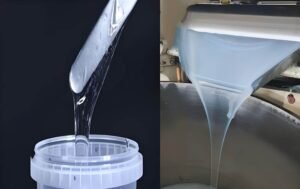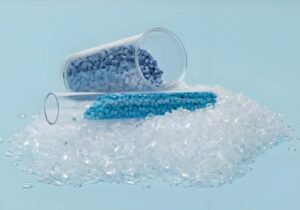

| Medical injection molding is a specialised manufacturing process that produces biocompatible plastic components for medical devices. It melts medical-grade resin, injects it into precision-machined molds, and solidifies it under controlled conditions in ISO Class 7–8 cleanrooms. Every stage follows FDA 21 CFR Part 820 and ISO 13485:2016 quality standards to ensure patient safety. |
The syringe a nurse draws from. The catheter that keeps a patient stable overnight. The housing that protects a pacemaker inside someone’s chest. Almost every plastic component in those devices was made through medical injection molding.
This guide explains how the process works, why it differs from standard molding, which materials are used and why, and what regulatory requirements apply.
What Is Medical Injection Molding?
Medical injection molding produces plastic parts for healthcare devices. Resin pellets are melted, injected into a precision-machined mold cavity, and cooled into the final shape. The molds themselves are engineered to tolerances of ±0.005 mm or finer — comparable to the width of a human hair divided by 10.
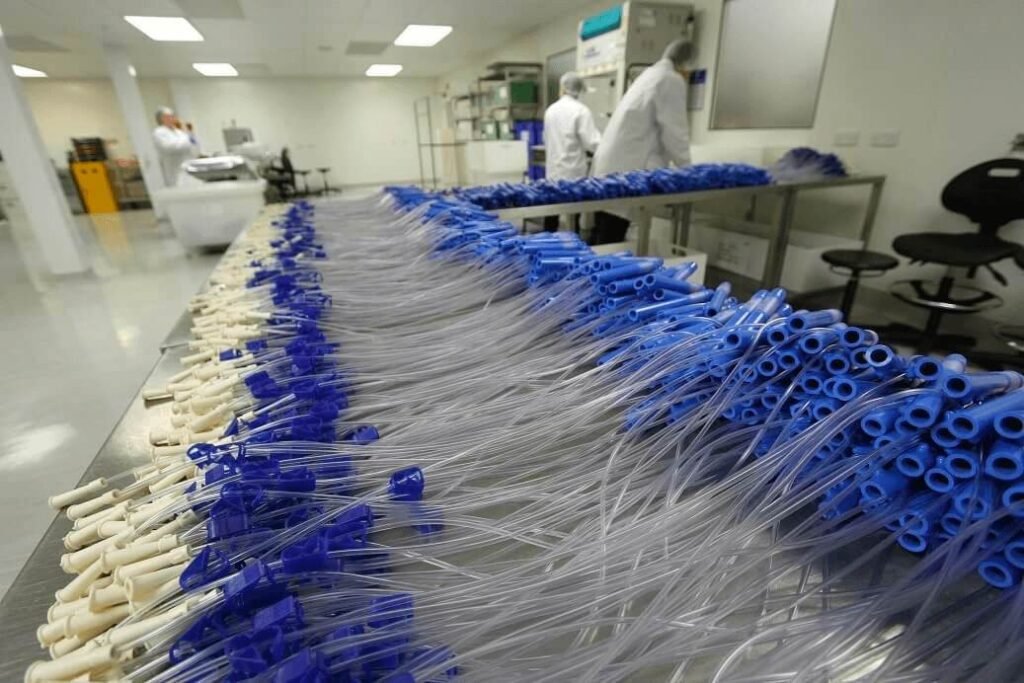
What separates medical from standard molding isn’t just the machines. It’s the environment, the materials, the documentation, and the regulations that govern every step. The process runs in ISO Class 7 or Class 8 cleanrooms — controlled environments where airborne particle concentrations, temperature, and humidity are tightly managed around the clock. [4]
Medical injection molding is ideal for producing both single use and reusable medical parts, surgical handles, diagnostic housings, catheters and more. Its ability to replicate complex designs with consistency makes it the backbone of modern healthcare manufacturing.
Medical vs. Standard Injection Molding: Key Differences
Both processes use the same fundamental technology. But for medical applications, every requirement is significantly more demanding.
| Parameter | Standard Injection Molding | Medical Injection Molding | Why It Matters |
| Dimensional tolerance | ±0.1 mm (typical) | ±0.005 mm (up to ±1 µm for micro parts) | Medical parts must fit and seal precisely — deviations are not cosmetic, they are functional failures |
| Production environment | Standard factory floor | ISO Class 7–8 cleanroom (≤352,000 or ≤3,520,000 particles/m³) | Contamination causes device failure or infection; cleanroom is non-negotiable |
| Regulatory framework | General manufacturing standards (ISO 9001) | FDA 21 CFR Part 820 / QMSR, ISO 13485:2016 | Medical devices require documented risk management, full traceability, and process validation |
| Materials used | Consumer-grade commodity plastics | Biocompatible medical-grade polymers (ISO 10993, USP Class VI) | Body-contact materials must pass biological safety testing before use |
| Lot traceability | Optional / project-specific | Mandatory — raw material to finished part | Required by FDA QMSR and ISO 13485 for recall capability |
| Process validation | Not required | IQ / OQ / PQ — three-stage documented validation | Proves the process is repeatable before full production begins |
| Quality inspection | Sampling-based | 100% dimensional + visual + functional on critical features | Zero-defect standard — critical components cannot rely on statistical sampling alone |
The gap in tolerance alone tells the story. Standard molding holds ±0.1 mm. Medical molding routinely hits ±0.005 mm.
That difference isn’t cosmetic. A valve that fits 0.1 mm out of spec can leak. A seal that’s 0.05 mm undersized can fail under pressure. In a patient’s body or on a surgical tray, there is no margin for ‘close enough.’
Materials Used in Medical Injection Molding
Choosing the right resin is one of the most consequential decisions in medical device development. The material must be biocompatible, withstand sterilisation, resist chemical exposure, and remain dimensionally stable over the device’s service life.
Most materials are evaluated to ISO 10993 and USP Class VI biocompatibility standards before being approved for patient-contact use.
Here are the eight most commonly specified polymers, with their sterilisation compatibility and typical applications.
| Code | Full Name | Type | Sterilisation | Common Medical Applications |
| PC | Polycarbonate | Rigid thermoplastic | Autoclave, EtO, gamma | Blood filters, diagnostic housings, optical connectors, IV set components |
| PP | Polypropylene | Semi-rigid, flexible | Steam, radiation | Syringes, IV connectors, test tubes, lab consumables — ideal for high-volume disposables |
| PEEK | Polyether Ether Ketone | High-performance rigid | Autoclave (>1,000 cycles) [4] | Orthopedic implants, surgical guides, dental abutments — radiolucent, implant-grade available |
| PPSU | Polyphenylsulfone | High-perf. rigid | Autoclave (>1,000 cycles) [4] | Reusable surgical trays, sterilisation containers, housings for repeated-cycle instruments |
| PSU | Polysulfone | High-perf. rigid | Autoclave (~100 cycles) [4] | Short-lifecycle reusable instruments, dialysis connectors, fluid management components |
| Ultem (PEI) | Polyetherimide | High-perf. rigid | Autoclave (2,000+ cycles at 132°C) [4] | Demanding sterilizable instruments, aerospace-grade medical electronics, high-heat housings |
| ABS | Acrylonitrile Butadiene Styrene | Tough, impact-resistant | EtO, low-temp plasma | Handheld instrument housings, diagnostic device enclosures, ergonomic grips |
| LSR | Liquid Silicone Rubber | Flexible elastomer | All methods — autoclave, EtO, gamma, e-beam | Respiratory seals, medical tubing, drug delivery membranes, infant care — see LSR Injection Molding guide |
Why Sterilisation Compatibility Matters So Much
PEEK and PPSU both withstand more than 1,000 autoclave cycles at 134°C without significant property loss. Polysulfone (PSU) tolerates around 100 cycles before potential crazing occurs.
Ultem (PEI) retains 100% of its tensile strength after 2,000 autoclave cycles at 132°C — one of the most impressive sterilisation durability profiles in the polymer family.
For disposables, PP and PC are standard. For reusable instruments that see daily sterilisation, PPSU, Ultem, or PEEK are the appropriate choices. Getting this selection wrong creates field failures, recall risk, and patient harm. It cannot be corrected after tooling is cut.
How Medical Injection Molding Works: Six Steps
The precise steps involved in medical injection molding ensure consistent production of high quality components for healthcare applications. Each phase requires meticulous attention to detail and strict adherence to quality standards.
Step 1 — Material Selection and Drying
The chosen medical-grade resin is selected based on the device’s contact type, sterilisation method, and ISO 10993 biocompatibility requirements.
Before processing begins, resin pellets are dried in desiccant dryers. Residual moisture causes voids, splay marks, and reduced mechanical strength.
The drying time, temperature, and target moisture level are documented as part of the validated process — not left to operator judgement.
Step 2 — Mold Design and Tooling
Mold design is the most critical and expensive part of the programme. Engineers specify gate type, runner system, draft angles, cooling channel layout, and venting.
For complex medical parts, tooling may include slides, lifters, or collapsible cores for undercuts. Each adds cost and lead time — but removing them after tooling is cut costs far more.
Medical molds are typically built from hardened stainless steel to resist corrosion from process chemicals and humidity.
Step 3 — Injection and Cavity Fill
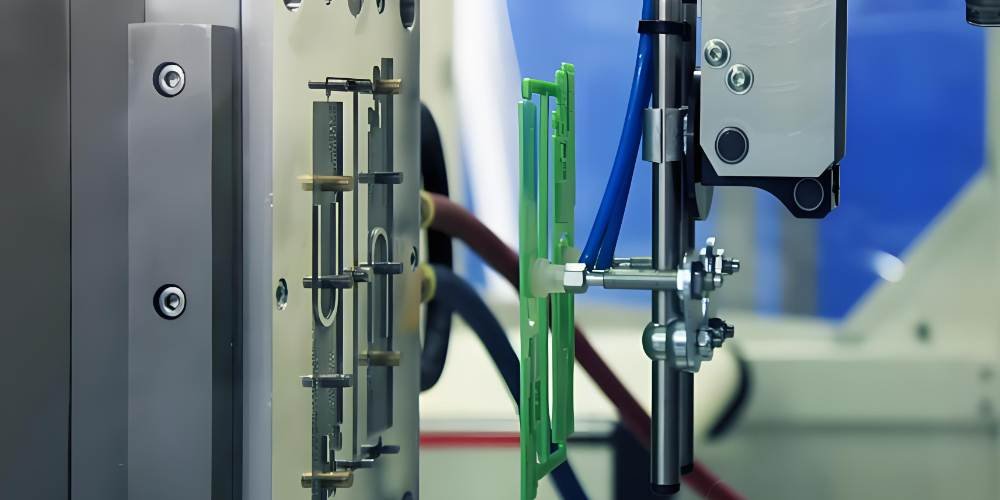
Molten resin is injected into the closed mold cavity under controlled pressure and speed. This is when dimensional accuracy is established.
Injection pressure typically runs 500–2,000 bar depending on material and geometry. Fill time is measured in fractions of a second. Any deviation from the validated parameters must be flagged and investigated — not simply adjusted on the fly.
Robots remove finished parts to prevent contamination from operator handling. No human hands touch the parts inside the cleanroom.
Step 4 — Cooling and Solidification
Cooling accounts for up to 75% of total cycle time. Uniform cooling prevents warpage, sink marks, and internal stress that could cause failure in service.
Cooling channel design is engineered at the tooling stage — it cannot be easily changed later. Conformal cooling (channels that follow the part geometry) is increasingly used for complex shapes.
Step 5 — Ejection and Trimming
Ejection pins, sleeves, or stripper plates release the solidified part from the mold. For medical parts, ejection force and speed are calibrated to prevent surface marking or deformation.
Any gate vestige, runner, or flash is trimmed. Trimmed parts return for quality inspection — they do not go directly to packaging.
Step 6 — Quality Control and Validation
Every medical molding programme runs 100% dimensional inspection on critical features, visual inspection for surface defects, and functional testing where applicable.
Process validation follows the IQ/OQ/PQ framework.
- IQ (Installation Qualification): verifies equipment is installed correctly and to specification
- OQ (Operational Qualification): validates that process parameters produce conforming parts across their defined range
- PQ (Performance Qualification): demonstrates consistent output over a defined production run at full operating conditions
These three stages are not bureaucratic formalities. They are the documented proof that the process is repeatable — which is exactly what FDA auditors examine.
Benefits of Medical Injection Molding
The benefits of medical injection molding go beyond manufacturing efficiency. This process delivers critical advantages that impact healthcare quality, accessibility and innovation.
Precision and Consistency
Once a mold is validated, every part that comes out matches the specification — not approximately, but within ±0.005 mm or better.
This matters for surgical instruments, implant components, and valve assemblies where dimensional variation affects function, not just appearance.
Scalability
Multi-cavity molds produce several parts per cycle. A 16-cavity syringe barrel mold running at 30-second cycles produces over 1,900 parts per hour.
Once the validation overhead is paid, the per-unit cost drops dramatically. This is why injection molding dominates disposable medical device production.
Design Complexity Without Assembly Complexity
Metal inserts, over-molded grip surfaces, living hinges, and integrated clips can all be molded in a single shot. Features that would require separate assembly steps are combined into one.
Fewer assembly operations mean fewer opportunities for contamination, fewer failure points, and lower labour cost per unit.
Regulatory Traceability
Every batch produced in a validated medical molding programme carries a documented audit trail: raw material lot, machine parameters, operator records, inspection results, and batch release.
If a field complaint arises, the manufacturer can trace the device back to its exact production conditions — and if necessary, isolate exactly which lots are affected.
Cleanroom Standards and Regulatory Compliance
The medical industry demands zero defects. Every medical plastic injection molding process must comply with regulatory standards to ensure safety and reliability.
ISO 13485 Compliance: This certification defines rigorous quality management systems for medical device production.
FDA Regulations (21 CFR Part 820): These rules govern design, manufacturing and documentation to ensure traceability and accountability.
Cleanroom Manufacturing: Cleanrooms (ISO Class 7 or 8) minimize airborne contamination. They control temperature, humidity and particle count to protect device sterility during molding, assembly and packaging.
Fecision’s Quality Commitment
Fecision maintains strict compliance with industry certifications through thorough validation protocols. Our process follows Installation Qualification (IQ), Operational Qualification (OQ) and Performance Qualification (PQ) methodologies. This three step approach verifies that tooling, materials, equipment and processes produce medical grade components that meet predetermined specifications.
In fact, our quality management system ensures complete traceability from raw materials to finished products. Our adherence to ISO 13485:2016 shows their commitment to international standards for medical manufacturing.
Medical Applications of Injection Molding
Injection molded medical components are used in countless healthcare applications across various specialties. The versatility of this process enables production of critical devices that save lives daily.
Surgical Instruments and Disposables
Handles, forceps, trocars, and clamps are injection molded in PPSU, ABS, or PC for single-use or autoclave-compatible reusable versions.
Disposable instruments eliminate cross-contamination risk and reduce sterilisation labour costs. The shift from metal to molded polymer disposables has accelerated across high-volume surgical settings.
Implantable Components
PEEK is the dominant polymer for non-metallic implants: orthopedic screws and plates, spinal fusion cages, dental abutments, and surgical guides. Its strength-to-weight ratio rivals titanium, and it is radiolucent — it does not obscure X-ray or MRI imaging.
Bioabsorbable polymers (PLLA, PGA, PLGA) are also injection molded into implantable fixation devices that dissolve over months in the body, eliminating the need for a second surgery to remove hardware.
Drug Delivery Systems
Syringe barrels, auto-injector components, insulin pen cartridges, and inhaler housings are all injection molded at high volume. Tolerances must accommodate automated assembly lines where parts fit together in fractions of a second.
Drug-contact components require chemical characterisation under ISO 10993-18 to confirm that no leachables from the polymer interfere with the drug formulation.
Diagnostic and Lab Equipment
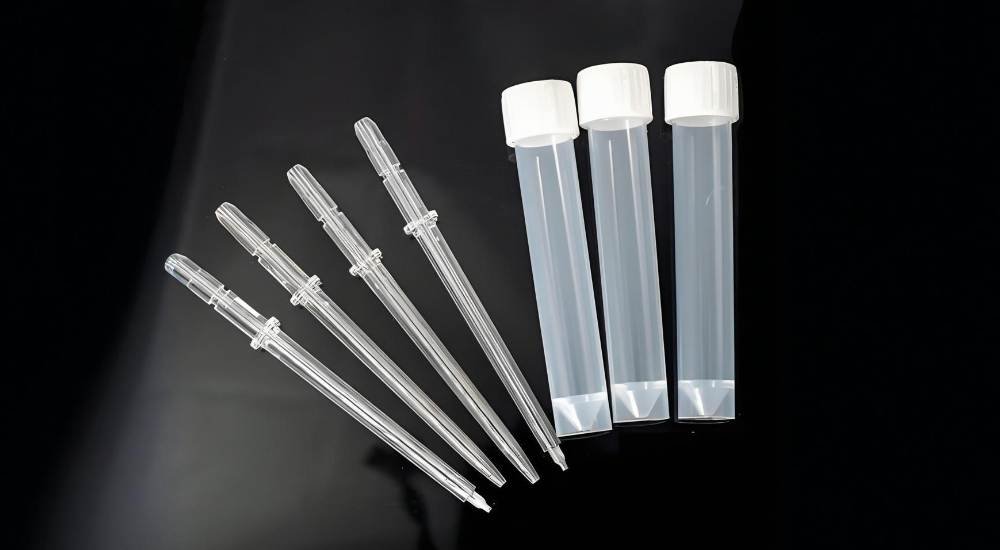
Microplates, pipette tips, test tube racks, and lateral flow cassette housings are produced in the hundreds of millions per year through injection molding.
Optical clarity (COP/COC, PMMA, PC) is critical for devices that measure light transmission. Even sub-micron surface contamination from the molding environment can affect assay results — which is why diagnostic consumables are produced in cleanrooms.
Wearable Medical Devices
Continuous glucose monitors, cardiac event monitors, and wearable ECG patches use injection-molded PC and TPU housings. Weight is a primary design constraint — molded polymer enclosures are 40–50% lighter than equivalent metal alternatives.
Skin-contact surfaces use LSR or medical-grade TPU overmolded onto rigid substrates for comfort and biocompatibility.
Frequently Asked Questions
How is medical injection molding different from standard injection molding?
The core technology is the same — but the requirements are far more stringent. Tolerances are 20× tighter (±0.005 mm vs ±0.1 mm). Materials must pass biocompatibility testing. Production runs in certified cleanrooms. Every batch requires documented traceability, and the process must be formally validated before production begins.
What materials are used in medical injection molding?
The most common materials are PC, PP, PEEK, PPSU, PSU, Ultem (PEI), ABS, and LSR. Material selection depends on contact type (skin, blood, implant), sterilisation method (autoclave, EtO, gamma, e-beam), and whether the device is single-use or reusable.
What is IQ/OQ/PQ validation and why is it required?
IQ (Installation Qualification), OQ (Operational Qualification), and PQ (Performance Qualification) are a three-stage validation protocol. Together they prove that the equipment is installed correctly, the process produces conforming parts across its validated range, and full production runs consistently.
What cleanroom class is used for medical injection molding?
Most medical injection molding runs in ISO Class 7 (≤352,000 particles ≥0.5 µm/m³) or ISO Class 8 (≤3,520,000 particles/m³). Class 7 is standard for implants, fluid-path components, and higher-risk devices. Class 8 is used for less contamination-sensitive secondary operations.
Does the FDA QMSR 2026 update affect medical injection molding suppliers?
Yes. The FDA’s Quality Management System Regulation (QMSR), effective February 2, 2026, now incorporates ISO 13485:2016 by reference into 21 CFR Part 820. [1][2] This makes ISO 13485:2016 compliance a legal requirement — not just a best practice — for suppliers of finished medical devices in the US market.
IQ/OQ/PQ validation, lot traceability, environmental controls, and supplier qualification are all subject to FDA inspection under the new regulation.
Conclusion
Medical injection molding is the production backbone of modern healthcare. It delivers the precision, sterility, and scalability that medical devices demand — at a cost that makes them accessible at scale.
The regulatory requirements are demanding for good reason. Patients depend on these components performing exactly as specified, every time, for the entire service life of the device.
Fecision is ISO 13485:2016 certified with Class 1000 (ISO 7) cleanroom facilities and validated production processes covering LSR, PEEK, PC, PP, and ABS medical components. We produce million medical-grade parts monthly with full lot traceability and audit-ready documentation.
Contact our engineering team for a DFM review and capability assessment for your specific application.
References & Citations
All sources publicly available. Accessed April 2026.
[1] U.S. Food and Drug Administration (FDA). ‘Quality Management System Regulation (QMSR).’ 21 CFR Part 820, effective February 2, 2026. https://www.fda.gov/medical-devices/postmarket-requirements-devices/quality-management-system-regulation-qmsr
[2] Federal Register. ‘Medical Devices; Quality System Regulation Amendments.’ Final Rule, February 2, 2024. 89 FR 7496. https://www.federalregister.gov/documents/2024/02/02/2024-01709/medical-devices-quality-system-regulation-amendments
[3] ISO 13485:2016. ‘Medical devices — Quality management systems — Requirements for regulatory purposes.’ ISO.org. https://www.iso.org/standard/59752.html
[4] Setra Systems. ‘What Is ISO 8 Cleanroom Classification?’ ISO 7 vs ISO 8 particle counts and ACH specifications. https://www.setra.com/blog/what-is-iso-14644-1-cleanroom-classification
[5] Wikipedia. ‘ISO 10993.’ Overview of the 22-part biological evaluation standard series. https://en.wikipedia.org/wiki/ISO_10993