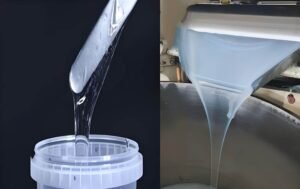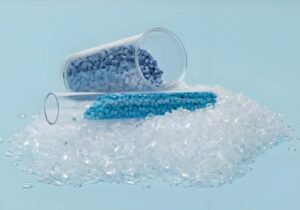
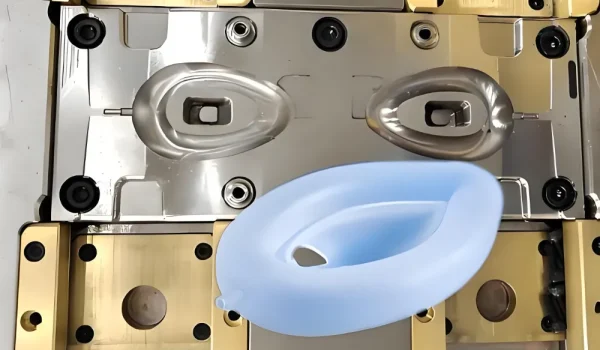
When a pacemaker seal fails, or a drug-delivery valve leaks, the consequences extend far beyond a manufacturing reject. Medical device engineers know this — which is why silicone molding for medical devices is one of the most tightly controlled manufacturing processes in the world.
Liquid Silicone Rubber (LSR) injection molding has become the dominant method for producing precision medical components because it combines sub-millimeter accuracy, biological inertness, and repeatable high-volume output. This guide covers everything you need to make informed decisions: the process, material grades, design requirements, sterilization compatibility, regulatory validation, cost benchmarks, and how to choose the right manufacturing partner.
Who This Guide Is For: Product engineers, R&D leads, and procurement teams at medical device companies evaluating LSR injection molding for Class I, II, or III device components. Whether you are moving from prototype to production, switching from compression molding, or qualifying a new supplier, this guide addresses the questions that matter most.
What Is Medical Silicone Molding?
Medical silicone molding is the manufacturing process of transforming raw silicone elastomers — most commonly Liquid Silicone Rubber (LSR) — into precision components that can safely contact human tissue, withstand repeated sterilization, and perform reliably over the life of a device.
Unlike general industrial silicone processing, medical-grade production takes place in controlled cleanroom environments and must satisfy a stack of regulatory standards: FDA 21 CFR 177.2600 for ingredient listing, ISO 10993 for biocompatibility, ISO 13485 for the quality management system, and ISO 14644 for cleanroom classification. The output may be anything from a 0.2 mm trocar membrane to a long-term cochlear gasket.
The process is fundamentally different from thermoplastic injection molding. While thermoplastics are melted and then cooled to solidify, LSR undergoes chemical cross-linking triggered by heat. This inversion — injecting cold material into a hot mold — requires specialized cold-runner equipment, precise temperature control, and dedicated cleanroom infrastructure. The result is superior elastomeric properties that no thermoplastic can replicate.
LSR vs. HCR vs. Compression Molding: Which Process Is Right?
Choosing the correct silicone processing method depends on your volume, geometry, regulatory timeline, and budget. Here is a direct comparison of the three primary methods:
| Factor | LSR Injection Molding | HCR Compression Molding | Transfer Molding (HCR) |
| Material form | Liquid (two-part, 1:1 mix) | Solid gum compound | Solid preform |
| Automation level | Fully automated, hands-free | Manual loading required | Semi-automated |
| Cycle time | 30 sec – 2 min | 3 – 10 min | 2 – 8 min |
| Typical tolerances | ±0.05 – 0.1 mm | ±0.1 – 0.3 mm | ±0.1 – 0.2 mm |
| Flash / trim | Minimal (flashless molds) | Requires deflashing | Requires deflashing |
| Volume sweet spot | High (>10,000 units) | Low–mid (<10,000 units) | Low–mid (complex shapes) |
| Tooling cost | Higher (cold-runner molds) | Lower | Moderate |
| Unit cost at scale | Lowest | Higher | Moderate |
| Cleanroom suitability | Excellent (automated) | Limited (manual) | Moderate |
| Overmolding / multi-shot | Yes (LSR onto thermoplastic) | Limited | Limited |
| Best for | High-vol implantables, wearables, drug delivery | Prototypes, low-vol seals | Complex geometries, HCR parts |
Key takeaway: For most regulated medical device components requiring consistent quality, cleanroom production, and scale, LSR injection molding is the superior choice. HCR compression molding remains valuable for low-volume prototypes or parts where tooling cost is a primary constraint.
For detailed discussion of mold tooling options, or thermoplastic vs. thermoset trade-offs, refer to the relevant sections of our Knowledge Center.
The LSR Injection Molding Process — Step by Step
Understanding each stage helps engineers specify molds correctly, anticipate validation requirements, and prevent the most common quality issues.
1. Mold Clamping
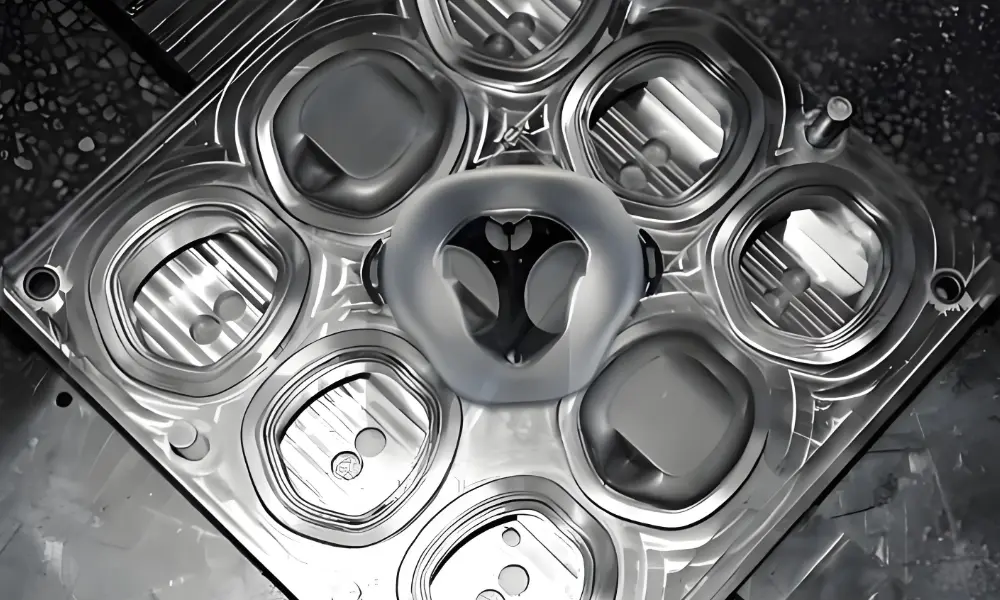
Precision medical-grade steel molds close under clamping forces typically ranging from 50 to 400 tonnes, depending on part projected area and injection pressure. Clamping force must be sufficient to prevent flash — excess material extruding at the parting line — without distorting the mold.
Maintaining a strong seal is especially important for higher-risk implantable manufacturing for medical devices. Clamping consistency is validated as part of the Installation Qualification (IQ) protocol.
2. Cold-Runner Injection
The next step is to inject Liquid Silicone Rubber (LSR) into the mold under high pressure through cold-runner valves. Cold runners expose the material to less heat. This matters because heat directly affects silicone’s properties, especially its viscosity during LSR injection molding.
LSR is kept cold (4–10°C) in the injection system to prevent premature curing. A two-component liquid — typically a platinum catalyst in one barrel, a cross-linker in the other — is metered in a 1:1 ratio and injected into the heated mold cavity through valve gates.
Cold-runner systems eliminate material waste in the runner and eliminate the need for post-mold runner separation, which is critical for bioburden control in cleanroom production. Injection pressures commonly range from 600 to 2,000 bar depending on part complexity and wall thickness.
3. Platinum-Catalyzed Curing
Once LSR reaches the heated mold (typically 160–200°C / 320–390°F), platinum catalyst initiates rapid cross-linking. Cycle time depends on wall thickness and part geometry — thin-walled components (0.5–1 mm) may cure in 20–30 seconds; thicker parts can take up to 2 minutes. Platinum curing produces extremely low levels of extractables and residuals, a critical property for drug-contact and implantable applications.
For some applications — particularly high-purity drug-contact components — secondary post-curing in a hot-air oven (typically 4 hours at 200°C) is performed to further reduce volatile extractables. This step must be included in the process validation plan.
4. Automated, Lubricant-Free Ejection
Silicone’s elastomeric properties allow it to flex off tool features during ejection, enabling the demolding of undercuts that would be impossible with rigid plastics. In medical production, ejection uses vacuum-assisted robotic systems with no release agents or talc — both of which can introduce bioburden or surface contamination.
The non-contact method of removing the component helps ensure the strict bioburden limits required in medical manufacturing, while maintaining the quality of the sterile environment and the component itself. Hands-free ejection is a requirement for ISO Class 7 and Class 8 cleanroom manufacturing.
5. Post-Mold Operations
Depending on the component, post-mold steps may include: cryogenic deflashing (for tight-tolerance parts), plasma or UV surface treatment (to improve adhesion for overmolded substrates), post-cure oven treatment, automated vision inspection, CMM dimensional validation, and lot traceability documentation.
Material Selection: Grades, Standards, and Cure Systems
The silicone you specify is as important as the mold design. Selection must account for regulatory pathway, contact duration, body contact category, and functional requirements.
Regulatory Grade Selection
The silicone you specify is as important as the mold design. Selection must account for regulatory pathway, contact duration, body contact category, and functional requirements.
You must match your material selection to the intended use and body contact duration. This means selecting from surface-device, externally communicating, or permanent implant tiers. You will then choose the ISO 10993 tests you need, like -5 cytotoxicity or -10 irritation, depending on the indication of your device.
Besides, for seamless and straightforward global market clearance, your materials need EU compliance like REACH and RoHS 2. A qualified supplier provides the Certificate of Conformance for each medical silicone batch and handles the registration paperwork.
| Standard | Scope | When Required |
| FDA 21 CFR 177.2600 | Ingredient-listed silicones for repeated food/tissue contact | All US-market components with human contact |
| USP Class VI | Biological reactivity testing (implantation, intracutaneous, systemic) | Components with patient contact |
| ISO 10993-1 | Biocompatibility evaluation framework (cytotoxicity, sensitization, irritation, implantation) | All medical device components; test tier depends on contact duration |
| ISO 10993-5 | Cytotoxicity testing in vitro | Short-contact and implantable components |
| ISO 10993-10 | Sensitization and irritation testing | Skin-contact wearables, externally communicating devices |
| REACH / RoHS 2 | Substance restriction for EU market | All components sold in EU/UK |
Body Contact Category and Material Tier
ISO 10993-1 defines three contact categories that should drive your material selection:
- Surface devices (skin, mucous membrane, compromised surface) — standard USP Class VI LSR is appropriate for most applications.
- Externally communicating devices (blood path indirect, tissue/bone/dentin communicating, circulating blood) — extended biocompatibility testing including cytotoxicity and pyrogenicity is required.
- Implant devices (bone/tissue, blood) — permanent implant platinum-cured LSR is mandatory; peroxide-cured grades are not acceptable due to higher extractables.
Platinum vs. Peroxide Cure: When Each Is Appropriate
Silicone that is cured using platinum has the premium performance, resulting in extremely low amounts of extractables. This high level of purity is desirable for sensitive applications such as internal device systems for drug delivery. In contrast, peroxide-cured silicone offers significant cost savings and is often perfectly suitable for simple, non-implant seals.
Your application determines the best cure system for the job and your budget. While platinum offers superior cleanliness, peroxide is a great, cost-effective option for less critical seals and external components.
| Cure System | Extractables Level | Typical Applications | Cost |
| Platinum-catalyzed LSR | Very low (<10 ppm) | Implantables, drug-contact, high-purity wearables | Premium |
| Peroxide-cured HCR | Higher (byproduct volatiles) | Non-implant seals, external covers, low-risk components | Lower |
Specialty Grades
- High-tear strength (>50 N/mm): Required for self-sealing perforable septa, repeatedly punctured membranes.
- High-transparency (>90% light transmission): For optical sensors, light-guide components, and visual inspection windows.
- Low-durometer (10–20 Shore A): Skin-contact wearables requiring ultra-soft feel; self-adhesive formulations available.
- Gamma-stable grades: For components that will undergo terminal gamma sterilization without discoloration or degradation.
- Fluorosilicone (FVMQ): For applications requiring enhanced chemical resistance to fuels, solvents, or aggressive pharmaceutical excipients.
Design for Manufacturability (DFM) for Medical Silicone Parts
Good DFM reduces tooling iterations, cuts scrap rates, and speeds regulatory validation. Engage your molder’s engineering team at the concept stage — not after design freeze.
Wall Thickness
LSR’s low viscosity allows thin walls that thermoplastics cannot achieve. As a guideline:
- Minimum wall thickness: 0.4–0.6 mm (part-size dependent; thinner possible with specialty molds).
- Uniform wall thickness prevents curing inconsistencies and warpage. Abrupt transitions create flow hesitation and incomplete fill.
- Very thin walls (<0.3 mm) may exhibit surface blemishes or dimensional variation; discuss with your mold designer before committing.
Tolerances
LSR has higher inherent dimensional variability than rigid plastics due to its elastomeric nature and post-cure shrinkage (typically 2.5–3%). As a practical rule:
- Apply tolerances to silicone material — not to spaces between silicone.
- Minimum practical tolerance: ±2.5% of the nominal dimension, or ±0.075 mm, whichever is greater.
- For critical sealing surfaces, tighter tolerances (±0.05 mm) are achievable with hardened steel tooling and validated process control, but require higher tooling investment.
Draft Angles, Undercuts, and Parting Lines
- Draft angles: LSR’s elasticity allows 0° draft on many features, but 1–3° is recommended for consistent ejection on deep draws.
- Undercuts: Silicone can be ‘peeled’ off undercut features during ejection — a significant design freedom not available with thermoplastics.
- Parting line placement: Locate parting lines at non-critical surfaces to minimize visible witness lines and reduce finishing operations.
Gate Design and Venting
- Cold-runner valve gates are preferred for medical production — they eliminate gate vestige and runner waste.
- Gate location should ensure complete cavity fill without flow marks or weld lines at critical surfaces.
- Proper venting is essential in deep cavities and narrow features; trapped air causes incomplete fill and surface voids.
DFM Tip from the Fecision Engineering Team: Request a mold flow simulation before tool fabrication. Simulation identifies fill patterns, potential air traps, and hot spots — preventing costly design-to-tool iterations. Our engineering team provides mold flow analysis as part of our pre-production review.
Sterilization Compatibility
Silicone’s ability to withstand multiple sterilization cycles without property degradation is one of its most valuable attributes for medical use. However, not all silicone grades perform equally across all methods.
| Sterilization Method | LSR Compatibility | Key Considerations |
| Steam autoclave (121°C / 134°C) | Excellent — repeated cycles without degradation | Verify dimensional stability for tight-tolerance sealing components |
| Ethylene oxide (EtO) | Excellent | EtO residual absorption must be validated; aeration time specified in 510(k) |
| Gamma irradiation | Good — use gamma-stable grades | Standard LSR may yellow; gamma-stable formulations prevent discoloration and property shift |
| Electron beam (e-beam) | Good — similar to gamma | Lower dose penetration depth; dose mapping required for dense parts |
| UV / VHP (hydrogen peroxide vapor) | Excellent for surface sterilization | Not suitable for terminal sterilization of sealed packages |
Sterilization validation must be conducted per ISO 11135 (EtO), ISO 11137 (radiation), or ISO 17665 (steam) as applicable. Material test samples should be aged through the intended number of sterilization cycles before final biocompatibility testing.
Cleanroom Requirements and Bioburden Control
Medical silicone components require production in controlled environments. ISO 14644 defines cleanroom classifications by airborne particle count:
| ISO Class | Max Particles ≥0.5 µm/m³ | Typical Use |
| ISO Class 5 (Class 100) | 3,520 | Filling lines, highest-risk aseptic assembly |
| ISO Class 7 (Class 10,000) | 352,000 | Implantable and parenteral-contact components, Class III device parts |
| ISO Class 8 (Class 100,000) | 3,520,000 | General medical device components, Class I–II externally communicating devices |
Beyond cleanroom classification, bioburden control requires: automated hands-free production (no bare-hand contact with product), no mold release agents or lubricants, HEPA-filtered downflow air at the mold area, routine environmental monitoring (particle counts, viable organism sampling), and gowning and personnel hygiene protocols.
Fecision’s certified cleanrooms support ISO Class 7 and Class 8 production with automated handling and full environmental monitoring documentation, providing the audit trail required for 510(k) and PMA submissions.
Process Validation: IQ, OQ, and PQ
Regulatory submissions for medical devices require documented evidence that the manufacturing process consistently produces conforming parts. This is achieved through a three-stage validation protocol:
Installation Qualification (IQ)
IQ verifies that all equipment is installed correctly and meets manufacturer specifications. For an LSR injection molding cell, this includes: injection press calibration and clamping force verification, cold-runner temperature control accuracy, mold cavity surface roughness measurements, and cleanroom environmental baseline data.
Operational Qualification (OQ)
OQ establishes the process parameter window that reliably produces conforming parts. Engineers run designed experiments (DOE) varying injection speed, mold temperature, cure time, and material mix ratio. The output defines the proven acceptable range (PAR) for each parameter — the foundation of your process control plan.
Performance Qualification (PQ)
PQ demonstrates that the validated process consistently produces conforming parts across multiple production lots. Statistical analysis (SPC, Cpk) confirms process capability. For implantables, three consecutive production runs at production scale are typical. PQ data forms the core of the process section in FDA submissions.
Regulatory Note: Process validation must be repeated — or at minimum re-evaluated — whenever there is a significant change to material lot, tooling, equipment, or facility. Build a robust change control procedure into your quality management system from the start. ISO 13485 Section 7.5.6 requires documented validation of any process where output cannot be fully verified by subsequent inspection
Advantages of Silicone Injection Molding for Medical Device Manufacturing
Silicone injection molding has several distinctive advantages that other processes often cannot provide, which include unmatched precision, high design flexibility, and very impressive cost savings when increased at scale.
Micro-Reproducibility
This process offers incredible consistency, with a Cpk that ensures superior process capability on extremely thin-wall components. Cpk is a measure of the process’s ability to consistently meet specifications. This level of precision is maintained across millions of production shots.
The ability to repeatedly produce parts with such tiny tolerances is a huge benefit for you. Every component meets strict quality standards. This matters most for implantable medical devices like pacemakers or spinal implants—here, consistency isn’t optional.
Multi-Shot Versatility
You can use multi-shot molding to over-mold sensitive electronics or critical drug-contact layers in the same cycle. This capability drastically reduces the need for secondary assembly steps and post-processing. This combination significantly cuts down on overall manufacturing time for medical devices.
This versatility simplifies the production of complex devices with multiple materials. It means a more integrated and often more robust final product for you. It’s an efficient way to make hybrid parts in one go, increasing functional density.
Complex Geometry Capability
Liquid Silicone Rubber (LSR) possesses exceptional fluidity – a significant property of silicone as a material. This allows the material to easily fill submillimeter micro-features, which are common in catheter tips with very fine, intricate features. Thermoplastics often struggle to reach these tiny, delicate spaces in medical silicone molding.
This superior flow means you aren’t limited in your design complexity or component size. You can create highly intricate and specialized parts that function perfectly for critical medical uses, enabling advanced device design.
Clean-Room Sustainability
The use of flashless cold-runner systems in this method is highly sustainable. These systems trim silicone waste substantially compared to traditional hot runners. Furthermore, the runners (the solidified channel waste) can often be fully reground and reused.
This commitment to less material waste aligns with modern environmental goals. It makes medical silicone molding a responsible and efficient choice. It ensures your manufacturing process is cleaner and more resource-efficient.
Applications of Medical Silicone Injection Molding by Device Category
LSR injection molding serves every tier of the medical device regulatory classification system. Here are the primary application categories with representative components:
Class III — Implantable Devices (Highest Risk)
Requirements: ISO 10993 permanent implant testing, platinum-cured LSR only, ISO Class 7 cleanroom minimum, full PMA validation package.
- Pacemaker and ICD lead boots and connector seals
- Cochlear implant gaskets and hermetic seals
- Long-term neural interface ports (intrathecal, epidural)
- Spinal cord stimulator housings and strain reliefs
- Breast implant shells (HCR, not LSR — requires different process)
Class II — Surgical and Diagnostic Devices
Requirements: USP Class VI, ISO 10993 as applicable, ISO Class 7–8 cleanroom, 510(k) process documentation.
- Steerable catheter handles and tip seals
- Laparoscopic trocar sealing membranes (0.2 mm bladders for pneumoperitoneum maintenance)
- Flexible endoscope shaft components
- Surgical instrument grips and handles (LSR overmolded onto stainless steel or thermoplastic)
- Ophthalmic device seals and membranes
Drug-Contact and Combination Products
Requirements: USP Class VI container testing, extractables/leachables study, FDA 21 CFR 177.2600 compliance.
- Metered-dose inhaler (MDI) valve components
- Insulin pump and infusion set diaphragms
- Prefilled syringe plunger stoppers and tip caps
- Bioreactor and oxygenator pump tubing and connectors
- IV port injection discs (needle-free, repeatedly puncturable)
Wearable and Connected Health Devices
Requirements: ISO 10993 skin contact (extended), hypoallergenic formulation, low-durometer comfort grades.
- Continuous glucose monitor (CGM) skin patches
- CPAP/BiPAP mask cushions and headgear seals
- Insulin patch pump adhesive interfaces
- ECG/EEG electrode substrates
- Hearing aid domes and earmolds
Sterile Packaging and Fluid Management
- Needle-free luer-lock injection port discs
- IV line check valves and flow-control diaphragms
- Specimen container septa and stoppers
- Gamma-stable sealing boots for radiation-sterilized assembly
Cost Benchmarks and Lead Times
Understanding typical cost and schedule ranges helps you budget accurately and evaluate supplier quotes.
| Phase | Typical Timeline | Typical Cost Range |
| DFM review and mold design | 1–2 weeks | Included in tooling cost |
| Prototype / soft tooling (aluminum mold) | 2–4 weeks | $3,000 – $15,000 USD |
| Production tooling (hardened steel, multi-cavity) | 6–14 weeks | $15,000 – $80,000+ USD |
| Process validation (IQ/OQ/PQ) | 4–12 weeks | $10,000 – $50,000+ USD (scope-dependent) |
| Cycle time (per shot) | 30 sec – 2 min | N/A |
| Unit cost — low volume (<10k) | $0.50 – $5.00+ | Highly geometry-dependent |
| Unit cost — high volume (>500k) | $0.02 – $0.50+ | Multi-cavity tools essential |
Note: Costs vary significantly based on part complexity, tolerances, cavity count, cleanroom class, and validation scope. Request itemized quotes that separate tooling, qualification, and production unit costs.
How to Choose a Medical Silicone Molding Partner
Not all injection molders have the regulatory infrastructure, cleanroom capabilities, or process validation experience that medical device manufacturing demands. Evaluate potential partners against these criteria:
- ISO 13485 certification — not just ISO 9001. Medical device QMS requirements are substantially more stringent.
- Cleanroom class documentation — verify the ISO class, particle monitoring frequency, and gowning procedures.
- In-house mold tooling capability [internal link → Mold Tooling] — reduces lead time, improves change control, and gives you one accountable partner.
- IQ/OQ/PQ experience — ask for a sample validation package and references from similar device categories.
- Material traceability and CoC documentation — lot-level traceability is required for FDA and MDR submissions.
- Mold flow simulation capability — indicates engineering depth and reduces first-article failure risk.
- Statistical process control (SPC) and Cpk reporting — demonstrates data-driven process management.
- Regulatory submission support — experience supporting 510(k), PMA, or CE/MDR submissions is a significant differentiator.
Fecision’s Medical Silicone Molding Capabilities
Medical silicone injection molding is a powerful technique. It allows for micron-level precision, a chemically inert material to the body, and increased speed via automation. This blend makes it the absolute backbone of modern medical device manufacturing, allowing for safe and complex designs.
Fecision provides end-to-end medical silicone molding from DFM through high-volume production. Our services include:
ISO 13485-certified quality management, hardened-steel multi-cavity mold tooling with ±0.01 mm CNC precision, ISO Class 7/8 cleanroom production, mold flow simulation and CMM/SPC quality documentation, rapid prototype tooling in 5–15 days, and 24/7 automated production capacity of up to 10 million units annually.
Contact us for a project-specific consultation and quote.
Frequently Asked Questions
What is the difference between medical-grade and food-grade silicone?
Medical-grade silicone must satisfy biocompatibility testing for prolonged or permanent contact with human tissue and bodily fluids under ISO 10993 and USP Class VI. Food-grade silicone is formulated for incidental food contact only. It does not meet the purity, extractables, or biological reactivity requirements for implantation, internal body contact, or high-risk clinical environments. Always specify medical-grade for any patient-contact application.
How long does LSR injection molding take for medical device production?
Cycle times for individual parts range from 30 seconds to 2 minutes depending on geometry and wall thickness. However, total program lead time includes mold design and fabrication (6–14 weeks for production tooling), process validation (4–12 weeks), and regulatory documentation. For programs requiring FDA 510(k) or PMA submissions, plan 6–18 months from design freeze to market clearance.
What tolerances can be achieved with medical LSR molding?
Well-designed LSR parts produced in validated processes can achieve tolerances of ±0.05–0.1 mm for non-critical features. For critical sealing surfaces with hardened steel tooling and tight process control, ±0.025–0.05 mm is achievable. Silicone’s inherent post-cure shrinkage (2.5–3%) must be compensated in mold design. Avoid specifying tolerances tighter than necessary — over-tolerancing drives up tooling cost and validation complexity.
Can LSR be overmolded onto plastics or metals?
Yes. LSR can be chemically and mechanically bonded onto thermoplastic substrates (polycarbonate, nylon, ABS, polyetherimide) and metals (stainless steel, titanium) in a single multi-shot molding cycle. Surface activation (UVC, plasma, or Pyrosil treatment) improves bond strength. This eliminates secondary assembly steps and creates sealed, hygienic joints — particularly valuable for surgical instrument handles [internal link → Injection Molding], wearable device housings, and drug-delivery device components.
Which sterilization methods are compatible with LSR components?
LSR is compatible with all major terminal sterilization methods: steam autoclave (121°C/134°C), ethylene oxide (EtO), gamma irradiation, and electron beam. For gamma and e-beam, specify gamma-stable silicone grades to prevent discoloration. Sterilization compatibility must be validated per the relevant ISO standard (ISO 11135, ISO 11137, ISO 17665) and documented as part of the device master record.
Is process validation (IQ/OQ/PQ) required for all medical silicone components?
Yes, for regulated medical devices. FDA 21 CFR 820.75 requires validation of any manufacturing process where output cannot be fully verified by inspection alone — which applies to injection molding. ISO 13485:2016 Section 7.5.6 imposes the same requirement for all quality management system-certified manufacturers. The scope and rigor of validation scales with device risk classification: more extensive for Class III implantables, more streamlined for Class I low-risk components.
What is the minimum order quantity for medical LSR production?
There is no universal minimum, but economics favor LSR injection molding most strongly at volumes above 10,000 units per year. Multi-cavity tooling spreads tooling amortization across more parts, reducing per-unit cost substantially. For lower volumes, soft aluminum tooling with lower upfront cost may be more appropriate during clinical trial or early commercial phases, transitioning to hardened steel production tooling at scale.