| RTV silicone is not a separate material from silicone. It is a subtype — one that cures at room temperature instead of needing heat. ‘Silicone’ covers a whole family of curing methods. The right question is: which type of silicone curing method suits your application? This article explains exactly that. |
Walk into any hardware store and you’ll see both ‘silicone sealant’ and ‘RTV silicone’ on the shelf.
They look similar. They feel similar. But engineers and procurement teams often pick the wrong one — because the naming is genuinely confusing.Here’s the short version: RTV silicone is not a competing product. It is a subtype of silicone. The difference is in how and when it cures — not in what it fundamentally is.
What is Silicone? The Parent Material
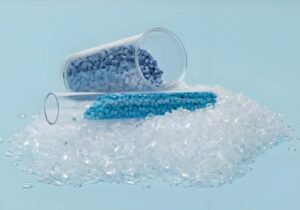
Silicone rubber is a synthetic elastomer built on a silicon-oxygen backbone (Si-O-Si), with organic side groups — typically methyl or phenyl — attached to the silicon atoms. Unlike organic rubbers, this inorganic backbone gives silicone its remarkable stability across extreme temperatures.[3]
Standard grades maintain useful mechanical properties from roughly −55°C to 230°C. That range covers everything from aircraft seals cycling through high altitude cold to sterilization ovens in hospital equipment.
‘Silicone’ is actually a family, not a single material. The main types are:
- HTV / HCR (High Temperature Vulcanizing / High Consistency Rubber) — solid rubber processed in heat presses. The workhorse of industrial seals.
- LSR (Liquid Silicone Rubber) — injected in liquid form, cured under heat in a mold. Used for precision medical and consumer parts.
- RTV (Room Temperature Vulcanizing) — cures at ambient temperature without a press or oven. The focus of this article.
Each subtype has a different curing mechanism, processing method, and best-fit application. They are not interchangeable.
Silicone plays a vital role in the medical field. Some common medical uses include:
- Implants: Breast implants, testicular implants, and facial implants often use silicone shells or fillers.
- Tubing and Catheters: Silicone’s flexibility and non-reactive properties make it ideal for medical tubing and catheters used in surgeries and treatments.
- Medical Devices: Items like hearing aids, respiratory masks, and pacemaker components often contain silicone for comfort and performance.
What is RTV Silicone?
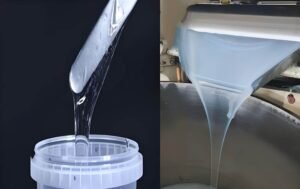
RTV stands for Room Temperature Vulcanizing. It describes silicone that crosslinks and hardens at ambient temperature — no oven, no press, no elevated heat required.
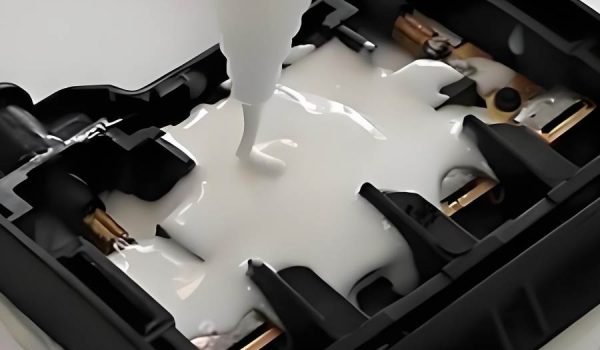
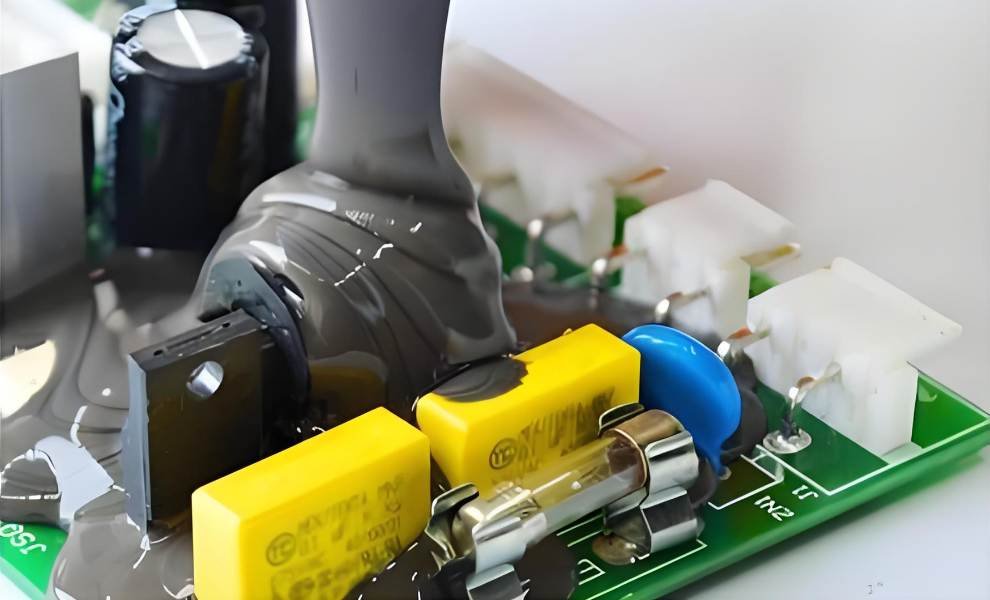
That curing convenience is RTV’s defining advantage. A plumber can seal a joint on-site. An engineer can pour a prototype mold in a lab without specialist equipment. An electrician can pot a connector in the field.
RTV silicone achieves this through one of two chemical pathways — and the distinction matters in practice.
Condensation Cure (Tin Catalyst)
The most common RTV chemistry. A tin-based catalyst triggers a condensation reaction that releases a byproduct — typically acetic acid (the compound that gives fresh bathroom caulk its vinegar smell) or alcohol in neutral-cure formulations.[1]
One-part RTV-1 systems use atmospheric moisture to drive the reaction — you open the tube, apply it, and it cures from the outside in as humidity penetrates. Two-part RTV-2 condensation systems mix a base and catalyst, then cure without needing moisture from the air.
Important: acidic-cure RTV (acetoxy type) can corrode copper, brass, and sensitive electronics. Neutral-cure formulations are preferred for electrical and medical applications.
Addition Cure (Platinum Catalyst)
Platinum-catalyzed RTV uses a hydrosilylation reaction — no byproducts are released during curing. [2] This makes it the standard for medical-grade molds and food-contact applications.
Platinum-cured RTV can also be heat-accelerated: for every 10°C rise above 21°C, cure time roughly halves. A mold that takes 16 hours at room temperature might be ready in 20–30 minutes at 65°C.
However, platinum catalysts are sensitive to contamination. Sulfur compounds, tin residues, certain adhesives, latex, and nitrile can all cause cure inhibition — where the silicone stays sticky and never fully hardens.
RTV silicone‘s ability to form complex shapes without heat makes it useful in medical applications such as:
- Prosthetics and Orthotics: High-temperature RTV silicone is often used to create soft liners or molds for prosthetic limbs and orthopedic supports.
- Medical Molding: It helps produce molds for dental impressions, hearing aid casings, and customized medical device housings.
- Wound Care: Some specialized RTV silicones are formulated for use in pressure-relief pads or protective layers for healing wounds.
| Practical note — cure inhibition Cure inhibition is one of the most common RTV mold-making failures. If you use latex gloves to handle the model before pouring platinum-cured RTV, the sulfur in the latex can prevent curing. Always do a small patch test on an inconspicuous area before committing to a full mold pour. |
RTV Silicone vs. Standard Silicone: Side-by-Side
The table below maps the main technical differences. Standard silicone here refers to heat-cured grades — HTV, HCR, and LSR — as opposed to RTV.
| Property | Standard Silicone (HTV / LSR / HCR) | RTV Silicone |
| Definition | The broad family of synthetic elastomers built on a silicon-oxygen (Si-O-Si) backbone. Includes HTV, HCR, LSR, RTV, and others. | A subtype of silicone that vulcanizes (cures) at room temperature — either by moisture or by mixing two components. |
| Curing mechanism | Varies by type: heat cure (HTV/HCR), platinum addition (LSR), or room-temperature condensation (RTV). | Condensation cure (tin catalyst, releases acetic acid or alcohol) or addition cure (platinum catalyst, no byproducts). |
| Curing temperature | High-temperature grades cure at 150–200°C in a press or oven. | Cures at ambient temperature — typically 15–35°C. No oven or press required. |
| Pot life / work time | High-temperature grades have no meaningful pot life limitation. | Limited pot life once mixed (RTV-2) or once tube is opened (RTV-1). Work must complete before gel point. |
| Typical form | Solid rubber sheet, extruded strip, or liquid (LSR) for injection molding. | Paste or liquid in cartridges (RTV-1) or two-part pails (RTV-2). |
| Strength & hardness | High-temperature vulcanized silicone typically reaches superior tear and tensile strength due to elevated cure conditions. | Good flexibility and adhesion, but molded silicone generally offers higher mechanical strength. |
| Common applications | Medical implants, LSR seals, injection-molded parts, high-volume production. | Sealants, field repairs, prototyping molds, potting electronics, gasketing. |
| Temperature range | Up to 230°C continuous service for standard grades; up to 300°C for specialty grades. | Up to 205°C heat resistance per Wikipedia RTV Silicone. |
| Production scale | Ideal for high-volume, automated injection molding. Consistent part-to-part quality. | Better suited for low-volume, one-off, or field-applied work. |
| Cost profile | Higher tooling investment; lower cost per part at volume. | Low entry cost for prototyping; less cost-competitive at scale. |
RTV Silicone vs Silicone: Key Differences
While both belong to the same family, they serve different purposes depending on how they are cured, how they’re applied, and how strong they are once set. Here’s a simple breakdown:
1. Curing Methods
One of the biggest distinctions between standard silicone and RTV silicone lies in the curing process. Regular silicone often requires heat to cure properly. This means it needs a controlled, elevated temperature to fully set and harden.
In contrast, RTV silicone cures at room temperature. This makes it far more convenient for quick repairs, DIY fixes, and environments where applying heat isn’t an option. It typically sets within a few hours.
2. Consistency and Application
Silicone products come in various forms, from thick putties to flowing liquids, depending on the intended use. However, traditional silicone used in high-temperature settings is more rigid and may require tools for application.
RTV silicone, on the other hand, is user-friendly and commonly available in caulking tubes or squeezable containers, making it easy to apply directly onto surfaces.
3. Strength and Adhesion
Both silicones are known for being durable, flexible, and resistant to moisture, UV rays, and temperature swings. However, RTV silicone tends to offer superior adhesion to a wide range of materials like metal, glass, plastic, and ceramic without needing primers.
RTV silicone is also better for high-vibration or dynamic environments, thanks to its flexible finish. It doesn’t crack easily under movement or stress.
RTV-1 vs. RTV-2: One Component or Two?
Within RTV silicone, the next practical choice is between single-component and two-component systems.
RTV-1 (Single Component)
Opens and applies directly from a tube or cartridge. Curing is driven by atmospheric moisture working inward from exposed surfaces.
The main limitation: curing depth is moisture-limited. Sections thicker than about 6 mm can take days to cure fully — and deep sections may never fully cure if humidity cannot penetrate.
Best for: sealing joints, adhering components, filling gaps, field repairs. Not suitable for thick castings or enclosed potting applications.
RTV-2 (Two Component)
Combines a base polymer and a curing agent immediately before use. Once mixed, curing happens throughout the material simultaneously — not just from the surface inward.
This allows RTV-2 to cure in thick sections and enclosed geometries. It also has a defined pot life — the window between mixing and gelation. Exceeding pot life means the material becomes too viscous to pour or apply properly.
Vacuum degassing is recommended before pouring RTV-2 into a mold. This removes air bubbles introduced during mixing — bubbles that would otherwise appear as defects on the mold surface. [4]
Best for: making prototype molds, casting waxes and resins, encapsulating electronics, and any application needing full through-thickness cure.
Silicone and RTV in Injection Molding
In the injection molding world, RTV silicone and heat-cured silicone serve very different roles. Knowing which to specify at each project stage saves significant time and cost.
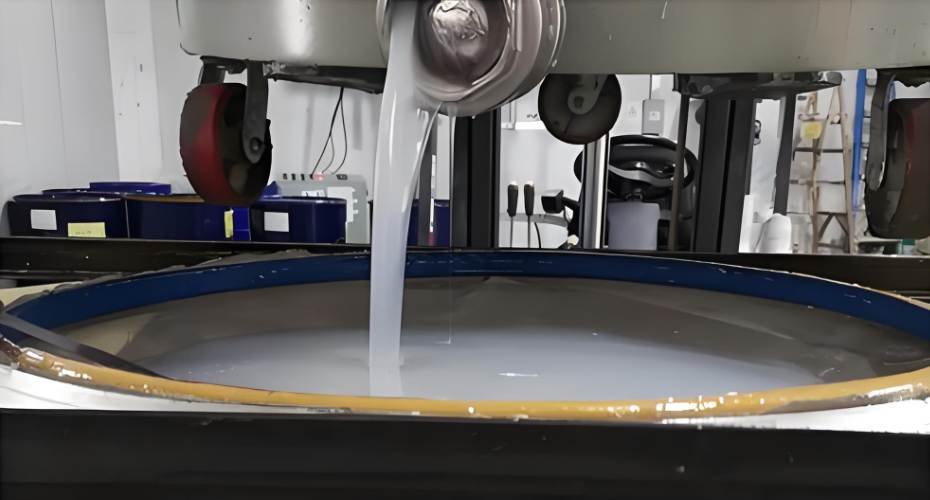
RTV Silicone — For Tooling and Prototyping
RTV-2 is the standard material for casting soft tooling in early-stage product development. It reproduces fine surface detail faithfully, cures without a press, and can produce usable prototype molds within hours.
These molds work well for polyurethane, epoxy, wax, and low-melt metal casting. They typically last 25–50 pours before surface degradation begins to affect part quality.
At Fecision, RTV soft tooling is often used during DFM validation — to confirm geometry and fit before committing to hard steel production tooling. The cost difference is significant: RTV molds run hundreds of dollars vs. steel molds in the tens of thousands.
Heat-Cured Silicone (LSR / HTV) — For Production
When parts need to be produced in volume, LSR injection molding replaces RTV entirely. LSR is injected as a liquid, cured in seconds under heat inside a precision steel mold, and demolded automatically.
Cycle times for LSR injection molding typically run 10–40 seconds — far faster than any RTV casting process. And because LSR is platinum-cured in a closed mold, there are no byproducts and no post-cure odor issues.
Our production cell runs 2 million LSR parts monthly in a Class 1000 cleanroom — primarily medical-grade seals, valve membranes, and respiratory components. None of that is achievable with RTV.
When to Use RTV, and When to Use Heat-Cured Silicone
This is the decision most engineers actually face. Run through these questions in order:
1. Do you need to cure without heat? If yes — RTV. If heat curing is available and the part needs tight tolerances, consider LSR or HTV.
2. Are you making fewer than ~50 parts? RTV soft tooling is almost always more economical at low volumes. Steel tooling investment only makes sense at meaningful production quantities.
3. Is the application a seal, adhesive, or field repair? RTV. Heat-cured silicone cannot be applied in the field — it needs a press or oven.
4. Does the part need medical-grade biocompatibility certification? For production medical components, platinum-cured LSR is the standard — with USP Class VI and ISO 10993 grades available. RTV can be used for prototype molds in medical design, but not for the regulated production parts themselves.
5. Is cure inhibition a risk in your environment? If sulfur-containing materials, tin compounds, or certain plastics are present in your workspace, platinum-cure RTV may fail. Condensation-cure (tin) RTV is more tolerant of contamination.
If you’re still unsure, the fastest path is a material consultation at DFM stage — before tooling decisions are locked.
Frequently Asked Questions
Can RTV silicone withstand high temperatures?
RTV silicone maintains heat resistance up to approximately 205°C. [4] This is good for many applications, but lower than specialty high-temperature HTV grades that reach 250°C continuous service or higher.
For applications that cycle above 200°C — automotive seals near exhaust, oven components, industrial heat shields — check the manufacturer’s specific grade data rather than relying on generic temperature figures.
What is cure inhibition, and how do I avoid it?
Cure inhibition is when a platinum-cured RTV fails to harden because a contaminant has deactivated the catalyst. Common culprits: sulfur (modeling clays, latex gloves), tin compounds, certain adhesives, and some plastics.
Prevention: clean the model thoroughly, test an inconspicuous spot before committing, and keep platinum-cure and tin-cure silicones in separate work areas.
Is RTV silicone safe for food contact and medical use?
Platinum-cured RTV-2 formulations can achieve FDA compliance for food contact and USP Class VI biocompatibility for medical use — but this depends on the specific grade, not all RTV silicones.
Tin-catalyzed condensation RTV is generally not suitable for medical or food-contact applications due to residual tin compounds and acetic acid byproducts in acidic-cure systems.
Can I use RTV silicone to make production injection molds?
RTV soft tools work for low-volume casting (polyurethane, epoxy, wax) — typically 25–50 parts before the mold surface degrades. For injection molding of thermoplastics or LSR at production volume, steel tooling is required.
Conclusion
The word ‘silicone’ describes a material family. RTV describes a curing method — room-temperature vulcanization — within that family.
Understanding this distinction removes most of the confusion. RTV is ideal for convenience applications: sealants, field repairs, and prototype molds where speed and no-heat curing matter most. Heat-cured silicone — HTV, HCR, LSR — is the right choice for precision production parts, regulatory-grade components, and high-volume manufacturing.
The catalyst chemistry matters too: platinum-cured systems produce no byproducts and suit medical and food applications; tin-cured condensation systems are more forgiving of contamination and better for general industrial use.
At Fecision, we work with both: RTV soft tooling during prototype and DFM validation stages, and precision LSR injection molding for production. If you’re at a stage where either material is a possibility, our engineering team can help you choose correctly from the start — before tooling costs are committed.
References & Authoritative Sources
All sources publicly available. Accessed April 2026.
[1] Wikipedia. ‘Silicone rubber — Condensation Cure Systems.’ (Covers acetoxy, alkoxy, and oxime cure chemistry; tin catalyst; byproduct classification.) https://en.wikipedia.org/wiki/Silicone_rubber
[2] Elkem Silicones. ‘What are RTV-2 Silicones?’ (Two-component RTV: condensation vs. addition cure; crosslinking mechanism; application categories.) https://www.elkem.com/products/silicones/rtv-2/
[3] ScienceDirect / Handbook of Polymer Applications in Medicine and Medical Devices (2013). ‘Condensation Cure Silicone.’ (Hydrosilylation reaction; platinum catalyst; LTV cure systems.) https://www.sciencedirect.com/topics/engineering/condensation-cure-silicone
[4] Wikipedia. ‘RTV silicone — Properties and Applications.’ (Heat resistance 205°C+; vacuum degassing requirement; cure inhibition by sulfur-containing materials.) https://en.wikipedia.org/wiki/RTV_silicone