
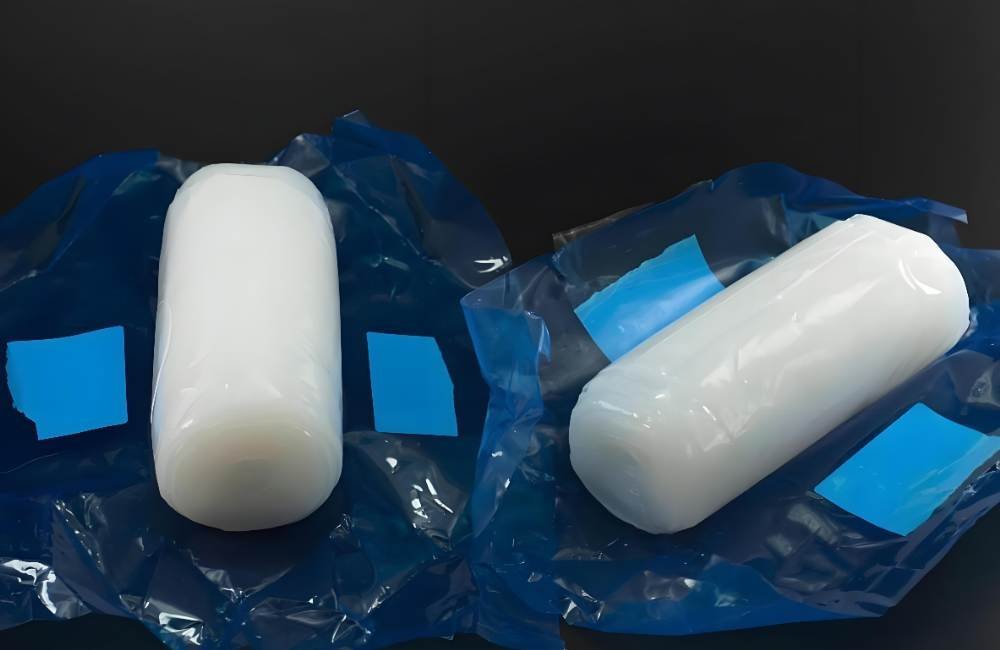
| Platinum grade and medical grade silicone are not two competing categories. Platinum-cured is a curing method; medical grade is a compliance classification. Most high-quality medical grade LSR is platinum-cured. The distinction that matters for procurement is whether the material has cleared the relevant regulatory testing — USP Class VI, ISO 10993, or FDA CFR 177.2600 — for your specific device and contact duration. |
These two terms get used interchangeably in supplier catalogues, and that confusion is expensive. A device manufacturer specifying ‘platinum grade’ when they need ‘ISO 10993-compliant implantable grade’ will get a material that satisfies one requirement while potentially missing another.
The reverse error — specifying ‘medical grade’ without specifying platinum-cured — can result in a peroxide-cured material that requires post-baking and leaves residues that complicate biocompatibility documentation.
This guide separates the chemistry from the compliance classification, explains what each term actually commits a manufacturer to, and gives a concrete decision framework for specifying the right material for your application.
Understanding the Terminology: Curing Method vs. Compliance Grade
Platinum grade silicone refers to the curing chemistry. A platinum catalyst drives an addition curing reaction between the vinyl-functional silicone polymer and a crosslinker. No acidic byproducts are generated. The reaction is clean, controllable, and produces a material with extremely low extractables — the chemical compounds that migrate out of a cured elastomer under heat or contact conditions.
Medical grade silicone refers to a compliance classification. A material earns that label by passing a defined set of biocompatibility tests (USP Class VI, ISO 10993, FDA CFR 177.2600) and being manufactured under GMP-controlled conditions. It says nothing specific about the curing chemistry — a medical grade silicone can be platinum-cured or, in some formulations, peroxide-cured.
The practical relationship: most modern medical grade LSR (liquid silicone rubber) is platinum-cured, because platinum curing produces the lower extractables and cleaner chemistry that biocompatibility testing demands. But not all platinum-cured silicone is medical grade — a platinum-cured industrial sealing compound does not carry biocompatibility certification and should not be used in medical devices.
| The framing that helps Platinum curing = the HOW (chemistry of crosslinking). Medical grade = the WHAT (regulatory compliance status). A material can be both, either, or neither. For medical device applications, you need both: platinum-cured AND medical grade certified. |
What Is Platinum Grade Silicone?
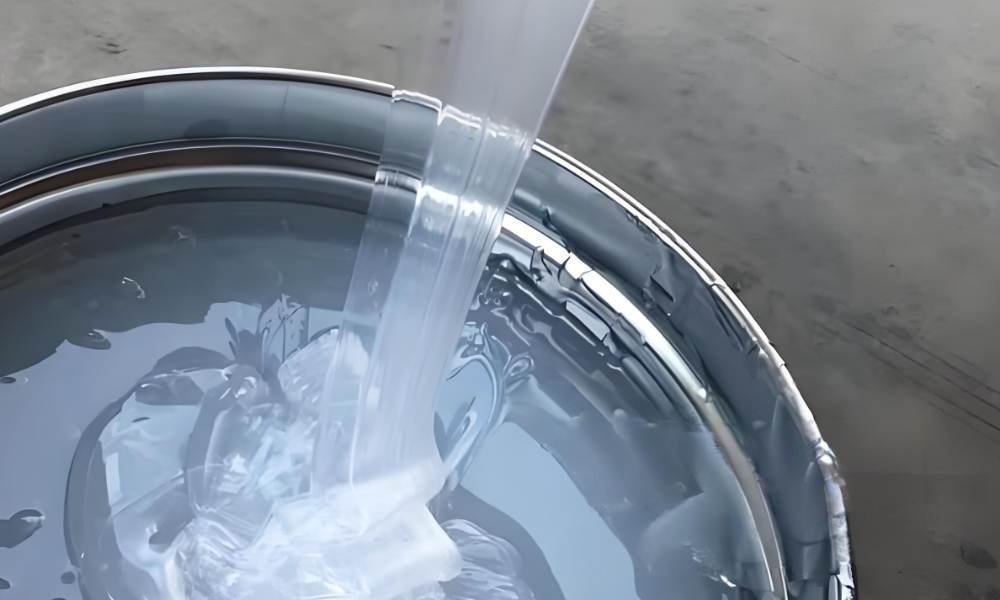
Platinum grade silicone uses platinum as a catalyst in an addition-cure process (also called hydrosilylation). The platinum group metal accelerates the reaction between silicon-hydrogen bonds on a crosslinker and vinyl groups on the polymer backbone, forming Si-C bonds without generating any reaction by-products.
The platinum curing process eliminates impurities and provides a material that is non-toxic, durable, and resistant to heat, cold, and environmental factors. That by-product-free chemistry is the entire reason platinum curing is preferred for sensitive applications.
Compare it to peroxide curing, where the peroxide initiator decomposes into free radicals, crosslinks the polymer, and leaves behind organic acid residues in the cured material. Those residues cause blooming on the part surface and, more critically for medical applications, show up as extractables in biocompatibility testing.
Platinum grade silicone is commonly used in medical devices, food-grade products, baby products, and high-performance seals because of its superior safety and reliability. It is known for being hypoallergenic, which makes it a preferred choice in sensitive applications such as implants, prosthetics, and kitchenware.
Key Properties of Platinum Grade Silicone
- No acidic by-products — addition cure generates no residues; post-baking is not required in most configurations
- Ultra-low extractables — up to 10× lower than peroxide-cured silicone
- High optical clarity — naturally translucent; resists yellowing over time
- Shore A 5–80 range — available in very soft to firm formulations
- Stable cure rate — platinum catalysts offer greater control over crosslink density than peroxide systems, producing more consistent mechanical properties
- Temperature resistance — continuous service to 200–230°C; short-term tolerance to 250–300°C
What Is Medical Grade Silicone?
Medical grade silicone is silicone that has passed a defined battery of biocompatibility and safety tests and is manufactured under documented, controlled conditions. The material must be non-toxic, biocompatible, and stable under the sterilisation and contact conditions of its intended application.
The label ‘medical grade’ is not self-certifying. It is meaningless without reference to which standards the material has passed, at which contact duration, and for which type of tissue contact.
The Three-tier Medical Grade Classification
ISO 10993 and the FDA classify medical silicone into three categories based on the nature and duration of body contact: [1]
- Non-implantable (surface and external communicating): Devices in contact with intact skin, mucous membranes, or breached surfaces for limited duration (≤24 hours). Masks, tubing, wound dressings.
- Short-term implantable (prolonged contact): Contact exceeding 24 hours and up to 30 days. Requires haemolysis, genotoxicity, and histopathological implantation testing. Catheters retained for days, drainage tubes.
- Long-term implantable (permanent contact): Contact exceeding 30 days. Requires extended exposure testing including carcinogenicity, chronic toxicity, and developmental toxicity. Breast implants, pacemaker lead coverings, hydrocephalus shunts.
Each tier carries a progressively heavier test burden. A material certified for non-implantable use cannot simply be promoted to long-term implantable use — the additional testing must be completed. This is where specifying ‘medical grade’ without specifying the tier creates procurement risk.
Regulatory Standards that Define Medical Grade
- USP Class VI (United States Pharmacopeia <88>): tests for systemic toxicity, intracutaneous reactivity, and implantation response. Widely required as a baseline screen for medical device components
- ISO 10993 series: the current international standard for biological evaluation. Risk-based framework covering cytotoxicity, sensitisation, irritation, haemocompatibility, and implantation testing
- FDA CFR 177.2600: US FDA regulation setting extraction limits for rubber articles intended for repeated use. Most medical and food-grade platinum-cured silicones are formulated to comply
- RoHS (EU): restricts hazardous substances in materials targeting EU markets. Platinum-cured medical grades typically comply due to their clean formulation
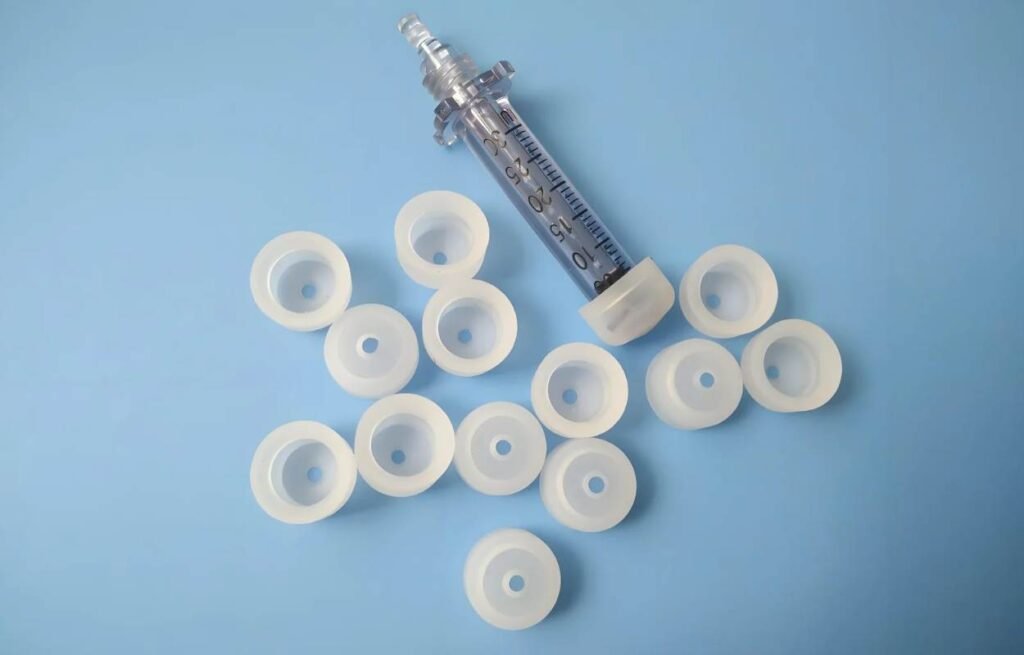
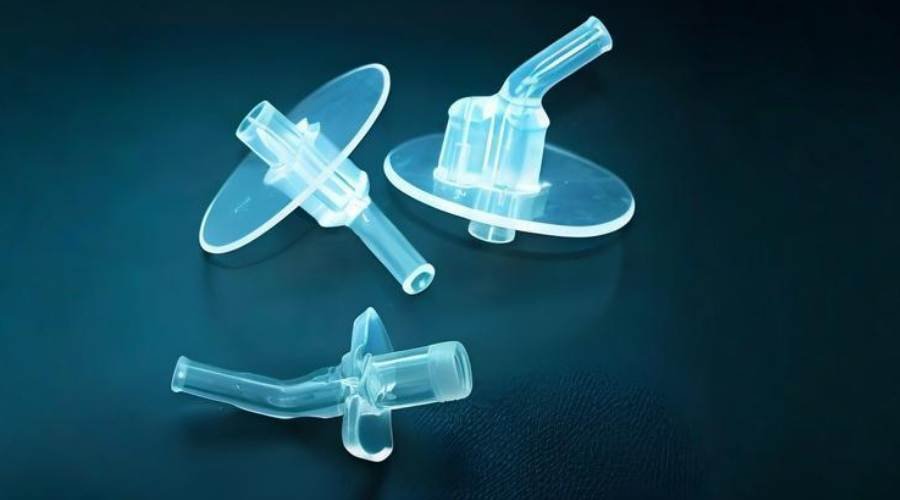
This type of silicone is often used in products like implants, catheters, tubing, baby care items, and wound dressings. It is non-toxic, hypoallergenic, and resistant to bacteria, making it ideal for sensitive or internal use.
Medical-grade silicone is also highly durable. It can withstand sterilization methods like autoclaving or radiation, which is essential in hospitals and medical manufacturing.
Comparison of Properties: Platinum vs. Medical-Grade Silicone
When selecting the right silicone for medical or high-performance applications, understanding the nuances between them is important. Below are the key properties to help you choose the right one:
Purity and Contamination Resistance
Platinum grade silicone is renowned for its ultra-high purity. Cured using a platinum catalyst, it eliminates residual byproducts, which ensures minimal extractables and leachables.
On the other hand, medical-grade silicone may also offer high purity but is cured using either platinum or peroxide systems. Peroxide-cured variants can leave behind residual compounds, necessitating additional post-curing processes to reduce potential contaminants.
However, even though medical grade silicone is suitable for many healthcare applications, it does not match the ultra-pure standards of platinum grade silicone.
Durability
When it comes to durability, platinum grade silicone once again takes the lead due to its long-term stability in the most rigorous applications.
Medical-grade silicone offers durability and can withstand repeated sterilization methods, including autoclaving and gamma irradiation. However, its long-term stability may vary depending on the curing process used.
The platinum grade silicone, on the contrary, also exhibits exceptional durability, maintaining its mechanical properties over extended periods. Its resistance to environmental factors like UV radiation, ozone, and extreme temperatures ensures better durability than medical-grade one.
Biocompatibility
Biocompatibility is essential for materials intended for medical use, and both platinum-grade and medical-grade silicones meet this criterion.
Platinum-grade silicone offers excellent biocompatibility, making it suitable for long-term implantation and direct contact with bodily tissues and fluids. Its inert nature helps minimize the risk of adverse reactions.
Similarly, medical-grade silicone is designed to be biocompatible and is widely used in medical devices such as catheters, tubing, and wound dressings. It undergoes rigorous testing to ensure it is safe for short- to medium-term contact with the human body.
Flexibility and Transparency
Flexibility and transparency are important for applications that require material adaptability and visual monitoring. On one end, the medical grade silicone provides good flexibility and can be formulated to achieve varying degrees of softness or firmness as needed.
However, on the other end, platinum grade silicone is highly flexible and maintains its elasticity over a wide temperature range. It also offers superior optical clarity, making it ideal for applications requiring visual monitoring where transparency is crucial.
While even if medical grade silicone is quite transparent, it does not match the level of clarity offered by platinum grade one. This is why the latter is mostly used in applications where visual inspection is essential.
Comparison Table: Platinum Grade vs. Medical Grade Silicone
The table below maps the key properties side by side. Note that where a medical grade material is platinum-cured, the columns will align closely — confirming that for the most demanding medical applications, the two classifications converge on the same material.
| Property | Platinum Grade Silicone | Medical Grade Silicone |
| Curing system | Platinum-cured only | Platinum OR peroxide-cured |
| Byproducts / residues | None — addition cure produces no acidic byproducts | Peroxide: acidic residues (post-bake needed); Platinum: none |
| Extractables | Ultra-low — up to 10× lower than peroxide | Low (platinum) to moderate (peroxide) |
| Regulatory compliance | FDA CFR 177.2600, USP Class VI, ISO 10993, RoHS | ISO 10993, USP Class VI (formulation-dependent) |
| Biocompatibility | Excellent — long-term implant & body-contact rated | Non-implantable to long-term implantable depending on sub-grade |
| Optical clarity | High — naturally translucent, low yellowing | Platinum: high; Peroxide: may yellow over time |
| Shore A range | 5–80 | 10–80 (varies by manufacturer) |
| Post-cure required | No (for LSR platinum grades) | Platinum: No; Peroxide: Yes (200–250°C / 2–4 hr) |
| Typical cost premium | Higher — platinum catalyst cost | Lower (peroxide) to comparable (platinum) |
| Primary applications | Long-term implants, surgical components, infant care, food contact | Catheters, tubing, masks, wound dressings (varies by sub-grade) |
Peroxide Curing vs. Platinum Curing: Why It Matters for Medical
Most of the practical differences between ‘standard’ medical grade and platinum grade silicone come down to the curing system. Not all medical grade silicone is platinum-cured — and when it isn’t, the production and qualification implications are significant.
Peroxide-cured Medical Grade Silicone
Peroxide-cured silicone uses an organic peroxide initiator that decomposes under heat, generating free radicals that crosslink the polymer chains. This works — but the decomposition produces organic acid residues in the cured material. Left in the part, these residues migrate to the surface (blooming) and appear in extractables testing.
The standard fix is a post-bake cycle at 200–250°C for 2–4 hours in a circulating-air oven. This drives off the volatile residues. Cutting the post-bake short — even by 30 minutes — leaves residues that will surface later.
For medical grade silicone, peroxide curing is still used in some HCR extrusion and compression-molded applications. But for LSR injection molding — the dominant process for precision medical components — platinum curing is essentially universal in quality production.
Platinum-cured Medical Grade Silicone
The addition-cure reaction produces no by-products that need removal. For Fecision’s medical LSR production, this means no mandatory post-bake step in the baseline process — though we do run a post-cure at 200°C for 4 hours for components intended for continuous service above 180°C, to complete secondary crosslinking and maximise compression set performance.
Our standard LSR process parameters: mold temperature 170 ± 2°C, vacuum at -0.08 MPa to eliminate trapped air, platinum-cured Wacker LR 3003/60 as the standard medical grade [2]. These controls directly support the biocompatibility documentation — low extractables from clean processing, no peroxide residuals, vacuum molding minimising particulate contamination risk.
Why This Distinction Matters in Injection Molding
In LSR injection molding, the material choice affects not just the finished part’s compliance status — it affects every step of the production process and the documentation trail that a regulatory submission will rely on.
Platinum-cured medical grade LSR in injection molding provides:
- No mandatory post-bake — the absence of peroxide residuals means the part comes out of the mold ready for inspection, not waiting for an oven cycle. This matters significantly for production throughput at volume
- Consistent cure kinetics — platinum catalysts offer tighter control over crosslink density batch to batch, which means consistent Shore A hardness, elongation, and compression set across production runs
- Clean extractables data — biocompatibility testing on platinum-cured LSR parts is more straightforward because the extractables profile is predictable and well-characterised
- Cleanroom compatibility — fully automated platinum LSR injection molding cells can be enclosed and run in ISO 7/8 cleanrooms with minimal operator contact, reducing particulate risk
- Overmolding on thermoplastics — self-adhesive platinum LSR grades bond directly to PA6, PA66, PC, and ABS in two-shot molding processes, enabling integrated assemblies for wearable and handheld medical devices
Medical grade silicone that is peroxide-cured can still be injection molded — but it adds the post-bake requirement, extends cycle time per batch, and creates a process control dependency (post-bake time and temperature) that must be validated and monitored. The post-bake failure case above is a real procurement risk, not a theoretical one.
Decision Framework: Which to Specify
The right way to frame the specification question is not ‘platinum grade vs. medical grade’ but rather:
- What contact type and duration does my device involve? (surface / external communicating / implantable; limited / prolonged / long-term)
- Which biocompatibility standards must the material pass? (USP Class VI alone, ISO 10993 series, FDA CFR 177.2600, EU MDR compliance?)
- Does my production process allow post-baking? If not — or if throughput is volume-sensitive — platinum-cured grades are the only practical option
- What extractables profile does my test programme demand? Platinum-cured grades start with a lower baseline; for highly sensitive implantable applications, that head start matters
- What is my volume? For high-volume LSR injection molding (>50,000 parts/year), the economics of automated platinum LSR production dominate regardless of the compliance requirements
| Practical decision rule If the device contacts human tissue, body fluids, or food — specify platinum-cured medical grade silicone, and specify which biocompatibility standard applies. ‘Medical grade’ alone is not a sufficient specification. ‘Platinum-cured, USP Class VI, ISO 10993-compliant’ is a complete specification for most non-implantable medical applications. Long-term implantable applications require an additional implantation testing programme beyond USP Class VI. |
Common Applications by Grade
Platinum Grade Silicone — Primary Applications
- Long-term implantables: pacemaker lead coverings, breast implants, cochlear implant components, hydrocephalus shunts
- Surgical tools and instrument handles: where direct tissue contact and repeated sterilisation cycles are required
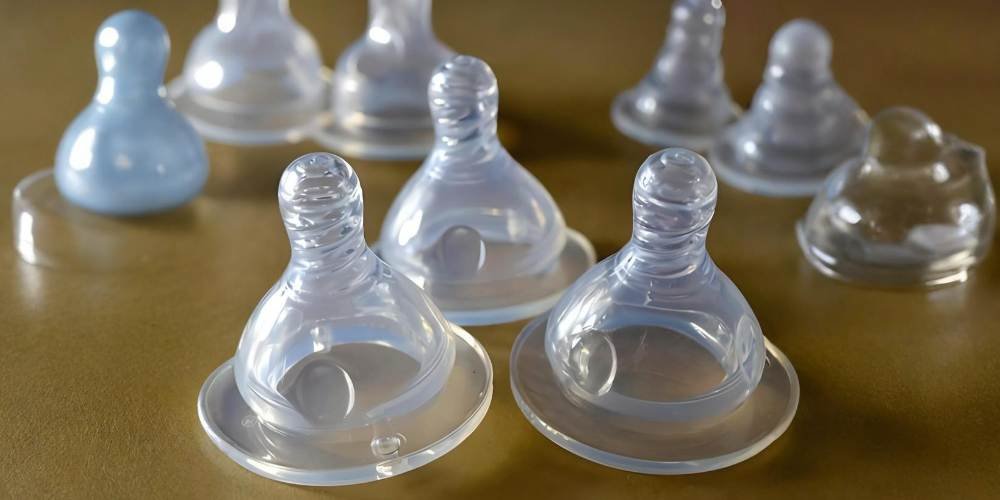
- Infant care: nipples, teethers, feeding bottle collars — applications where zero extractables tolerance applies
- Food contact components: dispenser seals, oven molds, food processing gaskets — FDA CFR 177.2600 compliance
- High-precision seals for pharmaceutical manufacturing equipment
Medical Grade Silicone — Common Applications
- Catheters, drainage tubes, intravenous tubing — non-implantable or short-term implantable
- Respiratory masks, oxygen masks, ventilator interfaces — surface contact devices
- Wound dressings and wound contact layers
- Wearable device enclosures and skin-contact gaskets
- Baby care products where USP Class VI certification provides the baseline safety assurance
Frequently Asked Questions
Why is platinum curing preferred for medical silicone?
Because the addition-cure reaction produces no acidic by-products. This means no post-baking is required to remove residues, extractables levels are significantly lower than peroxide-cured grades (up to 10× lower), and the material’s biocompatibility documentation is cleaner and simpler to support in regulatory submissions.
Can peroxide-cured silicone be used in medical devices?
Yes, in specific applications — but with important caveats. Peroxide-cured silicone requires a full post-bake cycle (200–250°C for 2–4 hours) to remove acidic residues. If that step is shortened or skipped, residues remain and will appear in extractables testing and on part surfaces (blooming).
For injection molded precision medical components, platinum curing is the industry standard because it eliminates this process dependency entirely.
What standards should medical grade silicone meet for my device?
It depends on contact type and duration. For most non-implantable device components: USP Class VI and ISO 10993-5 cytotoxicity as a minimum baseline. For devices with extended body contact: a fuller ISO 10993 programme including sensitisation (ISO 10993-10) and irritation (ISO 10993-23). For long-term implantables: the complete ISO 10993 series including implantation and chronic toxicity.
Does Fecision use platinum-cured medical grade silicone?
For a medical silicone component, the resin grade and its supporting test documentation are selected for the intended contact type and processing route. FECISION coordinates those requirements with the manufacturing partner, including any specified cleanroom conditions and component validation.
How do I verify whether a supplier’s silicone is genuinely medical grade?
Request the full material certification documentation, not just a ‘medical grade’ label. Look for: the specific test reports for USP Class VI (or ISO 10993) by a recognised third-party lab; the lot traceability from raw material to finished compound; the manufacturing site’s ISO 13485 or GMP certification; and the FDA CFR 177.2600 compliance letter if US market is involved.
Conclusion
Platinum grade and medical grade are not two competing silicone categories — they describe different aspects of the same material decision. Platinum-cured describes the curing chemistry; medical grade describes the regulatory compliance status.
For most precision medical device applications, you need both: a platinum-cured formulation (for clean chemistry, low extractables, and no post-bake dependency) and medical grade certification (for documented biocompatibility at the relevant contact duration and tissue type).
Specifying the material correctly means naming the curing system, the applicable biocompatibility standards, and the contact tier — not just the grade label. The decision framework above provides the questions to work through for any specific application.
FECISION coordinates medical LSR component projects through manufacturing partners selected for the applicable quality scope. Share the device use, contact duration and performance requirements to review the resin grade, production conditions and required evidence.
References & External Citations
All sources publicly available. Accessed April 2026.
[1] Use of International Standard ISO 10993-1, “Biological evaluation of medical devices – Part 1: Evaluation
and testing within a risk management process” (Sep 2023) https://www.fda.gov/media/142959/download
[2] ELASTOSIL® LR 3003/60 A/B https://www.wacker.com/h/en-us/c/elastosil-lr-300360-ab/p/000009413