IML Injection Molding Services for Decorated Parts in One Shot
IML (in-mold labeling) places a pre-printed film label inside the mold cavity before injection. Molten plastic fuses with the label permanently during fill. The finished part exits already decorated — no secondary labeling, no adhesive, no drying time. Label placement accuracy is ±0.1 mm with vision-verified robotic insertion.
Start Your Project Now
ISO 9001: 2015 Certified Processes
ISO 14001: 2015 Certified Processes
ISO 45001: 2018 Certified
ISO 13485: 2016 Medical Device
AS 9100 Aerospace
Label and Part Made as One — in a Single Cycle
With standard injection molding, decorating a part means a second step: a labeling line, adhesive, drying time, extra handling. IML removes all of that.
A pre-printed film label is placed into the mold cavity by a robot before injection. Molten plastic flows over and fuses with the label under heat and pressure during fill. When the part ejects, the decoration is already there — permanently bonded, scratch-resistant, and protected inside the part wall.
Full injection molding capabilities overview at our Injection Molding Services →
Permanently Bonded
Label fuses with the part wall — not adhered to it. Cannot peel, fade, or soak off in dishwashers, freezers, or humid storage.
Mono-Material Recyclable
PP label on PP container — same polymer, same recycling stream. No label removal before recycling. Meets EPR legislation.
One-Step Production
Label insertion during mold-open phase adds 0–2 seconds to cycle time. No secondary labeling station, no drying, no extra handling.
Full-Resolution Graphics
Gravure, flexo, or offset printing delivers vivid, high-definition color. Gloss, matte, metallic, and soft-touch finishes available.
3H Surface Hardness
PC or PMMA film with second-surface printing buries ink inside the part wall. Surface hardness reaches 3H — graphics are protected from both faces.
Artwork Updates Without Retooling
Seasonal or limited-edition graphics only require a new label die — not a new mold. Container geometry stays unchanged.
Film Types We Support
The label film substrate determines recyclability, print quality, and compatibility with the molded resin. Film and resin must be selected together — not separately.
BOPP — Solid White
Most CommonOpaque white substrate gives maximum color density and contrast. The standard choice for food packaging where branding must stand out. High printability with gravure or flexo. Enables mono-material PP recyclable containers when used with PP resin.
BOPP — Transparent
No-Label LookCreates the "no-label look" — graphics appear to float directly on the container surface. Used where product visibility is part of the brand identity. Full-color print visible through the container wall.
BOPP — Metallized
Premium FinishHigh-reflectivity mirror finish without metal weight. Adds oxygen and moisture barrier properties for sensitive food products. Ideal for luxury packaging and cosmetics where shelf impact matters.
BOPP — Matte / Soft-Touch
Tactile PremiumMicro-textured surface creates a premium paper-like tactile finish. Achieved by combining matte BOPP film with mold texture (VDI 12–24). Increasingly specified in premium food and cosmetics where glossy surfaces feel generic.
PET Film
Technical UseExcellent print registration and surface hardness. Used for technical and industrial applications where dimensional accuracy under processing heat is critical. Better stability than BOPP at the high end of molding temperatures.
PC / PMMA Film
Electronics & HMIThick clear PC or acrylic for electronics panels, automotive HMI, and control interfaces. Second-surface printing buries ink inside the part wall — surface hardness reaches 3H and graphics are protected from above and below. Enables capacitive touch integration.
The IML Injection Molding Process
Five stages — each timed precisely. At optimised automation, label insertion occurs during the mold-open phase and adds zero net time to the cycle.
Film Printing & Converting
Labels are pre-printed by gravure, flexo, or offset. Films are die-cut and stacked in humidity-controlled magazines (15–35°C, 45–65% RH) to prevent curling.
Robot Label Placement
During mold-open, a robot picks a label and places it into the cavity. Vacuum ports and electrostatic charge hold it against the cavity wall at ±0.1 mm accuracy.
Injection & Fusion
Molten resin is injected at controlled fill speed. The melt flows over the label and fuses with it under heat and pressure. Mold temperature for PP IML: 35–60°C.
Cooling & Bonding
During cooling, the label fuses permanently with the part wall through thermal bonding — not adhesive. For PP+PP, the bond is effectively seamless.
Ejection & Inspection
The decorated part ejects fully finished. Vision systems check label position and print quality before the part enters the downstream flow.
Why Switch from Post-Molding Decoration?
Post-molding decoration methods — pressure-sensitive labels, shrink sleeves, pad printing — all add a second production step. That means extra equipment, extra handling, extra risk of rejection.
IML combines decoration and molding into a single production cycle. The label is integral to the part — not applied to the surface — so it survives conditions that destroy post-applied labels.
- Label becomes part of the container wall — cannot peel or scuff
- Survives freezer-to-microwave, dishwashing, and outdoor storage
- Eliminates secondary labeling station, drying time, and manual handling
- No adhesive — food-safe, chemical-clean, no contamination risk
- Full 360° wrap decoration possible with one label
- Mono-material PP+PP fully recyclable without label removal
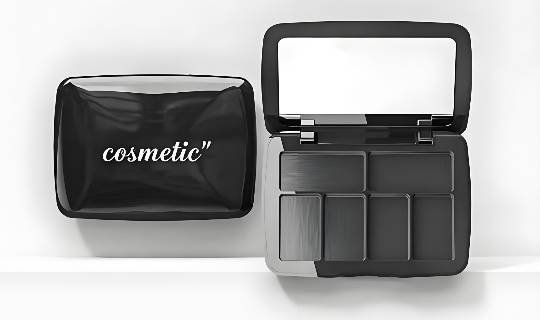
Food Container with IML Label
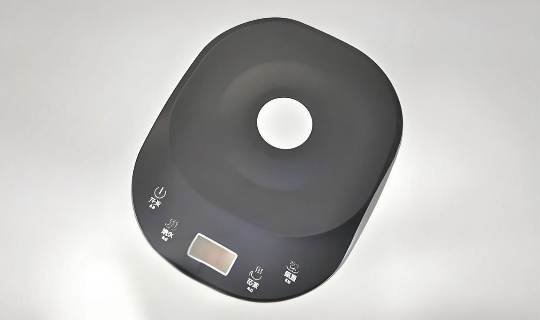
Electronics HMI Panel (PC Film)
Common IML DFM Issues We Catch
Insufficient Cavity Venting Behind Label
Air trapped between the label and cavity wall creates blisters or surface bubbles. Vent channels 0.02–0.05 mm deep are required behind the label area — this is the most common IML tooling error we see at DFM stage.
Sharp Label Corners
Sharp label corners create visible seam lines on the finished part surface. All label corners must have a minimum radius of ≥0.3 mm — plastic wraps around radiused edges cleanly, concealing the label termination.
Gate Impingement on the Label
If the melt gate is positioned so the flow front hits the label head-on, it causes label displacement or wrinkling. Gates must be positioned to allow fill to flow parallel to the label, not directly into it.
Film–Resin Mismatch
The label film substrate must be compatible with the injection resin. PP film on PP container gives the best fusion and mono-material recyclability. Mismatched materials cause delamination under temperature or stress.
Where IML Injection Molding Is Used
IML is strongest in applications where labeling durability, recyclability, or premium surface quality are required — and where post-molding decoration adds cost or complexity.
Food & Beverage Packaging
IML's dominant market. PP-on-PP creates freezer-safe, mono-material packaging with vivid branding that survives refrigeration and humid retail environments where adhesive labels fail.
Thin-wall PP containers at 0.4–1.2 mm wall thickness exit the mold ready for filling — no labeling station needed.
Consumer Electronics & HMI
Control panels, appliance fascias, and remote controls use IML with PC or PMMA film. Second-surface printing buries graphics inside the film — surface hardness reaches 3H.
Copper circuits can be printed onto the film and inserted before molding to create in-mold capacitive touch interfaces — no separate PCB mounting required.
Personal Care & Cosmetics
Shampoo bottles, lotion pumps, and cosmetic jars use IML for premium shelf presence. Metallized, matte, holographic, and soft-touch films are all available.
For seasonal or limited-edition packaging, only the label die changes — not the mold. This flexibility is especially valuable in cosmetics where artwork drives revenue.
Industrial & Chemical Packaging
Paint pails, lubricant containers, and fertilizer buckets demand labeling that survives warehouse handling, outdoor storage, and chemical splash. Adhesive labels peel — IML labels fused into the container wall are unaffected.
GHS/CLP hazard labeling remains fully legible throughout the product's handling chain — a permanent, legally compliant label that cannot be removed by handling damage.
IML Injection Molding FAQs
For thin-wall food packaging (yogurt cups, margarine tubs), 40–80 µm BOPP is standard. Thinner labels conform better to complex curved geometries. For flat panels and technical applications, 60–120 µm provides better dimensional stability during placement and injection. For electronics with PC/PMMA substrates, 125–375 µm is typical. General rule: thinner for deep-draw and complex contours; thicker for flat, high-detail graphics.
Need to discuss IML injection molding project?
Our expert engineers can analyze your application requirements and recommend the optimal solution.