Part manufacturing requires meticulous planning, especially when selecting the right material and process. The debate between plastic injection molding and extrusion molding is common. Both methods efficiently produce repetitive plastic parts at high speeds.
While they share similarities in using molten plastic, their applications, outcomes, and cost structures differ significantly. This article will explore the core differences between plastic extrusion vs injection molding. It will help you determine the optimal choice for your production needs.
What Is Injection Molding?
You may know that plastic injection molding produces intricately shaped components. How can the machine achieve such detail and speed? Let’s get into the heart of the process.
Injection Molding Definition
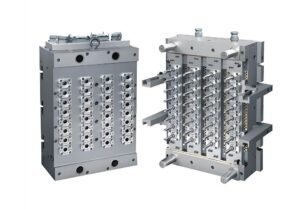
Injection molding is a repetitive, high-accuracy process. It melts plastic resin and injects the melted material into a precision metal cavity, typically at high pressure. This method can produce highly complex 3-D shaped parts with good dimensional tolerances and appearance. It is also a cost-effective way of molding large amounts of plastic consistently.
Process Workflow
Understanding the steps helps you see where the precision comes from. Let’s walk through the four core stages the plastic goes through inside the machine.
1. Material Preparation and Melting
The process begins as a hopper feeds the plastic pellets into the machine. You dry the resin and add color to ensure perfect, consistent material. A reciprocating screw then melts and homogenizes this material, preparing the precise “shot” needed.
2. Injection and Packing
High pressure, or a forceful “shot,” is used to rapidly force the melt into the closed mold cavity. A crucial packing phase immediately follows. This intense pressure prevents the plastic from shrinking as it starts to solidify.
3. Cooling and Solidification
Water channels built into the mold circulate cold water rapidly. This controlled, fast cooling solidifies your part inside the tool. The cooling time is vital for establishing the part’s final shape and overall quality.
4. Ejection and Cycle Reset
Once the part has cooled to solidification, the clamp opens, and ejector pins push the finished part from the mold cavity. The mold then closes tightly so that the repeatable cycle can begin again for fast production.
Compatible Plastics
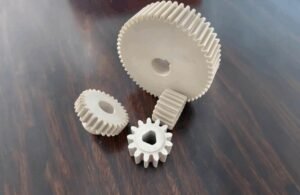
Injection molding is also extremely versatile. It can be used with the vast majority of thermoplastics currently available. It can also work with selected thermosets. Examples include commodity plastics such as PP, PE, PS, and ABS.
You can also injection mold engineering grades such as PA6, PC, and POM. For hard-to-mold applications, there are high-performance polymers such as PEEK and LCP available. Flexible materials such as TPU elastomers and a variety of bio-polymers can also be injection molded.
Key Advantages of Injection Molding
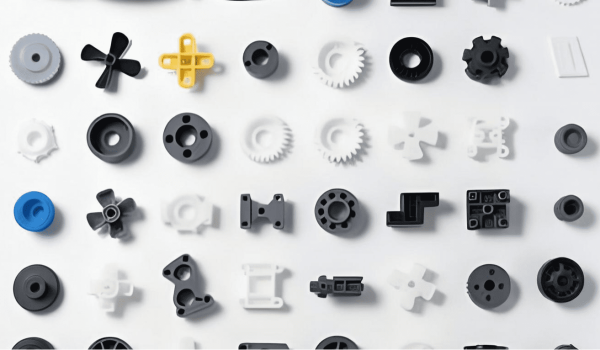
Injection molding is of substantial accuracy and complexity. It can produce highly detailed, three-dimensional molded parts with features such as snap-fits, threads, or ribs. In addition, these parts can have high-dimensional tolerances to best fit and function in an assembly.
It also provides high efficiency for mass production. When the mold cost has been paid for upfront, the cycle times will be incredibly short, and you will be able to produce identical parts in the millions with little time and effort. You will also have an excellent surface finish from the tool, thereby minimizing or completely eliminating the need for expensive post-processing.
Potential Disadvantages of Injection Molding
The most significant barrier is the high initial tooling cost. Designing and machining the complex steel molds requires a substantial upfront investment. This cost is only justified when your production volume is high, making it economically unviable for low-volume orders.
You must also account for a longer lead time for setup. Mold creation and testing can easily extend your initial project timeline by several weeks. Additionally, you face part design restrictions, as all parts must be specially engineered to ensure successful moldability and clean ejection.
What Is Extrusion Molding?
Now we switch focus to the continuous manufacturing sibling: extrusion molding. You’ll find this method is perfect for very long, simple shapes.
What Is Extrusion Molding?
Extrusion for plastic is a continuous melt process. It forces a homogenized polymer through a simple, two-dimensional die opening. This method rapidly creates endlessly long, uniform profiles, like pipes or sheets, with a constant cross-section. The tooling is substantially less complex and less expensive than injection molds, making it very economical for large volume production.
Process Workflow
The extrusion process is much more linear than plastic injection molding. It is a continuous-feed system that focuses on producing long shapes at high speed.
1. Material Feed and Plastication
The method begins with introducing plastic granules and any additives or coloring to a hot barrel. A rotating screw melts and homogenizes the resin under pressure and provides an excellent, consistent flow of materials.
2. Die Forming and Shaping
The molten plastic is forced forward and pushed through a simple, two-dimensional die opening. This crucial exit point instantly determines and forms the constant cross-section of the profile, pipe, or sheet you are producing.
3. Calibration and Cooling
As the hot profile exits, it immediately enters a vacuum tank. This step uses negative pressure to precisely calibrate the dimensions of the part. Water spray then rapidly cools and solidifies the plastic skin to lock in the final shape.
4. Haul-Off and Finishing
A haul-off system pulls the continuous profile at a constant speed. A saw or cutter then cuts your product to the specified length without stopping the line. It is then ready for coiling or packaging.
Compatible Plastics
Extrusion for plastic primarily uses thermoplastics that have high melt strength. This high strength is needed to resist gravity as the plastic exits the die. Common plastics include rigid and flexible PVC, HDPE, and PP.
Engineering plastics like ABS, PC, and PET-G can also be extruded. Note that this article focuses on plastic extrusion for profiles and sheets, not thermosets, which require specialized equipment.
Key Advantages of Extrusion Molding
Extrusion offers cost-effectiveness for linear products. Its continuous nature makes the process highly economical for producing long, uniform items. You get high production speed for these continuous shapes, generating vast lengths of product much faster than any batch-based process can.
The tooling process is simpler. Extrusion dies are generally less complex and cheaper to manufacture than intricate injection molds. This leads to a low barrier to entry for new projects. The method provides consistent cross-sectional quality along the entire length of the product.
Potential Disadvantages of Extrusion Molding
The major drawback is being limited to constant cross-sections. You cannot produce complex, three-dimensional shapes or parts with any varying geometry. Compared to injection molding, you will also face lower dimensional precision, as the tolerances are typically looser.
You will find that the options for achieving various surface textures are more limited. The glossy finish comes off the die, but custom textures are difficult. In addition, further processing is usually necessary since long profiles generally require secondary operations such as cutting to length, drilling, or punching.

The Main Differences Between Injection Molding vs Extrusion Molding
When weighing the two processes, the critical elements of the process weigh in favor of one over the other. Here is a head-to-head comparison of their core differences.
Process Philosophy
The core difference lies in the motion. Injection molding is a discrete, cyclic process. It repeatedly fills a 3-D cavity to make individual parts. Conversely, extrusion molding is a continuous process. It generates a 2-D profile in an uninterrupted stream.
Plastic Range & Melt Strength
You have more flexibility with plastic choice in extrusion molding vs injection molding. Injection molding accepts grades with low melt strength, like ABS or PC. Extrusion, however, demands high melt strength. This is vital to prevent the melt from sagging under gravity after leaving the die. Typical extrusion plastics are HDPE and RPVC.
Precision & Tolerances
For precision, injection molding has no equal. It handles exceedingly complex geometries and can produce identical parts with exceptionally tight dimensional tolerances, as required for highly demanding parts such as those in the medical field. Extrusion for plastic will provide good consistency along its length, but the overall accuracy will be much looser, definitely requiring special systems for better control.
Product Geometry
Injection molding is better suited to complex geometries. Think about features, such as bosses, ribs, snap-fits, or internal threads. Extrusion is limited to a constant cross-section. It produces continuous shapes like pipes, corrugated tubes, or profiles with hollow chambers.
Mold Tooling vs Die Tooling
The difference in tooling philosophy is fundamental. Injection molding requires a complex, multi-component mold that is a substantial high-cost investment. Extrusion uses a much simpler, single-piece die, which merely defines the profile’s cross-section. This drastically reduces the initial tooling expense for your project.
Cost of Extrusion vs Injection Molding
In terms of the cost of extrusion vs injection molding, injection molding has a high initial tooling cost, but the cost per piece drops to an extremely low level at vast production volumes. Extrusion offers a much lower upfront tool cost. Its per-meter cost remains consistent, making it highly economical for medium to large runs of long, constant-section products.
End-Use Applications
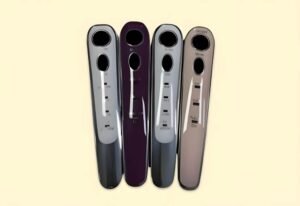
The end products are very different. Injection molding is for phone housings, automotive dashboards, syringe barrels, and bottle caps. Extrusion molding is used for drinking straws, electrical cable conduit, window gaskets, and 3-D printer filament.
A Note on Blow Molding
It’s helpful to know the difference between extrusion blow molding vs injection blow molding. Both methods make hollow things like bottles and containers.
The extrusion blow molding process starts by making a parison, a plastic tube shape. The parison is clamped into a mold and air is blown into it, which takes the shape of the mold. Injection blow molding consists of two phases – the plastic is injected into a mold to create a solid preform; the solid preform is then reheated and blown into its final container shape.

Quick Comparison
| Feature | Injection Molding | Extrusion Molding |
| Process | Discrete, cyclic process for individual 3D parts. | Continuous process for uninterrupted 2D profiles. |
| Melt Strength | Broad; accepts low melt strength plastics (e.g., ABS, PC). | Narrower; requires high melt strength plastics (e.g., HDPE, RPVC). |
| Precision | High precision with exceptionally tight tolerances. | Good consistency, but significantly looser overall accuracy. |
| Product Geometry | Complex 3D geometries (bosses, ribs, threads). | Constant cross-sections (pipes, tubes, profiles). |
| Tooling | Complex, multi-component mold (high cost). | Simple, single-piece die (low cost). |
| Costs | High initial tooling cost, very low per-part cost at volume. | Low upfront tool cost, consistent per-meter cost. |
| Applications | Phone housings, dashboards, syringes, bottle caps. | Drinking straws, cable conduit, window gaskets, filament. |
Injection Molding vs Extrusion: Which Is The Better Choice?
You should use your product’s specific requirements as the ultimate checklist to be certain you make the right decision on the process. Here’s a simple decision-making scheme.
Choose Injection Molding When…
You must choose injection molding when 3-D complexity or a textured surface is mandatory. The same goes for parts needing exceptionally tight tolerances where dimensional accuracy is critical. If your annual volume is very high, the payback period for the substantial tooling investment makes it cost-effective. You should also choose it if you need integrated features like insert screws or over-molded TPE grips.
Choose Extrusion Molding When…
You will want to select extrusion molding when the cross-section of the part is consistent and the length is extensive, as in a pipe or seal. This is also best for prototype or medium-volume production to save heavy tooling costs. Also, pick extrusion when you need a multi-layer structure or a foam core for better weight or cost savings.
Hybrid Thinking
In some cases, the best solution involves both methods. You can extrude a rigid ABS profile, cut it to length, and then use injection molding to over-mold end-caps onto it. For bottles, evaluate extrusion blow molding vs injection blow molding. If a product has handles, then extrusion will work well. And injection can produce a high-quality thread finish.
Conclusion
For high-volume complex parts, injection molding is the standard. For consistent output, especially long-profile products, extrusion delivers the best value. In the end, collaboration with an experienced manufacturer can always make a difference.
At Fecision, we specialize in plastic injection molding for intricate parts, while also producing long profiles through extrusion cost-effectively. We have the experience and engineering resources to guide you through the design for manufacturability (DFM) portion and material, all while ensuring consistency and flexibility to deliver both rapid small-batch prototyping and economical large-run production, moving your parts from concept to inventory quickly.
Contact Fecision today with your plastic part manufacturing project!