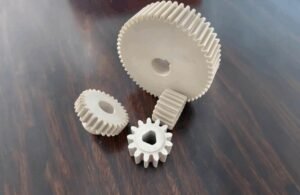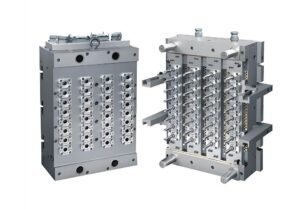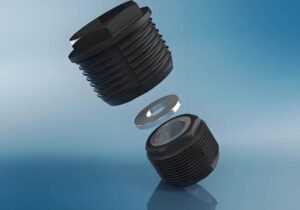
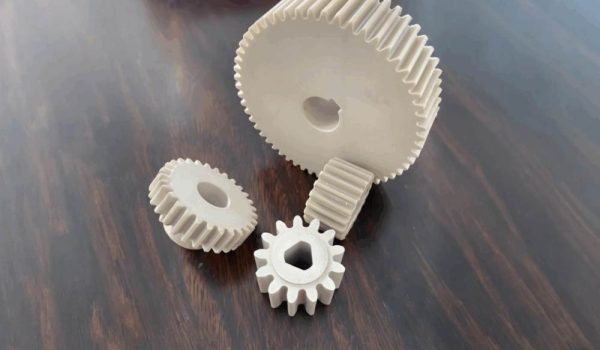
Precision injection molding produces small parts with amazing accuracy, such as surgical micro-gears and smartphone connectors. In this article, we will examine the process of small part injection molding, as well as the implications of micron-level precision when creating your parts or components.
What Is Small Part Injection Molding?
Small part injection molding is a specialized process for making tiny, complex plastic items smaller than a coin. In contrast to standard molding, it concentrates on intricate details, including thin walls and microscopic threads. Manufacturers utilize advanced machines and custom molds to obtain precise tolerances—typically ±0.001″—ensuring consistent high-quality function across mass production runs.
Why Is Precision Important for Small Plastic Parts?
Precision is not simply a preference; it is a functionally essential attribute of today’s hardware. By adhering to high standards of quality, brands can effectively deliver reliable products that perform reliably within larger systems.
Critical Function Dependence
Medical implants and aerospace sensors can fail if there is even a tiny mistake. In these high-stakes industries, precision ensures that parts are reliable for years. You simply cannot afford size changes when a part’s performance affects human safety or very expensive equipment.
Assembly Interchangeability
Tight tolerances mean that every part is a perfect match for automated assembly lines. This accuracy stops jamming and alignment problems during the building process. When you buy these small parts, you can trust that your assembly robots will handle them without any errors, which keeps your factory running fast.
Material Performance Realization
Strong plastics like PEEK only work well when they are molded with very careful control. Manufacturers must manage heat and cooling rates perfectly to keep the plastic strong. If this level of precision is not maintained, then the expensive material might lose its ability to resist heat or break far too easily.
Regulatory and Safety Compliance
Medical and automotive parts must validate dimensional stability under strict ISO and IATF standards. Precision molding provides the documentation trail that regulators demand for safety audits. By choosing high precision plastic injection molding, you secure the data necessary to prove your product’s long-term compliance.
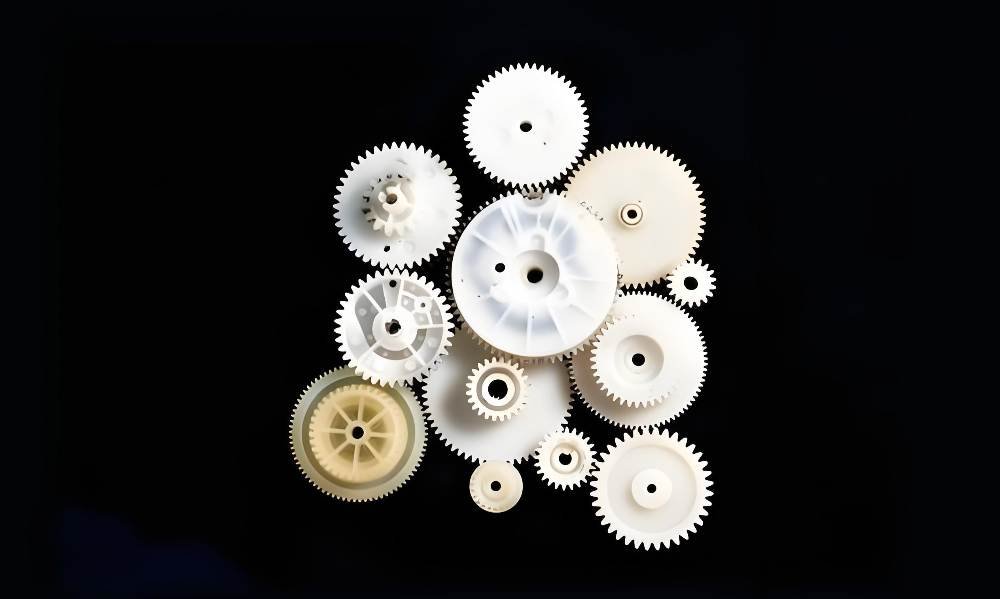
The Precision Injection Molding Process for Small Parts
Creating small parts requires a rigorous, step-by-step approach to engineering. Each phase of the process focuses on stability and repeatability to ensure that every shot matches your original CAD design.
Phase 1: Micro-Architected Mold Design
Manufacturers utilize advanced machining and mold flow simulation to build high-precision molds to ensure molten plastic will flow smoothly into every tiny area of the tool.
Micro-Cavity Architecture
High-speed CNC and EDM craft cavities with sub-micron detail. During the design phase, flow simulation is utilized to optimize gate placement. This prevents air traps in features thinner than a human hair, ensuring the small parts injection molding process results in full, clean geometry every time.
Intelligent Thermal Management
Conformal cooling channels follow part contours to extract heat uniformly. These channels are often 3D-optimized to reach tight corners. Balanced thermal design is critical because it eliminates differential shrinkage. Manufacturers are dependent on the precision of cooling to avoid distortion of delicate, thin-walled plastic components.
Phase 2: Scientific Material Preparation
Success depends on selecting the right polymers and preparing them in a controlled environment to prevent contamination and maintain consistent mechanical properties throughout production.
High-Performance Resin Matching
Selection is driven by melt flow index and precise shrinkage calculations. Although manufacturers may select either PEEK for heat resistance or LCP for stability, both materials must comply with the mold’s specifications. Early analysis of these variables will help guarantee that the precision plastic injection molding process can produce predictable output.
Contamination-Free Pre-Processing
Hygroscopic resins are dried to below 0.02% moisture to prevent structural defects. Automated gravimetric dosing units meter additives with laboratory accuracy. This ensures batch-to-batch consistency, which is vital when you are producing small parts injection molding components that require uniform color and strength.
Phase 3: Precision Machine Setup and Closed-Loop Control
Advanced all-electric machines, utilizing extreme pressure control with real-time monitoring, create the necessary mechanical accuracy for high-speed delivery of micro-sized shot plastics.
Electric-Driven Micro Screw Technology
Servo-controlled all-electric machines with specialized micro-screws deliver exact pressure profiles. These screws, often 14–18mm in diameter, prevent material shear while filling microscopic geometries. This specialized equipment is a hallmark of professional high precision injection molding, providing the torque and speed control needed for tiny shots.
Cavity Pressure Real-Time Adjustment
In-cavity sensors and infrared probes feed data into adaptive control systems. Micro-adjustments are made shot-to-shot to hold critical tolerance bands within 0.001″. This occurs without operator intervention, allowing the precision plastic injection molding process to remain stable over long, high-volume production runs.
Scientific Process Window Definition
Design of Experiments (DOE) establishes robust process parameters like fill time and pack pressure. These settings minimize variation and maximize Cpk for critical dimensions. Manufacturers use this data-driven approach to ensure that your injection molding small parts are consistently produced within the “sweet spot” of quality.
Phase 4: Controlled Filling, Packing, and Solidification
Manufacturers carefully control how the plastic flows during the injection mold process, assisting in the maintaining of an even cooling rate on the component so that no internal stress, defects, or warpage occur.
Multi-Stage Velocity and Transfer
Precision profiling prevents shear heating in thin walls. Manufacturers use millisecond-accurate switchover from injection to packing to eliminate sink marks. This level of control ensures that small parts injection molding creates smooth surfaces and structural integrity, even in the most complex, multi-faceted plastic geometries.
Pressure and Gate Seal Management
Hold pressure is calibrated to compensate for material shrinkage without overpacking the mold. Manufacturers monitor gate freeze-off timing to control the exact duration of this pressure. This maintains the integrity of micro-features and prevents the dimensional drift that often ruins high precision injection molding programs.
Solidification and Thermal Balancing
Balanced cooling circuits keep the temperature even across the whole mold surface. This prevents the internal stress and warping that often ruin injection molding small parts. By controlling how the plastic hardens, manufacturers ensure every part stays flat and matches your original CAD model perfectly.
Phase 5: Automated Ejection, Inspection, and Traceability
Robotic systems and digital sensors handle the finished parts to guarantee quality and provide a complete record of production for every batch.
Precision Robotic Extraction
High-speed servo robots extract delicate components without causing surface contact damage. Parts are placed directly into organized packaging or inspection queues. This automation is essential for small parts injection molding because manual handling could easily deform or contaminate the tiny, high-precision features of the parts.
100% Automated Verification
In-line vision inspection scans for surface defects, while offline CMM verifies dimensional compliance. This rigorous testing provides full batch traceability for your regulated projects. When you order high precision plastic injection molding, you receive the assurance that every single piece has been digitally verified.
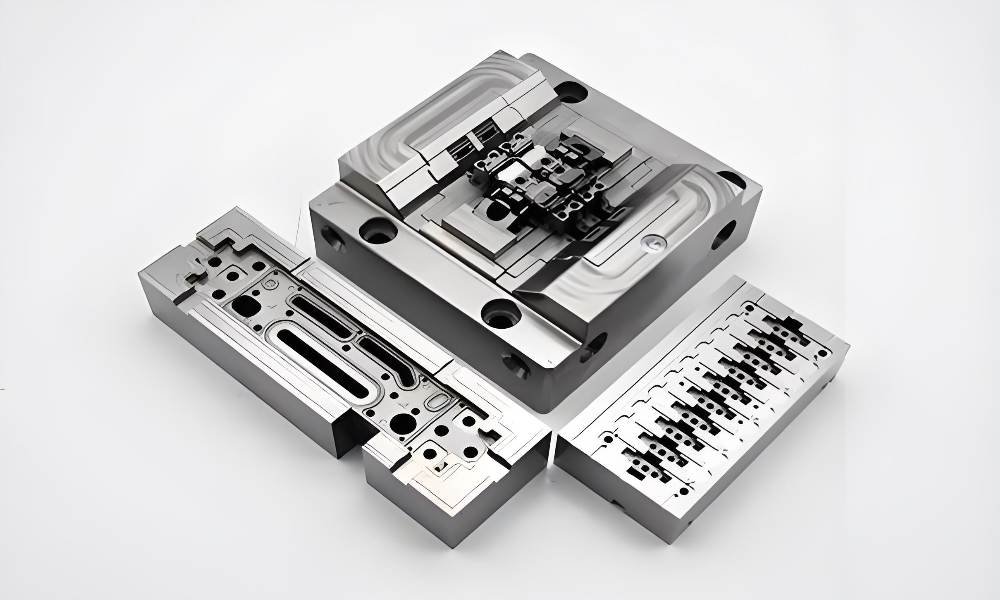
Benefits of Precision Injection Molding for Small Parts
Choosing a high-precision approach offers significant advantages for your supply chain. It reduces risk, lowers long-term costs, and allows for much more creative engineering solutions.
Extreme Dimensional Accuracy
High precision injection molding holds 0.001″ or tighter across millions of parts. This enables fits that manual assembly or standard molding simply cannot achieve. You can design complex systems with total confidence. Every component will slot together perfectly, and this remains true regardless of your total production volume.
Cost Efficiency at Scale
Despite the higher initial tooling investment, per-unit costs drop dramatically as volume increases. Multi-cavity molds and minimal waste maximize your budget. Small part injection molding is the most economical way to produce high-quality components when you need thousands or millions of units.
Design Complexity Freedom
Thin walls, living hinges, and overmolded seals can be integrated into single components. This flexibility allows you to reduce part counts in your final product. With precision plastic injection molding, you can combine multiple functions into one tiny part. This saves valuable space and reduces your overall assembly time significantly.
Risk Mitigation
Predictable control over every tiny dimension helps you stop part failures and expensive warranty claims before they occur. Validated manufacturing processes act as a strong safety net that protects your professional brand image. When you prioritize high precision injection molding, you ensure your customers get a reliable product every single time.
Supply Chain Simplification
Complex assemblies with many parts are often turned into just one molded component. This reduces the complexity of your bill of materials and the number of different suppliers you have to manage. You get a streamlined inventory and a lower total cost of ownership by using these advanced small parts injection molding strategies.
Stop worrying about part failures and high costs. Partner with Fecision to turn your complex small designs into perfect plastic components with fast, expert support!
Common Applications and Industries That Use Small Part Injection Molding
Small part injection molding is vital across many sectors because it creates precise parts very quickly. From the operating room to outer space, this reliable process supports the tools of the modern world.
Medical and Healthcare
Surgical grips and drug delivery tools need perfect precision to work safely for patients. Manufacturers use this process for implantable parts because they require high biocompatibility and very clean production. These tiny items also stand up to harsh sterilization methods used during critical hospital surgeries.
Consumer Electronics
Small parts like phone connectors and wearable sensor housings must be tiny to fit inside modern gadgets. This process also creates micro-switches and lens barrels with a perfect surface finish. It allows for tight fits in small devices while keeping the components strong enough for daily use.
Automotive
Modern cars rely on sensor housings, micro-gears, and electrical connectors to drive safely. These parts must survive constant vibration and huge temperature changes while out on the road. Manufacturers choose tough materials that resist chemicals, ensuring these small automotive pieces work for years.
Aerospace and Defense
Lightweight housings and specialized connectors are essential for keeping aircraft safe. Structural micro-components must handle extreme environments and follow a zero-failure tolerance policy. Engineers trust this method for its strength, as every small part helps keep defense systems secure and reliable.
Industrial and Robotics
Actuator parts and precision gears allow for smooth automation in factories. Sensor mounts and micro-valves help robots perform very sensitive movements. These small parts are built to be heavy-duty for repetitive motion, which makes advanced robotics and smart machines possible today.
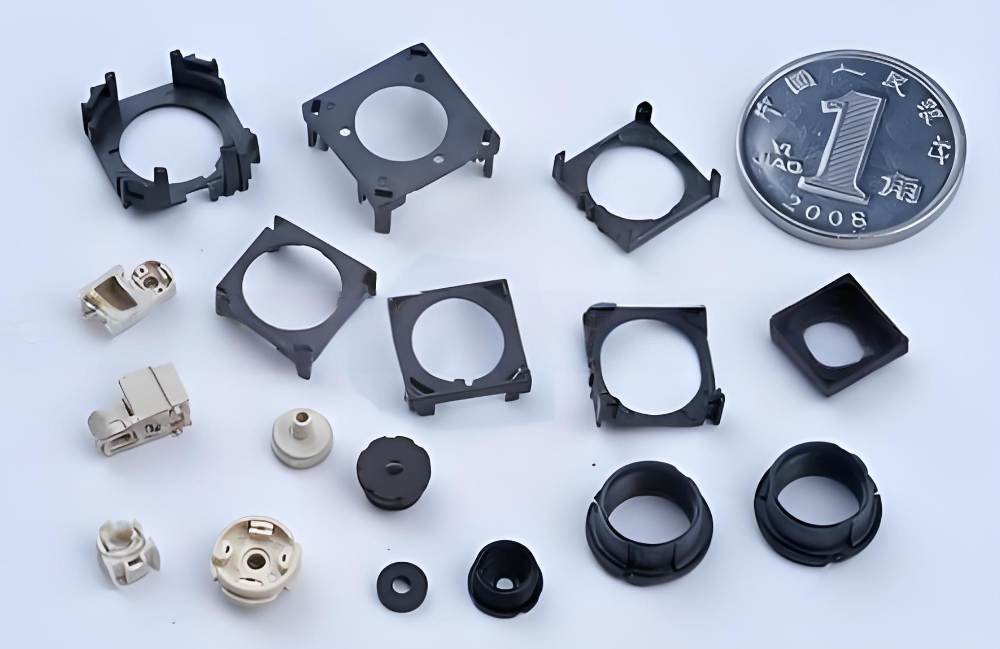
How to Choose the Right Precision Injection Molding Partner for Small Parts
Selecting a partner requires looking beyond just the lowest price quote. You need a team with the right tools and specific experience to handle micro-scale engineering challenges effectively.
Demonstrated Micro-Molding Expertise
Seek a manufacturer with a proven track record in high precision plastic injection molding for parts under 10 grams. They should show you examples of feature sizes below 1 mm. Expertise in this niche is essential because micro-scale physics differs greatly from general plastic molding.
Certified Quality Systems and Metrology
Ensure your partner holds ISO 13485 or IATF 16949 certifications to guarantee robust quality. They must use CMM verification and automated vision inspection for every batch. This equipment provides the full traceability and dimensional accuracy required for regulated industries like medical or automotive sectors.
Integrated Design Engineering
Your partner should offer early DFM engagement and mold flow simulation to catch errors early. This support prevents costly redesign cycles and helps you select the best materials. Practical engineering guidance at the start of your project accelerates validation and helps you meet tight deadlines.
Scalable Production Velocity
Look for a supplier who can handle flexible capacity of parts from 100-unit prototypes to 10 million units annually. They need to be lean manufacturers and have 24/7 automation so they will be able to provide shorter lead times. With scalable suppliers, your small parts injection molding project will be able to quickly grow without sacrificing part quality.
Fecision: Your Partner for Precision
At Fecision, we combine the latest technology and expertise to provide you with advanced solutions to your challenging miniaturization problems. We use state-of-the-art all-electric machinery with specially designed microscrews to provide extreme stability and repeatability throughout our processes. We pride ourselves on delivering perfect components that consistently meet medical and automotive quality requirements.
Fecision doesn’t just manufacture; we are your precision partner. Your designs will be optimized based on actual sensor data and the principles of scientific molding so that your small parts are functional, durable, and ready to be put into high-speed automated assembly lines.
Conclusion
Precision injection molding makes reliable production possible for complex miniaturization. Its success depends on the quality of tooling, the level of process control, and the right kind of partner. With all components being in sync, you can create small, high-performance parts that are at the highest quality levels.
Ready to bring your micro-designs to life with unmatched accuracy? Contact Fecision today for rapid DFM, tolerance analysis, and competitive quoting on your small parts injection molding program!