
Choosing the correct tonnage is crucial as it directly impacts the quality of your parts, production efficiency, and overall costs. The clamping force required to keep the mold closed during the injection process is a critical factor in determining the success of your project.
Understanding the factors that influence tonnage calculation is essential for engineers, project managers, and anyone involved in injection molding projects. In this article, we’ll explore what tonnage is, why it matters, and provide practical tips on how to determine the right tonnage for your project.
What Is Tonnage in Injection Molding?
Tonnage in injection molding is essentially the clamping force needed to keep the mold closed during the injection of plastic material. This force is measured in tons or metric tonnes and represents the machine’s capacity to resist the separating force created during the injection process.
The clamping force is generated by the machine’s hydraulic or mechanical systems, toggle mechanisms, and platen design, all working together to ensure that the mold remains closed. This force is crucial for ensuring that the mold remains shut against the pressure of the injected plastic material, thereby producing parts with the desired quality and precision.
The clamping unit of an injection molding machine works in conjunction with the injection unit to create a balanced system that produces high-quality parts. The tonnage required for a specific project depends on various factors, including the size of the part, the material being used, and the design of the mold.
Key Components of Clamping Force
The clamping force in an injection molding machine is generated by several key components. These include the machine’s hydraulic or mechanical systems, which provide the necessary force to keep the mold closed. The toggle mechanisms and platen design also play crucial roles in generating and maintaining the clamping force. Together, these components ensure that the mold remains shut during the injection process, allowing for the production of parts with precise dimensions and minimal defects.
The Relationship Between Tonnage and Machine Size
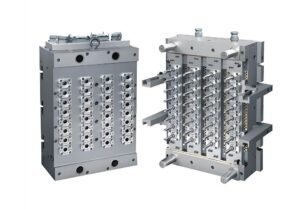
There is a direct relationship between the tonnage requirements of a project and the size of the injection molding machine needed. Larger parts or multi-cavity molds typically require machines with higher tonnage capabilities. Machine specifications are usually categorized by their maximum tonnage capacity, which affects the selection of machines for specific projects.

Why Proper Tonnage Calculation Matters
Accurate tonnage calculation is the foundation of a successful injection molding process. Proper tonnage ensures that your injection molding machine operates within optimal parameters, producing high-quality parts while minimizing defects and production costs.
Problems Caused by Insufficient Tonnage
Insufficient tonnage can lead to a range of problems, including flash and dimensional issues. When the clamping force is too low, the mold halves may not be held together tightly enough, allowing plastic to escape and causing flash.
Flash and Dimensional Issues
Flash occurs when excess plastic material seeps between the mold halves, creating unwanted protrusions on the part. This not only affects the part’s appearance but also its dimensional accuracy.
Inconsistent Part Quality
Inconsistent part quality is another consequence of insufficient tonnage. Variable weight, dimensions, and surface finish problems can make parts unusable, leading to increased scrap rates and production costs.
Issues Resulting from Excessive Tonnage
On the other hand, excessive tonnage can cause its own set of problems. Too much clamping force can lead to burn defects, pressure loss, and damage to both the mold and the machine.
Burn Defects and Venting Problems
Burn defects occur when air is trapped in the mold cavity due to excessive tonnage compressing the vents. This trapped air can cause charring or burning of the plastic material.
Pressure Loss and Process Variability
Excessive tonnage can also increase pressure loss and process variability. When the mold is over-clamped, it becomes harder to maintain consistent part quality, and higher injection pressures are required.
Mold and Machine Damage
Furthermore, excessive tonnage can cause serious damage to both molds and machines. Crushed vents, rolled parting lines, broken inserts, and even machine frame damage are potential consequences of using too much clamping force.
Impact on Production Costs
Improper tonnage calculation can significantly impact production costs. Increased scrap rates, more frequent mold maintenance, potential machine repairs, and production downtime all contribute to higher costs.

How to Calculate the Right Injection Molding Machine Tonnage
Accurate tonnage calculation is essential for achieving high-quality parts in injection molding. To determine the correct tonnage, you need to follow a step-by-step approach that considers various factors affecting your production process.
Step 1: Calculate the Projected Area
To start, you need to calculate the projected area of your parts and runner system as seen at the parting line. This area is where the plastic projects itself onto the cavity and attempts to force the mold open.
Determining Part Area
Measure the surface area of your part perpendicular to the mold opening direction. Be sure to account for any cored-out areas that reduce the effective projected area. For complex geometries, you may need to use CAD software or consult with a mold designer to accurately determine the projected area.
Accounting for Runner Systems
In cold-runner molds, the runner system adds to the total projected area and must be included in your tonnage calculations. Calculate the projected area of the runners and add it to your part area to get the total projected area.
Step 2: Apply the Appropriate Tonnage Factor
Once you have calculated the projected area, you need to apply a tonnage factor. Tonnage factors typically range from 2 to 8 tons/in², with 3 tons/in² being a common starting point for many applications.
Standard Tonnage Factors for Different Materials
Different materials require different tonnage factors based on their flow properties and processing requirements. For example, materials with high melt flow indices may require lower tonnage factors, while those with low melt flow indices may need higher factors.
When to Adjust Your Tonnage Factor
You may need to adjust your tonnage factor based on part design, material properties, and processing conditions. For instance, thinner-walled parts or those with complex geometries may require higher tonnage factors to prevent flash.
Step 3: Consider Additional Influencing Factors
Several additional factors can influence the tonnage required for your injection molding process. Understanding these factors will help you refine your tonnage calculation.
Material Flow Properties (MFI/MFR)
Materials with higher melt flow rates generally require less clamping force than those with lower melt flow rates. Consider the MFI/MFR of your material when determining the appropriate tonnage.
Part Geometry and Wall Thickness
Parts with complex geometries or thin walls may require higher tonnage to ensure proper filling and to prevent flash. Conversely, thicker-walled parts may require less tonnage.
Gate Location, Size, and Quantity
The design of your gate system can significantly impact the pressure required during molding and, consequently, the tonnage needed. Optimize your gate design to minimize tonnage requirements while ensuring proper part filling.
Flow Length and Aspect Ratio
The flow length and aspect ratio of your part can also affect tonnage requirements. Parts with high aspect ratios or long flow lengths may require higher tonnage to overcome the resistance to flow.
Step 4: Verify Your Calculations
After calculating your initial tonnage requirement, it’s crucial to verify your calculations to ensure accuracy.
Using Mold Filling Analysis
Mold filling analysis software can provide a more accurate prediction of the required tonnage based on simulations of actual molding conditions. This can help remove much of the guesswork from your tonnage calculation.
Adding a Safety Factor
To account for variations in material properties, processing conditions, and machine performance, it’s recommended to add a safety factor to your calculated tonnage. A typical safety factor is between 10% to 15%.
By following these steps and considering all the relevant factors, you can accurately determine the right injection molding machine tonnage for your project, ensuring high-quality parts and efficient production.

Conclusion
The tonnage of an injection molding machine plays a significant role in the quality and profitability of your plastic parts. Proper tonnage calculation is not just a technical detail, but a critical factor in project success. It requires balancing tonnage requirements to avoid issues such as flash and quality problems due to insufficient tonnage, or equipment damage from excessive tonnage.
By following a systematic four-step process, you can determine the right tonnage for your project. Let’s work with Fecision, an experienced injection molding partner, to ensure optimal tonnage selection and successful outcomes for your injection molding or mold tooling projects.
FAQ
What problems can occur if the tonnage is insufficient for my injection molding project?
Insufficient tonnage can lead to a range of issues, including flash, uneven parting lines, and incomplete mold filling. This can result in defective parts, increased scrap rates, and reduced production efficiency.
Can excessive tonnage cause problems in the injection molding process?
Yes, excessive tonnage can cause issues such as mold damage, increased wear on the machine, and higher energy consumption. It’s essential to calculate the correct tonnage to avoid these problems and ensure optimal production.
How does the number of cavities affect the required clamping force?
The number of cavities in your mold directly impacts the required clamping force. As the number of cavities increases, so does the projected area, which in turn requires a higher clamping force to keep the mold closed during the injection process.
What role does material play in determining the required tonnage?
Different materials have varying viscosities and flow characteristics, which affect the required clamping force. For example, materials with higher viscosities may require higher tonnage to ensure proper mold filling.