
PA6 GF30 Injection Molding: Housing 2-Cavity Hot Runner Mold
For special material - PA6 GF30% injection molding, let's see how Fecision team conducts professional DFM analysis to identify and solve the challenges.
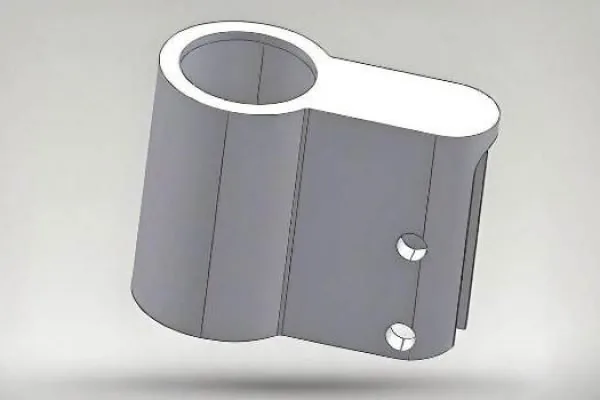
Specification
Project Overview
What does the engineering review cover?
A two-cavity tooling concept for a glass-filled PA6 housing, with hot runner and cold sub-gate, SKD61/S136 cavity steel and a three-slider layout. The review focuses on shrinkage-sensitive fits, parting lines and the dimensional checks needed for approval.
Scope of this case study: the table and DFM values describe design inputs and proposed tooling parameters, not a published acceptance report. Final drawing approval, inspection methods and measured sample results are agreed for the specific project.
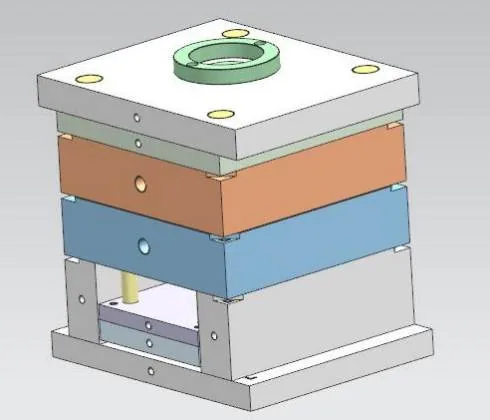
| Mold Type | 2-Plate Injection |
|---|---|
| Cavities | 2 Cavity |
| Mold Base | S50C |
| Cavity Steel | SKD61 / S136 |
| Core Steel | SKD11 |
| Gate System | Hot Runner + Sub Gate |
| Runner Config | 1 Hot Zone + Cold Sub |
| Sliders | 3 Sliders |
| Ejection | Sleeve + EJ Pin φ2.0 mm |
| EJ Pin Recess | Recess ≤ 0.05 mm |
| Shrinkage | 0.3 – 0.6% |
| Mold Dimensions | 400 × 300 × 360 mm |
| Machine | FANUC i100A (100 T) |
| Cavity Mark Depth | 0.1 mm proposed |
| Inspection | Dimensional inspection plan to be agreed |
Problem Diagnosis
Engineering Challenges Identified in DFM Review
Five structural and process risks were flagged during the mold structure review before any steel was ordered. Each item directly affects dimensional conformance, cycle reliability, or part quality on the production floor.
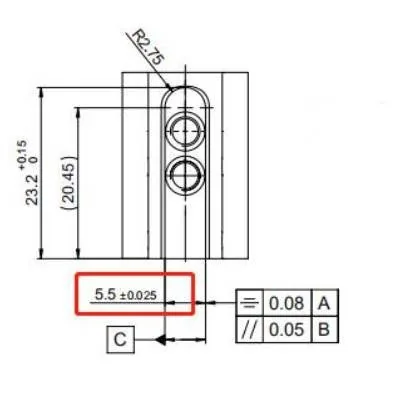
Tight Tolerance vs. PA6 GF30 Shrinkage
The drawing specifies 5.5 ±0.025 mm with flatness 0.08 A and parallelism 0.05 B on a feature that spans a significant length. Glass-fiber PA6 shrinks anisotropically — fiber alignment along the flow path reduces shrinkage in one direction while increasing it transversely.
With a shrinkage range of 0.3–0.6% and the part's overall length, holding ±0.025 mm post-mold is at the boundary of what injection tooling can reliably deliver without secondary machining.
Warpage Risk on Long Span Dimensions
Multiple dimensions are affected by both shrinkage variation and warpage — the two failure modes compound each other on glass-filled polyamide. When the part cools non-uniformly, differential shrinkage between GF-rich and GF-lean zones causes the part to bow.
Engineering response: Dimensions in the flagged zones were proposed for tolerance relaxation from drawing values to ±0.05 mm to match what the process can reliably deliver.
3-Slider Geometry — Parting Line Complexity
The housing geometry requires three sliders to release undercut features on three separate faces. Each slider introduces a parting seam — three seams meeting on a single part multiplies the flash risk and the precision requirement for slider-to-cavity contact alignment.
The main parting line runs at the mid-plane (red line, cavity front/core rear split). Slider PL seams at each side feature must all close to the same standard without leaving witness marks on functional surfaces.
Ejection System — Sleeve + Pin Configuration
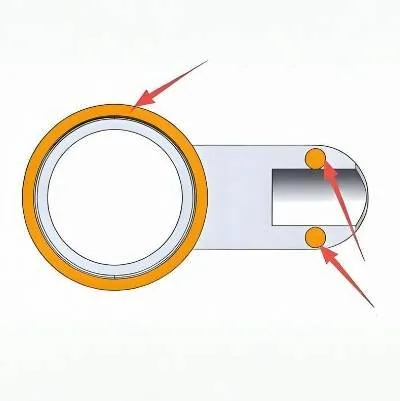
The cylindrical bore (Ø17 mm feature) requires a sleeve ejector rather than conventional ejector pins — a pin placed inside the bore would cause marking on a bore surface that mates with a locking cylinder component. The remaining ejector positions use EP φ2.0 mm pins at the flat base.
The critical constraint: ejector pin positions must be flush or recessed ≤0.05 mm — any protrusion above the part face is a rejection criterion because the housing seats against a precision assembly interface.
EJ protrusion: 0 mm (flush) to −0.05 mm only
Draft Angle — Minimal Undersize Relief Required
Draft analysis identified two surface categories: green-zone surfaces (most of the part exterior) require material removal of less than 0.05 mm per side to achieve clean draft without affecting critical dimensions. Pink-zone surfaces (the bore interior and two slider-facing faces) require even tighter relief — less than 0.03 mm per side.
These limits mean the cavity polishing operation must be controlled at sub-tenth-of-millimeter scale to avoid over-cutting draft that is intended to be minimal for dimensional retention.
Engineering Solution
Mold Engineering Solution
The proposed two-plate mold combines a hot runner with a cold sub-gate. The heated runner reduces cold runner material, but the cold section still produces material that must be accounted for. The sub-gate is intended to separate during ejection; samples must confirm the vestige and any additional trimming requirement.
Steel selection was deliberate: SKD61 for the primary cavity faces (H13 equivalent, hot-work tool steel, excellent thermal fatigue resistance under PA6's high processing temperature of 260–290°C) and S136 for the secondary cavity inserts that require higher corrosion resistance. The SKD11 core (D2 equivalent, high wear resistance) protects the internal bore geometry that is contacted by the sleeve ejector every cycle.
For full injection mold technical specifications, see our injection mold capabilities →
- One hot-runner zone feeds a cold sub-gate; verify separation and remaining runner material
- SKD61/S136 cavity + SKD11 core — material matched to PA6 GF30 thermal and wear demands
- Three-slider concept addresses the undercut features; tool movement requires design review
- Sleeve ejector at the Ø17 bore and φ2.0 pins at the base; define acceptable witness marks
- Agree optical or contact measurement methods against the ballooned drawing
- Proposed ±0.05 mm tolerance changes require customer drawing approval
- 01
3D Geometry Review
Review the housing model and controlled drawing revision together. Identify assembly datums and dimensions requiring a process-capability review.
- 02
Gate & Runner Design
Hot runner (1 zone) + cold sub-gate selected. Gate entry point on top face evaluated against flow balance to 2 cavities.
- 03
Parting Line Definition
Main PL at mid-plane (red line). Three slider parting seams reviewed for undercut features on three separate faces.
- 04
Draft Analysis
Green zones: <0.05 mm/side material removal. Pink zones (bore + slider faces): <0.03 mm/side. Cavity polish controlled accordingly.
- 05
DFM Report Issued
8 mold structure items documented. Critical: tolerance relaxation request on shrinkage-affected dimensions. Client sign-off required.
- 06
Tool Build Approval
Confirm the proposed S50C base, SKD61/S136 cavity inserts, SKD11 core, mold envelope and machine interface before procurement.
- 07
Sample and Inspection Plan
Agree a ballooned drawing, measurement method, sample conditioning and report format. Dimensional and functional records are required before production acceptance.
Manufacturing Strategy & Inspection
FECISION coordinates the material, tooling and inspection requirements with the selected manufacturing partner. The production-site qualification and the part acceptance plan are separate reviews; see our manufacturing standards and scope. For similar geometry, start with our custom injection molding service.
Steel Selection Strategy
Three distinct steels for three functional zones.
▲ S50C mold base — structural, cost-effective, sufficient for a 100T press.
▲ SKD61 primary cavity — H13 class, chosen for thermal shock resistance under repeated PA6 GF30 shots at 270–290°C barrel temperature.
▲ SKD11 core — selected for wear resistance around the glass-filled resin and bore features. Service life depends on the tool design, processing conditions and maintenance; it is not established by steel choice alone.
Phase 1 — Design LockGate Location & Runner Design
The hot runner nozzle enters the top face of the part geometry.
A single heated zone maintains PA6 melt temperature to the manifold.
The sub-gate is intended to separate during ejection. Gate vestige, reliable separation and any trimming requirement need sample verification before estimating labor savings.
Phase 2 — Tool BuildCooling Channel Routing
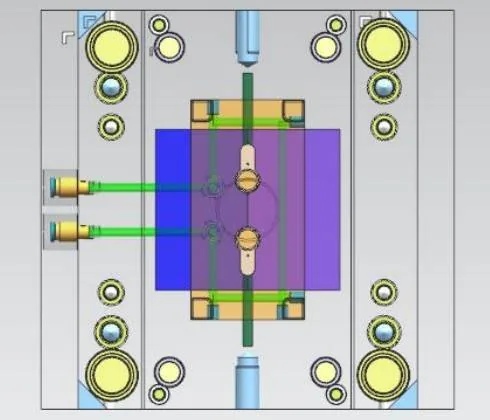
Cooling circuit runs through both the cavity (front mold) and core (rear mold) blocks. Two inlet/outlet pairs feeding the cavity block from the side, with internal channels arranged to maintain even temperature distribution across the cylindrical bore region — the thickest wall section and therefore the longest cooling zone.
The cooling review aims to reduce differential shrinkage around the Ø17 mm bore. Conditioned sample measurements are needed to confirm the resulting dimensions.
Phase 3 — Cooling ReviewInspection Protocol — OMM 2D&3D
The measurement plan should identify suitable optical, contact or other methods for bore dimensions, datums, flatness and parallelism. Instrument resolution alone does not prove measurement uncertainty or part conformance; calibration, fixturing and the feature-specific method must be checked.
The proposed cavity identification mark is 0.1 mm deep. Its location and depth need drawing approval so traceability does not interfere with the seating surface.
Phase 4 — Sample VerificationDrawing Requirements, DFM Proposals and Verification
The values below distinguish drawing inputs from proposed design changes. They are not before-and-after production measurements. The final column identifies the approval or inspection needed to establish acceptance.
Proposed tool layout for the housing
Max EJ pin recess below part surface — no protrusion permitted
Independent slider mechanisms releasing undercut geometry
Proposed cavity mark depth — drawing approval required
| Parameter | Drawing / Original | DFM / Proposed | Approval or Verification |
|---|---|---|---|
| Tab width tolerance (5.5 mm feature) | ±0.025 mm | Retain as a critical review item | Confirm process capability and inspection |
| Shrinkage-affected long dimensions | Per drawing | ±0.05 mm proposed | Customer drawing approval required |
| Green-zone draft material removal | Not specified | <0.05 mm/side proposed | Confirm on the approved tool drawing |
| Pink-zone draft material removal | Not specified | <0.03 mm/side proposed | Confirm dimensional impact |
| EJ pin surface relationship | Flush (0 mm) | Recess from 0 to −0.05 mm | Inspect sample seating surfaces |
| Cavity number depth | Not specified | 0.1 mm proposed | Approve mark location and depth |
| Bore Ø17 diameter | Ø17 -0/-0.1 mm | Feature-specific measurement method | Record conditioned sample dimensions |
| Thread M4×0.5 position | GD&T per drawing | Datum-based measurement plan | Document positional inspection |
| Measurement capability | Drawing tolerances | Calibrated equipment and suitable fixture | Verify method uncertainty |
| Runner and gate material | Hot runner with cold sub-gate | Measure the remaining cold-gate material | Do not assume zero runner waste |
5 Reusable Principles from the Project
These findings apply beyond this specific part number — they represent transferable principles for any glass-fiber filled polyamide injection mold with tight tolerance requirements and complex slider geometry.
Review Shrinkage by Feature and Flow Direction
Glass-filled polyamide can shrink differently along and across the flow direction. Use the selected grade, gate layout and expected fiber orientation to review critical dimensions, then verify the offsets with conditioned samples.
PRINCIPLE 01Resolve Tolerance Questions Before Releasing the Tool
Discuss critical fits and any proposed tolerance relaxation before machining. The proposed ±0.05 mm limits in this review are not customer approval; the controlled drawing must record the agreed requirement.
PRINCIPLE 02Evaluate Degating as Part of the Production Plan
A submarine gate can support separation during ejection, but resin behavior, gate geometry and vestige requirements determine whether extra trimming remains necessary. Confirm the actual operation before claiming cycle or labor savings.
PRINCIPLE 03Match Ejection to the Functional Surface
A sleeve ejector can distribute force around a cylindrical feature instead of concentrating it at a pin location. Check the seating surface, ejection load and permissible witness marks for the actual part.
PRINCIPLE 04Choose Inspection by Feature, Not Instrument Headline Resolution
Flatness, parallelism and bore dimensions require appropriate datums, fixtures and measurement methods. A dimensional report should identify the method and sample condition; equipment resolution is not a substitute for measurement uncertainty or conformance data.
PRINCIPLE 05Review Your Glass-Filled Nylon Part
Send the CAD, resin grade, assembly dimensions and quantities.
We will review the tooling approach and inspection plan with you.