Aluminum ranks as the third most abundant metal in Earth’s crust. People often ask if die cast aluminum is safe for daily use. Science shows us something reassuring – aluminum cookware releases tiny amounts into acidic food, just under one-hundredth milligrams per cup.
Die cast aluminum products come from a high-pressure molding process. These products last long and spread heat evenly. Medical researchers have good news too. Modern reviews from sources like NIH and the Alzheimer’s Society found no proven link between everyday aluminum exposure and dementia. This article explores Is Die Cast Aluminum Safe, the safety aspects, health considerations, and best practices for using die-cast aluminum products.
What Is Die-Cast Aluminum?
Die-cast production uses pressure and precision to make repeatable kitchen parts and engineered components. In plain terms, molten aluminum is injected into a hardened steel mold under high pressure between 1,500 and 25,000 psi to form a single, detailed part. That pressure fills tiny cavities so each piece matches the next with tight dimensions.
The manufacturing happens in several vital stages. The aluminum heats up to about 1220°F (660°C) until it melts completely. The liquid metal then gets injected into pre-designed steel molds, which experts call dies. These dies come in two halves to make product extraction easier.
Aluminum production works best with the cold chamber die casting method. The melting pot stays separate from the main chamber, and the molten aluminum moves from the pot into the die under substantial pressure. This high-pressure injection fills the mold quickly, which is vital for uniform solidification before any part hardens.
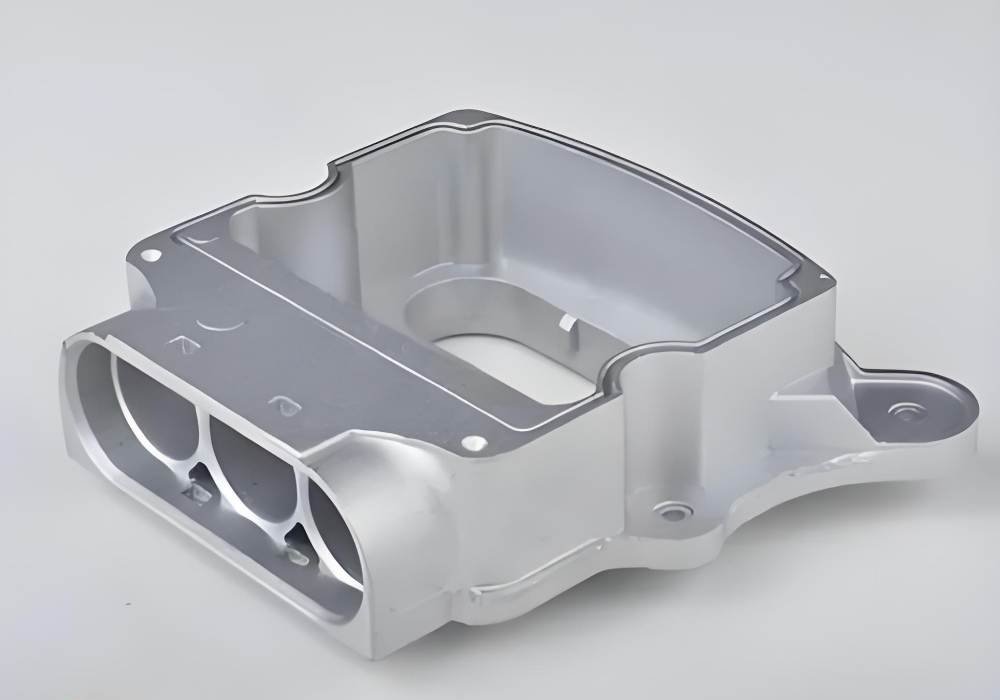
Die-Cast Aluminum Process and What That Means for Safety
Melting and Filtering: Melting runs at roughly 660°C (1220°F). Molten metal is filtered to remove dross and unwanted ingredients. That first gate prevents weak spots and odd surface inclusions that can harm coating adhesion or product life.
Cooling and Finishing: Controlled cooling reduces internal stresses and warping. Uniform solidification keeps flat cooking faces and tight tolerances. Finishing—trimming, polishing, or sandblasting—removes flash and evens the surface so coatings bond predictably.
Surface Prep: Good surface prep matters for non-stick, ceramic, or anodized coating systems. Poor prep causes peeling or uneven wear.
Quality Assurance Checks: Expect dimensional checks, porosity inspection, and coating thickness and adhesion tests. Brands often document FDA or EFSA compliance for food-contact parts.
Why Die-Cast Aluminum Is Used So Widely?
Die-cast aluminum’s material properties make it valuable in a variety of industries. The material resists corrosion well, stays strong at moderately high temperatures, and conducts heat and electricity efficiently. It weighs just 2.67g/cm3, making it quite light. The thermal conductivity reaches 120 W/mK, which makes it perfect for applications that need quick heat dissipation.
Die-cast aluminum parts have unique properties that make them different from other manufacturing methods. These components offer superior dimensional stability, especially when creating intricate shapes and thin walls. The process lets manufacturers create walls thinner than 13 mm, which gives them great design flexibility. The surface finish needs minimal post-processing, which reduces time and costs. These components are also more durable than parts made through other manufacturing methods.
Compared with stamped sheet pans, die-cast parts tend to be thicker and resist warping. Stamped pieces are pressed from thin metal and can flex or heat-unevenly under heavy use. Cast iron, by contrast, is usually made by sand casting, a slower process for heavier cookware. Beyond kitchens, the method suits any product that needs consistent geometry at scale.
Is Die-Cast Aluminum Safe for Cooking?
The practical answer: safe when alloy, process controls, and certifications are right.
In plain terms, most die-cast cookware is considered cookware safe when made by reputable suppliers. You should expect food-contact coating disclosures and test reports that match your market (FDA or EU LFGB). Proper process control reduces porosity, contamination, and poor coating adhesion.
What “safe” really means: intended use, temperature, and surface condition.
“Safe” here means the item suits your intended use, handles the heat levels you plan, and has an intact surface. High heat, acidic cooking, or damaged coatings change the risk profile quickly.
Ask suppliers for coating specs, material certificates, and third-party compliance test reports. When you combine application + temperature + surface condition + certifications, you get a practical decision framework that beats online myths.
Die-cast Aluminum Coatings: Safety and Tradeoffs
Die-cast aluminum cookware becomes safer by a lot through special treatments. Aluminum creates a protective oxide layer naturally when it meets oxygen, which protects against more oxidization. This barrier gets better through anodization – a chemical process that makes the protective coating thicker and harder, becoming part of the cookware. Coating choice defines how a pan performs, how long it lasts, and what limits you set in the kitchen.
PTFE non-stick: PTFE delivers excellent release and easy cleanup. Modern pans should be PFOA-free and rated for use under about 260°C (500°F).
Ceramic coatings: Ceramic tolerates higher heat than many non-stick layers, but it often loses slickness sooner. Expect different wear patterns and faster dulling with repeated use.
Hard anodized surface: Hard anodizing converts the metal into a thicker oxide layer. That lowers reactivity, improves scratch resistance, and gives a durable base for coatings.
Die-cast aluminum products often come with ceramic coatings between 50-1500 mm thick. These surfaces resist scratches well and create another layer of protection against chemical leaching. The best safety comes from picking high-quality, PFOA-free coatings.
How to Keep Your Die-cast Aluminum Cookware Safe?
- Cook at temperatures below 200 degrees Celsius
- Season new cookware with butter or oil after washing it well
- Wash gently by hand and don’t use harsh cleaning tools
- Don’t store food in aluminum cookware for long periods
Die-cast aluminum cookware is safe for daily cooking when it’s made properly with food-grade materials and used correctly. Picking well-known brands is vital because low-quality products might contain harmful materials like lead or cadmium.
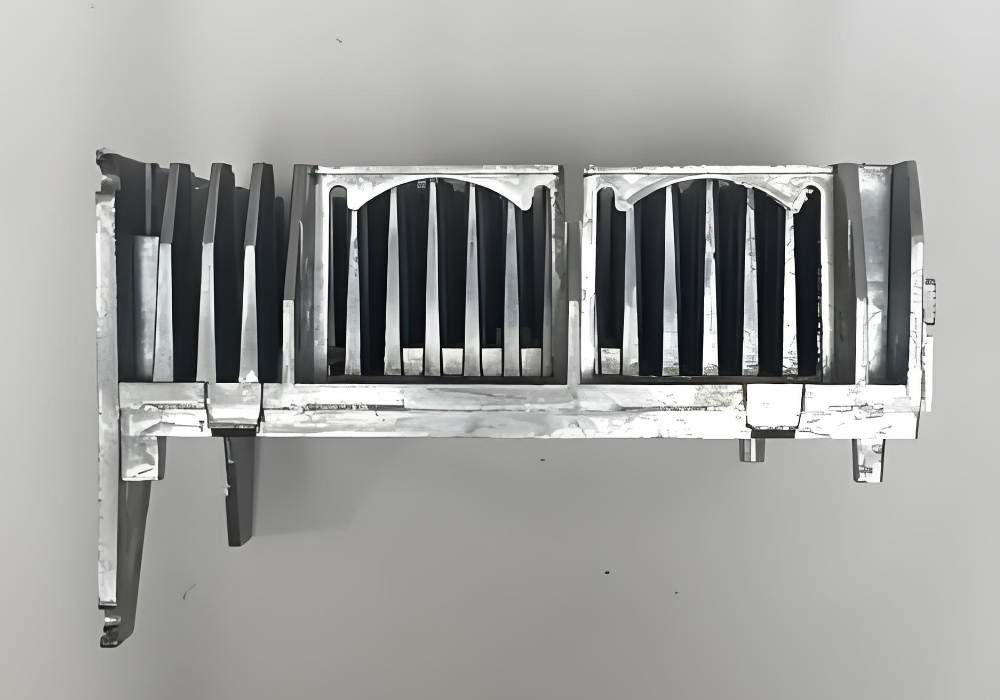
Is Die-Cast Aluminum Safe for Industrial and Automotive Use?
When you specify parts for vehicles or machines, reliability becomes the core definition of safety. In industry, the appeal of aluminum cast products rests on strength-to-weight, tight geometry from steel dies, and good corrosion behavior.
Aluminum components make up about 25% of vehicle production. Die-cast aluminum parts are a great way to get engine blocks, transmission cases, and suspension components in the automotive industry. The material’s light weight helps save fuel, as aluminum-lithium alloys make aircraft 15% lighter. Modern aircraft use 75-80% aluminum components.
Engineers measure safety as predictable properties, low porosity, and design margins that survive real loads. Alloy selection controls temperature and fatigue performance. Porosity control affects leak-tightness and structural strength.
Process capability matters: shot control, clean melt, and well-designed gating and venting drive consistency from lot to lot. Those steps reduce defects and exposure to failure in service.
Compliance expectations you should demand include RoHS and REACH alignment, plus customer-specific documentation and traceability. Ask for material certificates, porosity reports, and inspection plans.
Working with a qualified partner like Fecision means defined specs, inspection protocols, and documented process controls. That combination turns a metal component into a dependable product for automotive and industrial use.
Best Practices for Safe Use of Die-Cast Aluminum
Die-cast aluminum components perform better and last longer with proper safety measures. Quality control in professional die-casting facilities involves regular component inspections and testing. These steps detect defects early and give the final products maximum corrosion resistance.
Manufacturers should follow these steps to achieve the best results:
- Select high-quality aluminum alloys containing silicon, copper, magnesium, or zinc
- Employ precise and controlled manufacturing processes
- Design molds carefully to minimize defects like porosity
Clean surfaces play a crucial role in industrial applications. Adhesion and surface finish quality suffer from contaminants, oils, grease, or dirt. The surface might need sandblasting or grinding to achieve smoothness and remove defects.
Component durability improves with surface treatment. Professional die-casting companies use heat treatments, solution heat treatments, and aging processes to boost corrosion resistance. They also apply surface treatments like anodizing, chromate, or powder coating based on specific needs.
Quality control goes beyond the manufacturing process. Die-cast aluminum parts need proper maintenance to avoid deterioration. A mild soap wash and thorough rinse removes dirt and debris effectively. Regular checks for loose screws, bolts, and damage signs help catch problems early.
Storage conditions substantially affect how long components last. Components stay rust and corrosion-free when kept off the ground. Breathable material covers protect parts during storage. Professional die-casting companies suggest using proper touch-up methods and following manufacturer’s repair guidelines when surface damage occurs.
Health Risks and Safety Considerations
Scientific research shows complex health effects linked to aluminum exposure. The human body naturally contains approximately 30-50 mg/kg of aluminum, and normal serum levels range from 1-3 μg/L. Aluminum plays no role in the body’s metabolic processes, despite its common presence.
Manufacturing facilities need complete safety protocols:
- Mandatory use of personal protective equipment (PPE) including gloves, safety goggles, and face shields
- Regular inspection of equipment condition and placement
- Proper ventilation systems for toxic fume removal
- Clear incident reporting systems
Regular equipment checks are vital for industrial applications. Equipment condition and placement need inspection before operations begin. Clear reporting systems help spot potential dangers early.
OSHA’s standards limit aluminum dust exposure to 15 mg/m3 for total dust and 5 mg/m3 for respirable fraction during an 8-hour workday. These guidelines serve as key workplace safety standards.
Conclusion
Die cast aluminum is widely regarded as a safe and reliable material when properly designed and manufactured. People get minimal aluminum exposure from cookware and industrial uses. These amounts stay far below WHO’s safety limits. Modern production methods like anodization and special coatings substantially boost die-cast aluminum’s safety.
Safety matters go beyond personal use. Industrial settings need strict protocols, routine upkeep, and the right protective gear to keep workers safe. The excellent strength-to-weight ratio, corrosion resistance, and thermal performance of aluminum make it suitable for a broad range of applications, including automotive components, electronics housings, and consumer products.
Good maintenance keeps die-cast aluminum safe and performing well over time. The material’s protective qualities last longer with regular cleaning, proper storage, and following manufacturer’s guidelines. Thorough quality checks throughout production protect both workers and end-users.
At Fecision, we offer professional aluminum die casting services, supporting customers from design optimization to finished part production. Our expertise ensures consistent quality, structural integrity, and compliance with application-specific requirements.
If you’re considering aluminum die casting for your next project, contact Fecision today to explore safe, efficient, and high-quality manufacturing solutions.