Die Surface Treatment Optimization: Quenching & Tempering + DLC Coating
Overcome Performance Limitations of Conventional Heat Treatment
Cr12MoV tool steel
Quenching and tempering to HRC 58-62 hardness
Stainless steel stamping operations
≥30,000 stroke service life
Project Overview
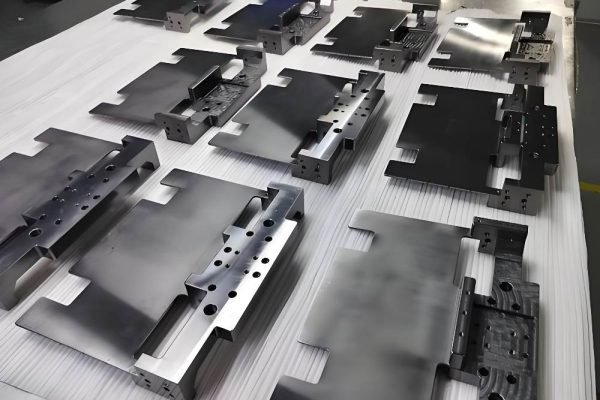
Surface treatment is a critical determinant of strength, wear resistance, and service life in hardware stamping dies—directly impacting production stability and total cost of ownership for manufacturing clients.
In this precision tooling project, the client initially specified quenching and tempering treatment only, seeking to meet basic mechanical property requirements. However, validation through trial stamping and small-batch production (1,000 pieces) revealed significant performance gaps that threatened long-term operational viability.
Our team identified critical failure modes in the single-stage heat treatment approach and implemented a composite surface treatment solution—adding Diamond-Like Carbon (DLC) coating to the existing quenching and tempering process. This optimization extended die life by 233%, eliminated adhesion issues, and delivered substantial cost savings, exceeding client expectations while adhering to their core requirements.
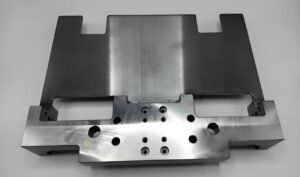
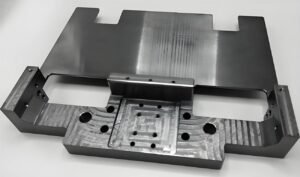
Critical Issues Identified
During trial production reaching 12,000 strokes, three core problems emerged that compromised production efficiency and part quality:
Rapid Die Wear
Impact: Workpiece surface defects (burrs, scratches); mandatory downtime for die maintenance
✅ Route Cause: Insufficient surface hardness to withstand high-frequency friction and compression
Material Adhesion
Impact: Workpiece surface defects (burrs, scratches); mandatory downtime for die maintenance
✅ Route Cause: High friction coefficient of tempered surface; poor self-lubrication properties
Premature Failure
Impact: Projected 15,000-stroke lifespan vs. 30,000+ requirement
✅ Route Cause: Surface properties inadequate for continuous production demands
Meeting the client's explicit "quenching and tempering" specification alone proved insufficient for actual production conditions. The die required enhanced surface engineering without compromising the base material requirements.
Engineering Solution
Quenching & Tempering + DLC Composite Treatment
Technical Rationale
Through metallurgical analysis and process investigation, we determined that quenching and tempering optimizes bulk properties (strength and toughness) but cannot improve surface characteristics critical for stamping operations—specifically wear resistance and lubricity. The high-cycle friction between die and workpiece demanded advanced surface engineering.
Optimization Strategy
A composite surface treatment protocol integrating DLC coating with the mandated heat treatment to address both compliance and performance needs.
Strategic Advantages

Requirement Compliance: Strict adherence to client's quenching and tempering specifications

Performance Enhancement: DLC coating provides exceptional hardness (≥2,200 HV), ultra-low friction coefficient (0.1–0.2), and anti-adhesion properties

Economic Value: Controlled process cost with significant lifecycle cost reduction through extended service intervals
Implementation: Precision Process Control
Phase 1: Quenching & Tempering (Base Requirements)
| Parameter | Specification | Purpose |
| Austenitizing | 1,050°C × 2 hours | Carbide dissolution, homogeneous microstructure |
| Quenching | Oil cooling | Martensitic transformation, hardness development |
| Tempering | 200°C × 3 hours | Stress relief, toughness optimization |
| Final Hardness | HRC 58–62 | Client specification compliance |
Phase 2: DLC Coating Preparation (Critical for Adhesion)
| Step | Process Parameters | Quality Target |
| Ultrasonic Cleaning | 20 minutes with degreasing agent | Removal of oils, oxides, metallic debris |
| Deionized Rinse | 3 cycles | Elimination of cleaning residue |
| Surface Finishing | 800# → 1200# abrasive progression | Surface roughness Ra ≤ 0.2 μm |
| Plasma Activation | 400W × 15 minutes | Surface energy enhancement for coating bonding |
Phase 3: DLC Deposition (Performance Layer)
| Parameter | Specification | Purpose |
| Austenitizing | 1,050°C × 2 hours | Carbide dissolution, homogeneous microstructure |
| Quenching | Oil cooling | Martensitic transformation, hardness development |
| Tempering | 200°C × 3 hours | Stress relief, toughness optimization |
| Final Hardness | HRC 58–62 | Client specification compliance |
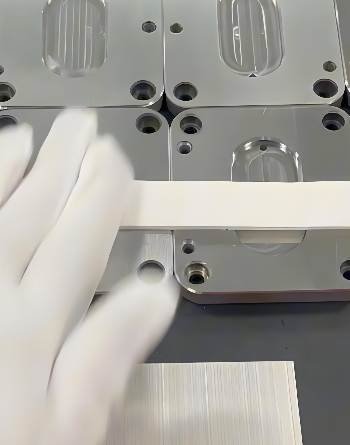
Quality Verification
✅ Coating thickness: Eddy current measurement
✅ Hardness: Vickers indentation (≥2,200 HV confirmed)
✅ Adhesion: Cross-cut test (ISO 2409) — no delamination
Phase 4: Production Validation
- Test Volume: 3 die sets, 50,000 stamping cycles
- Monitoring: Wear progression, adhesion events, dimensional stability
- Process Refinement: Optimized lubrication interval to every 800 strokes based on coating wear patterns
Results: Quantified Performance Improvements
Service Life & Maintenance Comparison
Hardness & Quality Improvement
| Metric | Before (Heat Treatment Only) | After (Composite Treatment) | Improvement |
|---|---|---|---|
| Surface Treatment | Heat treatment only | Composite: Heat treatment + DLC coating | Added high-performance surface layer |
| Hardness | HRC 58–62 (substrate) | Substrate: HRC 58–62; Coating: ≥2,200 HV | 3.5× surface hardness increase |
| Friction Coefficient | High (adhesion-prone) | 0.1–0.2 (self-lubricating) | Elimination of sticking; improved throughput |
| Service Life | ~15,000 strokes | ≥50,000 strokes | +233% lifespan extension |
| Maintenance Frequency | Every 12,000 strokes | Every 45,000 strokes | 73% reduction in downtime |
| Part Quality | 97.5% yield (burrs, scratches) | 99.8% yield (defect-free surface) | +2.3% quality improvement |
| Total Cost of Ownership | High (frequent repairs, replacements) | 60% reduction in maintenance costs | Significant long-term savings |
Engineering Value & Client Impact
Requirement Exceedance
Delivered full compliance with client-mandated heat treatment while proactively addressing unstated performance needs. Die longevity and part quality significantly surpassed expectations, strengthening client partnership and trust.
Technical Value Creation
The composite treatment architecture transformed die performance, achieving 233% lifespan improvement and 60% maintenance cost reduction. This demonstrates how strategic surface engineering creates measurable economic value beyond basic specifications.
Production Reliability
Complete elimination of adhesion and rapid wear issues minimized unplanned downtime, ensuring consistent delivery schedules and production planning confidence.
Conclusion: Surface Engineering for Competitive Manufacturing
Your Success Story Could Be Next!
Want results like these for your own production?
Reach out — let’s talk about what we can achieve together.