Tolerance control is one of the most critical elements in precision injection molding. Whether you are manufacturing components for medical devices, aerospace applications, or electronic connectors, consistent dimensional accuracy directly determines product performance, assembly fit, and overall quality.
This guide examines the key factors that influence injection molding tolerances and provides practical strategies to maintain tight dimensional control across the entire production process.
Standard Tolerance Ranges
Commercial vs. Precision Tolerances
| Tolerance Class | Linear Dimensions | Hole Diameters | Parting Line | Angles |
|---|---|---|---|---|
| Commercial | ±0.2mm to ±0.5mm | ±0.1mm to ±0.2mm | ±0.3mm | ±0.5° |
| Fine | ±0.05mm to ±0.1mm | ±0.03mm to ±0.05mm | ±0.1mm | ±0.25° |
| Precision | ±0.01mm to ±0.05mm | ±0.01mm to ±0.03mm | ±0.05mm | ±0.1° |
| Ultra-Precision | ±0.005mm or tighter | ±0.005mm | ±0.02mm | ±0.05° |
Industry-Specific Tolerance Requirements
- Medical Devices: ±0.05mm typical, ±0.01mm for critical features
- Aerospace: ±0.05mm to ±0.1mm based on application
- Electronics: ±0.03mm for connectors, ±0.05mm for housings
- Automotive: ±0.1mm to ±0.2mm for most components
Different Types of Injection Molding Tolerances
There is not just one type of tolerance for an injection molded part. Tolerances can also be grouped by how precise they need to be. Understanding different types from standard injection molding tolerances to the tight tolerance injection molding is important. Different parts of the piece have their own tolerance limits.
Here are some common ones:
- Straightness or Flatness
This relates to how flat or straight large, flat areas stay. Good mold design like where the plastic enters and how it cools evenly helps reduce warping.
- Dimensional
This is about the overall size of the part. Bigger parts tend to shrink more as they cool. So, tolerances are often given based on size ranges.
- Hole Diameter
Bigger holes usually need a wider tolerance. This is usually because they shrink more during cooling.
- Blind Hole Depth
Blind holes are the holes that don’t go all the way through. So, they need special mold parts. If the plastic is injected with high pressure, then these mold parts can bend especially if the hole is deep.
- Concentricity/Ovality
Uneven shrinking can make them lose their perfect round shape for round parts with thin walls
Factors Affecting Dimensional Accuracy
There are mainly three aspects affecting the plastic molding dimensional accuracy, which include:
Material-Related Factors
Shrinkage Rate: Different plastics exhibit distinct shrinkage behavior during cooling:
- PEEK: 1.0% to 1.5%
- PPS: 0.2% to 0.6%
- LCP: 0.05% to 0.4%
- PA66: 0.8% to 1.5%
- PBT: 1.0% to 2.0%
Moisture Absorption: Hygroscopic materials such as nylons and polycarbonate absorb moisture from the environment, leading to dimensional changes. Proper drying is essential for producing tight-tolerance parts.
Fillers and Additives: Glass fiber reinforcements reduce shrinkage and enhance stability but may cause anisotropic shrinkage—meaning different rates in the flow direction and cross-flow direction.
Process-Related Factors
Melt Temperature: Higher temperatures improve flow but increase shrinkage. The optimal temperature balances processability and dimensional stability.
Mold Temperature: Higher mold temperatures improve surface finish but extend cycle time and increase shrinkage.
Injection Pressure: Higher packing pressure reduces shrinkage but may cause flash and internal stress.
Cooling Rate: Rapid cooling shortens cycle time but can create warpage and residual stress.
Mold-Related Factors
Mold Construction
- Steel grade impacts wear resistance and long-term stability
- Cooling layout determines temperature uniformity
- Venting affects filling completeness and part quality
Mold Wear
Over time, mold dimensions shift due to:
- Abrasion from filled materials
- Corrosion from moisture or chemicals
- Thermal fatigue during repeated cycling
Design for Tight Tolerances in Injection Molding
You need to think carefully about different factors to get the best results when it comes to mitigating tolerances. These factors usually range from the product design to choice of materials, mold design, and how the process is managed.
Here we will explore some key factors that can help you to mitigate tolerances in injection molding:
Material Selection
Picking the right plastic is really important. This helps to make sure that your part comes out the right size and shape. The plastic should shrink evenly and fit the size and design you want. Since different plastics shrink differently. So, it is good to keep this in mind when you pick the
Best Materials for Tight Tolerances
- LCP (Liquid Crystal Polymer)
- Extremely low shrinkage (0.05% to 0.4%)
- Excellent dimensional stability
- Low moisture absorption
- Ideal for fine-pitch connectors
- PPS (Polyphenylene Sulfide)
- Low shrinkage (0.2% to 0.6%)
- High chemical resistance
- Strong thermal stability
- PEEK (Polyetheretherketone)
- Moderate shrinkage (1.0% to 1.5%)
- Outstanding mechanical performance
- Low moisture absorption
- Suitable for high-performance structural parts
Part Design Guidelines
Two simple things can really help when you are designing a part. These things usually include keeping the wall thickness the same all around and making the design less complicated.
Wall Thickness
- Maintain consistent wall thickness across the part
- Use gradual transitions with a 3:1 taper ratio
- Typical range: 0.8mm to 3.0mm
Corner Radii
- Internal corners: min. 0.25mm radius
- External corners: 0.5mm to 1.0mm radius
- Generous radii improve flow and reduce stress
Draft Angles
- Standard: 0.5° to 1° per side
- Deep draws: 1° to 3°
- Textured surfaces: add 1° per 0.025mm texture
Ribs and Bosses
- Rib thickness: 50–70% of main wall
- Boss diameter: 2–3× hole diameter
- Avoid thick sections that cause sink marks
Injection Mold Design for Precision
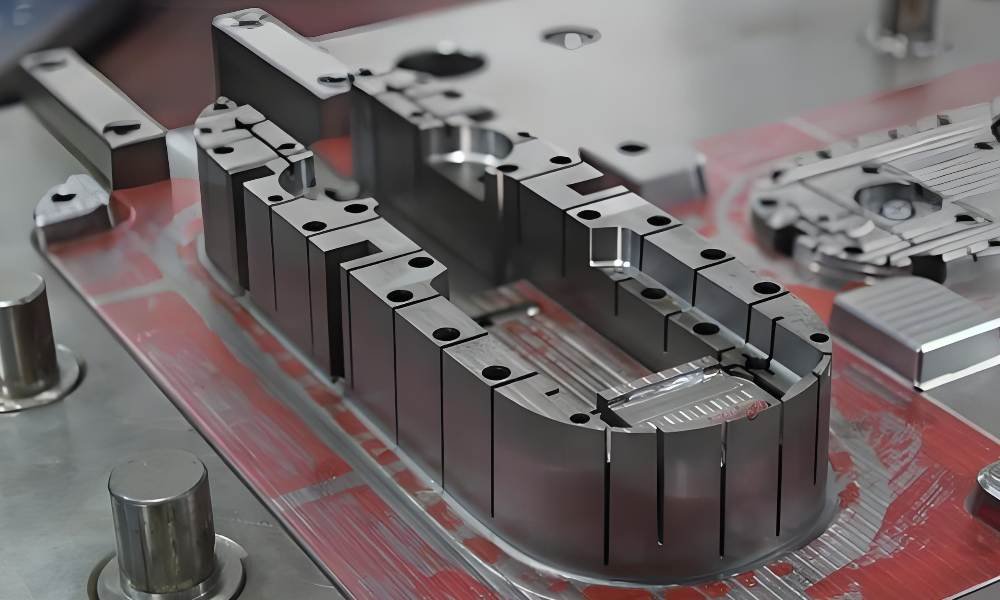
Injection molding tolerances depend a lot on how the mold is designed and how many cavities it has. If the mold does not cool the plastic evenly and steadily, parts can shrink too much or unevenly. This will be making it harder to keep the right size.
Steel Selection
High-Volume Precision Molds
- H13 or S7 tool steel (48–52 HRC)
- High wear resistance
- Excellent polishability
Ultra-Precision Molds
- 420 SS or 440C stainless steel
- Superior corrosion resistance
- Maintains sharp edges over millions of cycles
Cooling System Design
Conformal Cooling
- Follows part geometry for uniform cooling
- Reduces warpage and cycle time
- Improves dimensional consistency
Cooling Channel Design
- Spacing: 3–5× channel diameter
- Turbulent flow (Re > 4,000)
- Target temperature uniformity: ±3°C
Venting
Importance
- Prevents burns and short shots
- Lowers required injection pressure
- Enhances surface quality
Design Guidelines
- Vent depth: 0.01mm to 0.03mm
- Vent width: 3mm to 6mm
- Position at last-to-fill areas
Process Control for Tight Tolerances
Keeping tolerances tight in plastic injection molding is not just about good design. It also means carefully controlling the molding process.
Scientific Molding Approach
Process Development
- Balance flow across all cavities
- Optimize packing and holding phases
- Define required cooling time
- Establish a stable process window
Process Monitoring
- Cavity pressure sensors for critical dimensions
- Real-time SPC (Statistical Process Control)
- Automated process adjustment
Environmental Control
Material Handling
- Strict drying according to material specs
- Sealed storage to prevent moisture uptake
- FIFO inventory rotation
Mold Temperature Control
- Chillers or TCUs
- Continuous inlet/outlet monitoring
- Stability within ±2°C
Measurement and Quality Control
Once the process is set up well, it is important to keep checking the finished parts over time. This will help you to make sure no unexpected problems show up. As a result, the parts stay high quality and fit just right.
Inspection Equipment
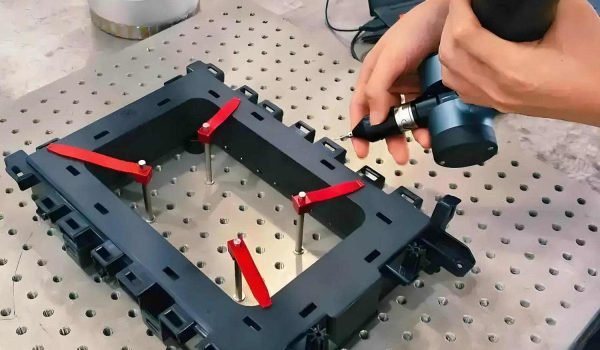
CMM (Coordinate Measuring Machine)
- Accuracy: ±0.002mm to ±0.005mm
- Automated inspection programs
- Statistical analysis tools
Optical Measurement
- Vision systems for micro-features
- Non-contact inspection
- High-speed testing
Other Tools
- Height gauges, pin gauges, thread gauges
- Surface roughness testers
- Optical comparators
Inspection Strategy
First Article Inspection (FAI)
- 100% dimension verification
- Full documentation package
- Customer approval before mass production
In-Process Inspection
- Critical dimensions: checked every 2 hours
- Key characteristics: statistical sampling
- Trend analysis for early warning
Final Inspection
- Complete traceability records
- AQL-based sampling
- Typical: AQL 0.65 to 1.0 for precision parts

Troubleshooting Tolerance Issues
Common Problems and Solutions
Dimensions Too Large
- Cause: Insufficient shrinkage
- Fixes: Raise mold temp, reduce packing, check moisture
Dimensions Too Small
- Cause: Excessive shrinkage
- Fixes: Lower mold temp, increase packing, extend cooling
Inconsistent Dimensions
- Cause: Process variation
- Fixes: Implement SPC, narrow process window, improve material control
Warpage
- Cause: Uneven cooling or differential shrinkage
- Fixes: Optimize cooling, adjust parameters, consider annealing
Choose Fecision for Your Next Project!
Achieving tight tolerances in injection molding demands a systematic approach covering material selection, part design, mold engineering, process control, and quality assurance. By understanding the variables that impact dimensional accuracy and applying best practices at every stage, manufacturers can consistently produce high-precision components that meet the most stringent industry requirements.
Collaborating with an experienced precision injection molding partner that specializes in tight-tolerance production is key to success in high-demand industries. Fecision is here to help you with all your plastic injection molding needs. Our ISO-certified facility specializes in medical, aerospace, and electronics applications that demand uncompromising accuracy.