One tiny airborne particle can render a life-saving device useless. To meet zero-defect standards, medical, optical, and microelectronic parts are manufactured through clean room injection molding techniques in controlled environments called clean rooms. In high-stakes situations like these, even a small piece of debris can cause catastrophic failure of a device or injury to a patient.
This guide explains injection molding clean room fundamentals, contamination risks, operational benefits, and industry applications. You will discover why controlled atmosphere molding remains non-negotiable for critical-use plastics and how it protects your product’s integrity from the very first shot to the final assembly.
What Is a Clean Room in Injection Molding?
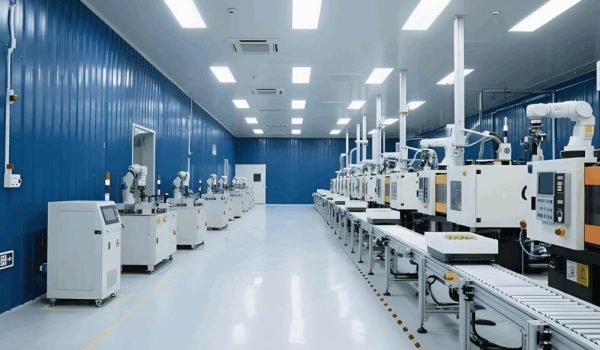
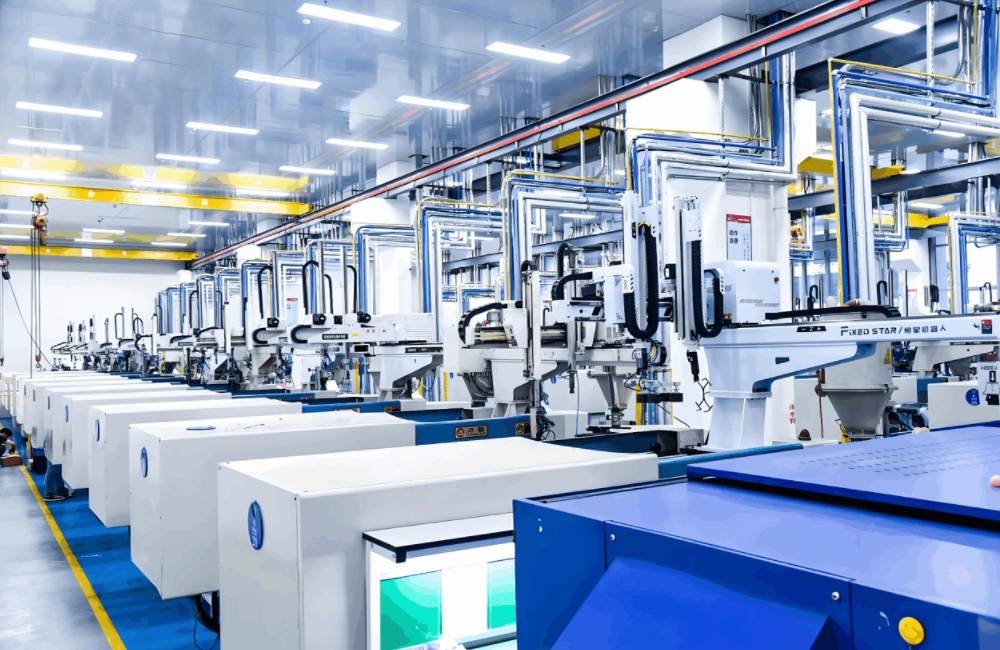
A clean room in injection molding is an enclosed space where air quality is maintained within strict limits by continual filtration. Manufacturers maintain airborne particulate, microbial, and chemical vapor levels below specified thresholds in this environment. This discipline covers everything from material handling to personnel protocols to prevent any foreign debris from contaminating your parts.
ISO 14644-1 standards define these cleanliness levels by counting particles per cubic meter of air. While ISO Class 7 and 8 are common for most injection molding clean rooms, more stringent cleanliness classes, such as ISO Class 5 or Class 6, are utilized for the most sensitive medical and optical components. These rooms also regulate temperature and humidity to ensure consistent resin behavior and repeatable quality.
The Importance of Clean Rooms in Injection Molding
Understanding the risks of a standard factory floor helps explain why these controlled zones are vital. These five areas show how a clean environment protects your parts.
Contamination as Root Cause of Failure
Particulate inclusions serve as stress concentrators, causing cracks to propagate under cyclic loading. In the case of medical devices, a tiny 50 µm fiber can trigger life-threatening thrombosis. In terms of optics, a single microscopic particle can scatter laser beams and result in poor optical performance. Clean room injection molding eliminates these specific failure modes at the very source.
Air Quality Management Architecture
HEPA filtration banks are used to remove 99.97% of particles larger than 0.3 µm. Unidirectional laminar flow is then utilized to sweep particles downward and out of the room. Return plenums prevent recirculation, while real-time particle counters trigger alarms if injection molding clean room thresholds ever drift.
Material Handling Discipline
To maintain purity, virgin resin often arrives in sealed foil pouches. Operators cut these bags inside glove boxes to prevent any ambient exposure to the factory air. Colorants and additives undergo rigorous pre-screening for metallic contamination before they ever enter the clean room injection molding hoppers.
Regulatory Compliance Imperatives
Strict environmental conditions are imposed by FDA 21 CFR Part 820, EU MDR, and ISO 13485 (along with other requirements). The clean room injection molding standards, for example, ISO 14644-1, provide the verification metrics against which auditors will assess their adherence to these regulations in terms of validating your facilities for product compliance and getting your products on the market.
Consistency Through Environmental Stability
Using stable temperatures and humidity allows you to control viscosity swings between shots, minimizing weight variations and providing consistent processes within your quality control methods. This helps create defect-free products and also allows for the use of Statistical Process Control (SPC) within high-volume injection molding clean rooms, so that every part produced meets your specified requirements.
Benefits of Clean Room Injection Molding
While the primary goal is purity, these environments offer several practical business advantages. Here is how high-end molding facilities improve your bottom line and part reliability.
Defect Reduction and Yield Improvement
Controlled environments cut cosmetic rejects like specks or streaks and prevent structural flaws. First-pass yields above 98% are routine in mature clean room injection molding operations. This is a massive improvement over the 85–90% yields often seen in conventional shops that lack these strict environmental controls.
Patient and Consumer Safety Assurance
Eliminating bioburden and particulate ensures your devices meet USP Class VI and ISO 10993 requirements. Injection molding in clean room conditions provides the exact documentation trail that regulators demand. This gives you total confidence that your products are safe for the end-user and fully compliant.
Extended Tooling Life
Filtered air reduces the amount of abrasive dust that settles on mold surfaces. This slows down vent clogging and prevents galling between moving components. Precision molds running in injection molding clean room environments often achieve double the shot count between maintenance cycles, saving you significant time.
Operational Cost Rationalization
While the capital outlay for HVAC infrastructure is significant, the avoided costs deliver rapid payback. You save money by reducing scrap, rework, and the threat of liability litigation. In the long run, clean room injection molding becomes a profit protector rather than just another overhead line item.
Market Differentiation and Brand Equity
Clean-room capability signals a deep quality commitment to your procurement teams and customers. Manufacturers with certified injection molding clean rooms win preferred-supplier status in aerospace and medical supply chains. A robust injection molding clean room design often determines who wins a contract when audit scores are the primary deciding factor.
Clean Room Injection Molding Applications
Many modern technologies simply could not exist without these ultra-pure settings. Let’s look at the specific products that rely on this specialized manufacturing process every day.
Medical Device Housings and Enclosures
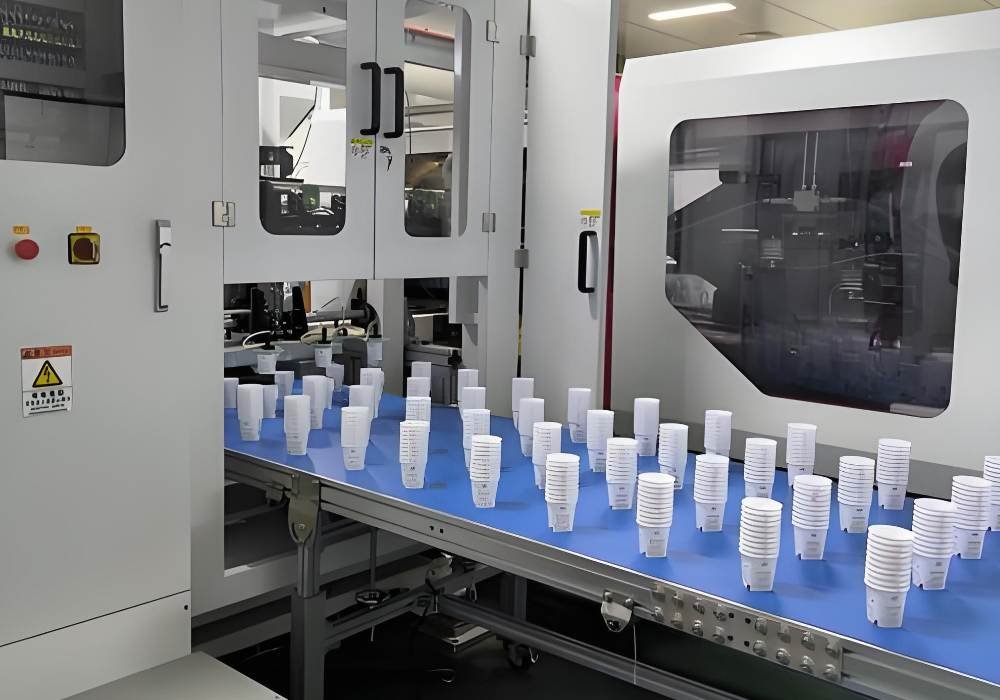
The surfaces of diagnostic instruments and wearable monitoring devices must be free from even minute amounts of dust and debris. Clean room injection molding will produce high-quality, sterilizable ABS, PC or PEEK outer shells for use in installation on these devices. The resulting housings maintain strength through gamma and autoclave cycles without any degradation or surface spotting.
Surgical Instruments and Disposable Tools
Forceps handles and trocar components molded in clean rooms eliminate sites where bacteria could hide. High-performance polymers like PSU and PPSU provide the heat resistance you require. These tools are manufactured to be fully smooth so that no tissue or fluid becomes trapped during a surgical procedure.
Implantable Medical Components
Pacemaker headers and dental abutments require Class 7 or even better environments for safety. Injection molding clean room protocols guarantee that all long-dwell devices are manufactured to the most stringent biocompatibility standards. As these devices will remain in the body, they must not contain any trace of debris.
Fluid Delivery and Collection Systems
IV connectors and syringe barrels cannot tolerate any particulate that could obstruct narrow lumens. Clean room injection molding of medical-grade TPE and PP maintains sterile pathways for fluid. This ensures that no foreign matter enters a patient’s bloodstream during a blood draw or an infusion.
Pediatric and Neonatal Devices
Infant incubators and respiratory masks are designed for the most vulnerable patients. Zero-defect injection molding performed within controlled environments produces components for newborns whose developing immune systems are not yet able to cope with foreign materials. These rigorous production processes ensure the health and safety of small children.
Scientific and Research Instrumentation
Microplate wells and pipette tips require absolute optical clarity for accurate laboratory work. Injection molding in clean room conditions prevents the sub-micron contamination that can distort assay results. This keeps your research data clean and prevents costly errors caused by background noise from environmental dust.
Semiconductor and Microelectronics Packaging
Wafer carriers and chip sockets must be free of ionic contamination that could cause short circuits. Clean room injection molding of specialized compounds meets both ESD and cleanliness requirements. These parts are handled by manufacturers using strict protocols to protect your sensitive electronics from damage.
Aerospace Electronics and Optics
Satellite lens barrels and fiber-optic connectors demand total stability across extreme temperatures. Controlled-environment molding of Ultem and PEEK ensures these parts launch without any latent defects. You need these components to function perfectly in space where repairs are impossible, making clean-room production a baseline requirement.
Aseptic Food and Beverage Components
High-purity closures and dispensing valves benefit from injection molding clean rooms that prevent microbial ingress. ISO 8 environments are often used for food-contact applications to balance safety with cost. This process ensures your packaging remains sterile and protects the shelf life of the products inside.
Conclusion
Clean room injection molding is the gold standard for industries that demand total precision and purity. By removing dust and stabilizing the air, this process ensures your most sensitive parts work exactly as they should. It turns simple manufacturing into a certified quality guarantee that protects your project from microscopic defects.
Fecision delivers elite reliability through our ISO 13485 certified medical-grade clean room injection molding and Class 7/8 clean room environments. We utilize validated contamination control and real-time particle monitoring to protect your sensitive designs. Our traceable material flow and audit-ready documentation ensure your biocompatible parts meet every strict FDA and EU MDR requirement perfectly.
Contact Fecision today to secure a certified clean room injection molding roadmap for your next critical project!