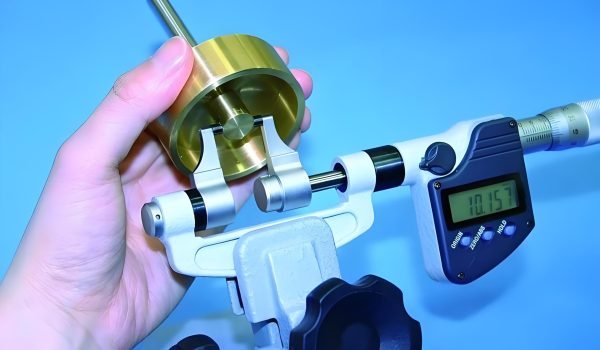
Did you know that a significant portion of manufacturing costs can be attributed to dimensional tolerances and precision requirements? In the world of CNC machining, understanding these tolerances is crucial for producing high-quality parts.
The ISO2768 standard provides a globally recognized framework for general tolerances of linear and angular dimensions, ensuring product quality and consistency across production. By implementing this standard, manufacturers can simplify technical drawings, reduce potential errors, and achieve better communication between design and production teams.
As a customer requiring CNC machining parts, understanding the ISO2768 standard can help you ensure that your manufactured parts meet quality requirements consistently. This comprehensive guide will walk you through everything you need to know about the standard, from basic definitions to practical applications in various industries.
What is ISO 2768 Standard and Why It Matters

The ISO2768 standard plays a significant role in defining the acceptable limits of variation in dimensions and geometrical features of manufactured parts. You need to understand this standard to ensure that your parts meet the required specifications.
Definition and Purpose of ISO2768
The ISO2768 standard is an international guideline that provides a framework for general tolerances in linear and angular dimensions. Its primary purpose is to simplify technical drawings by specifying acceptable deviations from nominal values, ensuring that parts fit and function as intended. By defining these tolerances, ISO2768 helps manufacturers produce parts that meet design requirements, reducing the risk of rework or failure.
Structure and Components of the Standard
The ISO2768 standard is structured into several components that outline different aspects of tolerances. It covers general tolerances for linear and angular dimensions, as well as geometrical tolerances. The standard is divided into two main parts: ISO2768-1, which deals with linear and angular dimensions, and ISO2768-2, which focuses on geometrical tolerances. Understanding these components is crucial for applying the standard correctly in your manufacturing processes.
The Role of Tolerances in Manufacturing Quality
Tolerances play a critical role in ensuring the quality of manufactured parts. By defining acceptable deviations from nominal values, tolerances help ensure that parts fit and function correctly during assembly. Proper tolerances also facilitate quality control by providing clear acceptance criteria for inspecting manufactured parts. Moreover, tolerances directly impact manufacturing costs, as tighter tolerances typically require more precise machinery and skilled labor, increasing production expenses.
To strike a balance between ensuring functional requirements are met and keeping manufacturing costs reasonable, it’s essential to apply reasonable tolerances. The ISO2768 standard helps standardize tolerance specifications, making it easier for designers to communicate their requirements and for manufacturers to understand what’s expected. By applying the ISO2768 standard, you can ensure that your parts meet the required quality and precision standards, reducing the risk of rework or failure.
The Fundamentals of ISO 2768 in CNC Machining
To achieve precision in CNC machining, it’s essential to grasp the basics of ISO2768. This standard provides a framework for tolerances, ensuring that machined parts meet the required specifications. Understanding ISO2768 is vital for manufacturers to produce high-quality parts consistently.
How ISO2768 Simplifies Technical Drawings
ISO2768 simplifies technical drawings by providing a standardized system for specifying tolerances. This eliminates the need for detailed tolerance information on every dimension, making drawings clearer and easier to interpret. By applying ISO2768, designers can ensure that their intent is communicated effectively to manufacturers.
When to Apply ISO2768 in Your Projects
You should apply ISO2768 in your projects when you’re working on parts that require specific tolerances. This standard is particularly useful for CNC machining, where precision is critical. By specifying ISO2768 tolerances, you can ensure that your parts are manufactured to the required standards.
Interpreting ISO2768 Specifications on Drawings
Interpreting ISO2768 specifications on drawings involves understanding the code system used to indicate tolerance classes. For example, “ISO2768-mK” indicates medium tolerance for linear and angular dimensions, as well as medium tolerance for geometrical features. To interpret these specifications correctly, you need to refer to the appropriate tolerance tables in the standard.
ISO 2768-1: General Tolerances for Linear and Angular Dimensions
Understanding the ISO2768-1 standard is crucial for ensuring precision in CNC machining, particularly when it comes to linear and angular dimensions. This standard provides a comprehensive framework for general tolerances, which are essential for maintaining manufacturing accuracy and quality.
Linear Dimensions Tolerance Classes
You need to understand that ISO2768-1 categorizes linear dimensions into four tolerance classes: f (fine), m (medium), c (coarse), and v (very coarse). These classes help you determine the acceptable deviations in linear dimensions based on the nominal size. For instance, the fine tolerance class is used for high-precision parts, while the very coarse class is used for parts where larger deviations are acceptable.
External Radii and Chamfer Heights Tolerances
ISO2768-1 also provides guidelines for tolerances on external radii and chamfer heights. These are critical for ensuring that rounded edges and chamfers are manufactured within acceptable limits. The standard specifies tolerance values based on the nominal size, helping you achieve the desired finish and functionality.
Angular Dimensions Tolerance Tables
For angular dimensions, ISO2768-1 offers comprehensive tolerance tables that are vital for components where the angle between surfaces affects functionality or assembly. The tolerances are expressed in degrees and minutes and are determined based on the length of the shorter leg of the angle. The standard divides angular dimensions into five nominal length ranges, with permissible deviations becoming tighter as the length of the shorter leg increases.
You will find that for fine (f) and medium (m) tolerance classes, the permissible deviations are identical, ranging from ±1° for the smallest lengths to ±0°5′ for lengths over 400 mm. The coarse (c) and very coarse (v) classes allow larger angular deviations, making them suitable for applications where such tolerances are acceptable.
ISO 2768-2: General Tolerances for Geometrical Features
In CNC machining, understanding and applying ISO2768-2 is vital for achieving the desired geometrical tolerances. This standard provides a framework for general tolerances on geometrical features, ensuring that machined parts meet the required specifications.
Straightness and Flatness Tolerances
Straightness and flatness tolerances are critical in ensuring that surfaces are properly aligned and that parts fit together as intended. ISO2768-2 specifies tolerance values for these features based on the nominal length of the part.
Perpendicularity Tolerances
Perpendicularity tolerances control the orientation of features relative to a datum. ISO2768-2 provides tolerance classes that dictate the acceptable deviation from perfect perpendicularity.
Symmetry Tolerances
Symmetry tolerances ensure that features are symmetrically disposed about a datum. This is particularly important for parts that require balanced operation or aesthetic symmetry.
Circular Run-Out Tolerances
Circular run-out tolerances control the combined effects of form deviations (roundness) and location deviations (concentricity) when a part rotates around a reference axis. These tolerances are crucial for rotating components like shafts, bearings, and gears.
Circular run-out is measured as the total indicator reading (TIR) when a dial indicator is placed against the surface while the part is rotated around its reference axis. The ISO2768-2 standard specifies three precision classes for circular run-out tolerances: 0.1 mm for high precision (H), 0.2 mm for medium precision (K), and 0.5 mm for low precision (L).
Table 7 – General Tolerances on Circular Run-Out illustrates the tolerance values for different precision classes. By selecting the appropriate tolerance class, designers can balance the need for precision with manufacturing cost considerations.
Selecting the Right ISO 2768 Tolerance Class for Your Application
To ensure the optimal outcome of your CNC machining operations, it’s essential to select the right ISO2768 tolerance class. The ISO2768 standard provides a framework for specifying tolerances on technical drawings, simplifying communication between designers and manufacturers.
Factors Influencing Tolerance Selection
Several factors influence the selection of an appropriate ISO2768 tolerance class. These include the functional requirements of the part, the manufacturing process, and the material being used. You must consider how these factors interact to determine the optimal tolerance class for your application.
Balancing Precision and Manufacturing Cost
One of the key challenges in selecting an ISO2768 tolerance class is balancing precision with manufacturing cost. Tighter tolerances typically require more precise and expensive manufacturing processes, while looser tolerances can reduce costs but may compromise part performance. You need to weigh these factors to determine the optimal balance for your specific application.
Material Considerations in Tolerance Selection
Material properties play a crucial role in tolerance selection. Different materials respond uniquely to machining processes, and their properties can significantly impact the achievable tolerances. For instance, metals like aluminum are relatively easy to machine to tight tolerances, while harder materials like stainless steel or titanium may require looser tolerances due to tool wear and heat generation during machining. Additionally, material thermal expansion characteristics, homogeneity, and response to finishing operations must be considered when selecting the appropriate ISO2768 tolerance class.
Benefits of Implementing ISO 2768 Standards in Manufacturing
With ISO2768, manufacturers can experience a notable improvement in their production workflows. By standardizing tolerances, you can ensure that your designs are translated into products with precision and accuracy.
Streamlined Communication
ISO2768 facilitates clearer communication between design and production teams. By establishing a common language for tolerances, you can reduce misunderstandings and errors, leading to more efficient production processes.
Cost Reduction
Standardizing tolerances through ISO2768 can lead to significant cost savings. By minimizing the need for custom tolerances, you can reduce production costs and improve your bottom line.
Enhanced Global Compatibility
ISO2768 promotes global compatibility and interchangeability by providing a universal tolerance language. This enables seamless collaboration between international manufacturing partners and ensures that components from different suppliers can be reliably interchanged. As a result, you can confidently outsource production or source parts from global suppliers, knowing that they will meet your quality standards.
Industries and Applications That Rely on ISO 2768
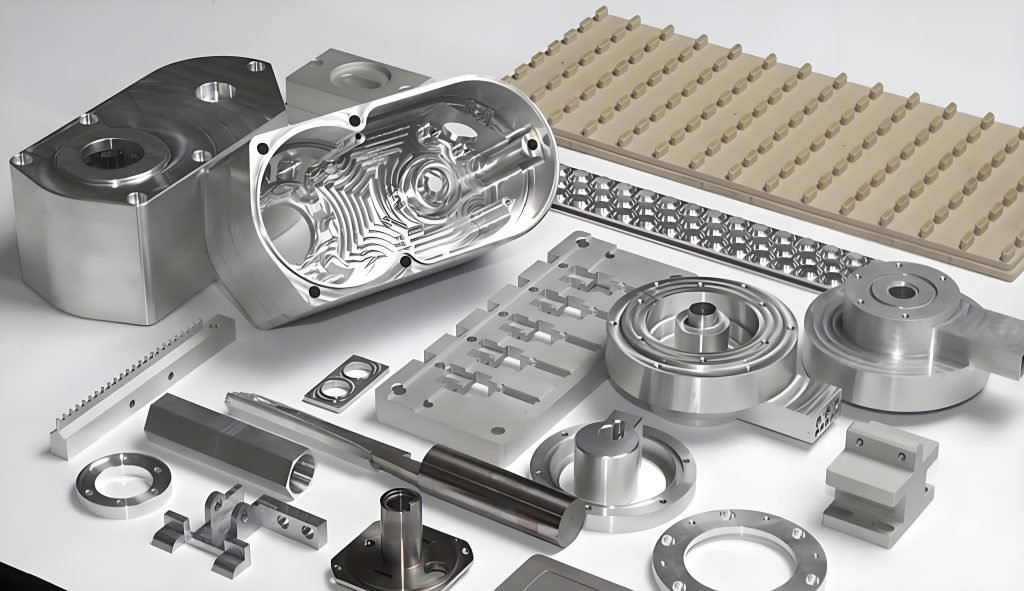
ISO2768 is widely adopted across different industries for its role in standardizing tolerances and improving manufacturing processes. Its application is particularly significant in sectors where precision and quality are paramount.
Aerospace and Automotive Engineering
In aerospace and automotive engineering, the ISO2768 standard ensures that parts are manufactured to precise tolerances, critical for safety and performance. The standard helps in maintaining consistency across components, which is vital for these industries.
Medical Device Manufacturing
Medical device manufacturing relies on ISO2768 for producing high-quality components. The standard’s tolerance specifications ensure that devices are manufactured with the necessary precision, directly impacting patient safety and device efficacy.
Consumer Electronics and General Machinery
Consumer electronics manufacturers utilize ISO2768 to maintain consistent quality across high-volume production runs. The medium “m” tolerance class is often used for electronic device housings and internal components to balance precision with cost-effectiveness. General machinery manufacturers apply ISO2768 standards to a wide range of components, ensuring reliable operation and maintenance. The standard facilitates global sourcing by ensuring dimensional compatibility across different regions.
The use of ISO2768 in these industries highlights its versatility and the value it brings to manufacturing processes. By standardizing tolerances, ISO2768 enhances product quality, facilitates global sourcing, and supports the production of complex components.
Conclusion: Mastering ISO 2768 for Precision Manufacturing
To ensure quality and precision, mastering ISO2768 is essential. This standard provides a framework that simplifies communication between designers and manufacturers while maintaining consistent quality. By understanding and implementing ISO2768, you can significantly reduce costs and improve production efficiency without compromising on quality.
ISO2768 offers a practical balance between specificity and simplicity, allowing you to focus on critical dimensions while relying on standardized tolerances for less critical features. Its flexibility makes it adaptable to various industries, from aerospace to general machinery. For CNC machining, ISO2768 provides clear guidelines that can be easily integrated into machining parameters, ensuring consistent results.
By applying ISO2768 principles, you’ll enhance your ability to produce high-quality parts that meet functional requirements consistently, achieving the right balance between precision and manufacturability.