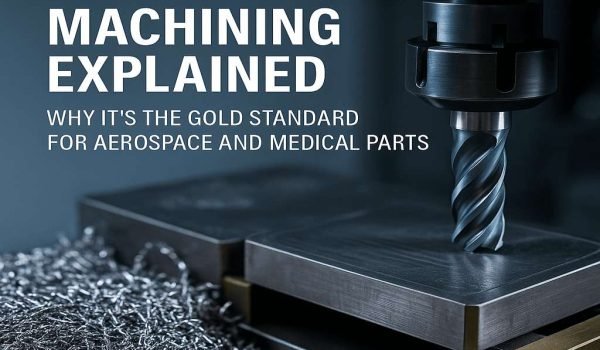
Titanium CNC machining is the pinnacle of precision manufacturing, combining one of the world’s strongest materials with cutting edge technology. Titanium’s unmatched strength to weight ratio (288 kN·m/kg), corrosion resistance and high temperature performance make it a must have in aerospace, medical and marine applications. It’s not an exaggeration to say titanium machining has become the gold standard for industries that demand perfection.
But achieving this level of precision isn’t easy. Titanium’s properties also make it hard to cut, shape and form. This is where modern CNC (Computer Numerical Control) machining comes in. It offers automated precision that meets the toughest quality standards. This article explains why titanium CNC machining is so important to modern engineering, the challenges manufacturers face and how innovators like Fecision are pushing the boundaries of what’s possible.
What is Titanium CNC Machining?
Titanium CNC Machining is the process of shaping titanium workpieces into complex and precise parts using computer controlled (CNC) machine tools. The process starts with a digital design, often created using CAD (Computer Aided Design) software, which is then converted into CAM (Computer Aided Manufacturing) instructions. These instructions guide cutting tools, spindles and other machine components with extreme precision.
Unlike manual machining, CNC machining eliminates human error and ensures consistent quality across multiple parts. This level of automation allows for tight tolerances, sometimes as small as 0.0001 mm, making it ideal for industries that require perfection, aerospace, medical and defense.
CNC titanium machining enables the creation of complex geometries that would be almost impossible to produce manually. This process is critical when manufacturing components such as aircraft engine blades, surgical implants and precision connectors.
How it differs from traditional machining methods
Traditional machining relies heavily on skilled technicians who manually operate cutting tools, whereas CNC machining uses pre-programmed computer instructions to control every machine movement. Conventional methods require one skilled operator per machine, whereas with CNC, one technician can monitor multiple machines at the same time.
Traditional methods are good for small quantity projects and prototypes due to lower setup costs, whereas CNC machining delivers precision, holding tolerances as tight as 0.00003937 inches (0.0001mm) or 1/500th of a human hair. This precision enables the creation of complex geometries that would be almost impossible to produce manually.
Why Titanium is Hard to Machine
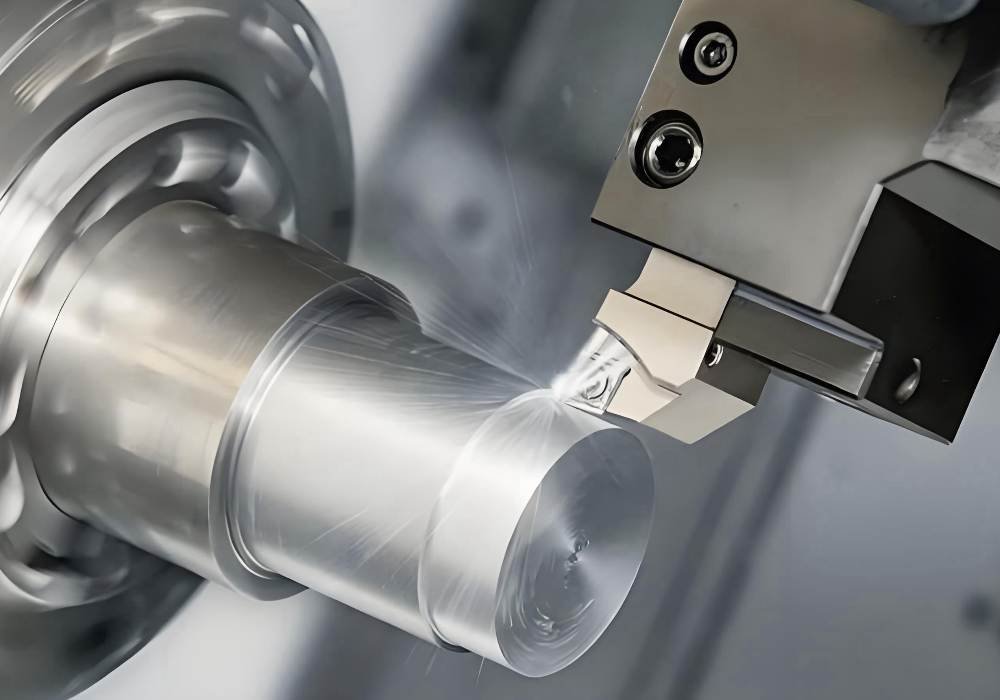
While titanium offers excellent performance characteristics, machining it is no easy task. Titanium’s low thermal conductivity (only 1/6th of steel) means heat generated during cutting stays near the cutting edge. This can cause tool wear and deformation if not properly managed.
Titanium has a high strength to weight ratio and maintains that strength at high temperatures. These properties make the material resistant to cutting and put stress on tools. Titanium also hardens quickly. Its surface becomes tougher during machining, making the process even more complicated.
In CNC machining titanium parts, three main challenges appear:
- Heat generation: Excessive heat can damage tools and distort the workpiece.
- Tool wear: Titanium’s high strength wears out tools faster than softer materials.
- Vibration and chatter: Titanium’s elasticity causes vibrations that reduce accuracy.
These issues require advanced techniques, specialized tools and optimized machining parameters to ensure consistent quality and tool life.
Titanium Grades Used in Aerospace and Medical Applications
Selecting the correct titanium alloy is vital for achieving performance goals. Below are the most widely used grades and their key characteristics:
| Grade | Composition | Applications | Key Properties |
| Grade 5 (Ti-6Al-4V) | 6% Al, 4% V | Aerospace structures, implants | High strength (131,000 PSI), heat resistant |
| Grade 23 (Ti-6Al-4V ELI) | Extra low interstitials | Medical implants | Superior biocompatibility, fracture toughness |
Grade 5 – The Workhorse Alloy
Accounting for over 50% of global titanium usage. Grade 5 is the most widely used titanium alloy. Grade 5 offers a perfect balance between strength, machinability, and thermal stability, making it the first choice for airframes, turbines, and implants.
Grade 23 – Medical Excellence
The “Extra Low Interstitial” version of Grade 5 contains fewer impurities (oxygen, nitrogen, carbon), enhancing biocompatibility and making it ideal for orthopedic and dental implants.
Advantages of CNC Machining Titanium for Aerospace
The aerospace industry requires lightweight, strong and corrosion resistant materials and titanium meets all these requirements. In fact, titanium can reduce aircraft structural weight by up to 40% compared to traditional materials.
Here’s why precision CNC-machined titanium parts are essential in aviation:
- High Strength-to-Weight Ratio: Perfect for reducing aircraft weight while maintaining structural integrity.
- Fatigue Resistance: Withstands repeated stress cycles, ideal for landing gear and engine parts.
- Heat Resistance: Performs well under high temperatures in jet engines and turbines.
- Corrosion Resistance: Excellent protection against moisture and salt in flight conditions.
Examples of CNC machining of titanium parts in the aerospace industry include compressor disks, turbine blades, landing gear components, and fasteners. Each of these components must meet exact tolerances, often as tight as ±0.0005 inches, to comply with standards such as AS9100 and ISO 9001.
Titanium CNC Machining in the Medical Industry
Medical professionals rely on titanium CNC machining as the foundation of modern healthcare innovations. Since the 1940s, titanium has been part of surgical and dental equipment, and has since expanded into countless applications throughout modern medicine.
Medical grade titanium is the most compatible metal with human physiology, accounting for nearly 80% of modern medical equipment. This amazing material forms a protective oxide layer that prevents corrosion at body pH levels, so implants can stay functional for 20+ years inside patients.
One special feature that makes precision CNC machined titanium parts essential for medical use is their osteoconductive property that promotes bone growth around implants for seamless skeletal integration. Grade 5 (Ti-6Al-4V) has better fracture resistance for dental implants, while Grade 23 has better biocompatibility with reduced impurities.
Medical device manufacturers produce a wide range of titanium components:
- Bone screws (tapered, straight or self-tapping)
- Dental implants and neurosurgical components
- Orthopaedic implants and joint replacements
- Pacemaker cases and endoscopic devices
Indeed, titanium is non-magnetic so it’s compatible with MRI machines, making it an ideal material for long-term implantable devices. Leading titanium CNC machining services are ISO 13485 certified and FDA compliant, ensuring medical components meet the strict quality standards of this life-critical industry.
Advanced CNC Technologies for Titanium Machining
Modern titanium machining requires specialized technologies that overcome the material’s inherent challenges. Today’s advanced systems provide solutions that address the unique properties of this difficult metal.
5-Axis Machining, High-Speed Milling and Precision Inspection
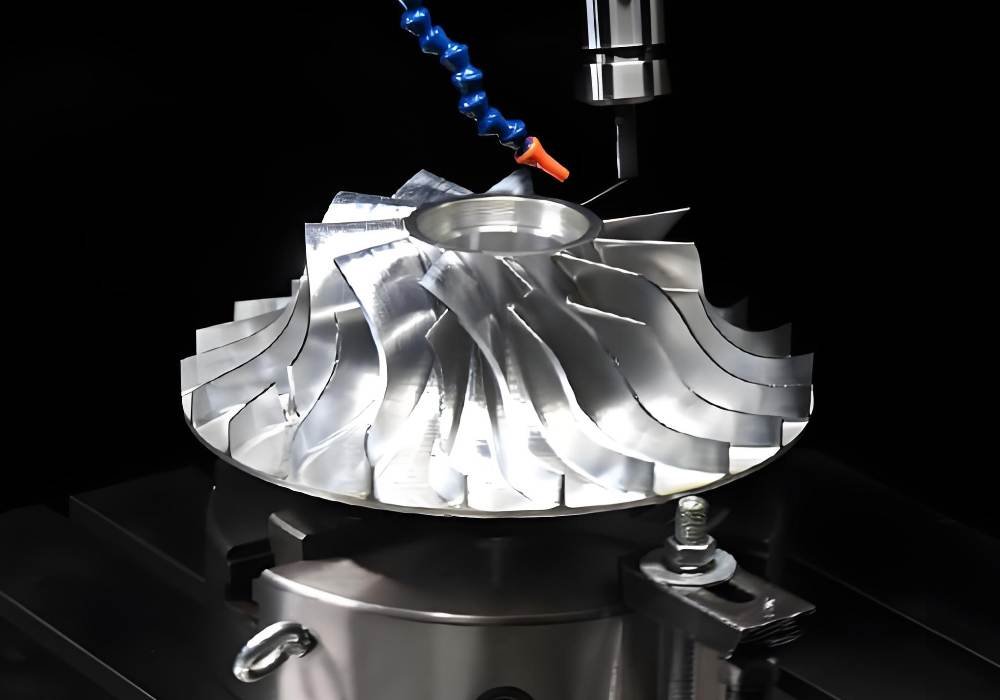
5-axis machining is a significant advancement in titanium CNC machining. This technology allows workpieces to move along 5 axes simultaneously, creating complex shapes that would be impossible with 3-axis machines. Fewer setups are required, reducing errors and improving efficiency.
High-pressure coolant systems greatly improve titanium machining performance by reducing heat generation, the biggest challenge in working with this metal. Meanwhile, advanced inspection capabilities can achieve tolerances as tight as 0.0005″, ensuring critical components meet strict requirements.
The Importance of CAD/CAM Integration
CAD/CAM integration is crucial for precision cnc machined titanium parts.
- CAD (Computer-Aided Design) is used to design the part digitally.
- CAM (Computer-Aided Manufacturing) turns that design into machine commands that guide cutting tools.
When CAD and CAM work together, the process is faster, more accurate and more efficient. It reduces waste, saves time and ensures every titanium part meets tight tolerances and quality standards.
Titanium CNC Machining with Automation and AI
Top China titanium CNC machining suppliers like Fecision use automation and artificial intelligence (AI) to improve production quality and efficiency.
These technologies help:
- Predict when machines need maintenance before problems occur* Automatically adjust cutting speeds and tool paths in real-time
- Collect and analyze data to improve accuracy and reduce errors
Fecision ensures each titanium component is made with high precision, consistent quality and maximum efficiency by combining automation and innovation. This advanced approach helps them stay ahead in the competitive titanium CNC machining services.
Quality Control and Precision Standards
Quality control is the foundation of successful titanium CNC machining services. Every part must meet industry standards to guarantee safety, performance and durability. Manufacturers use advanced inspection tools to check dimensions, surface finishes and overall accuracy.
Inspection Methods for Precision CNC Machined Titanium Parts
Modern tools used to check accuracy and finish:
- Coordinate Measuring Machines (CMM): Measure parts with extreme accuracy up to ±0.0008mm using ruby-tipped probes.
- Surface Profilometers: Measure surface smoothness or roughness of a part, roughness values from Ra 0.02 to 1.6 μm.
- Optical Inspection Systems: Non-contact systems use cameras and lasers to inspect parts up to 50 times faster than manual methods, ideal for large production runs.
International Certifications and Standards
All aerospace and medical components must meet global standards to ensure safety and reliability. Some key certifications:
- ASTM B265: Titanium sheet and plate quality standards.
- ISO 5832-3: Titanium used in surgical implants requirements.
- AS9100: Aerospace manufacturing quality certification.
- ISO 13485: Medical device manufacturing certification.
These certifications confirm that CNC machining titanium parts suppliers follow the highest precision and safety standards.
Fecision’s Quality Commitment
At Fecision, every titanium component is inspected rigorously. Our ISO 9001 certified quality system includes optical inspections and hardness testing to verify precision. Our experts work with tolerances as tight as ±0.01 mm to ensure each part meets aerospace and medical standards.
With precision manufacturing, automation and quality control, Fecision is a trusted partner among China titanium CNC machining suppliers. We deliver titanium components for demanding industries.
China’s Titanium CNC Machining Leadership
In recent years, China titanium CNC machining manufacturers have become global leaders in producing high-quality titanium components at competitive prices. We deliver precision and efficiency by combining advanced automation, AI-powered production lines and strict quality standards.
Companies like Fecision have become trusted partners for global clients in aerospace, medical and industrial sectors. Our facilities house state-of-the-art 5-axis CNC machines, advanced cooling systems and precision measuring equipment, all designed to handle titanium’s challenges.
Choose Fecision for Titanium CNC Machining Services
Choosing the right titanium CNC machining services provider is crucial. The wrong partner can result in wasted materials, inconsistent tolerances or costly production delays. Fecision stands out due to its in-depth expertise in addressing titanium’s unique challenges.
Here’s why Fecision is a preferred CNC machining titanium parts supplier:
Specialized Equipment: Multi-axis machines designed specifically for titanium.
Experienced Engineers: Experts who know how to manage heat buildup, vibration and tool wear.
Stringent Quality Control: ISO 9001 and AS9100 certified systems with full traceability from raw material to finished product.
Full Traceability: From raw titanium to finished part, every step is documented.
Design Support: Fecision works with clients to optimize part geometry for performance and cost efficiency.
Whether you’re developing aerospace-grade titanium engine components or precision medical implants, Fecision commitment to excellence ensures every part meets or exceeds your expectations.
Conclusion
Titanium CNC Machining is redefining what’s possible in high-performance manufacturing. Its unmatched combination of light weight, strength, corrosion resistance and biocompatibility makes it the go-to solution for industries that demand perfection. Today’s manufacturers can produce parts that perform flawlessly in the sky, in the ocean or inside the human body through modern CNC machining, titanium technologies, advanced automation and strict quality control.
If you’re looking for a reliable China titanium CNC machining supplier that combines innovation with precision? Fecision is your trusted partner. Their titanium CNC machining services deliver performance, consistency and quality that sets the gold standard from prototype to full-scale production.
Contact Fecision today to see how their titanium CNC machining solutions can elevate your next aerospace or medical project.