
Nearly 40% of measurement errors trace back to the wrong tip or lead, not the meter itself — a surprising gap that changes how you pick tools for electronics work. You’ll learn what a test probe is and how it links your meter and device under test so your readings are accurate and safe.
Multimeter probes can include retractable tips, fused protection, or alligator clips to match bench and field tasks. Small 1 mm tips reach dense boards, while fused options rated to 1000 V and 11 A add safety when you need it.
Good leads and accessories shape bandwidth and noise, and spring force affects contact reliability. You’ll see how voltage ratings, insulation choices, and rugged equipment help you measure with confidence and reduce rework on boards and terminals.
What Is a Test Probe and How It Functions in Electronic Test
A precise contact between the metal tip and the circuit point is what gives you a trustworthy voltage reading. In simple terms, a test probe is the handheld contact that touches the board. It guides the metal tip to a pad or pin so your meter sees the actual signal.

From probe tip to meter: how probes, leads, and adapters work together
The assembly starts at the tip, passes through a rigid insulated handle, then follows a flexible cable to the meter. Finely stranded conductors in the leads keep the cable supple for field work while maintaining low resistance. Insulation is rated above the meter’s maximum voltage to prevent breakdown.
Test lead vs. test probe: what you actually touch the circuit with
The probe is the contact interface; the lead is the conductor that carries the signal to your equipment. Adapters such as alligator or hook clips let you convert a handheld probe into a hands‑free connection. Choose straight or right‑angle ends based on panel access, and color code your leads for polarity to avoid mistakes when you take measurements.
Basic Parameters of Contact Probes You Should Evaluate
When you compare contact parts, look beyond appearance—electrical specs and mechanical wear tell the real story.
Electrical and safety ratings
Pick ratings that exceed your expected voltage and current. Confirm the voltage rating, continuity resistance range, and CAT safety category for your environment to keep work safe.
Impedance and bandwidth
Know the loading your probe adds. A 10× passive probe is typically ~10 MΩ // 12–15 pF after compensation. A 1× coax path can add ~100 pF per meter and about 1 MΩ, which loads small circuits.
Z0 (50 Ω) resistive divider designs trade heavier loading for multi‑GHz bandwidth. Always use the scope’s 1 kHz square wave to compensate passive probes for a flat response.
Tips, reach, and durability
Match tip geometry to the job: needle for tiny pads, hook or pincer for leads, lantern for posts, and piercing tips for harness jackets. Slim bodies and 1 mm tips suit dense electronics; long reach helps recessed terminals.
Check durability metrics: stable low milliohm contact resistance over thousands of cycles, robust insulation, and springs and barrels that hold force and survive repeated bends. Use a quality test lead with strain relief for long life.
Base Materials for Test Probes and Leads
Material choices for contacts and cables shape how well you capture signals and how long your gear lasts. Pick cores and jackets that match your accuracy, spring feel, and safety needs so your measurements stay reliable in the field.
Conductive cores: copper alloys, beryllium copper, brass, and stainless steel
Copper alloys and beryllium copper give low resistance and strong spring action for consistent contact. Use these where low voltage drop and repeatable force matter.
Brass and stainless steel add wear resistance for harsh environments. Choose harder metals when tips will see abrasion or repeated insertion cycles.
Insulation and jacketing: silicone, double insulation, and shielded coax
Leads usually use finely stranded wires inside silicone jackets for flexibility across temperatures. Double insulation adds visible protection for higher voltage work and rugged industrial use.
When signal integrity matters, shielded coax cable reduces noise and sets predictable capacitance for scopes and sensitive meters. Match insulation voltage ratings to the expected exposure and pick jackets that resist oils and abrasion.
Plating Choices for Test Probes and Why They Matter
Finishes on probe tips change how reliably you carry low‑level signals and how long the tip lasts under repeated use.
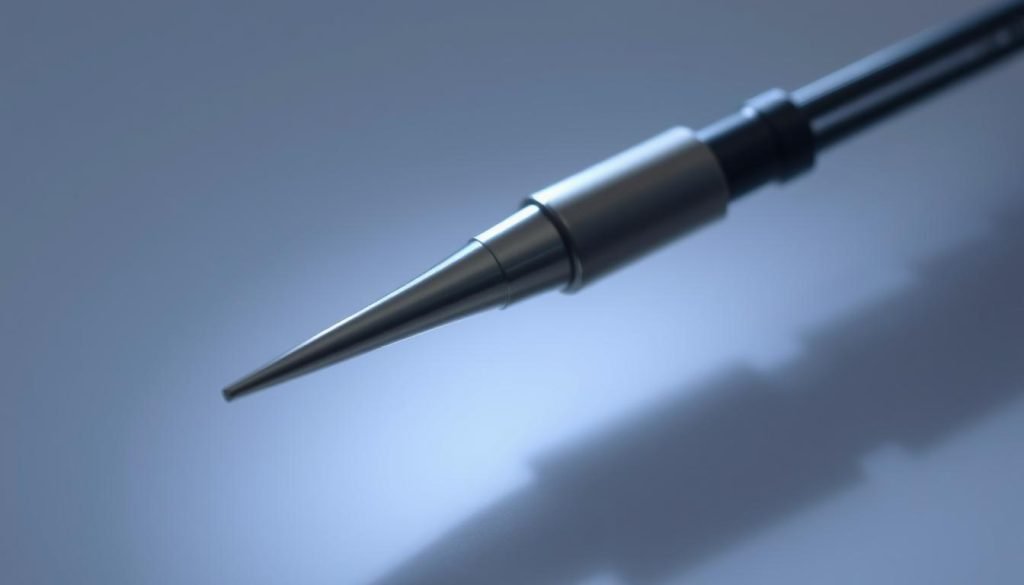
Gold for low resistance and corrosion resistance
Gold plating keeps contact resistance low and stable. That makes gold ideal when you measure small signals or touched pads that may have light oxidation.
Gold is soft, so manufacturers often limit thickness to the contact area to control cost while preserving micro‑contact performance.
Nickel and palladium systems for wear and cost balance
Nickel underplates add hardness and protect base metals from abrasion. A palladium top layer increases wear resistance and reduces fretting on solder‑coated pads.
Mixing finishes—gold where the signal matters, nickel where structure takes wear—extends life and controls parts expense.
Check plating thickness, adhesion, and resistance to your cleaning solvents. For high cycle fixtures, plan simple replacement intervals and document stacks so your team orders consistent parts and keeps measurements reliable.
Test Probes: Types and Applications
Choosing the right contact and lead style shapes how quickly and safely you can gather measurements across panels and boards.
Multimeter sets and lead accessories
Multimeter kits pair modular test leads with banana plugs and an array of clips for the meter end. Use retractable tips and hook or pincer clips for component leads, and alligator clips for bus bars and large lugs.
Pick a test lead set with the right length and strain relief so your wiring stays tidy between bench and field.
Voltage and scope solutions
Voltage probe sets include passive 1× and 10× options, active and differential versions, and Lo‑Z types for 50 Ω systems. Shielded cable and short ground accessories keep scope probes from adding noise to sensitive electronics.
Current clamps and logging
For power work, choose current probes or flexible clamps that cover AC and DC. iFlex-style clamps handle high currents and pair with data loggers for long captures without heavy cabling.
Fixture contacts and high-throughput arrays
Pogo pins in bed‑of‑nails fixtures deliver repeatable contact across many nodes. Use probe set arrays when you need fast, consistent connections in production or service fixtures.
Specialty items: safety and hybrids
Specialty options include fused test probe set models rated to 1000 V and 11 A for added safety, insulation‑piercing clips for jacketed wires, and temperature accessories that add thermocouple or RTD inputs.
Processing Techniques for Precision Test Probes
Manufacturing accuracy starts long before final assembly; it begins at the CNC cut and the heat‑treat oven. Controlled shaping, thermal cycles, plating, and calibration form a chain that gives you consistent contact, low resistance, and predictable life for each probe set.
Precision machining and forming of barrels, plungers, and tips
Mills and Swiss lathes control tip geometry to land reliably on small pads and pins. Tight tolerances reduce wobble and wear so each part repeats its contact geometry across thousands of cycles.
Heat treatment and spring tuning
Thermal processing sets hardness, and spring tuning shapes the force curve across working travel and over‑travel. That ensures stable, low‑milliohm connections even when mechanical tolerances stack up.
Plating and surface prep for adhesion and wear
Clean surfaces and staged plating layers maximize adhesion and hardness. The result is low contact resistance with minimal transfer films on PCB finishes, extending time between replacement and service.
Quality and calibration checks
Manufacturers verify bandwidth and compensation on scope probes and each voltage probe using a 1 kHz square wave. They keep ground pigtails short, control cable capacitance (≈90 pF/m), and confirm passive 10× behavior (~10 MΩ // 12–15 pF). Safety regimes include dielectric checks and fused element validation to meet 1000 V/11 A and high interrupt ratings.
Incoming and final inspections log dimensions, spring force, and continuity. Traceability and documented replacement intervals help you maintain measurement accuracy and field safety over the life of your parts.
Selecting the Right Probe, Leads, and Accessories for Your Measurement

Match your probe and lead choice to the job environment to cut errors and speed up troubleshooting. Start by listing the use and hazards you expect, then pick parts that meet those needs.
Match use case: bench, industrial, automotive, HVAC
For electronics benches, choose slim tips, shielded cable, and a compact lead set to reduce noise and reach tight pads.
Industrial power work needs rugged assemblies with high CAT ratings and fused protection for 1000 V, 11 A fault coverage. Automotive jobs favor back‑probe pins and insulation‑piercing clips for sealed connectors. HVAC combines electrical checks with temperature accessories, so include thermocouple adapters.
Safety first: fused elements, CAT ratings and insulation
Put safety at the top. Verify CAT ratings and choose fused options where energy is high. Use probe guards and double insulation to protect you during live use.
Adapters, cables, and length: reach, flexibility, and noise immunity
Pick adapters that stabilize contact: hook or pincer clips for small leads, alligator clips for lugs, and back‑probe pins for connectors. Keep a test lead kit with common tips and a spare for wear items.
Use the shortest practical cable length to lower capacitance. Shielded leads and voltage probe sets with MHz headroom improve scope probes performance. Carry flexible iFlex current accessories for power logging and modular accessories so you can swap between meter and scope quickly.
Fecision: Custom Test Probes for Your Needs
Custom contact assemblies let you target durability and signal integrity where standard kits fall short. You get parts specified for your application, from micro 1 mm tips to fused options rated for 1000 V, 11 A and high IR levels.
Design: materials, plating, tips, and springs
Work with Fecision to pick BeCu, brass, or stainless cores and gold, nickel, or palladium stacks to match life and contact resistance. Choose needle, hook, pincer, lantern, or piercing tips and set spring force with defined travel so each contact hits low milliohm targets without damaging pads.