Have you ever wondered what makes polyvinyl chloride (PVC) so versatile in manufacturing applications, from construction to healthcare products?
The answer lies in its unique thermal properties, particularly its melting
Understanding the melting behavior of PVC is crucial for effective processing and manufacturing. As a widely used thermoplastic polymer, PVC’s amorphous nature gives it complex thermal behavior, making its melting characteristics particularly important.
Manufacturers need to grasp these properties to optimize processing conditions, ensure product quality, and maintain safety standards. In this article, we’ll explore the fundamental properties of PVC, its melting characteristics, and factors affecting its thermal behavior.
Understanding PVC Material Properties
To effectively work with PVC, it’s crucial to understand its material properties. PVC, or polyvinyl chloride, is a versatile thermoplastic used in a wide range of applications, from construction to consumer products.
Physical and Chemical Composition of PVC
PVC is composed of repeating vinyl chloride monomers (C2H3Cl)n, with approximately 57% of its mass being chlorine. This unique composition gives PVC its distinct properties compared to other thermoplastics. The physical properties of PVC include a density of 1.3-1.45 g/cm3 for rigid PVC and 1.1-1.35 g/cm3 for flexible PVC.
| Property | Rigid PVC | Flexible PVC |
|---|---|---|
| Density (g/cm3) | 1.3-1.45 | 1.1-1.35 |
| Chemical Resistance | Excellent | Excellent |
Crystallinity and Structure
PVC exhibits an amorphous structure with some degree of crystallinity, which significantly influences its thermal behavior and processing characteristics. The molecular weight of PVC resin directly impacts its mechanical properties, with higher molecular weight resulting in better mechanical strength, cold resistance, and thermal stability.
Understanding these fundamental material properties is essential for properly manipulating PVC during processing and achieving desired product characteristics. You can adjust the material’s crystallinity through various compositions and processing methods, allowing manufacturers to create products with specific physical properties.
What is the Melting Point of PVC?
PVC’s melting behavior is complex due to its amorphous nature, making its “melting point” a temperature range rather than a single value. Unlike crystalline polymers with distinct melting points, PVC is primarily amorphous.
Defining Melting Point for Amorphous Polymers
For amorphous polymers like PVC, the melting point is more accurately described as a softening or processing temperature range. This range is critical for processing techniques such as extrusion and injection molding.
PVC Melting Temperature Range
The melting temperature range for PVC typically falls between 160°C and 210°C, with most commercial formulations beginning to soften around 170-185°C.
| Temperature Range (°C) | Description |
|---|---|
| 160-210 | Melting temperature range for PVC |
| 70-90 | Glass transition temperature (Tg) range for PVC |
| 170-185 | Softening temperature for most commercial PVC formulations |
Glass Transition Temperature vs. Melting Point
The glass transition temperature (Tg) of PVC, ranging between 70°C and 90°C, is another critical thermal parameter. Understanding the distinction between Tg and melting point is crucial for PVC processing. Below Tg, PVC is rigid; above Tg but below the melting range, it’s flexible but not moldable; within the melting range, it becomes processable.
Factors Affecting the Melting Point of PVC
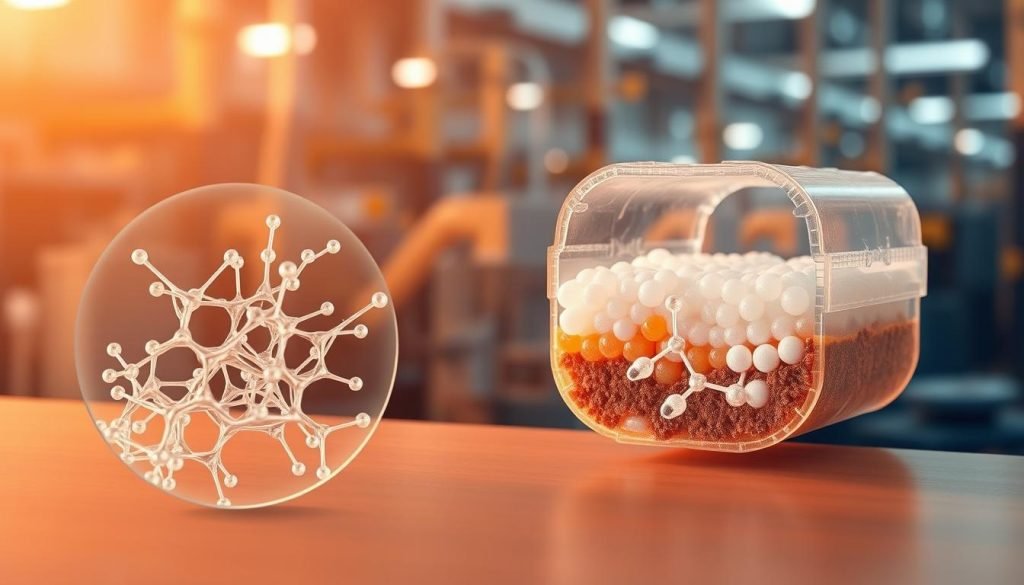
PVC’s melting point is not a fixed value; it varies based on several critical factors. Understanding these factors is essential for optimizing PVC processing and manufacturing.
Molecular Weight and Polymer Chain Length
The molecular weight of PVC significantly impacts its melting behavior. Higher molecular weight PVC requires higher processing temperatures due to increased entanglement between polymer chains. The longer the polymer chains, the more thermal energy is needed to achieve sufficient mobility for processing.
Impact of Additives and Plasticizers
Additives play a crucial role in modifying PVC’s thermal properties. Plasticizers, in particular, reduce intermolecular forces between polymer chains, lowering both the glass transition temperature and processing temperature of PVC. The addition of plasticizers can reduce the processing temperature by 30-40°C.
Effect of Stabilizers on Thermal Properties
Heat stabilizers are essential additives that prevent thermal degradation during processing. They allow PVC to be processed at temperatures that would otherwise cause decomposition, ensuring the material maintains its desired properties.
Rigid vs. Flexible PVC: Thermal Property Differences
You need to consider the thermal property differences between rigid and flexible PVC to ensure proper material selection and processing. The distinction in their thermal properties stems from differences in their formulation, particularly the presence of plasticizers in flexible PVC.
Thermal Characteristics of Rigid PVC
Rigid PVC, known for its strength and durability, has a higher glass transition temperature (typically 80-85°C) and requires higher processing temperatures (around 190-205°C). Its thermal characteristics include a higher heat distortion temperature and better dimensional stability at elevated temperatures. However, it has a narrower processing window due to its proximity to decomposition temperature.
How Plasticizers Affect Melting Behavior in Flexible PVC
Flexible PVC, made flexible by the addition of plasticizers, exhibits substantially different thermal behavior. The plasticizers increase the free volume between polymer chains, reducing intermolecular forces and lowering both the glass transition temperature and processing temperature. As a result, flexible PVC has a lower softening point and a broader processing temperature range, making it easier to process but reducing its heat resistance compared to rigid PVC.
| Property | Rigid PVC | Flexible PVC |
|---|---|---|
| Glass Transition Temperature (°C) | 80-85 | Lower due to plasticizers |
| Processing Temperature (°C) | 190-205 | 150-170 (with high plasticizer content) |
| Heat Distortion Temperature | Higher | Lower |
Comparison of PVC Melting Point with Other Thermoplastics
Comparing the melting points of PVC with other thermoplastics reveals its unique processing and application advantages. PVC’s melting point range of 160-210°C positions it in the mid-range of common thermoplastics, offering a balance between processability and thermal resistance.
PVC vs. Polyethylene (PE)
Polyethylene (PE) has a lower melting point than PVC, with LDPE melting around 105-115°C and HDPE around 130-137°C. This makes PE easier to process but less heat-resistant in applications.
PVC vs. Polypropylene (PP)
Polypropylene (PP) melts at approximately 160-170°C, similar to the lower end of PVC’s melting range. However, PP has better heat resistance (up to 160°C) compared to PVC’s service temperature limit of about 80°C.
PVC vs. Polystyrene (PS)
Polystyrene (PS) has a melting point around 240°C but softens at much lower temperatures (glass transition around 100°C), making its practical processing temperature range comparable to PVC.
PVC Processing Methods Based on Thermal Properties
PVC processing methods are heavily influenced by its thermal properties, which determine the material’s behavior during manufacturing. The thermoplastic nature of PVC allows it to be reshaped under heat and regain its solid structure upon cooling, making various processing techniques possible.
Extrusion Processing
Extrusion is one of the most common methods for PVC manufacturing. The material is heated to its processing temperature, typically between 170-195°C, and forced through a die to create continuous profiles like pipes, window frames, and siding. Careful temperature control across multiple heating zones is crucial to ensure PVC reaches proper plasticity without approaching decomposition temperatures.
Injection Molding
Injection molding of PVC requires precise thermal management. The material is heated to 180-200°C before being injected into cooled molds (20-40°C) to rapidly solidify into complex shapes. High pressure (typically 500-1000 bar) allows PVC to fill intricate mold details, but also generates shear heat that must be accounted for in temperature settings to prevent degradation.
Calendering and Other Techniques
Calendering is often used for producing PVC sheets and films. The heated material (170-180°C) is passed through a series of heated rolls to achieve precise thickness and surface finish. Other techniques include blow molding, thermoforming, and rotational molding, each requiring specific temperature profiles optimized for PVC’s thermal behavior. Cooling rate is a critical parameter across all methods, affecting crystallinity, shrinkage, and final mechanical properties.
Applications of PVC Based on Melting Point Characteristics
The unique thermal characteristics of PVC enable its use in numerous applications, including construction, healthcare, and consumer products. You can leverage these properties to create a wide range of products that benefit from PVC’s durability, flexibility, and resistance to chemicals.
Construction and Building Applications
PVC’s thermal properties make it an ideal material for construction and building applications. PVC pipes and fittings dominate the plumbing market, accounting for 75% of sewer applications in the US, due to their precise extrusion and service temperature range (-15°C to 60°C), which provides excellent durability in varied climates. You can also find PVC used in window profiles and siding, where rigid PVC formulations are processed at higher temperatures (190-205°C) to achieve structural integrity and weather resistance.
Medical and Healthcare Uses
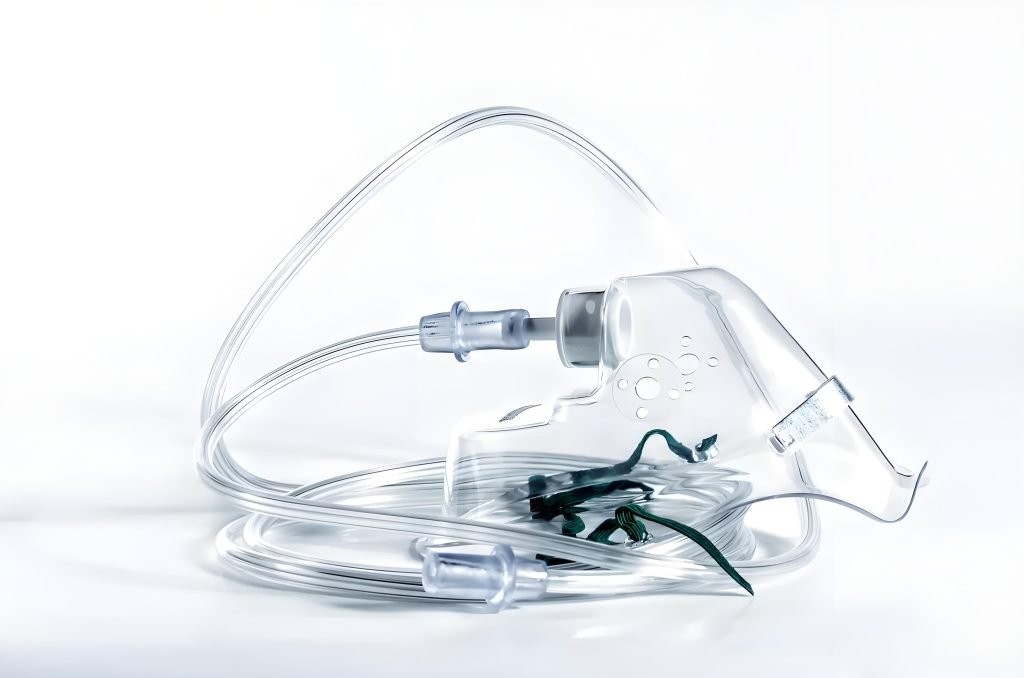
In medical and healthcare applications, PVC’s processing temperature allows for the production of clear, flexible products with precise dimensions and excellent sterilization capabilities. Medical tubing, blood bags, and IV containers benefit from PVC formulations that can be processed at controlled temperatures to ensure product quality and biocompatibility. You can rely on PVC for producing medical devices that require clarity, flexibility, and precision.
Consumer Products and Packaging
Consumer products and packaging applications often utilize PVC processed at various temperature ranges depending on the required flexibility and clarity. Blister packaging for pharmaceuticals, for example, leverages PVC’s ability to be thermoformed at specific temperatures (150-170°C) to create precise cavities while maintaining transparency and barrier properties. Vinyl flooring production also benefits from calendering at carefully controlled temperatures (170-180°C) to create products with specific wear resistance, thickness uniformity, and surface textures.
By understanding and leveraging PVC’s melting point characteristics, you can tailor products for specific applications, achieving desired performance characteristics through adjusted formulations and processing conditions.
Safety Considerations Related to PVC Melting Point
PVC processing involves unique safety challenges due to its melting point and decomposition temperature proximity. The softening point of polyvinyl chloride resin is close to its decomposition temperature, making it critical to manage processing conditions carefully.
Thermal Decomposition Hazards
Thermal decomposition of PVC releases hydrogen chloride (HCl) gas, which is corrosive to equipment and hazardous to worker health. The autocatalytic nature of PVC degradation means that once decomposition begins, the released HCl can accelerate further breakdown, potentially leading to a rapid degradation cascade if temperature control is lost.
Safe Processing Temperature Ranges
To ensure safe processing, it’s essential to establish a temperature range that is typically 10-20°C below the point of rapid decomposition while still achieving adequate material flow. Modern processing equipment incorporates multiple safeguards, including precise temperature controls and automatic shutdown systems, to prevent overheating scenarios.
By understanding these safety considerations and implementing appropriate measures, you can minimize risks associated with PVC processing. This includes maintaining safe processing temperature ranges, utilizing proper ventilation systems, and training operators to recognize signs of thermal degradation.
Conclusion
Understanding PVC’s melting behavior is essential for optimizing its processing conditions and achieving high-quality products. The melting point of PVC plays a crucial role in its manufacturing process, directly impacting product quality and safety.
You can manufacture various products from PVC, ranging from rigid structures often used in construction to flexible medical devices that require precise dimensional control. Modern processing technologies continue to evolve, allowing for more precise temperature control and expanding the range of products that can be manufactured while maintaining high quality standards.