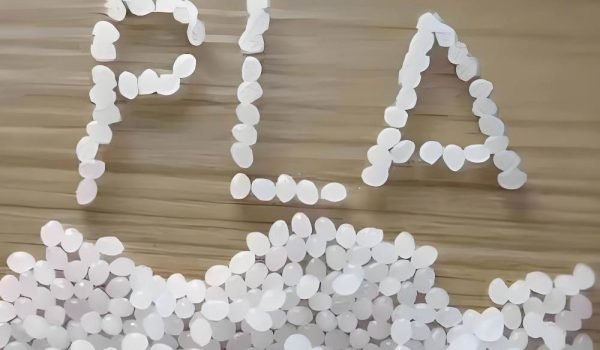
A bioplastic called Polylactic Acid, or PLA, had high consumption volume among bioplastic worldwide. Its importance is growing as a sustainable alternative to traditional plastics.
You might be wondering what makes PLA so popular. It’s produced from renewable resources like corn starch, making it a more sustainable alternative to conventional plastics like ABS or PET. Let‘s’ explore PLA’s unique properties, advantages, and limitations, and learn whether it’s the right material for your needs.
What is PLA Plastic?
PLA plastic, also known as polylactic acid, is a biodegradable thermoplastic made from renewable plant-based resources such as corn starch, sugarcane, and cassava. Unlike traditional petroleum-based plastics, PLA belongs to the category of bioplastics, which are designed to reduce environmental impact while maintaining useful mechanical properties.
Because PLA is derived from renewable resources and can break down under industrial composting conditions, it is often considered one of the most environmentally friendly plastics currently available. It is widely used in packaging, medical applications, and especially 3D printing, where it is one of the most commonly used materials due to its low processing temperature and ease of use.
How PLA Plastic Is Made
The manufacturing process generally includes the following steps:
- Fermentation – Plant sugars are fermented by microorganisms to produce lactic acid.
- Polymerization – The lactic acid molecules are chemically combined to form long polymer chains.
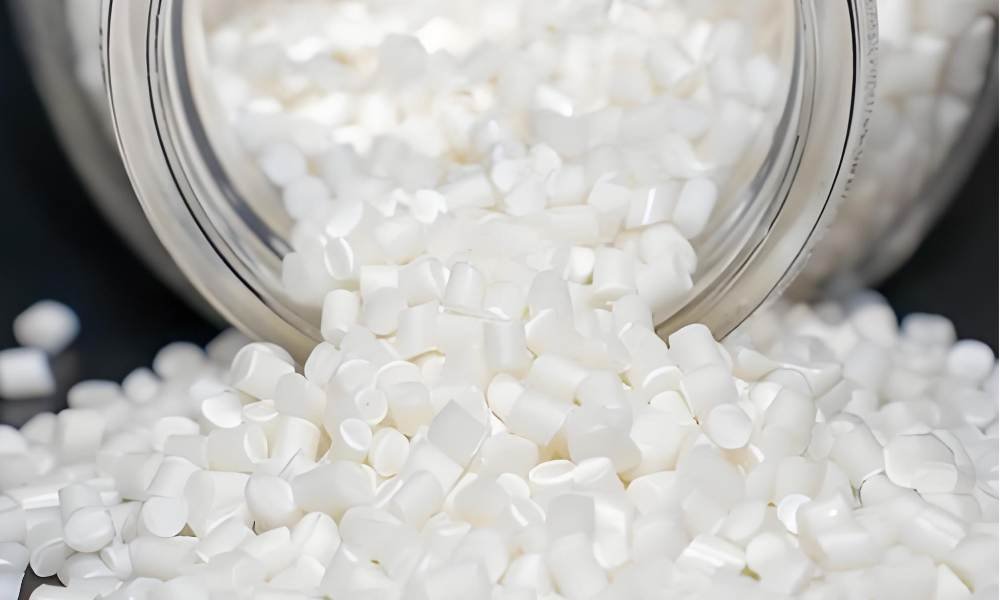
- Pelletization – The resulting PLA resin is converted into pellets that can be used in various plastic processing methods.
Most PLA is made from corn because it’s one of the cheapest and most available sugars globally. These pellets can then be processed through injection molding, extrusion, thermoforming, or 3D printing, making PLA a versatile material for many industries.
Properties of Polylactic Acid
PLA material offers a balance of mechanical strength, processability, and environmental benefits. Below are some typical properties of PLA plastic.
Physical Properties
PLA’s physical properties make it an attractive material for consumer products. Its density ranges from 1210-1430 kg/m³, and it often exhibits transparency and a natural glossy appearance. The glass transition temperature of PLA is between 60-65°C, while its melting temperature ranges from 130-180°C. These thermal properties significantly affect how PLA behaves during processing and use.
Mechanical Properties
PLA’s mechanical properties are between those of polystyrene and PET. It has good heat sealability but is very brittle, with less than 10% elongation at break. The material’s tensile strength is comparable to PET, but it has significantly less flexibility and impact resistance. You can modify PLA’s properties through additives, blending with other polymers, or processing techniques to enhance its performance for different uses.
PLA has relatively good stiffness and strength compared with many other biodegradable plastics. However, it also has certain limitations, such as relatively low heat resistance and moderate impact strength.
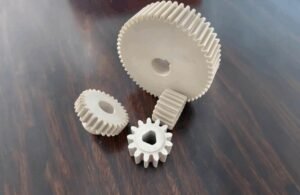
Because of its predictable processing behavior and stable dimensional properties, PLA can be used for manufacturing precision plastic parts through processes like injection molding.
Advantages of PLA Plastic
One of the main reasons PLA plastic has gained global popularity is its combination of performance and sustainability. Compared with many conventional plastics, PLA offers several advantages.
First, PLA is made from renewable resources, reducing dependence on fossil fuels. Corn starch and sugarcane are commonly used feedstocks for PLA plastic. PLA requires 65% less energy to produce than petroleum-based plastics and emits 68% fewer greenhouse gases, making it a more sustainable material option.
Second, PLA is considered biodegradable under industrial composting conditions, breaking down into harmless lactic acid, carbon dioxide, and water, which helps reduce long-term environmental pollution compared with traditional plastics.
Another advantage is its easy processing characteristics. PLA melts at relatively low temperatures, allowing it to be processed with lower energy consumption. This is particularly beneficial in manufacturing processes such as 3D printing and injection molding.
Finally, PLA is generally non-toxic and food-safe, which makes it suitable for applications such as food packaging, disposable utensils, and medical devices. Additionally, PLA is FDA-approved for food contact applications, making it ideal for food packaging.
Limitations of PLA Material
Despite its benefits, PLA plastic also has several limitations that designers and manufacturers should consider.
One of the main drawbacks is its low heat resistance. PLA begins to soften at temperatures around 55–65°C, which limits its use in high-temperature environments.
PLA can also be more brittle than many traditional plastics. While it has good tensile strength, its impact resistance is relatively low, which can lead to cracking under certain conditions.
Another limitation is that although PLA is biodegradable, it typically requires industrial composting conditions to break down effectively. In normal landfill environments, the degradation process can take much longer.
Because of these limitations, engineers often compare PLA with other materials such as ABS or PET when selecting the best plastic for a specific application.
Types of PLA and Processing Methods
To fully utilize PLA, it’s essential to comprehend its different types and how they’re processed. PLA can be divided into three main sub-families: PDLLA (poly DL-lactic acid), PLLA (poly(L-lactic acid)), and PDLA (poly(D-lactic acid)). These types have the same chemical makeup but differ in their 3-dimensional molecular structure.
Different Forms of PLA
The three main types of PLA are used in various applications based on their properties. PLLA is the most common form used in consumer applications and 3D printing due to its favorable properties. PDLA and PDLLA, on the other hand, have specific uses in medical and industrial applications where their unique characteristics are beneficial.
PLA Injection Molding and Manufacturing
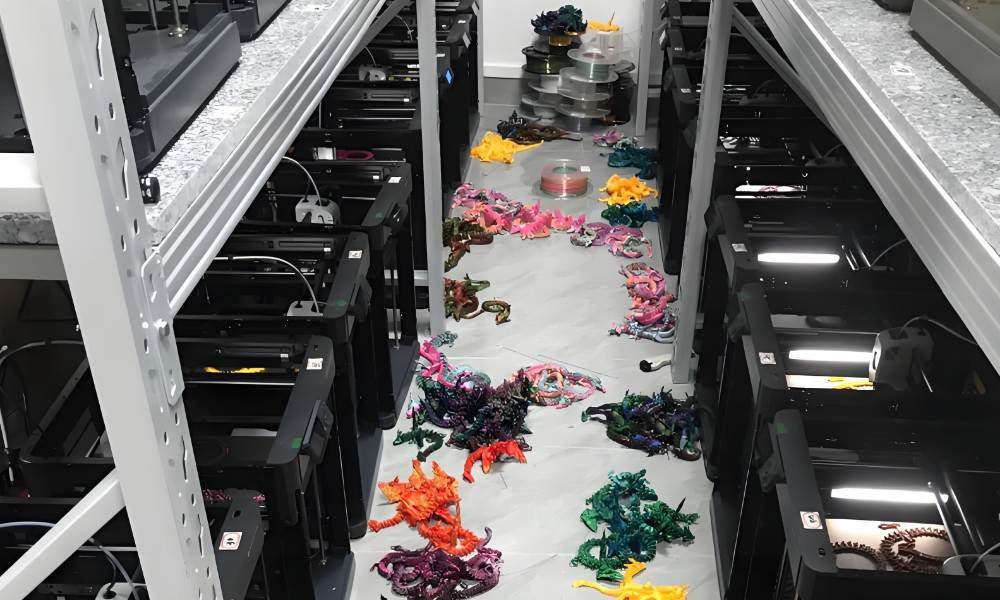
PLA can be processed using several methods, including 3D printing, casting, injection molding, extrusion, machining, and solvent welding.
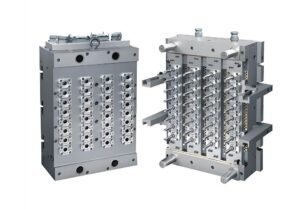
Among these methods, PLA injection molding is commonly used for producing precision plastic components in medium to high production volumes. Because PLA has a relatively low melting temperature, it can often be processed using standard injection molding equipment with minor adjustments.
Injection molding allows manufacturers to produce high-precision PLA plastic parts with consistent quality and repeatability. This process is commonly used for packaging components, consumer goods, and custom biodegradable products.
At Fecision, we provide professional plastic injection molding services for a wide range of thermoplastic materials, including PLA and other engineering plastics. Our manufacturing capabilities support both prototyping and large-scale production of custom plastic components.
Common Applications of PLA Plastic
Thanks to its sustainability and good mechanical properties, PLA plastic is used in a wide range of industries.
Packaging
PLA is widely used in food packaging and disposable products. Common examples include cups, food containers, and biodegradable cutlery. These products benefit from PLA’s transparency, safety, and environmentally friendly characteristics.
3D Printing
PLA is one of the most popular 3D printing filaments in the world. It melts easily, produces minimal warping during printing, and delivers smooth surface finishes. This makes PLA ideal for prototyping, educational projects, and consumer products.
Medical Applications
Polylactic acid is also used in the medical industry. Certain grades of PLA are used in surgical sutures, implants, and tissue engineering applications because they can safely degrade inside the body over time.
Agriculture
PLA materials are sometimes used in agricultural films and biodegradable plant supports, helping reduce plastic waste in farming environments.
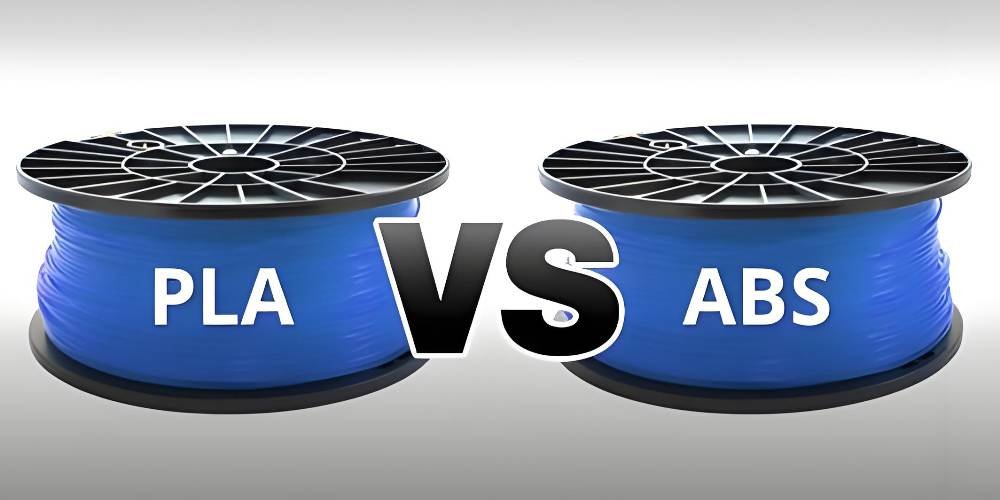
PLA vs ABS: What’s the Difference?
PLA and ABS are two of the most commonly used thermoplastics, especially in manufacturing and 3D printing.
PLA is a biodegradable plastic made from renewable resources, while ABS is a petroleum-based plastic known for its durability and higher heat resistance.
In terms of mechanical properties, ABS generally offers better impact resistance and higher temperature stability, making it suitable for more demanding mechanical applications.
However, PLA is easier to process and more environmentally friendly, which makes it a preferred choice for packaging, consumer products, and prototyping.
Choosing between PLA and ABS depends on the specific requirements of the application, including strength, heat resistance, and sustainability goals.
Biodegradability and Environmental Impact
PLA plastic’s potential to reduce plastic waste hinges on its biodegradability and the conditions required for it to break down. You should understand that PLA is generally considered compostable in industrial composting conditions, but not in home compost. The degradation process involves three mechanisms: hydrolysis, thermal decomposition, and photodegradation.
For PLA to biodegrade effectively, it requires temperatures above 60°C and high humidity, typically found in industrial composting facilities. This specificity in conditions often leads to misconceptions about PLA’s environmental benefits, as it won’t break down in home compost bins, oceans, or landfills under normal conditions.
The end-of-life options for PLA products include industrial composting, chemical recycling, and incorporation into existing recycling streams, though challenges exist. Emerging technologies in PLA recycling can convert used PLA back into its building blocks, potentially creating a closed-loop system.
FAQs About PLA Plastic
Is PLA plastic biodegradable?
Yes, PLA is considered biodegradable under industrial composting conditions, where high temperatures and controlled humidity allow microorganisms to break down the material.
Is PLA plastic safe?
PLA is generally regarded as non-toxic and food-safe, which is why it is widely used for food packaging and disposable utensils.
Can PLA be injection molded?
Yes. PLA can be processed using injection molding, extrusion, thermoforming, and 3D printing. Injection molding is commonly used for producing high-volume PLA plastic parts.
What products are made from PLA?
Common PLA products include food containers, disposable cutlery, 3D printing filaments, packaging materials, and certain medical devices.
Conclusion
PLA plastic, or polylactic acid, has emerged as one of the most important biodegradable plastics in modern manufacturing. Its renewable origin, good mechanical properties, and versatility make it suitable for a wide range of applications, from packaging and consumer goods to medical devices and 3D printing.
As demand for sustainable materials continues to grow, PLA is expected to play an increasingly important role in the plastics industry. Through advanced manufacturing technologies such as PLA injection molding, companies can produce high-quality plastic components while reducing environmental impact.
At Fecision, we offer professional plastic injection molding services for various materials, including PLA, helping customers develop custom plastic parts with precision, efficiency, and reliability.