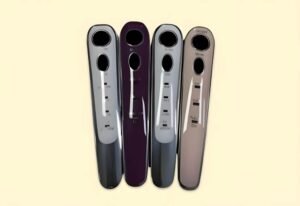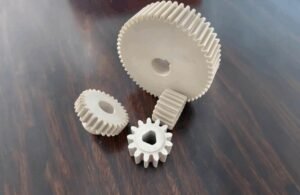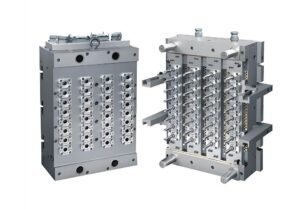

Surprising fact: many automotive connectors and household switch housings rely on a material that reaches near 200°C when reinforced, enabling short molding cycles and reliable performance.
You’re getting a concise guide to polybutylene terephthalate and why engineers pick it for repeatable, precise parts. This semi-crystalline engineering material dries quickly, crystallizes fast, and gives stable dimensions for tight-tolerance components.
We’ll define how it’s made from terephthalic acid and 1,4-butanediol, outline key properties like strength, dielectric performance, low moisture uptake, and heat resistance, and show common applications in electronics, automotive, and consumer goods.
What Is Polybutylene Terephthalate?
When you need stable, repeatable parts, polybutylene terephthalate is often the engineering polyester chosen for electrical and automotive uses. It is a semi-crystalline material that balances mechanical strength, electrical insulation, and reliable processing.
Chemically, the resin forms by reacting terephthalic acid with 1,4-butanediol. Through esterification and polymerization, long chain polymers with repeating terephthalate units develop. Those chains and aromatic rings give rigidity, good solvent resistance, and solid dielectric properties.
Compared with PET, which uses ethylene glycol in its backbone, this family of polyesters crystallizes faster. Faster crystallization means shorter injection molding cycles and better dimensional fidelity on complex geometries without special nucleating additives.
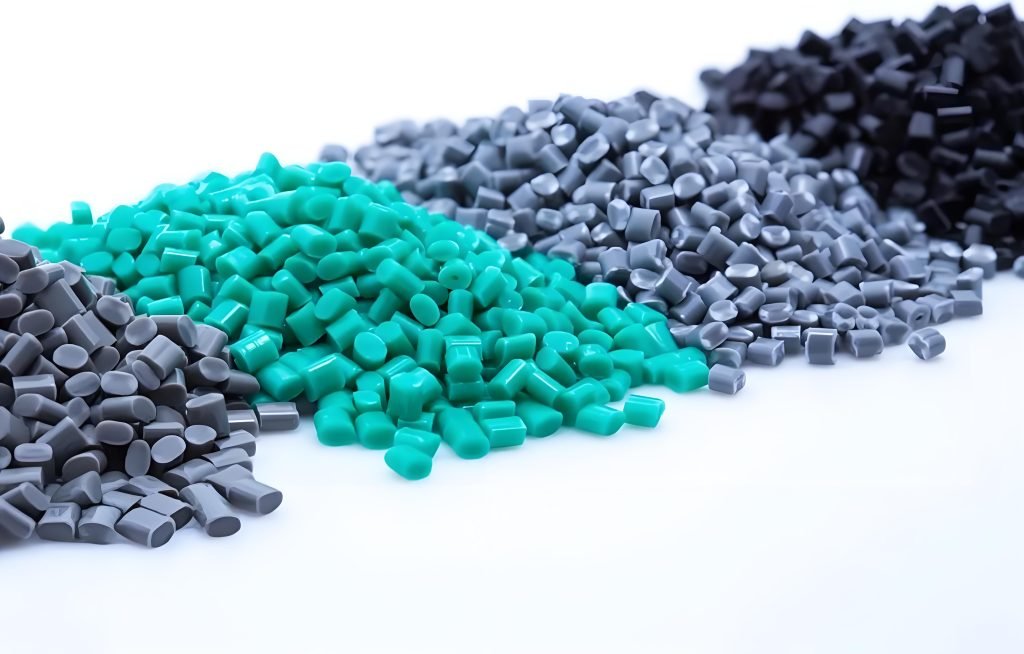
Types and Grades of Polybutylene Terephthalate
Choosing the right grade affects flow, strength, heat tolerance, and long-term resistance in finished parts.
Unfilled versus glass-fiber-reinforced
Unfilled polybutylene terephthalate gives excellent flow and a smooth surface for cosmetic parts and fine detail.
Glass-fiber-reinforced grades boost rigidity, tensile strength, and heat deflection. Reinforcement can raise strength up to roughly threefold, letting you reduce wall thickness while keeping performance.
Flame‑retardant, impact‑modified, and high‑cycle options
Flame‑retardant variants (often halogen‑free phosphorus systems) meet UL 94 and help you hit CTI, GWIT, and GWFI targets for electrical applications.
Impact‑modified grades preserve toughness for assembly or drop risks. High‑cycle formulations maintain short molding runs and consistent crystallinity for volume production.
Electrical and E&E optimized grades
For connectors and switch housings, select FR grades tuned for tracking and glow‑wire resistance. Stabilized blends add UV or hydrolysis resistance when parts see outdoor or humid use.
When uncertain, prototype with a neat grade and a mid‑glass FR variant to verify dimensional stability, dielectric clearance, and assembly fit before final grade choice.
Key Characteristics and Properties of Polybutylene Terephthalate
A concise look at core traits helps you match material properties to part function and processing.
Mechanical profile
You get a strong balance of strength, stiffness, and toughness suitable for clips, housings, and light gears. Creep resistance is good for snap fits and repeated assembly cycles.
Thermal behavior
Melting sits near 230–233°C and practical heat resistance is about 150°C in service. Glass-fiber reinforcement raises that continuous use temperature for hot environments.
Electrical and chemical performance
Dielectric strength and insulation are standout properties, and flame‑retardant grades help meet E&E tracking and glow‑wire targets.
Chemical resistance at room temperature covers fuels, oils, alcohols, many esters/ethers, diluted acids, and fats. Avoid strong alkalis and prolonged hot, humid exposure — ester chains can hydrolyze and reduce performance.
Moisture and dimensional stability
Low water uptake limits shrink variation and helps you hold tight tolerances in multi‑part assemblies. Compared with PET, expect faster crystallization and better impact with slightly lower rigidity.
PBT vs PET, PP, and PA66: Choosing the Right Engineering Plastic
Compare common engineering resins to pick the best fit for your part’s performance and processing needs.
PBT versus PET
When you need fast cycles and fine-detail fidelity, pbt (polybutylene terephthalate) often wins. It crystallizes faster than pet, which reduces cycle time and risk of splay in thin walls.
PET can offer slightly higher rigidity, but its slower crystallization may force longer molding runs or nucleating additives. Choose pbt for impact and tight tolerances; pick pet when stiffness is priority.
PBT versus PP
PP is lighter (0.89–0.91 g/cm3) and feels softer. If weight reduction is key, PP is compelling.
For higher rigidity and heat capability (~150°C service versus PP near 120°C), pbt is the better engineering choice for housings and E&E components.
PBT versus PA66
PA66 typically gives greater mechanical strength and higher heat performance when filled. It also shows good sliding and wear behavior for moving parts.
Use pbt when low water uptake, electrical insulation, and dimensional stability matter. Prototype both resins for sliding wear or high-temperature aging before final selection.
Processing Techniques for PBT Plastic in Injection Molding
Good processing starts with moisture control and clear temperature targets for reliable parts. Follow a short, repeatable checklist to reduce scrap and preserve electrical and heat resistance in finished components.
Always dry the resin to a moisture content ≤0.03% before molding. Use a desiccant or vacuum dryer at about 130°C for three hours or longer to prevent hydrolysis and chain scission from water and acid byproducts.
Set your melt near 240–250°C and keep mold temperatures at or above 40°C. These temperatures encourage uniform crystallization and stable dimensions, especially in thick bosses and ribbed areas.
Control fill speed and packing to minimize sink and warp. Because this grade crystallizes quickly, size gates to drive flow along main walls and avoid premature freezing in thin sections.
Vent cavities well, purge the barrel when switching colors or grades, and for glass-filled variants tune runners to limit fiber breakage. Finally, run post-mold conditioning tests if parts will face high heat and moisture in service.
Design Considerations to Maximize PBT Performance
Good geometry and gate strategy translate material properties into reliable, repeatable parts. Start with simple rules that convert thermal and flow behavior into design choices you can validate in tooling.
Wall thickness, ribs, and draft angles
Aim for uniform wall thickness to limit differential cooling and uneven crystallinity that cause warp in semi‑crystalline resins. Keep transitions gradual and avoid thick bosses that create sink.
Use ribs sized at about 40–60% of nominal wall thickness to add stiffness without heavy sections that trap voids. Fillet boss‑rib intersections to lower stress and keep strength after molding.
Provide 1–2° of draft per side, more for textured faces. Draft reduces ejection damage and eases removal when mold temperatures sit at or above 40°C for dimensional stability.
Insert molding and fiber orientation
For glass‑filled grades, align gates so flow direction gives stiffness where you want it. Expect anisotropic shrink and tune gate placement for predictable dimensions.
Preheat metal inserts when possible and use generous radii to prevent localized shrink gradients and cracking. Run flow simulation to preview fiber orientation, knit lines, and likely warp vectors before final tooling.
Advantages of PBT in Plastic Injection Molding
When you design for production, you want a material that pairs reliable performance with efficient molding. This engineering resin gives a useful mix of thermal stability, good surface quality, and predictable behavior on the press.
High heat resistance, color retention, and weatherability
The resin maintains useful performance near 150°C in service. Stabilized grades keep color and gloss even after outdoor exposure or elevated-temperature cycles.
It also stays tough down to about −40°C, so you get parts that resist cold impact in automotive and outdoor applications.
Excellent electrical insulation and chemical resistance
You benefit from strong dielectric strength and reliable insulation for connectors and switch housings. Flame‑retardant formulations can meet UL 94 and glow‑wire tests like GWIT and GWFI.
At room temperature the material resists oils, fuels, and many solvents, giving broad chemical resistance for industrial uses.
Short cycle times from quick crystallization
Fast crystallization cuts cooling time and raises throughput on high-volume runs. That shortens per-part cost and helps you hold tight tolerances across runs.
Glass-filled grades boost stiffness and heat performance, letting you reduce wall thickness without losing strength. Overall, the predictable process window makes this material a dependable choice for molding applications where yield and repeatability matter.
Limitations and Risks When Using PBT
Knowing where this terephthalate family struggles is as important as knowing its strengths. Use this section to identify risks and practical mitigation steps for your designs.
Hydrolysis in warm, humid conditions
The ester links in this terephthalate can break down with prolonged heat and water exposure. In warm, humid service, hydrolysis lowers molecular weight and cuts mechanical and electrical performance over time.
If your part sees continuous hot-water exposure above about 60°C, run accelerated aging tests and consider protective coatings or alternate materials.
Chemical and UV sensitivity
Avoid strong acids and strong bases; aggressive cleaners can attack the resin and reduce resistance. At room temperature many fuels and oils are acceptable, but hot alkaline cleaners are a risk.
Outdoor use needs UV stabilization. Like pet, unstabilized grades lose color and mechanical integrity under sunlight.
Warp risk in glass-reinforced grades
Glass fill raises stiffness but can increase warp if walls are uneven or fiber orientation is poor. Control gate placement, wall thickness, and drying content before molding to limit distortion.
When risk is high, validate with prototyping and compare alternative resins or stabilized blends for your applications and long-term properties.
Key Applications of PBT Plastic
Across electronics, automotive, and consumer markets, this terephthalate is chosen where repeatable performance matters. You get fast cycles, stable dimensions, and good dielectric strength that suit many high-volume applications.
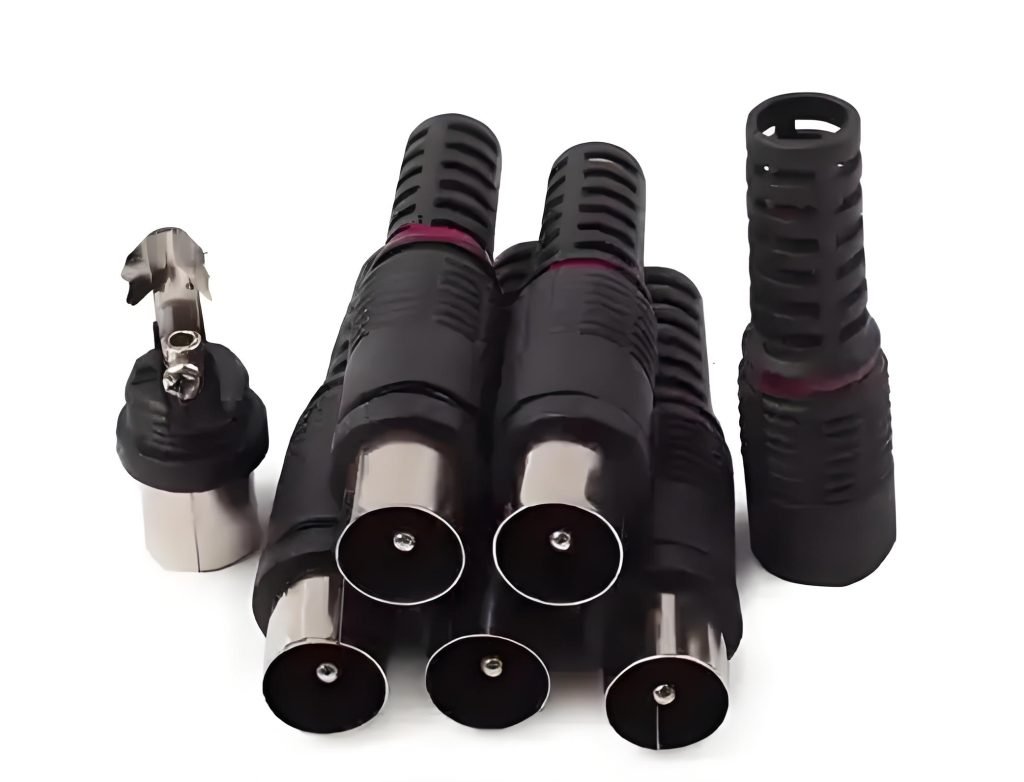
Electrical and electronics
Specify pbt for connectors, terminal blocks, headers, relay cases, and sensor housings. Its dielectric strength and tracking resistance help parts meet CTI, GWIT, and GWFI targets.
Thin-wall, high-pin-density connectors benefit from fast crystallization and low shrink, so you can pack features without long cycle penalties.
Automotive
In automotive use you’ll find plugs, ECU housings, covers, and small gears. Glass-filled grades raise heat resistance and stiffness for underhood service and harness connectors near hot components.
Industrial and consumer goods
Valve bodies, pump housings, wear strips, and precision gears rely on low friction and dimensional stability. High-end keycaps favor this resin over ABS for better wear and UV life.
Appliance parts around heaters and motors use flame‑retardant packages to meet glow‑wire and safety needs.
Textiles and fibers
As yarn, polybutylene terephthalate offers elasticity and chlorine resistance. That makes it a good choice for swimwear and sports garments where stretch and chemical durability matter.
PBT Plastic
This resin shines in designs that demand dielectric strength, dimensional control, and repeatable molding.
When you decide on a material, think about fit for function and production. Choose this option when tight tolerances, good electrical insulation, and repeatable cycles are priorities. It is a practical choice across many applications in electronics and automotive use.
Where it excels as a material choice
You get balanced performance for mechanical loads, electrical insulation, and useful heat resistance. Low moisture uptake preserves dimensions so assemblies remain reliable after humidity cycling.
Compared with pet in molding, this resin forms complex shapes more easily and without long cycle penalties. Glass‑filled grades increase stiffness so you can thin walls and save weight on structural features.
For harsher environments, pick stabilized or flame‑retardant grades to extend the service range. Overall, this engineering resin gives a cost‑effective mix of manufacturability, in‑service reliability, and a wide range of practical uses.
How to Choose the Right PBT Grade for Your Part
Start by matching the part’s duty cycle and environment, then narrow grade options by performance needs.
Balancing mechanical, thermal, and electrical needs
Begin with operating temperature and the load profile for your parts. For high stiffness and heat deflection, pick 20–50% glass‑filled grades. For snap fits or living hinges, choose unfilled or impact‑modified options.
Check electrical targets early. Specify CTI, GWIT, and GWFI requirements for E&E housings and select a flame‑retardant package to meet them. Many FR systems are halogen‑free, phosphorus‑based solutions that balance tracking resistance and dielectric strength.
Compliance, moisture, and injection alignment
If the part will face warm, humid service, use hydrolysis‑stabilized grades and run aging tests. Validate chemical resistance against fuels, cleaners, and any hot alkaline or acidic agents tied to your application.
Balance flow and glass loading so thin sections fill without high injection pressure or cosmetic defects. Finally, align your grade with melt, mold temperature, and drying protocol to assure repeatable cycles and consistent dimensions.
Sustainability, Safety, and Compliance Considerations
Sustainability and regulatory risks now shape how you choose engineering materials. Buyers in the electronics and automotive industry expect clear documentation on additive content and end-of-life options.
Recycling and feedstock routes
Biomass routes for terephthalic acid and 1,4-butanediol are progressing and can lower supply-chain emissions. Polyester polymers like polybutylene terephthalate also support chemical recycling when contamination is controlled.
Additives, flame retardants, and compliance
Select halogen-free flame-retardant packages to meet UL 94 without creating health concerns. Document additives for REACH, RoHS, and Proposition 65 and keep supplier change-control tight.
Operational safety and end‑use checks
Validate VOC and outgassing limits for enclosed electronics to protect optics and boards. Manage dryer exhaust and fumes at elevated heat to protect operators and comply with safety data sheets.
Design for disassembly, assess leachables for water-contact parts, and engage suppliers early about closed-loop or takeback pilots to improve lifecycle performance.
Conclusion
This guide closes by linking polybutylene terephthalate traits to practical choices for your next component. You get fast crystallization, stable electrical performance, and sound heat and chemical resistance for demanding E&E and automotive applications.
Design and processing matter: dry the resin, control melt and mold temperature, and plan geometry to limit warpage and hydrolysis. Specify grades for stiffness, flame resistance, or environmental stabilization to match service conditions.
Compare with PET and other polymers during prototyping to validate fit, and align compliance, tooling, and processing early to avoid late rework. As bio‑based feedstocks and recycling improve, the terephthalate chain chemistry offers clearer paths to circularity.
Use this checklist to select the right grade and injection window so you capture the material advantages and deliver reliable, cost‑effective parts.