What if a single material decision could make your parts last longer or fail sooner?
You’ll get a friendly, clear comparison that helps your choice without guesswork. This brief intro explains how two classic engineering plastics emerged and why their chemistry matters for real parts.
Both polymers date back to early synthetic fiber research and share strength, wear resistance, and semi-crystalline structure. One is made from caprolactam and melts near 215–220°C; the other uses adipic acid plus hexamethylene diamine and melts around 250–265°C.
That chemistry leads to practical differences in heat-age strength, abrasion resistance, moisture uptake, and mold shrinkage. Later sections map those properties to manufacturing, common applications, and reinforcement strategies so you can match material performance to your project’s needs.
Why Nylon Matters as an Engineering Plastic: Core Properties You Can Rely On
Choosing the right engineering plastic changes how reliably your part performs in the field. This group of semi-crystalline polyamides gives a balanced mix of strength, stiffness, and toughness for gears, bearings, and housings.
Strength, toughness, and abrasion resistance in demanding environments
You can expect good wear resistance and low friction that help moving parts run quieter and last longer. Mechanical damping reduces vibration, while hardness and rigidity resist deformation under repeated load.
Reinforced grades, especially glass-fiber filled variants, boost stiffness and cut creep so tight fits stay accurate over time.
Moisture absorption and its impact on dimensional stability
Moisture uptake is a real factor: these polymers absorb water, which raises ductility but lowers stiffness and can change dimensions. In humid or wet environments, unfilled parts may drift from original tolerances.
Plan for both temperature and humidity when setting tolerances, or specify conditioned or reinforced grades to maintain stability and electrical performance in service.
Meet the Materials: Introduction to PA 6 and PA 66
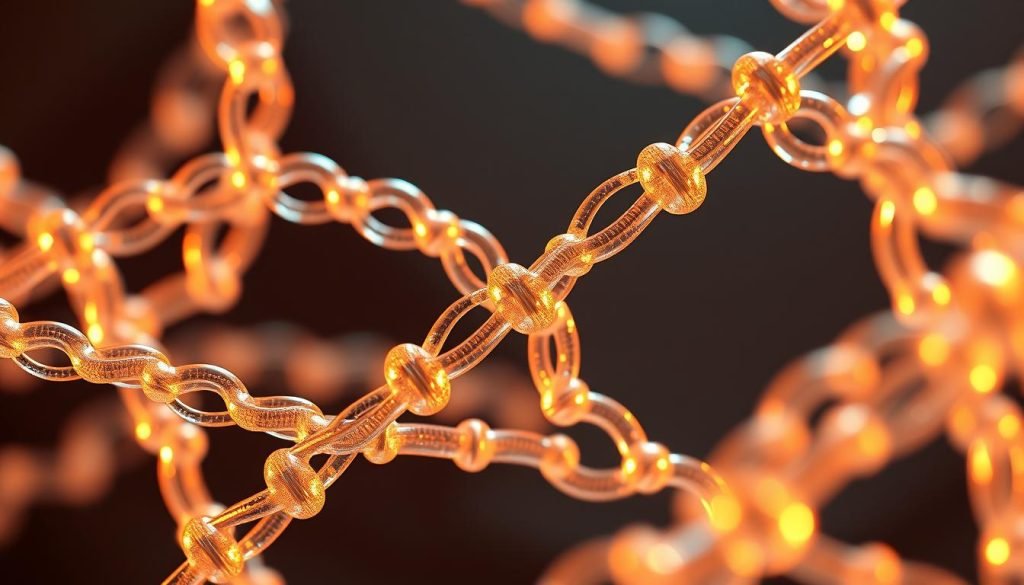
Understanding the molecular recipe will quickly show why these two polyamides behave so differently in service.
Chemistry and carbon atoms: single monomer vs. two-monomer route
One resin forms by ring-opening a single monomer called caprolactam, which contributes six carbon atoms to its repeat unit. The other is made by condensing adipic acid with hexamethylene diamine; each monomer brings six carbon atoms, creating a repeating unit with paired segments.
Crystallinity, polymer chains, and how structure drives properties
The arrangement of carbon and the way polymer chains pack controls crystallinity. Tighter packing raises melting point, stiffness, and creep resistance.
More crystalline chain packing typically lowers moisture uptake and boosts heat deflection. Less crystalline chains give better elastic recovery and impact resistance but can absorb more water and soften at lower temperatures.
Nylon 6 VS Nylon 66: Key Differences That Affect Performance
When temperature, load, and environment push a part, the right polymer choice decides if it endures or wears out.
Thermal profile
One grade melts near 215–220°C, while the other melts around 250–265°C. That higher melting and HDT gives the latter a wider operating margin at elevated temperature.
Heat-age tests at 180°C show far better retained strength for the higher-melting resin, which matters for under-hood or heated assemblies.
Mechanical behavior
Expect greater tensile strength and rigidity from PA 66, while PA 6 typically offers better impact resistance and elastic recovery. Use the stiffer option when creep and deflection are critical.
Moisture and chemicals
PA 6 absorbs water faster and to higher levels, which softens parts and shifts dimensions. The other shows lower water uptake and better resistance to acids and oil permeability.
Wear, durability and dimensional control
Abrasion tests favor PA 66 (roughly 60,000 vs. 40,000 cycles). PA 6 often has lower mold shrinkage and easier dimensional control in molding. Both degrade in 15% ethanol blends, so check chemical resistance for fuel exposure.
How PA 6 and PA 66 Compare in Manufacturing
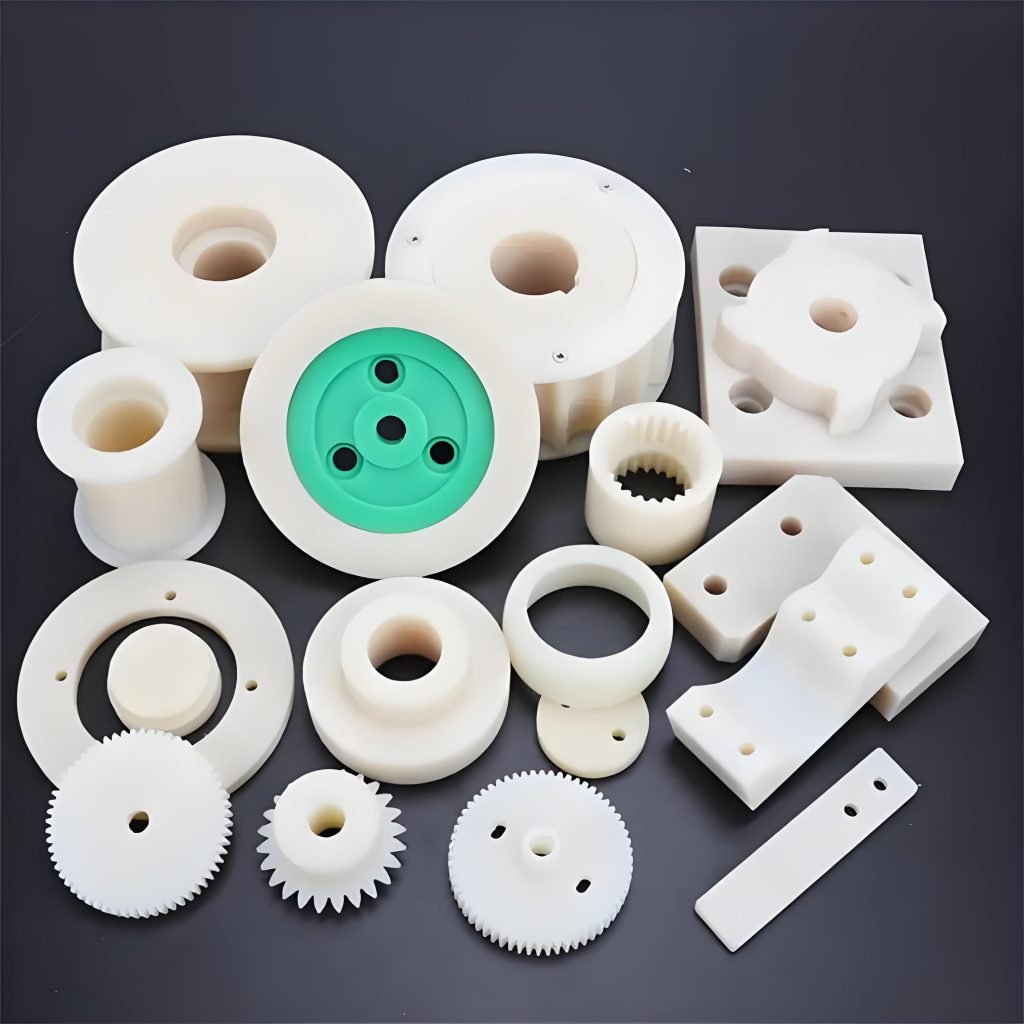
The way you process a resin often dictates final tolerances and part life. Pick the right grade to balance dimensional control, wear, and cost across your production range.
Injection molding realities
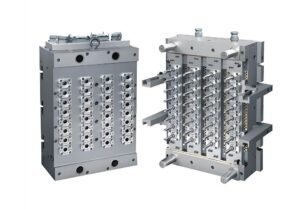
In injection runs, expect different shrink rates. One grade shows lower mold shrinkage and eases tight tolerances. The other needs tool compensation and careful gate design.
Filled options boost stiffness and cut creep, but glass reinforcement speeds cavity wear. Also plan melt and cycle windows: lower melting points can cut energy and cycle time for thin parts.
Machining and casting
Both materials machine cleanly, so you can finish features without exotic tooling. Cast grades of PA6 give large, stress-relieved blanks with a smooth finish for bearings and wear parts.
Casting is cost-effective for big, thick components; high-volume molded parts win where precision and repeatability matter.
3D printing and reinforcements
For additive, consider PA 11 or PA 12 family polymers for lower moisture uptake and strong dimensional stability. Use UV or heat stabilizers for outdoor or hot environments.
Choose glass, mineral, or impact modifiers to tune stiffness, wear, and surface finish to your application needs.
Real-World Applications: Where Each Nylon Excels
Match the resin to the load, temperature, and environment, and your assemblies will repay the choice in uptime.
PA 6 — impact-prone parts and visible components
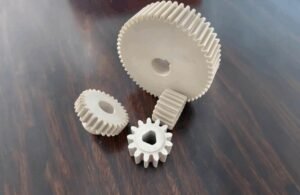
Use PA 6 for resilient gears, bushings, wear strips, and chain guides where low friction and good impact resistance cut noise and failures.
It works well for electrical insulators and connectors because the material damps vibration and can be made in transparent grades for quick inspection.
PA 66 — high-heat, high-wear uses
Choose PA 66 for friction bearings, tire cord, seat belts, and conveyor belts where abrasion resistance and heat-age strength extend service life.
Battery modules and under-hood clips benefit from its higher HDT when temperature and long cycles matter.
Sector guidance: automotive, electrical, and industrial components
For automotive and electrical applications, balance surface finish and color needs against thermal and wear demands. Test for ethanol blends—both families lose performance in 15% ethanol fuels.
Use this guidance to benchmark your part against proven applications and pick the right material for durability and service intervals.
Choosing the Right Nylon for Your Project
A simple decision tree saves time: map heat, humidity, mechanical load, abrasion, and chemical exposure to material strengths before you specify resin.
Decision criteria: temperature, moisture, load, abrasion, chemicals
Start with temperature. If your part sees sustained high heat or engine-bay conditions, pick the higher-melting option for safer stiffness and retained strength.
Check moisture exposure and water absorption tolerance. If dimensional growth will break tolerances, specify reinforced grades or the lower-uptake resin to preserve stability.
Match mechanical needs to material behavior. When tensile strength and creep resistance matter, choose the stiffer polymer; when impact and flex fatigue dominate, choose the tougher grade.
Design trade-offs: aesthetics, colorability, stiffness vs. impact, and dimensional stability
Consider surface finish and color. One material generally colors and finishes more attractively for visible parts, while the other demands tooling offsets to hit tight dimensions.
Balance wear, cost, and processing: filled grades boost performance but increase mold wear and cycle energy. Validate chemicals—acids and oils favor the higher-melting resin; avoid 15% ethanol fuels with either choice.
Use this framework to turn performance needs into a clear material choice for your project.
Conclusion
If your parts see sustained heat, PA 66 gives higher melting, better heat-age strength, and superior abrasion resistance for rugged automotive and industrial applications.
Choose PA 6 when impact resilience, low as-molded shrink, and easier color/finish control are priorities. Cast PA 6 for large blanks; use PA 11/12 for additive when moisture control and fine features matter.
Reinforce with glass or mineral fillers to raise stiffness and dimensional stability, but plan for added tool wear. Prototype both materials to verify melting, shrink, and fit, then lock in the material that meets your performance and cost targets.