
When it comes to high-performance engineering thermoplastics, understanding the nuances between different materials is crucial for selecting the right polymer for your specific application needs. Acetal and Delrin are two such materials that are often mentioned together, but are they the same?
Both acetal and Delrin offer excellent mechanical properties, including strength and durability, making them appealing to manufacturers. However, the distinction between these materials lies in their chemical compositions and performance characteristics. This guide will explore the key differences between acetal copolymers and Delrin homopolymers to help you make an informed decision for your engineering projects.
Acetal Polymers Overview
What is Acetal?
Acetal is a type of engineering plastic that offers a unique combination of strength, stiffness, and resistance to chemicals. It is known for its ability to handle exposure to organic and inorganic solvents and acids, as well as prolonged exposure to hot water and high temperatures.
Chemical Structure and Properties of Acetal
The chemical structure of acetal features a backbone of carbon-oxygen bonds, providing exceptional stability and strength. Acetal polymers demonstrate excellent resistance to various chemicals, making them suitable for applications involving chemical exposure. The material’s low water absorption properties contribute to its dimensional stability, allowing it to maintain precise tolerances even in humid conditions.
Additionally, acetal’s crystalline structure provides a unique combination of rigidity and impact resistance. The material exhibits good thermal resistance, maintaining its mechanical properties across a wide temperature range from -40°C to approximately 100°C for continuous use. These properties make acetal a versatile material for various industrial applications.

Types of Acetal Materials
When exploring acetal materials, you’ll encounter two primary variants: acetal copolymers and homopolymers. These materials are both part of the polyoxymethylene (POM) family but differ in their molecular structure and properties.
Acetal Copolymers: Characteristics and Benefits
Acetal copolymers are known for their excellent dimensional stability and resistance to chemicals. They offer a good balance between mechanical properties and processing ease. The incorporation of comonomers into their structure enhances their resistance to hydrolysis and thermal degradation. This makes them suitable for applications requiring durability and exposure to various environmental conditions.
Some key benefits of acetal copolymers include their ability to maintain their shape under different temperatures and their resistance to fuels and chemicals. They are often used in automotive and consumer goods applications where these properties are valued.
Acetal Homopolymers: Overview and Advantages
Acwtal Homopolymers feature a uniform backbone of repeating CH2O units, resulting in high crystallinity and excellent mechanical properties, including strength and stiffness. This structure provides superior tensile strength, stiffness, and fatigue resistance, making homopolymer POM ideal for high-load applications.
The material’s excellent spring-back properties allow it to flex under load and return to its original shape without deformation. However, it’s worth noting that homopolymers may have reduced chemical resistance compared to copolymers and can be more susceptible to centerline porosity during extrusion.
Delrin: The Premium Acetal Homopolymer
Delrin, a high-performance acetal homopolymer, has revolutionized the engineering plastics industry with its exceptional properties. You can rely on Delrin for applications that demand high strength, stiffness, and dimensional stability. Its unique characteristics make it an ideal material for a wide range of engineering applications.
What Makes Delrin Unique
Delrin stands out due to its excellent flow characteristics, allowing it to fill injection molds efficiently with short cycle times. Its ability to flex without deforming makes it perfect for snap-fit connectors. Moreover, Delrin resists fatigue extremely well, making it a popular choice for parts subjected to continuous cyclic loading. As an engineering plastic, Delrin offers a combination of metal-like strength with the processing advantages of thermoplastics.
DuPont’s Development of Delrin
DuPont pioneered the development of Delrin in the 1950s, creating one of the first commercially successful acetal homopolymers. The company’s innovative polymerization process resulted in a polymer with exceptional purity and crystallinity, contributing to Delrin’s superior performance. DuPont’s patented manufacturing techniques allowed for precise control over the material‘s molecular weight and end-capping, critical factors in determining its properties. Today, DuPont continues to refine and expand the Delrin product line, developing specialized grades for specific industries and applications in the field of engineering.
Common Grades of Delrin and Their Applications
You can choose from multiple grades of Delrin, each engineered to deliver exceptional performance in various applications. Delrin’s diverse range of grades caters to different industrial needs, ensuring that you can find the right material for your specific project requirements.
Delrin 150: High-Performance Standard
Delrin 150 is a high-performance standard grade that offers excellent mechanical properties, making it suitable for a wide range of applications, from consumer goods to industrial components. Its high machinability allows for efficient production using injection molding and prototyping.
Delrin AF Series: PTFE-Filled Grades
The Delrin AF Series is a PTFE-filled grade that provides enhanced lubricity and wear resistance. This makes it ideal for applications where reduced friction is crucial, such as in mechanical parts and components subject to high wear.
Glass-Filled Delrin: Enhanced Rigidity
Glass-filled Delrin grades offer enhanced rigidity and dimensional stability, making them perfect for applications requiring high stiffness and resistance to deformation. These grades are commonly used in automotive and industrial components.
Specialty Delrin Grades for Specific Industries
Specialty Delrin grades have been developed for specific industries, including medical, food processing, automotive, and aerospace. These grades may include additives for UV stability, flame retardance, or enhanced chemical resistance. For instance, Delrin AF DE588 is used in the Navy for submarine parts due to its exceptional reliability and performance.

Is Delrin the Same as Acetal? Key Differences Explained
The confusion between Delrin and acetal stems from the misuse of a brand name as a material category, a common issue in the industry. To clarify, let’s dive into the differences between these two terms.
Chemical Composition Differences
Acetal, also known as polyoxymethylene (POM), is a class of semi-crystalline plastics. Delrin, on the other hand, is DuPont’s trademarked brand name for their acetal homopolymer, characterized by constant repeating CH2O units. This distinction highlights that while all Delrin is acetal, not all acetal is Delrin.
Crystalline Structure Variations
The crystalline structure of Delrin and other acetal materials can vary, affecting their mechanical properties. Delrin, being an acetal homopolymer, has a more uniform crystalline structure compared to some acetal copolymers.
Brand vs. Material Category Clarification
Delrin is specifically DuPont’s brand name for their acetal homopolymer, while acetal refers to the broader family of polyoxymethylene materials. Other manufacturers produce acetal homopolymers and copolymers under different brand names, such as Celcon, Hostaform, Ultraform, and Kepital. Understanding this relationship helps engineers and designers communicate more precisely about material specifications and ensures appropriate material selection.
Comparing Properties: Acetal Copolymer vs. Delrin
When deciding between acetal copolymer and Delrin for your project, understanding their distinct properties is crucial. Both materials have their unique characteristics that make them suitable for different applications.
Mechanical Properties Comparison
Delrin and acetal copolymer exhibit different mechanical properties. Delrin typically offers higher strength and stiffness, making it suitable for applications requiring high performance. In contrast, acetal copolymer provides better impact resistance and flexibility.
Thermal Performance and Heat Resistance
Both materials have good thermal stability, but Delrin generally has a slightly higher melting point. This makes Delrin more suitable for high-temperature applications. Acetal copolymer, however, offers a wider processing window, reducing the risk of thermal degradation during manufacturing.
Chemical Resistance and Durability
Acetal copolymer is generally more resistant to chemicals and has lower porosity compared to Delrin. This makes acetal copolymer a better choice for applications where exposure to chemicals is a concern, such as in the food and medical industries.
Processing and Machining Differences
Delrin is known for its excellent flow properties during injection molding, allowing for the production of complex parts with short cycle times. However, acetal copolymer is less prone to centerline porosity, making it more suitable for certain extrusion processes. Machining behavior also differs, with Delrin producing cleaner cuts but requiring careful cooling.

Applications: When to Choose Acetal or Delrin
The choice between Acetal and Delrin depends on the specific requirements of your application. Both materials have unique properties that make them suitable for different uses.
Ideal Applications for Acetal Copolymers
Acetal copolymers are suitable for applications that require a balance of mechanical properties and chemical resistance. They are often used in parts that need to withstand exposure to various chemicals and maintain their dimensional stability.
Best Use Cases for Delrin Homopolymers
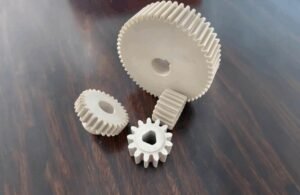
Delrin homopolymers are the preferred choice for applications requiring superior mechanical strength, stiffness, and fatigue resistance. They are ideal for parts such as gears, bearings, and rollers, where high performance and durability are crucial. Delrin is also used in conveyor system parts, safety restraints, and mechanical fasteners due to its excellent tensile strength and impact resistance.
Conclusion: Making the Right Material Choice for Your Project
The decision between acetal copolymers and Delrin homopolymers hinges on your project’s specific requirements. Delrin offers superior mechanical strength and dimensional stability, while acetal provides better chemical resistance.
Consider factors like cost, operating environment, and performance needs. Working with an experienced manufacturing partner like Fecision can help you navigate material selection and ensure high-quality parts.
Fecision offers specialized manufacturing services for both acetal and Delrin materials. Contact us today for a quote on your parts and benefit from their expertise in engineering thermoplastics manufacturing.
FAQ
What is the main difference between Acetal Copolymer and Delrin?
The primary difference lies in their chemical structure and properties. Acetal Copolymer is a type of polyoxymethylene (POM) that offers excellent chemical resistance, while Delrin, a homopolymer, provides superior mechanical properties and dimensional stability.
How do I choose between Acetal and Delrin for my project?
You should consider factors such as mechanical strength, chemical resistance, and dimensional stability. If your application requires high stiffness and resistance to friction, Delrin might be the better choice. For applications involving exposure to hot water or solvents, Acetal Copolymer could be more suitable.
Can Delrin be used in high-temperature applications?
Yes, Delrin has a relatively high melting point and can be used in applications with temperatures up to 180°F (82°C) continuously. However, its performance may degrade at higher temperatures, so it’s essential to evaluate the specific requirements of your project.
What are the benefits of using Acetal Copolymer in injection molding?
Acetal Copolymer offers excellent chemical resistance, dimensional stability, and a relatively low cost. It’s also suitable for applications involving hot water and solvents, making it a versatile material for various industries, including automotive and machinery.
Can Acetal and Delrin be machined or prototyped?
Yes, both materials can be machined and prototyped using various techniques, including injection molding and CNC machining. However, the specific processing conditions may vary depending on the material’s properties and the desired outcome.